• Blog
  • Shop
  • Podcast
  • Resources
  • About
  • Archive
  • Contact
  • Cart
  • Sign In My Account
Menu

The Gentleman Stationer

Vintage Living in the Modern World.
  • Blog
  • Shop
  • Podcast
  • Resources
  • About
  • Archive
  • Contact
  • Cart
  • Sign In My Account

When is a Fountain Pen Too Big? Considerations on "Oversized" Pens

August 8, 2020

Setting aside filling systems, if someone asked me to identify the key difference between vintage pens of 75-100 years ago and modern pens currently on the market, I would have to say size. Extremely popular vintage pens such as the Parker 51 and the standard Parker Vacumatic Maxima, not to mention something like the Sheaffer Snorkel, appear tiny when compared against the majority of modern fountain pens. Even looking at pens from just 20 years ago (still considered “modern” in most circles), size has steadily increased. I have a set of Waterman Man 100 Patricians from the early 1990s, which were considered large pens at the time. and while they’re still not small, they compare to a standard Esterbrook Estie or Diplomat Aero.

Notwithstanding my concerns about what seems to be the ever-increasing size of modern fountain pens, I still found a way to add three Momento Zero Grandes to my collection over the past year. From left, the “Arlecchino,” “Primary Manipulation Vesuvio,” and “Primary Manipulation Stromboli”. All three are limited editions, though I would say that the Momento Zero Grande will remain one of my pens of the year.

I first noticed the oversized trend with the Edison Collier, which I considered huge when it was first announced several years ago but which today seems relatively modest. Pen companies haven’t slowed down. Before they went under, Delta and OMAS made oversized versions of their Dolcevita and Paragon fountain pens, respectively. Leonardo has released the Momento Zero Grande, a larger version of its already substantial Momento Zero. Esterbrook is killing it with the Estie “Oversized,” and apparently is selling so many that they have started to release special edition versions. These days, even the Montblanc 149 - once considered a “huge” pen - no longer seems that big at all.

What’s Driving the “Oversized” Trend?

I’ve heard a few different things in the course of years worth of conversations with both users and penmakers:

  • The fountain pen community is aging. While more young people are coming into the hobby, those who grew up using fountain pens - still the core audience - are moving into their 60s and 70s, and larger pens are more comfortable for those with conditions such as RSI (repetitive stress injury) or arthritis. (A recommendation for “a large pen for arthritic hands” is actually one of the most frequently received requests here at T.G.S.)

  • As fountain pens have become less utilitarian objects and more luxury accessories, the focus has shifted from the pen as a “daily writer” to the pen as a vehicle to showcase unique materials. Some companies have managed to navigate this shift remarkably well. For example, both Kanilea Pen Company and Leonardo Officina Italiana make fountain pens that are both gorgeous to look at and exceptionally comfortable to use. On the other hand, the past several years have seen an explosion of uber-expensive pens so large that they look like nightsticks, primarily made from rare celluloids. Personally, I have a hard time seeing how those pens can be used practically as everyday writers by anyone save those with extremely large hands.

  • Vintage pens were manufactured in factories as objects for mass consumption, as opposed to turned by hand on a lathe, as many pens are today. My understanding is that it can be more difficult and labor-intensive to hand-turn a smaller or more slender fountain pen, and it results in more wasted materials (which can be expensive). I’m not a penmaker, so I have no experience in this regard, but I’ve had multiple individuals mention this at shows over the years.

  • Sometimes it’s as simple as a shift in consumer preferences. Especially in the U.S., everything has upsized over time: cars, houses, watches, and, yes, pens. If larger pens sell, manufacturers will keep making them, especially if consumers equate “bigger” with “more expensive", and remain willing to pay top dollar for giant pens.

The Leonardo Momento Zero Grande is incredibly well-designed for such a large pen. If you’re a poster like me, you’ll want to consider this model because the cap adds little to no weight to the pen.

I haven’t held a vintage Parker Vacumatic in quite some time. Is the Sailor Pro Gear Slim the closest thing on the market right now? It’s somewhat astonishing how small this pen feels.

Considerations on Buying a Large Fountain Pen

If you’ve also noticed the shift towards larger pens, and are curious about trying one, keep a few things in mind. First, whether any pen will make a comfortable daily writer is less about pure length or diameter and more about shape and balance (i.e. weight distribution). For example, what makes the Leonardo Momento Zero Grande an extremely comfortable pen, despite its size, is the fact that the pen has a subtle hourglass shape with most of the girth towards the front. Slightly tapering the back end allows you to post the cap deeply, without throwing off the balance and back-weighting the pen too much. It helps that the cap is extremely light.

Second, while piston filling systems are seen by some as a sort of litmus test as to whether or not a pen is truly “high-end,” they can add weight. I would love to add a Pelikan M1000 to my collection, but the added weight from the filling system makes this a hard pen for me to use. On oversize pens, I tend to prefer cartridge-converter systems, though I will add that Leonardo’s has developed an extremely lightweight piston on the Momento Zero Grande.

Finally, if you’re thinking about purchasing an oversized fountain pen for the first time, consider visiting a pen shop in person or waiting until pen shows resume. (It’s currently hard to predict exactly when that will happen in light of current events, but I remain confident that this too shall pass.) If you can’t wait, be sure to purchase from a retailer who allows returns, and handle the pen to make sure you find the size comfortable before you ink it up.

A comparison of five modern fountain pens against a vintage Parker Vacumatic Major (far right). Starting from the left, a Sailor Pro Gear Imperial Black, Momento Zero Grande Arlecchino, Delta Fusion 82 in Pompeii Celluloid, Kanilea Pen Company Mauna Kea, and Leonardo Momento Zero standard in Burkina Celluloid.

Final Thoughts

I started thinking about these issues while watching the pens in my collection gradually get larger. While I can appreciate an oversized fountain pen, especially one made by a craftsman who enjoys the act of writing and how a pen should fit the hand for maximum comfort over long sessions, I would love to see more pens made in the size and shape of the classic Parker Vacumatic. Delta made a run of celluloid Fusion 82s in conjunction with Bryant Greer of Chatterly Luxuries several years ago, and those ended up just about perfect (though as you can see from the pictures, the pens were still larger than a vintage Vac). Conway Stewart’s excellent Model 100 is another vintage-inspired option, though difficult to find in the U.S. Waterman, with its flagship Expert and Carene models, seems to be losing ground. Don’t even get me started on the disappearance of the Parker Sonnet. Currently, Japanese companies are holding out, with Pilot, Sailor, and Platinum still sizing their flagship collections for the everyday user, though you can see the “big pen” trend working its way into their lineups with pens such as Pilot’s massive “Custom Urushi” and Sailor’s “King of Pen.”

At the end of the day, I appreciate variety, but I have some concern based on the trends I’m seeing that reasonably sized, practical fountain pens are losing ground to larger “show ponies.” Personally, I would like to see more vintage-inspired design, not only in terms of shape and materials but also in terms of size. Taking things too far in any one direction can only restrict the appeal of the hobby, which is good for no one and risks jeopardizing the progress we’ve made towards a broader pen community.

Disclaimer: The pens featured in this review are from my own personal collection.
In Editorial Tags Editorial
2 Comments

Gone But Not Forgotten: The Twist Bullet Pencil Revisited

August 5, 2020

In a niche industry admittedly dominated by hype and FOMO, products come and go. Something launches on Kickstarter, people buy the product in an initial rush, maybe it sells briefly at retail, and then it disappears. I can think of a few candidates, but the Steel & Flint pen and the Twist Bullet Pencil are the two that come to mind because I miss them the most. While I still have two Twists, the pencil has been out of production for a couple of years now, and no third-party retailers appear to have any left in stock. I hesitate to carry my Twists as much as I’d like because it’s unlikely that I’ll be able to source a replacement if lost.

The brass “bullets” on my Twist pencils have aged nicely, developing quite the patina.

You can read my original review of the machined aluminum Twist Bullet Pencil here. The product itself impresses with the quality of construction and the way in which the designers took the bullet pencil, a classic piece of Americana, and modernized it for today’s stationery enthusiast. While I purchased several Twist pencils over a two or three year period, I only kept two in my collection. I suspect the primary reason behind the discontinuation of the Twist was that it was a niche product targeted to pencil/pocket notebook enthusiasts and the Erasable Podcast crowd - enough to support an initial Kickstarter project and product launch, but maybe not sustained production because even woodcase pencil enthusiasts don’t necessarily have a need for multiple bullet pencils.

My favorite iteration of the Twist was the wooden “Timber Twist” model. It’s incredibly light.

Regardless, the Twist remains a great tool to have, and I’m sad to see a general lack of modern bullet pencils currently available for purchase. Neither of the Twist co-creators are still in the pencil business, from what I can tell. Jay Smith (“Huckleberry Woodchuck”) still maintains an active site, selling handkerchiefs, facemasks, and Begleri beads, and his site confirms that the Twist is officially out of production. Metal Shop CT, co-creator Jon Fontane’s machine shop, which actually manufactured the Twist pencils, no longer maintains an active website, though there was some chatter on Instagram last year about possibly resuming production at some point.

My red and brass “Ironman” version.

Are There Any Viable Bullet Pencil Alternatives on the Market?

As I mentioned earlier, I couldn’t find many modern iterations of the classic bullet pencil currently on sale. You can always acquire vintage bullet pencils on Etsy or eBay (Seller “Barnstar Treasures” seems to have a lot of interesting options), but I’ve been hesitant to dive back into the vintage market due to the pain in sourcing replacement erasers, and the inherent fragility of using a pencil 70-90 years old as an everyday writer. Elegant Utility makes the brass “Pencil Pal,” a more modern machined brass take on the classic bullet, and there’s always the Traveler’s Company version, though it’s currently hard to find in the U.S. If you are aware of any other alternatives currently on the market, please let me know! [Update: I managed to source the Traveler’s Company bullet pencil and now have it available for sale in my shop! It has an excellent authentic vintage vibe, and even uses the same bullet style as some of the vintage pencils in my collection.]

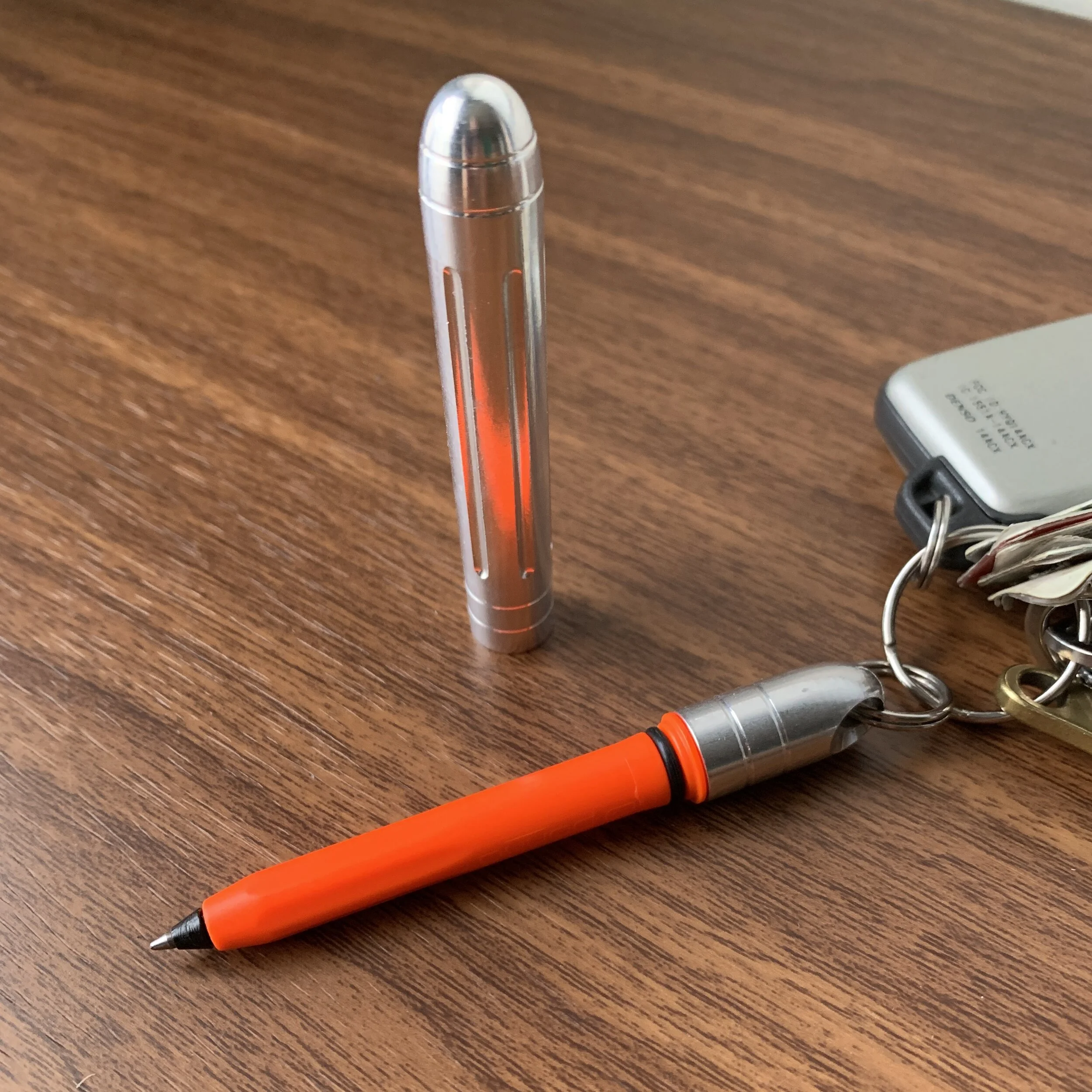
Maybe the solution is for Pokka to design a “pencil” insert for their recently released “Pokka Jakket” aluminum cap?

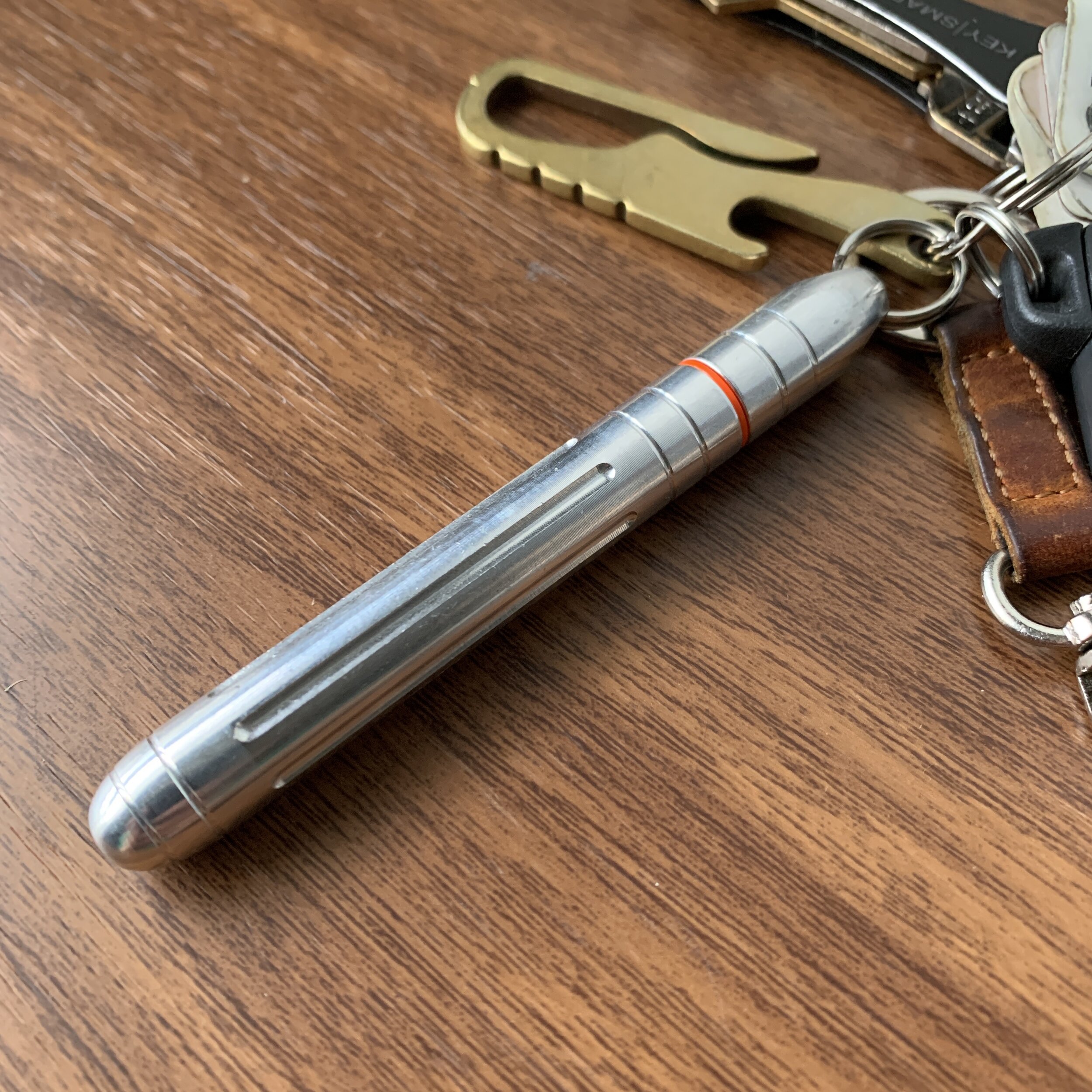
In my opinion, the true “spiritual successor” to the bullet pencil is probably the ultra-portable Pokka Pen - even though it’s a ballpoint pen and not a pencil - because it not only follows the “bullet” form factor but is inexpensive and designed to be used in a workaday scenario where you’re not necessarily afraid of losing a prized possession. As I posted yesterday, you can now “upgrade” your Pokka barrels to provide additional durability, if you so desire, and there’s even a keyring dock (pictured below) to make it a more integral part of your EDC. Maybe the solution is for Pokka to make a pencil insert for the Pokka Pen? We can dream, right?

Disclaimer: This post contains affiliate links. I purchased the bullet pencils featured in this post with my own funds, for my own collection. I am also a retailer of Pokka Pens, and additional details can be found in The T.G.S. Curated Shop.

In Pencil Review, Vintage Pens Tags Twist Bullet Pencil, Pencils, Pokka Pens
2 Comments

Introducing New Pokka Accessories: Aluminum Cap and Keyring Dock

August 4, 2020

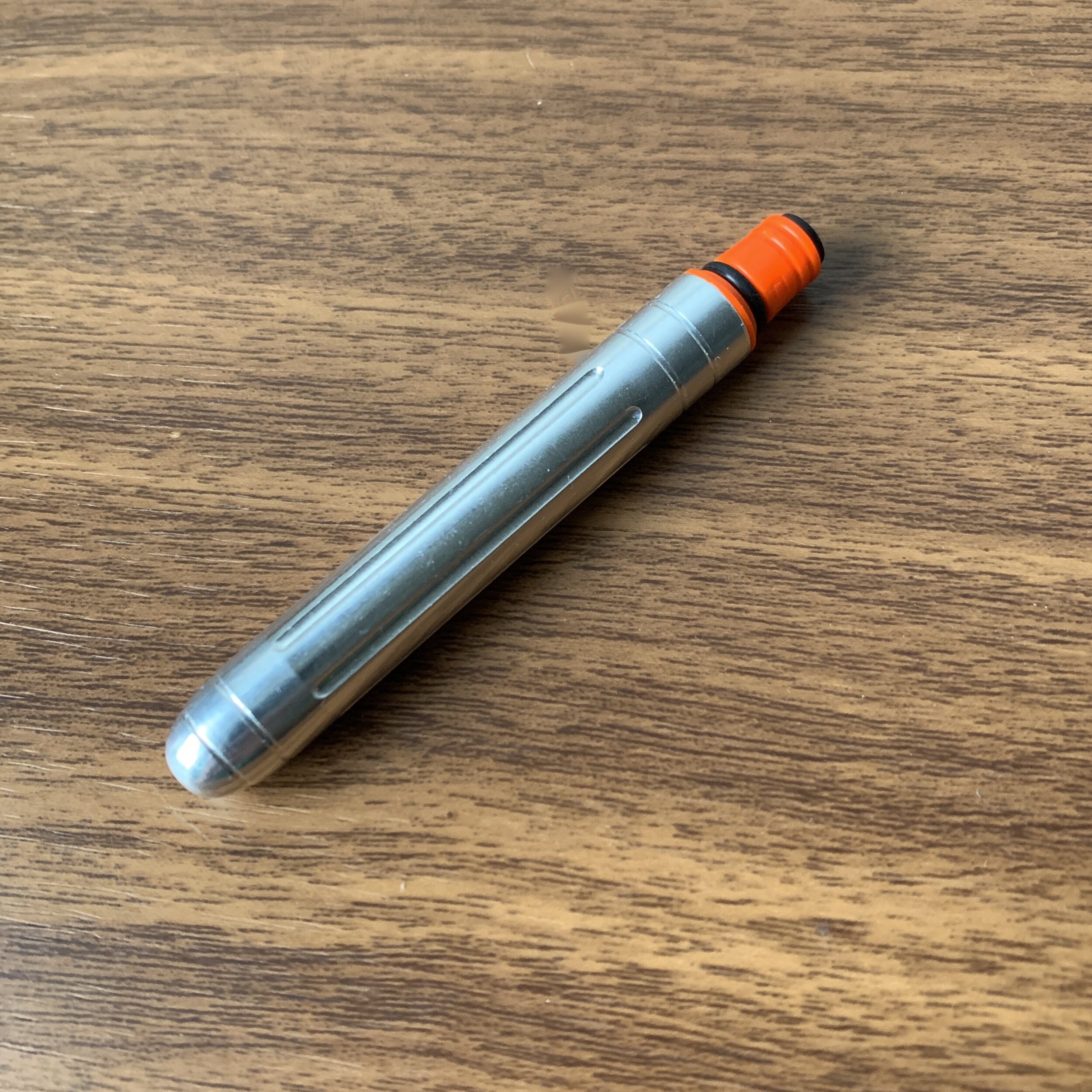
People love their Pokka Pens, and Pokka recently released a new line of accessories that can make your Pokka an even more essential part of your everyday carry. I’m currently stocking both the Pokka “Dokk” keyring docking system, as well as the Pokka “Jakket” aluminum cap, both of which you can pair with any Pokka Pen using the secure Pokka o-rings included on every pen barrel. Note that all Dokks and Jakkets are sold separately, and do not come with a pen.

View fullsize Pokka Jakket on Pokka Dokk
View fullsize Pokka Jakket Uncapped
View fullsize Pokka Dokk Keyring
View fullsize Pokka Jakket Capped

Finally, in response to multiple requests, I’m now stocking three-packs of Pokka Refills, available in blue and red. If you’ve been despairing because you don’t like the black ink included with your Pokkas, swap ‘em all out!

In Pens, TGS Curated Shop Tags TGS Curated Shop, Pokka Pens
Comment

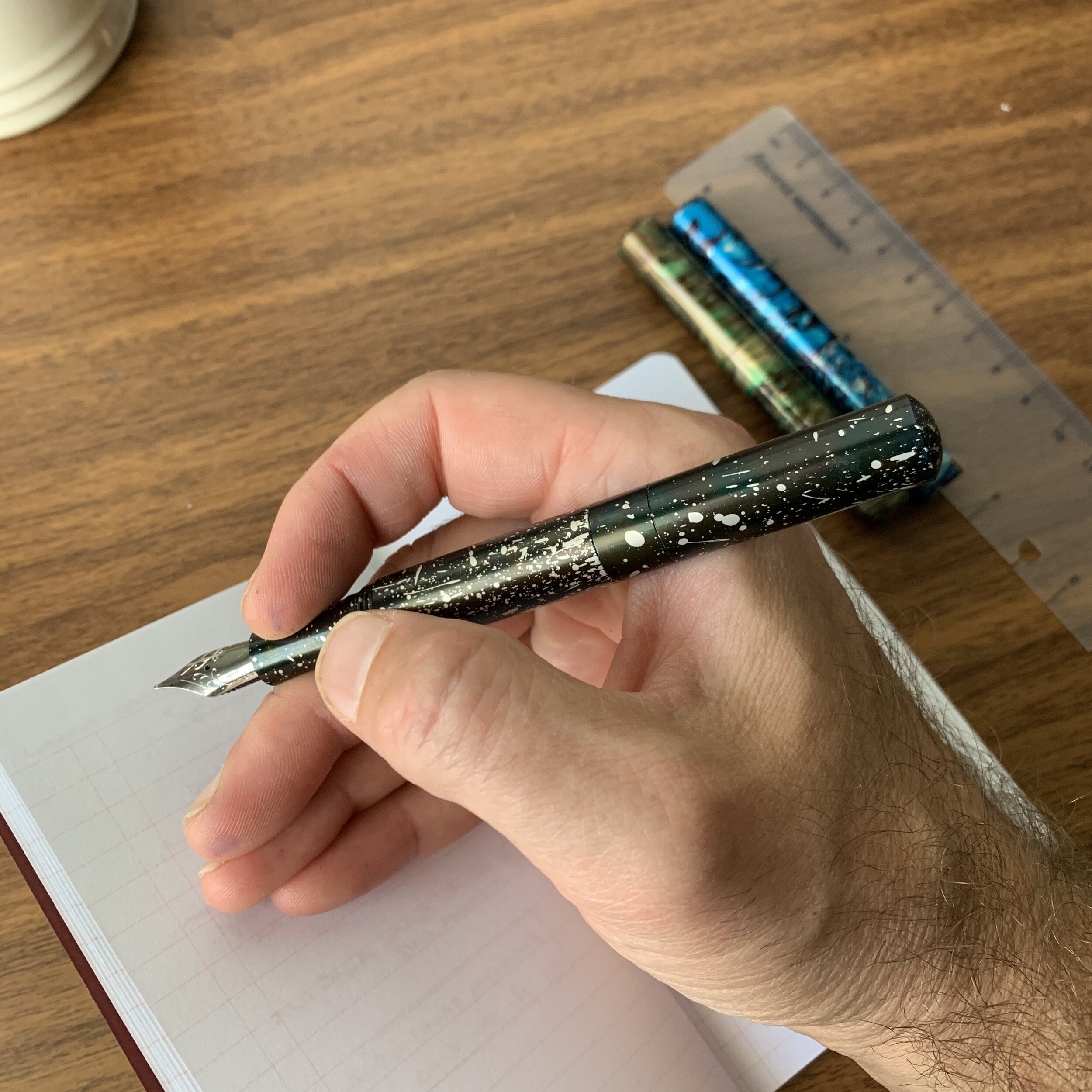
Pen Review: Schon DSGN Pocket Six Fountain Pen

August 1, 2020

One product that makers have tried to perfect over the years, with inconsistent results, is the pocket fountain pen. It’s a hard product to do correctly. Fountain pen filling systems have never been designed for the rigors of pocket carry, and pens holding large reservoirs of ink tend to leak (or “burp”) ink into the cap when the pen gets jostled or there’s a shift in temperature or air pressure. Moreover, many pocket fountain pens end up too small for comfortable longer writing sessions, or feature smaller No. 4 or No. 5 nibs, which for some reason tend to have ink flow and other quality control issues at a higher rate than larger nibs.

The cap threads onto the barrel to post securely. Nearly everyone will need to post this pen to write comfortably.

After perfecting the design on his Classic Machined Pen - an excellent pocket ballpoint - pen and watchmaker Ian Schon set out to develop a true “pocket fountain pen” that he refers to as the “Pocket Six,” because - you guessed it - it features a full-size No. 6 nib. Due to its combination of design, functionality, and ability to accept interchangeable JoWo nib units, I can safely say that the Pocket Six is the best execution of the “Pocket Fountain Pen” concept on the market right now.

For a pocket notebook to go along with your pocket fountain pen, my go-to choice is the Write Notepads Copper Anniversary Edition.

There’s no one characteristic that sets the Pocket Six apart from its competition - it’s an all-around well-designed pen with excellent fit and finish. The selling point that gets the most attention, however, is that namesake No. 6 JoWo nib. Ian specifically designed the cap and section to hold this larger nib, which lives up to its billing in that it generally offers more consistent ink flow and a smoother writing experience than the smaller nibs found on other “pocket” fountain pens. While JoWo nibs are still “stock” nibs and therefore occasionally need tuning, the JoWo nib unit is probably, overall, the most reliable stock nib unit available, and therefore used by most custom penmakers. To have this nib in a pocket fountain pen is a huge plus.

The Pocket Six is so small, closed, that three of them easily fit into my hand at once.

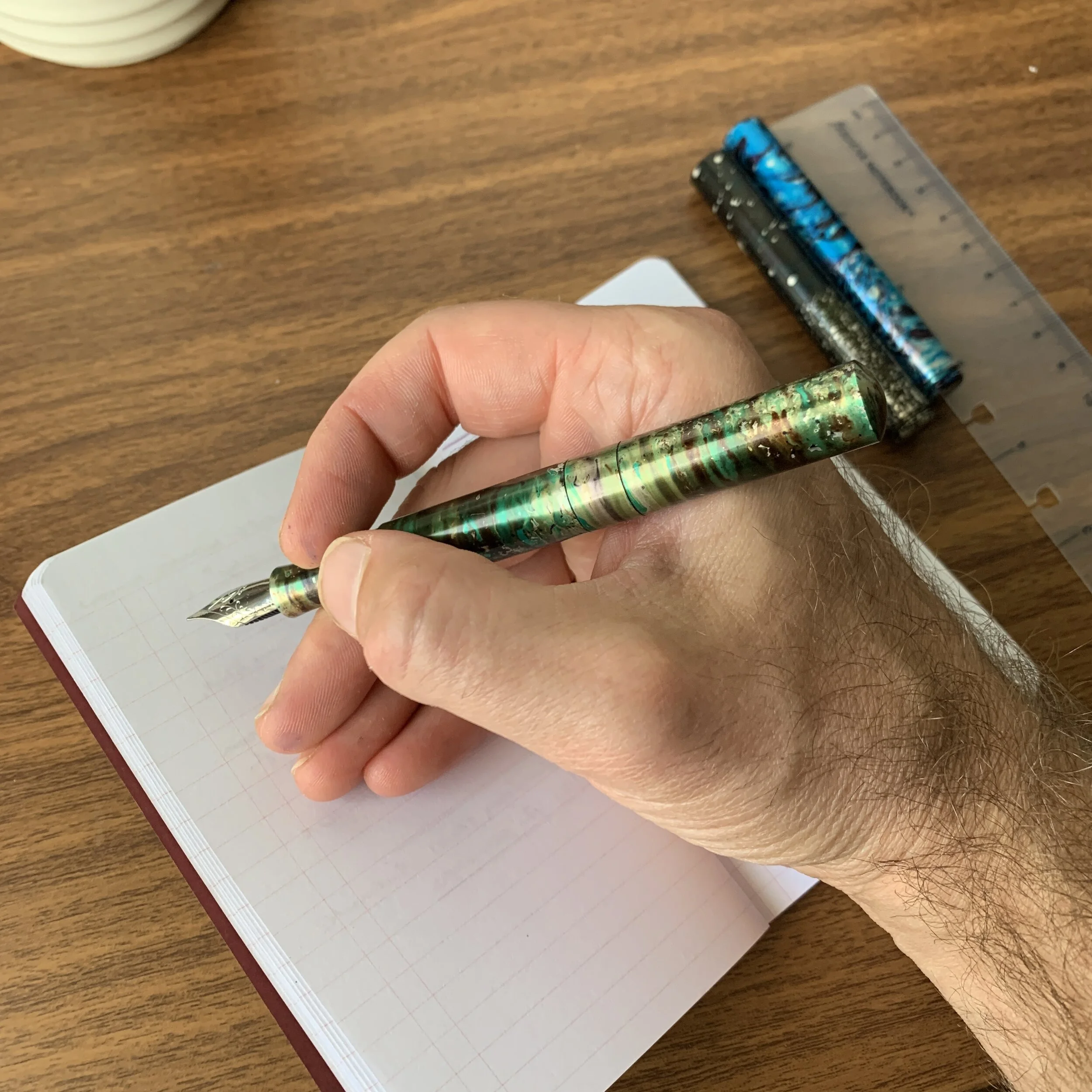
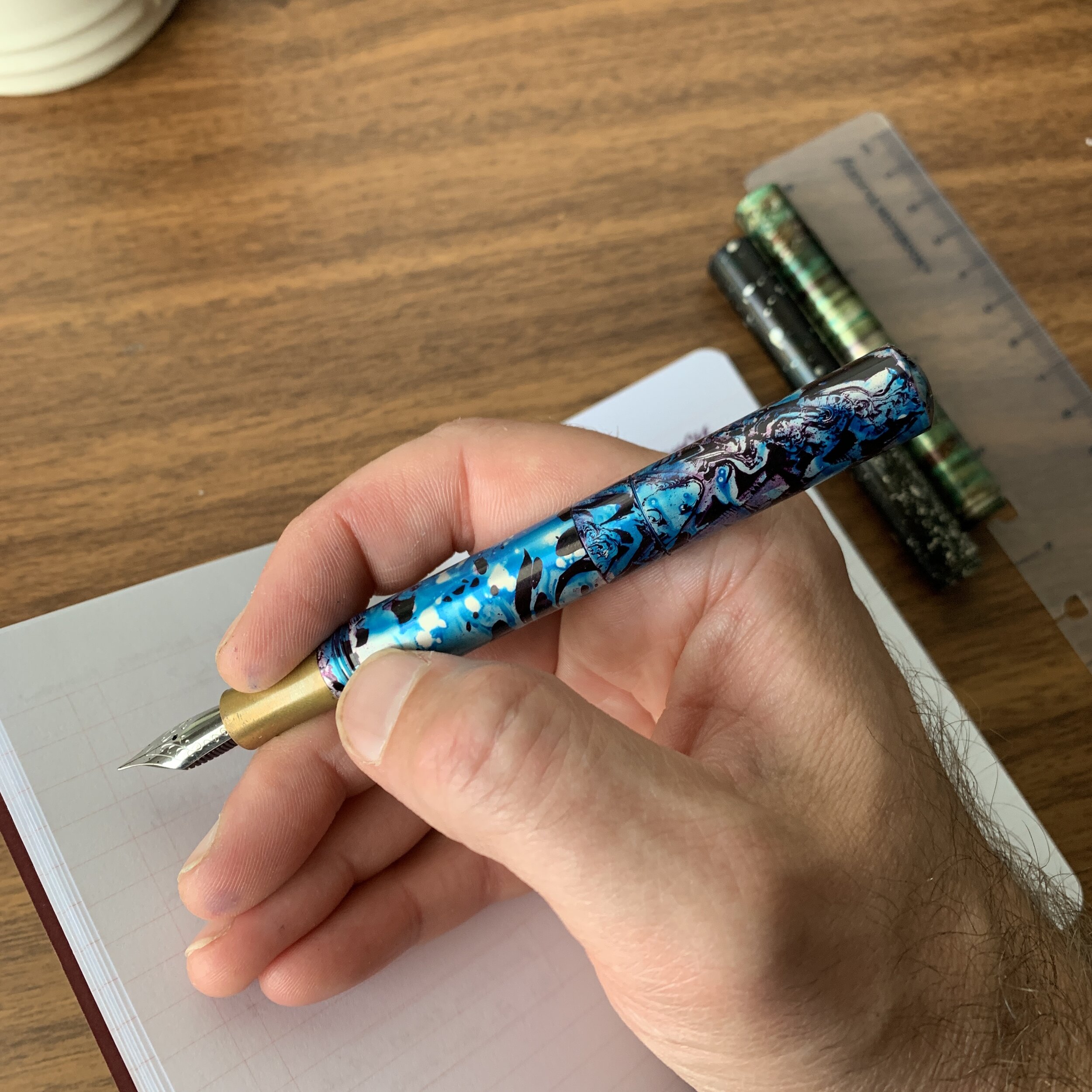
Closed, the Pocket Six is easily “pocketable” at 3.5 inches long. Unless you have tiny hands, or are used to writing with pencil stubs or gripping pens with the ends of your fingers, you’ll need to post the pen to write, and that’s how the Pocket Six was designed, with threads on the end of the barrel to post the cap securely. Fully extended, the pen sits at a comfortable five inches, which for me is long enough to use it for pretty much any writing scenario. While the Pocket Six is a metal pen, Ian uses lightweight aluminum, so even with a brass section I had no issues with fatigue. As you might expect from a pen this compact, it fills with short international cartridges, and since it’s metal, I wouldn’t eyedropper it.

View fullsize Schon DSGN "Malachite"
View fullsize Schon DSGN Blue/Purple/Black Swirl
View fullsize Schon DSGN "Deep Sheen"

I now own three Pocket Six fountain pens: I picked up my first in at the Philadelphia Pen Show, in a special blue, purple and black anodized finish with a brass section. and recently added two more from Ian’s ongoing “online pen show”: one in “Deep Sheen” (a black and silver mottled finish with dark blue and green “sheen” undercurrents) and another in “Malachite” (a green/blue/grey/brown/black pattern with a real mineral quality to it). Ian also offers standard editions in aluminum, brass, and copper, including a few pens with “hammered” textures both on the body and section. Moving forward, when pen shows resume, I think it’s safe to expect that the Schon DSGN table will become a standard destination, much like Franklin-Christoph, where people can’t wait to see what new prototype colors and patterns Ian has been able to devise.

Takeaways and Where to Buy

As I mentioned earlier, the Pocket Six has quickly become my favorite pocket fountain pen on the market. All three of mine are currently inked and see heavy use on a daily basis. Of my three, the Malachite is my favorite aesthetically speaking, followed by my blue pen from Philly (not sure that it has a name) and the Deep Sheen, but I enjoy every one. I can pretty much guarantee that I’ll be adding one or more new Pocket Sixes annually, since they’re like Kaweco Sports - eminently collectible!

You can purchase the Schon DSGN Pocket Six directly from Ian via his website. Since all pen shows are currently suspended, there’s unfortunately no way to view the pens in person before you purchase, but let’s be honest: I’ve never seen a bad one. If you have been looking for a pocket fountain pen with a reliable nib and a creative design or finish, you absolutely need to give the Pocket Six a try. Prices range from $118 to $135 for an aluminum pen, while brass and copper models can cost more, especially if you opt for the hammered texture which takes more time to finish. These prices are on par with Kaweco AC Sports and Art-Sports, and for the level of workmanship and creativity that goes into these pens, are more than fair.

Disclaimer: I purchased the three fountain pens featured in this review with my own funds, for my own use. I was not compensated for this review.

In Pens Tags Schon DSGN, Schon DSGN Pocket SIx, Pocket Pens, Pocket Fountain Pen, Pen Review
4 Comments

Personal Journaling Setup, Part 3: Revisiting Pocket Notebooks

July 31, 2020

In the early years of this blog, I was a huge pocket notebook enthusiast and carried one with me wherever I went. Honestly, for a couple of years pocket notebooks served as my primary note-taking setup, even at work. But as my responsibilities increased, I needed something a bit more versatile (i.e., that contained more pages) to manage multiple projects and an at-times overwhelming number of tasks, and I gradually fell out of the habit of regular pocket carry.

Over the past couple of weeks I’ve spent a lot of time reorganizing my home office setup for what looks like a permanent work-from-home situation, and part of that process has involved going back through stacks of old notebooks, papers, files, etc. and determining what could be thrown away, what needed to be kept or archived, and whether I needed to change anything in my current workflow. As I read through years of old pocket notebooks, what struck me was how easy it was to remember things - even specific days seven or eight years ago - simply by reviewing short to-do lists and other notes I made for myself. Next thing I knew, a couple of hours had passed and I decided that I was going to pick the hobby back up.

2013-2015 were peak “pocket notebook” years for me. I miss having this informal “daily record,” and plan to pick up the practice once again.

Unlike traditional journaling or commonplacing, my pocket notebooks don’t have any set format, and mostly amount to a collection of short lists, reminders, and random stream-of-consciousness jottings. These notebooks essentially serve the same purpose as scratch paper, only I have all of my random musings gathered together in one place as opposed to scattered around my desk on post-its and the backs of old grocery lists. Here I’ve put together a set of links to various pocket notebooks and pocket notebook accessories I’ve used over the years, including many available for purchase in the TGS Curated Shop. Enjoy!

The TGS Patreon Program and sales through The Curated Shop are how I fund The Gentleman Stationer. Your support is greatly appreciated! Any third-party links here are NOT affiliate links and unpaid.

  1. Field Notes Archival Wooden Box. I finally added a Field Notes Archival Box to my personal collection, which let me get these stacks of filled notebooks off my bookshelf and into some discernible order. The set comes with dividers that you can use to organize your collection (I went with organization by years), as well as a Field Notes “band of rubber.”

  2. Field Notes Pocket Notebooks. I carried Field Notes exclusively for years, but as I moved into larger format notebooks, and didn’t use as many, I allowed my subscription to lapse. I’m still working my way through what I’d call a “backlog,” and the unused pocket notebooks pictured in my . That said, if you’re in need of Field Notes, or a new pocket carry enthusiast looking to stock up, I now carry the full line.

  3. Write Notepads Copper Anniversary Edition Pocket Notebooks. For fountain pen enthusiasts who don’t want to carry anything else, it can be hard to find a pocket notebook containing paper that will hold up to any pen or ink you can throw at it. These Write Notepads pocket notebooks will do the trick (plus they still fit in the Field Notes Archival Box).

  4. Lamy Pico Ballpoint Pen (via Vanness Pens). Lamy makes one of my favorite pocket ballpoints of all time, the extendable Lamy Pico. Not only does it have a great refill, but the pen itself is comfortable to write with for extended periods of time - rare for a ballpoint this compact. Read my review here.

  5. Caran D’Ache 849 Ballpoint (via T.G.S. Curated Shop). With Retro 51 supposedly winding down operations later this year, which company will replace Retro as your go-to source for fun, reasonably priced pens that work for most people? Caran D’Ache is certainly trying, having released a steady stream of special editions in their 849 Ballpoint. This pen grows on you, and I personally love the fact that the barrel features a hexagonal shape reminiscent of a woodcase pencil.

  6. Rotring 800 Mechanical Pencil (via Pen Chalet). For those who prefer a mechanical pencil, if you’re looking for pocket carry I’d recommend going with something that features a retractable tip. The Rotring 800 generally takes the same shape and build as the legendary Rotring 600, only the retractable pipe means that you won’t stab yourself in the leg when you sit down. Read my review here.

  7. Retro 51 Tornado Rollerball (via Goldspot). In my experience, liquid ink rollerballs tend to bleed and feather on the same level as fountain pens in pocket notebooks, but if you enjoy quirky limited editions you can’t get much better than the Retro 51 Tornado. The sad news is that Retro 51 is closing up shop by the end of the year. Before then, be sure to check out Goldspot’s exclusive “Pizza” Exclusive Limited Edition!

  8. CW&T Pen Type-B. Looking for the ultimate in high-end pocket carry? Consider adding a CW&T Pen Type-B to your rotation. This deliberately “over-engineered”, indestructible masterpiece of industrial design features Pilot’s Hi-Tec-C needlepoint gel refill, and could almost certainly be the last pen you’d ever need. (Not that it would be. We all know how that works.) Read my review here.

  9. Pokka Pens. Or perhaps you’d prefer a pen that you don’t have to worry about losing. Designed as an easily replaceable version of the Fisher Space Pen “Bullet” Pen, the Pokka sells in packs of three in a wide range of fun colors. I have these scattered all over my house, in my car, and even one on my keychain (look for these new accessories soon).

  10. Schon DSGN “Pocket Six” Fountain Pen (via Schon DSGN). Last but not least, pocket pen impresario Ian Schon has added a fountain pen to his lineup of everyday carry writing instruments. He’s currently offering an “online pen show” of sorts, with the Pocket Six available in a wide range of cool colors. Stay tuned for my review of this epic new addition to my pocket writing arsenal, coming soon.

In Editorial Tags Journal, Pocket Notebook, Deals
Comment
← Newer Posts Older Posts →
Store Hours and Events
Shop T.G.S. Online
Updated 2026 "Best Pens" Guide
No results found
On The Paper Trail: Live In Nashville Event Tickets Now Available!
TGS_25 Roterfaden Restock Notification
Hierarchies of Fountain Pen Friendly Paper

Join Our Patreon!
Subscribe to the TGS E-mail List

Featured Posts

Featured
Pilot-Custom-Heritage-92.jpg
June 6, 2026
Workhorse Pens: Pilot Custom Heritage 92 Fountain Pen
June 6, 2026
June 6, 2026
Kakimori-Inkstand-Before.jpeg
May 30, 2026
Japan Trip Journal: A Visit to Kakimori, Including Custom Notebooks and the InkStand!
May 30, 2026
May 30, 2026
Five-Foundational-Fountain-Pens.jpeg
April 22, 2026
T.G.S. 12th Anniversary: 5 Fountain Pens Everyone Should Experience
April 22, 2026
April 22, 2026
The Gentleman Stationer RSS

View Cart

© Digital Divide Media, LLC, 2014-present.

All content is the exclusive property of Digital Divide Media, LLC, d/b/a The Gentleman Stationer, including “The Gentleman Stationer” website and trademark, and should not be reproduced without express written permission.  All rights reserved.

All content containing paid advertising, affiliate links, or sponsored content will be plainly disclosed by a disclaimer when/if featured.

Contact Information

Website Terms and Conditions

Store Shipping Policy and Return Policy

Privacy Policy and Cookie Policy

Accessibility Statement

Powered by Squarespace