This month TGS turns 12! Yes, I’ve been at this for over a decade, and while the site has evolved a lot over the years, the core of the business - and what I love about running The Gentleman Stationer - still revolves around pen recommendations and helping those interested in writing by hand find the best pen to fit their specific needs. A common request I get is for an “experience list” or a “what’s next” list - if someone has tested out an inexpensive pen like a Pilot Kakuno or Platinum Preppy and decided that they enjoy writing with fountain pens, what pens should they try next to give them a sense of what else is out there? I consider the five pens discussed here to be to be “foundational,” in the sense that they were all important to me in my own fountain pen journey and still serve as benchmarks for how I consider and evaluate a lot of other pens on the market.
I need to preface this article by saying that this is not intended to be a “pens you need to buy” list, but rather more of a pens to TRY list. Most of these are relatively common fountain pens that you can see in person at most brick and mortar pen shops or pen shows, or in someone else’s collection at a pen club or pen meetup.
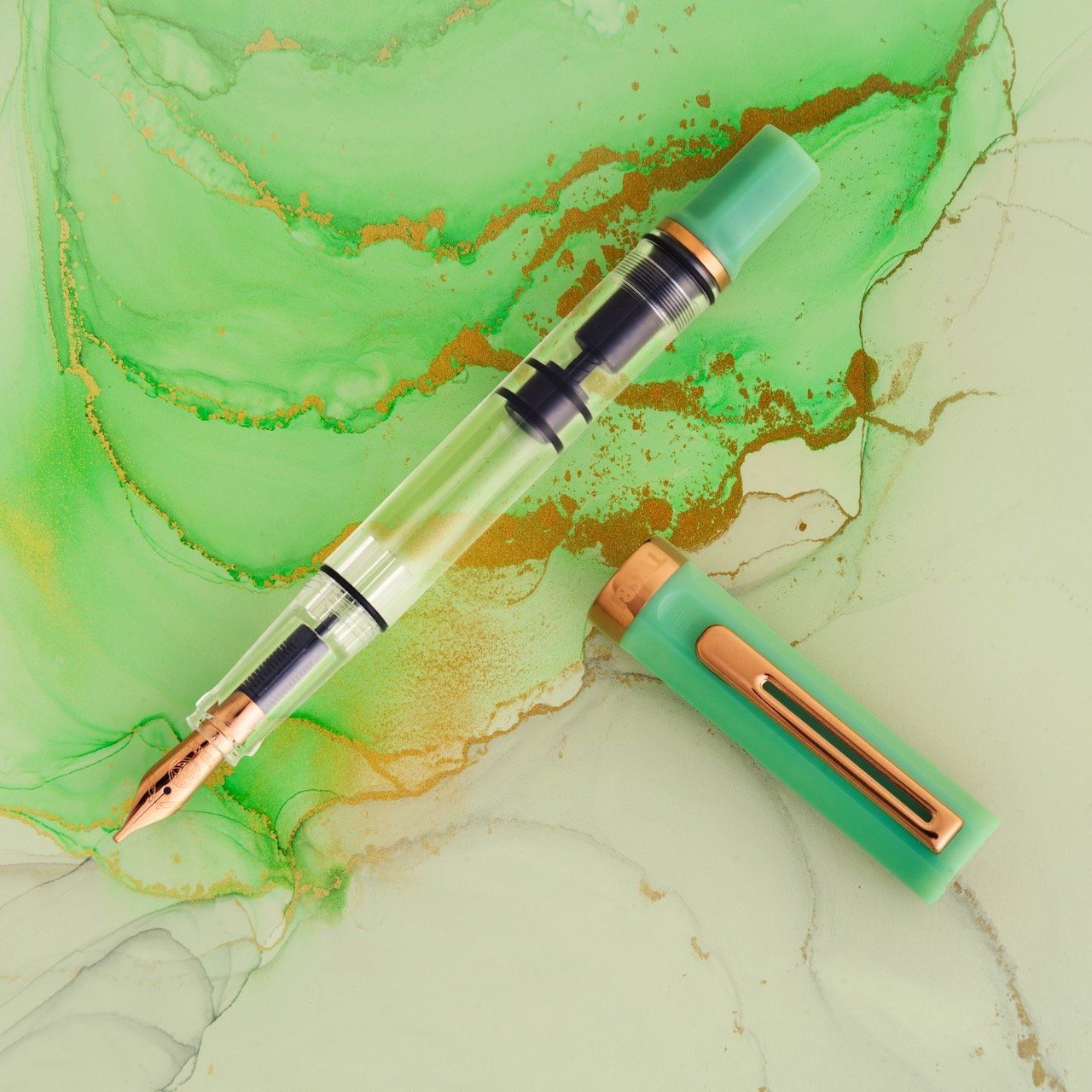
TWSBI ECO (left) next to a Lamy Safari.
Lamy Safari
Originally released in 1980 (46 years old - ask me how I know that), the Safari features a modern design with its signature oversized clip and somewhat polarizing triangular grip. A flexible cartridge-converter filling system and interchangeable nibs make it a versatile pen that you can usually find priced under $30. Importantly, if you try out a Safari or its larger sibling, the AL-Star, and discover that molded-grip fountain pens aren’t for you, this will help you rule out a lot of potential purchases.
TWSBI ECO
“I’m curious about using bottled ink and want to try a piston-fill fountain pen but don’t want to spend $100.” I get some version of this question every weekend, and usually my answer is going to be to try the base model TWSBI ECO. At $36.99, you can test out a quality piston fill mechanism that holds a lot of ink, and discover whether it’s for you or whether you prefer the convenience of an ink cartridge or the flexibility of a converter. If you visit our shop in person we almost always have at least one ECO inked as a tester.
Pilot Custom 74
If you’ve never tried a gold nib fountain pen before, start by trying out one of the best possible no-fuss writing experiences. Pilot nibs are known for their consistency and reliability, and even after all these years the Pilot Custom 74 with a 14k medium nib might be my favorite all-around writer. Both steel and gold nibs can offer an excellent writing experience, but gold nibs have their own unique feel. The Custom 74 is one of the best at a very good price point. (Custom 74 Full Review)
Pilot Vanishing Point or Decimo
“A retractable fountain pen?” A lot of new users are shocked that such a thing even exists, much less that it’s been around since the early 1960s. If the clip doesn’t interfere with how you grip the pen, the Vanishing Point/Decimo’s capless design can be a game changer for those of us who have worked in office environments where writing on the go is a necessity. Personally, the slimmer Decimo works better for how I hold my pen, but that’s something you can only discover by trying both pens out in person. (Vanishing Point/Decimo Workhorse Pen Review)
Lamy 2000
The Lamy 2000 draws strong opinions, and that’s exactly why it’s on this list. The Bauhaus-inspired design dates to 1966, and while some may find the minimalist brushed Makrolon construction “boring”, it remains my favorite fountain pen design of all time. Is it for everyone? No. But for every person looking for a brightly colored acrylic demonstrator, there’s someone looking for an everyday workhorse they can use at the office that disappears in their hand. For me, the Lamy 2000 is that pen. Moreover, like the Pilot Vanishing Point, when something has been around for almost 50 years, and is still manufactured today using basically the same design as when it was originally released, its worth a try simply to be able to add it to your “pen vocabulary”. (Lamy 2000 Workhorse Pen Review)
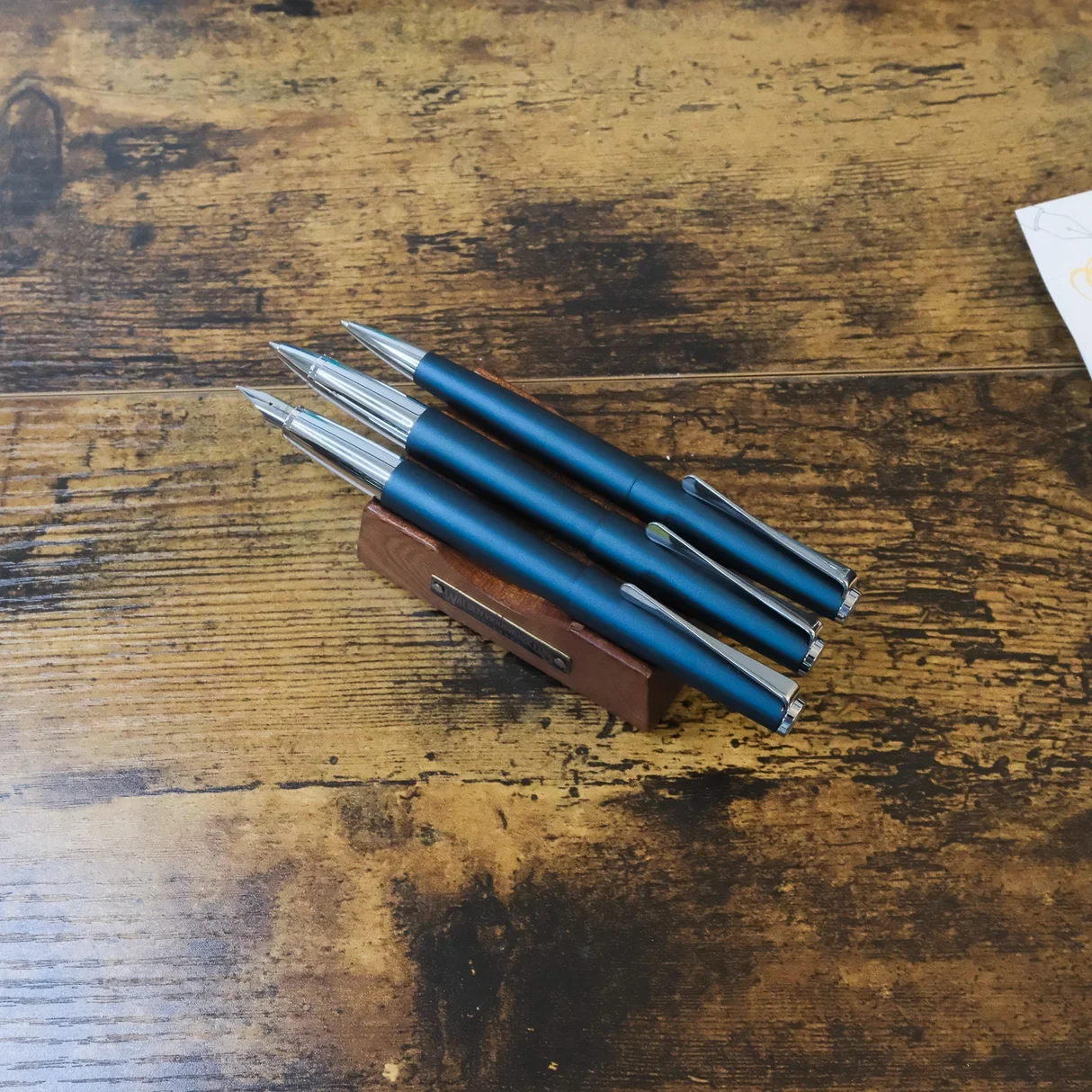
Pilot pens are easy to recommend as reliable workhorses. Shown here are the Pilot Custom 74 (front) with a Pilot Decimo (sorry, the finish was an exclusive for Nagasawa Stationery in Kobe, Japan).
What Factors Drive Inclusion on This List?
Obviously this list isn’t exhaustive - it contains five pens I recommend people try when they’re looking to broaden their horizons and explore different fountain pen options on the market. While some of this is intangible and driven by by my own likes/dislikes and personal experience, here are a few general factors I considered:
Range. This set of five pens I’ve chosen presents a diverse variety of styles, from classic (the Custom 74) to more modernist (Safari and the Lamy 2000). Do you prefer an “edgier” look, or more traditional vintage-inspired design?
Age and Popularity. For new users, I generally recommend they try as many “classics” as they can, meaning pens that have been around for a while (i.e., usually decades, with the one exception here being the ECO). A baseline familiarity with popular fountain pens broadens your frame of reference and can help you have more informed discussions with other enthusiasts or retailers, making your experience more enjoyable by allowing you to better understand what other people are talking about.
Value. The most expensive pen on this list is the Lamy 2000, which retails for $223 and includes a 14k gold nib and an integrated piston filling system. The Pilot Custom 74 is another pen with a 14k gold nib that retails at most places for $216. While I tend to be a “buy what you like and use it forever” person who doesn’t overanalyze price if it’s an item I intend to use long-term, I feel that the rapid emergence of licensed/branded collaborations and marked-up special editions has made it more important to have a perspective on value. I’ve found myself considering - and rejecting - certain pens because at $350+ they simply don’t offer anything beyond core pens I already own, that I enjoy using, and which cost much less. Again, price isn’t always everything, but know what you can get for your money.
We have all of the pens models shown here available in our Nashville shop, and often have at least one example of each model inked up and available to try in person. We also regularly bring pens on the road to shows. We hope to see you sometime!