• Blog
  • Shop
  • Podcast
  • Resources
  • About
  • Archive
  • Contact
  • Cart
  • Sign In My Account
Menu

The Gentleman Stationer

Vintage Living in the Modern World.
  • Blog
  • Shop
  • Podcast
  • Resources
  • About
  • Archive
  • Contact
  • Cart
  • Sign In My Account

Refillable Rollerball and "Inkball" Pens: Do They Work?

July 8, 2026

One product category that we are seeing more and more is the refillable rollerball (sometimes referred to as the "inkball") pen. These first went mainstream several years ago with an inexpensive version released by ink maker Herbin, followed by TRAVELER'S Company releasing a version of their Brass Fountain Pen with a refillable rollerball tip. Recently, another pen garnering a lot of attention is Kakimori's "Frost" pen, which is available in both a fountain pen and rollerball format. We've had a lot of questions recently about the rollerball/inkball functionality, so I thought I'd take the opportunity and do a bit of an overview of how these work and how they perform.

The Kakimori Frost pen ships with a twist converter, while the TRAVELER’S Company brass pen is advertised as cartridge only. However, it will take the Kaweco Mini Converter if you absolutely insist on using bottled ink.

How they work: This one's pretty easy. These refillable rollerballs all use a fountain pen-style nib unit that accepts standard international ink cartridges and Schmidt-style converters. You fill the pen as you would any standard cartridge/converter fountain pen, using fountain pen ink. (While not every manufacturer announces the maker of the rollerball nib/tip unit, Kakimori has specified that it is Schmidt, so if you see "made in Germany" you can probably assume that's who it is.)

Predictably, early iterations of these products weren't as reliable as the versions now available. Performance has improved - particularly the consistency of the ink flow - and I've found the pens themselves easier to clean. But why would you opt for one of these "inkball" refillable rollerballs as opposed to a fountain pen? Here are a few considerations:

  • Office Use. Despite their growing popularity, fountain pens continue to draw a lot of attention in the workplace. If you prefer to remain inconspicuous while still being able to write with your fountain pen ink, these pens are a good alternative.

  • Permanent or Pigmented Inks. Kakimori makes an extensive line of pigment inks, which are both lightfast and water-resistant. While I've not had a bad experience using Kakimori inks in standard fountain pens, those who are concerned about cleaning and clogging might feel better using a Kakimori-branded pen or a non-fountain pen altogether. I currently have a Frost rollerball loaded with the special ink I mixed in Tokyo at the Kakimori store, and I have had no issues.

  • Consistent Line Width. While fountain pens are known for line variation depending on the angle of your handwriting and the grind of the nib, ballpoints and rollerballs typically produce a single consistent line width while writing. Note that the one variable here is ink and paper. Since these "inkball" pens use fountain pen ink, the wetness of the ink and absorbency of the paper you are using can cause a wider line than the stated .5mm tip size.

A writing sample of the .5mm rollerballs, on Rhodia Premium paper. Note the consistent line width across both brands, with two very different inks.

A Few Downside Considerations

  • Cleaning and Clogging. I would be more conscientious about cleaning these rollerball tips than a standard fountain pen nib, since any sort of roller tip does have extra moving parts (the metal ball) that can get gummed up. The good news is that refillable rollerballs using the Schmidt nib unit clean identically to standard fountain pen nib units, though sometimes you have to flush them a few more times to remove stubborn clogs and residual ink. I typically take a bulb syringe and flush these pens in the same way you would flush a fountain pen. Ultrasonic cleaners can also be helpful.

  • Leakage. Especially wet, free-flowing fountain pen inks may leak out the front of the nib and/or cause the pen to "blob" on the page while writing. I've only had this happen with a couple of inks, one of which was the ultra-lubricated Tom's Studio Fineliner-specific Midnight Blue ink that probably wasn't intended to be used with this pen in the first place. Most standard inks work perfectly fine.

In the event the tip does become irreparably clogged or damaged - which I personally have yet to experience in either of the models shown here - these nib units are replaceable. Both TRAVELER'S Company and Kakimori use a standard rollerball unit manufactured in Germany by Schmidt, and sell replacements to fit their respective pens. You are also not locked into one writing "mode." Note that these rollerball units are threaded identically to each brand’s fountain pen nib units, so you can use them interchangeably in your Kakimori Frost Pens and TRAVELER'S Brass Fountain Pen. (I do not believe these nib units are interchangeable between brands, since they use slightly different housings.)

Both pens are compact, but I would only call the TRAVELER’S Brass Pen a true “pocket pen”.

Takeaways and Where to Buy

I've enjoyed using the "inkball" option fairly regularly, and overall I'm pleased with how these pens perform. While I might not reach for them as my primary writing option (I still prefer the softer feel of fountain pens and refillable fineliners), those looking for a reliable second option for using their fountain pen ink should give these a try. I am consistently impressed with how clean a line this current generation of refillable rollerballs can write.

The two pens featured in this post are the Kakimori Frost and the TRAVELER'S Company Brass Ballpoint, and are priced at $54 and $75, respectively. Additional nibs can be purchase for around $16. As noted above, both pens are compatible with their brand's fountain pen nibs, so there's no need to purchase a second pen - just the nib - unless you'd like to have both inked up at once.

The Gentleman Stationer is an authorized retailer of both Kakimori and TRAVELER'S Company products. You can view these both in our physical Nashville Shop or our online store.

In Pens Tags Pen Review, Kakimori Frost, Traveler's Company Brass Pens, Traveler's Company Brass Rollerball, Rollerballs, Inkball Pens
Colorverse 2025 Top 3 Inks from Colorvent Calendar

New Arrivals: Colorverse Restocked, Along with Platinum Pens and Inks!

June 30, 2026

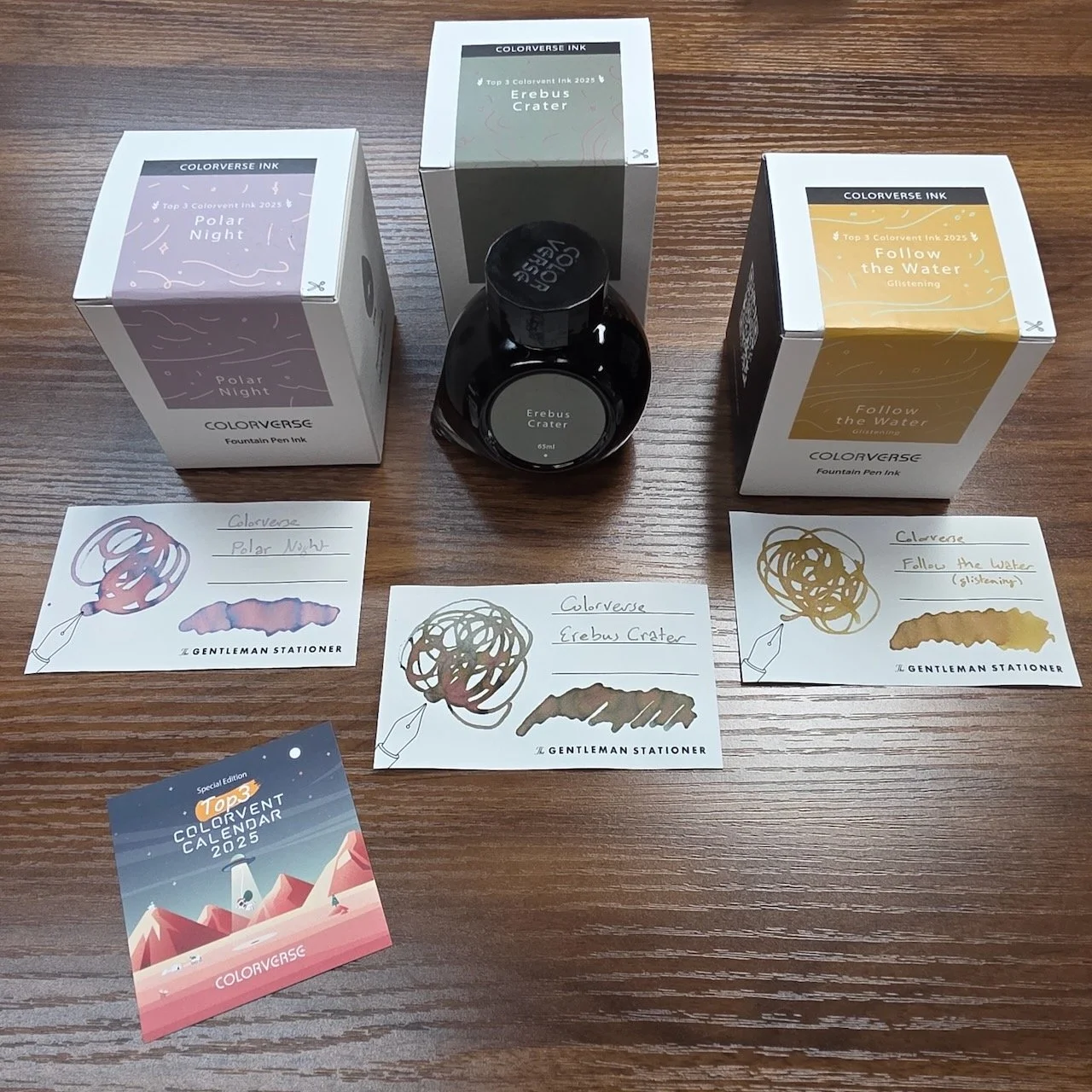
We’ve received a fresh shipment of Colorverse Ink, meaning that nearly all of the Colorvent “Top 3” Inks are back, including the 2024 and 2025 three-bottle sets as well as quirky favorites like Erebus Crater and Polar Night! We also have more of the 2025 Red Horse Collection, as well as all of the colors in the “Joy in the Ordinary” series.

Pens for Beginners in the T.G.S. Warehouse

Every year we update our “Best Pens” list, which includes recommendations from across a wide range of product categories.

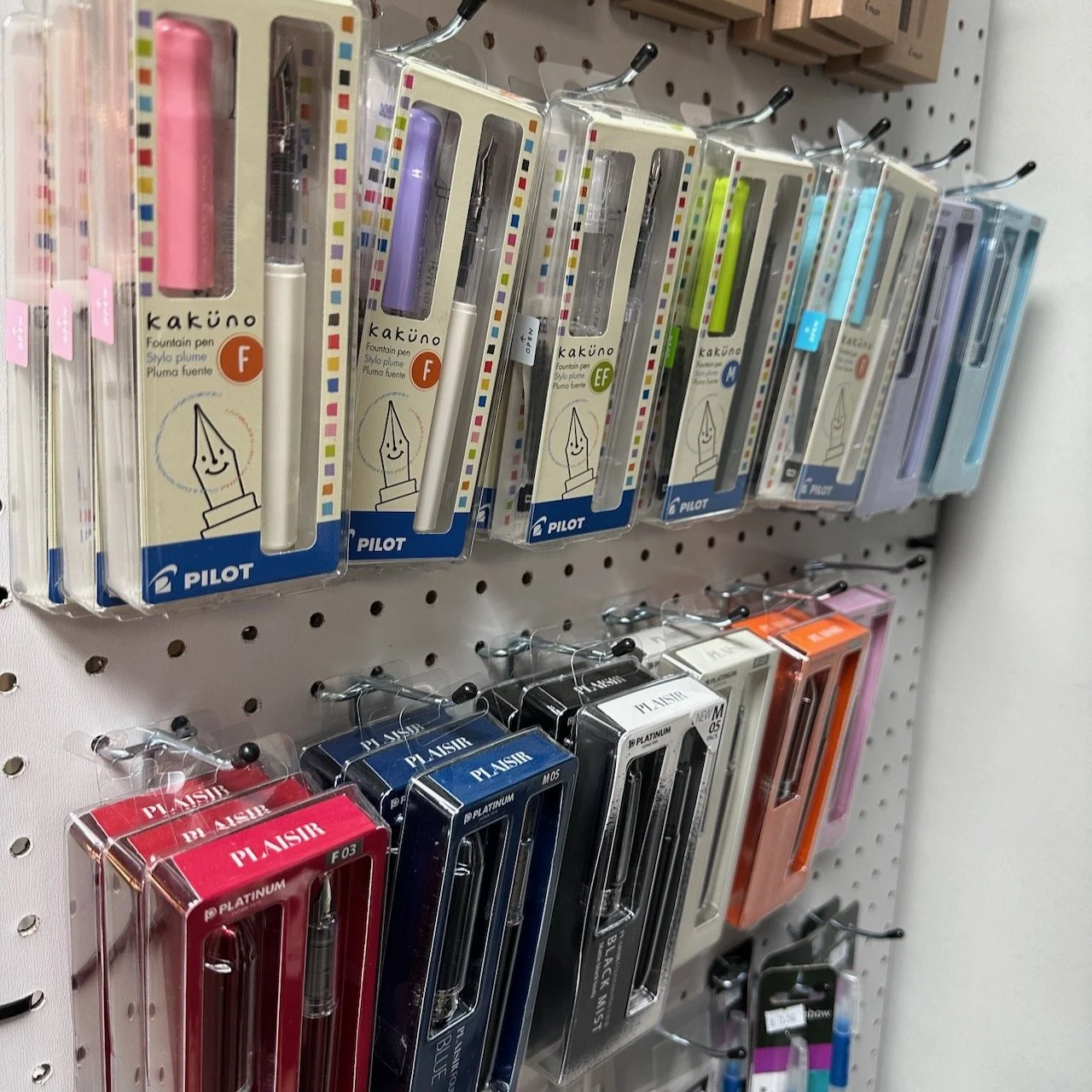
We also have more Platinum Plaisir and Prefounte fountain pens, both of which are mentioned on our “Best Pens” list for beginners as well as those simply looking for a reliable everyday writer that you don’t have to worry about when knocking around town, the office, or your world travels! Finally, fans of permanent, dark black inks can also celebrate because Platinum Carbon Black and Chou Kouro have both returned.

Come see these and more this week in our Nashville shop! We are open normal hours (1-6pm Thursday and Friday and 10am-5pm on Saturday), meaning that yes we are open for the 4th of July weekend. Many of you have reached out to let us know you are coming to town so we will be there and ready to welcome you!

In Pens Tags Colorverse Ink, Platinum Pens, Platinum Prefounte, Platinum Plaisir

Pilot Frixion Revisited: Do I Have a Use for An Erasable Gel Pen?

June 13, 2026

Pilot’s line of erasable “Frixion” pens has expanded since its initial release in 2006, to the point where it can almost be considered a flagship product line. It hasn’t always been smooth-sailing, however. I recall trying the Frixion early on and disliking the writing experience immensely. The ink skipped and the colors looked washed out. While the erasability factor was convenient for the many different reasons discussed below, the writing experience itself left much to be desired. Fortunately, Pilot has improved the Frixion in recent years, reworking both the ink formulation and the tips of the pens themselves. I find the current version of the Frixion to be quite good, and in most cases almost as good in terms of smoothness and saturation as a standard gel pen.

My Frixion Ball 3 Multipen is regularly used as a planner pen, shown here with my Roterfaden A5.

Why Might You Need An Erasable Pen?

Based on my own experiences as a user and conversations with customers and other community members who use Frixions, there are a handful of core use cases for erasable pens:

  • Planners and Calendars. The most common benefit of the Frixion that I hear about is the ability to change dates, appointments, and tasks in a planner and/or calendar. In fact, I understand that one of the big contributors to the Hobonichi paper controversy from a couple years ago is that their “new” Tomoe River replacement paper was not extensively tested for fountain pens due to Japanese users overwhelmingly favoring the Pilot Frixion and other gel pens for use in planners.

  • Math-Intensive Applications and Professions. Engineers, accountants, and students regularly come into our store inquiring about the Frixion due to the advantages of erasability when revising calculations and proofs. I use my own Frixion multi pen for a lot of my business accounting work.

  • Left-handed Writers Who Have a Hard Time Using Pencils. I know many lefties who dislike pencils due to the fact that their hand tends to smear the graphite. The Frixion offers erasability without the same disadvantage.

Before you take the plunge and dive into the Frixion line, however, you should consider how these pens actually work. The Frixion ink isn’t “erased” in the traditional sense - it’s formulated to disappear/become invisible when heat is generated by rubbing the Frixion “eraser” on paper. Many people don’t realize that the ink can reappear when the paper is exposed to temperatures below freezing. For this reason, if you live in a very cold climate, have a use case where your notebooks/journals/planners are otherwise exposed to freezing temperatures, or need absolute archivability, the Frixion may not be the best choice for you.

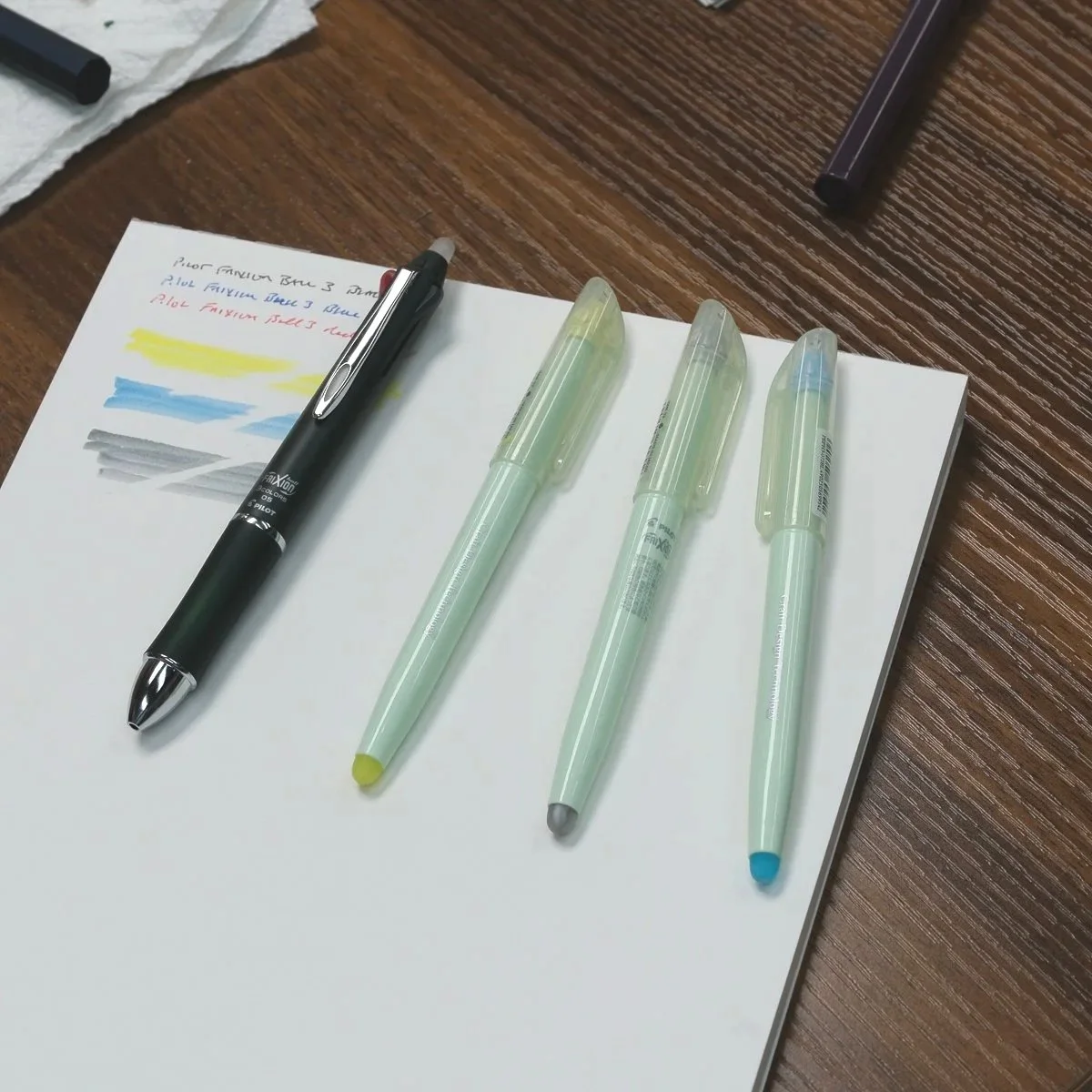
In addition to improving the ink formulation and writing tips, Pilot has also released Frixion highlighters, fineliners and markers. Of these additional categories, the Frixion highlighters work the best, and actually come in handy if, like me, you tend to be an over-eager annotator and highlighter who wishes they were more selective in their note taking. Frixion highlighters use the same thermal technology as the gel pens - you “erase” the highlighting with the heat-generating eraser on the end of the pen.

Pilot Frixion Ball 3 and Frixion Highlighters shown in Craft Design Technology colors

The Craft Design Technology Frixion Ball 3 in Dark Green, shown alongside the CDT Highlighters.

Takeaways and Where to Buy

The Pilot Frixion isn’t for everyone, but for those of us with a need for the convenience of erasable ink, it’s now a solid product that I use regularly on a case-specific basis. My personal favorite version of the Frixion gel pens is the Frixion Ball 3 multi pen, which we stock in the Craft Design Technology Dark Green variant. It’s design is similar to other Pilot Multi Pens like the Wood 4+1 and the Dr. Grip line. This pen comes with black, blue, and red Frixion refills in a .5mm tip size.

We also carry certain colors of the Frixion Highlighter (which I use fairly frequently), and the recently released Frixion Waai retractable pens which introduced unique colors, including some pastels. Of the Waai pens, the “Bronze” and “Cherry” inks are the ones I find the most unique, and stand alone as cool gel colors regardless of the Frixion aspect.

You can come see these and more in person at our Nashville shop (including testers)! Our showroom is open 1-6pm Thursday and Friday, and from 10am-6pm on Saturday.

In Pens Tags Pilot Frixion, Pilot Frixion Waai, Craft Design Technology, Multi Pens, Pen Review
Tom's Studio Ori Highlighters in Three Colors

New Pen Day! Setting Up the Tom's Studio Ori Refillable Highlighter (And Cleaning Out the Lumos)

June 10, 2026

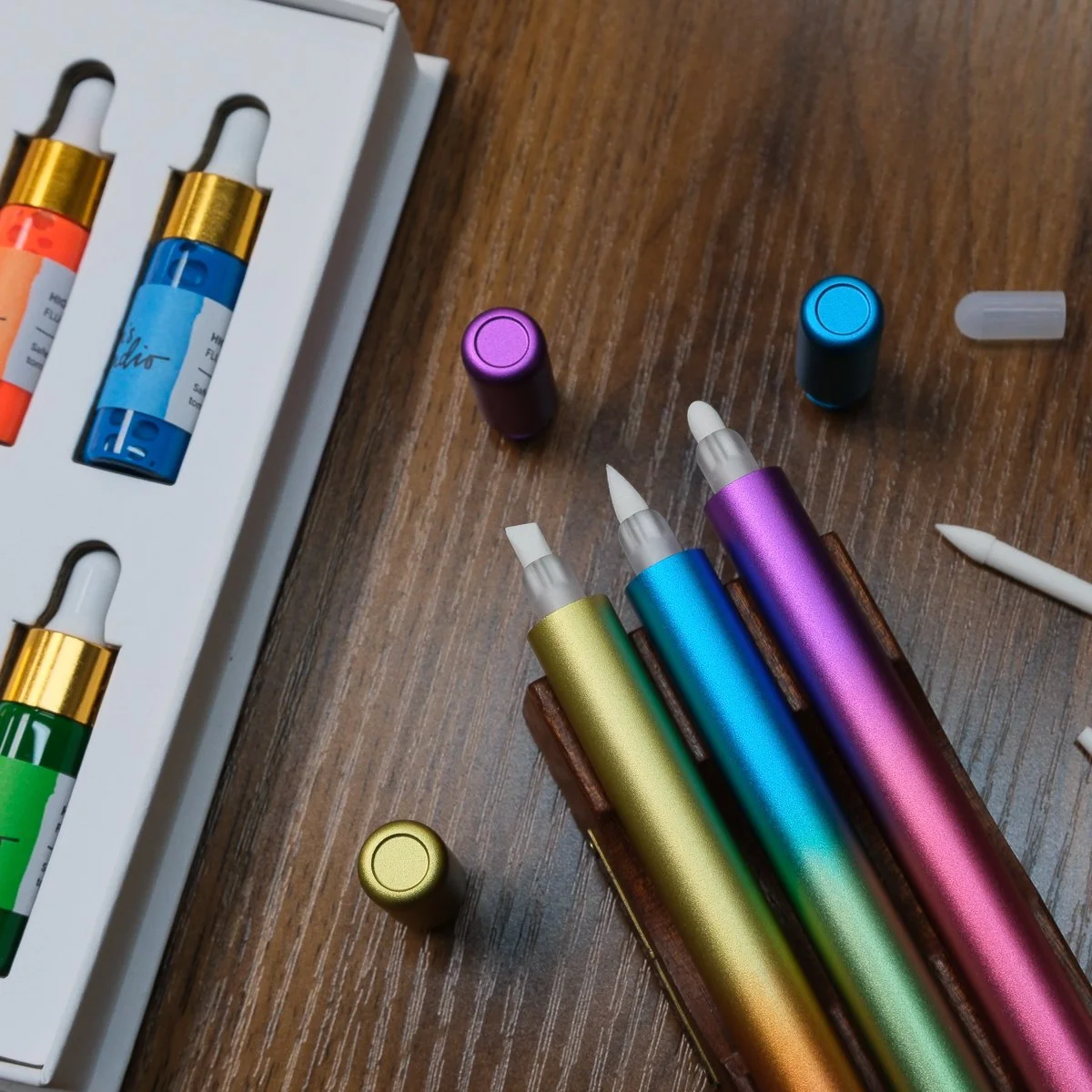
Tom’s Studio recently announced their latest product - an “infinitely refillable” version of a product that isn’t supposed to be refillable: the highlighter. Dubbed the “Ori,” this new pen works on the same principle as the Lumos and Wren refillable fineliners. Each Ori highlighter pen features a double-ended design with two replaceable cotton reservoirs and marker-style tips. To fill the pen, you dip the end of the reservoir into the ink and watch as the ink saturates the filling system and the tip. Each bottle of Tom’s Studio highlighter ink also includes a small eyedropper, and Tom’s Studio suggests that you apply a drop or two to the tip of the marker to ensure adequate saturation and ink flow.

It never gets old watching these things fill up.

I’m really happy to see a product like this reach market. Way back in the early 2010s, what prompted me to start exploring better stationery was the waste inherent in disposable pens, and especially plastic highlighters. Working in a research-intensive profession, I would churn through highlighters at a somewhat astonishing pace, though my current burn rate has slowed somewhat due to a focus on finer tipped products like the Zebra Mildliners, which use less ink.

While it might look like a bit of a project at first, setting up the Ori (and the Lumos and Wren) is fairly simple even if you get inky fingers!

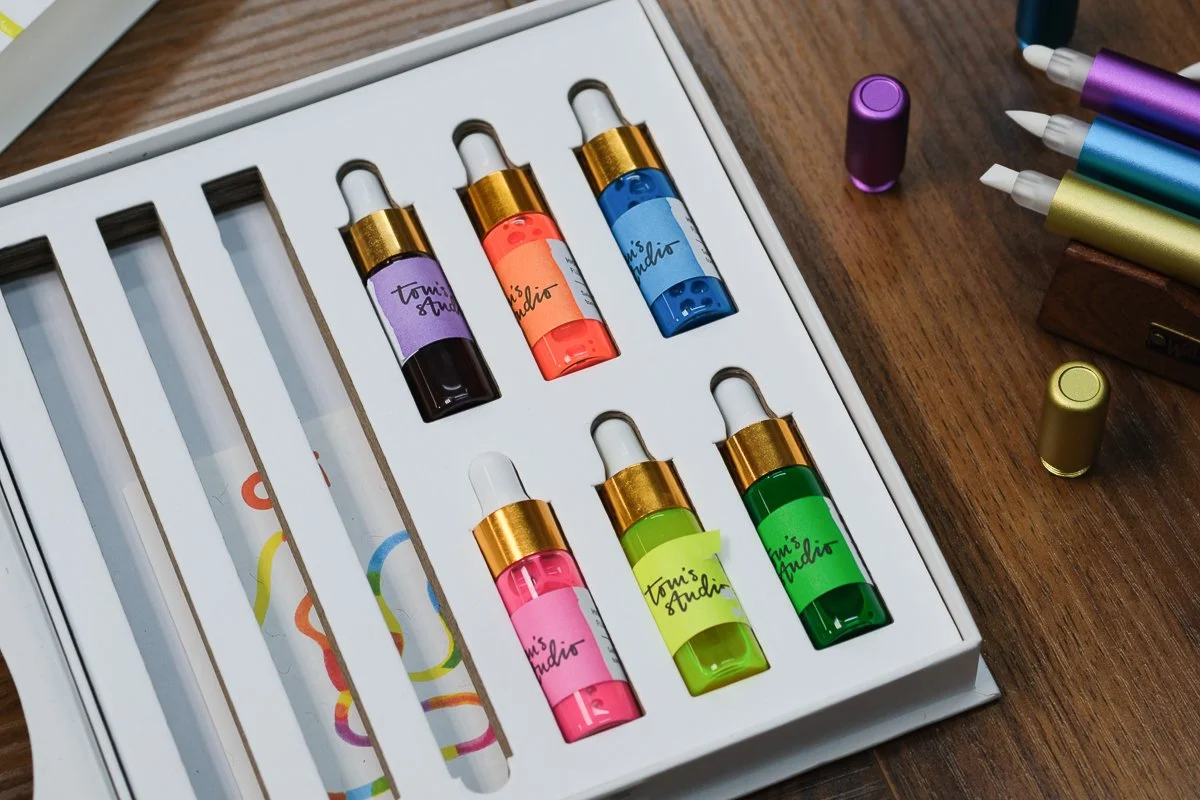
Tom’s Studio currently makes six different fluorescent highlighter inks that you can use with the Ori: Yellow, Orange, Blue, Green, Pink, and Purple. These are available individually in 5ml dropper bottles, or as a set of 6. Each individual Ori comes packaged with the two colors that match the pen’s anodization, and if you spring for the set of three pens, you’ll get all six inks plus a set of the bullet and brush tips. As of today, all products are available in our own shop.

The three-pen set comes nicely packaged, with inks and all the tips.

Tom's Studio Ori Six Ink Set

If you only want one pen, you can also buy the set of six inks separately.

Inevitable Question: Can I Use the Ori Inks in My Tom’s Studio Lumos Pens?

Yes and No. Per Tom’s Studio, the Green and Purple Fluorescent inks are dye-based, and can therefore be used in the Lumos pens with the fibre or brush tips (i.e., the marker-style tips). The other four inks are pigment based, and should only be used in the Ori Highlighters because they will clog the Lumos. However, all six inks can also be used with dip pens.

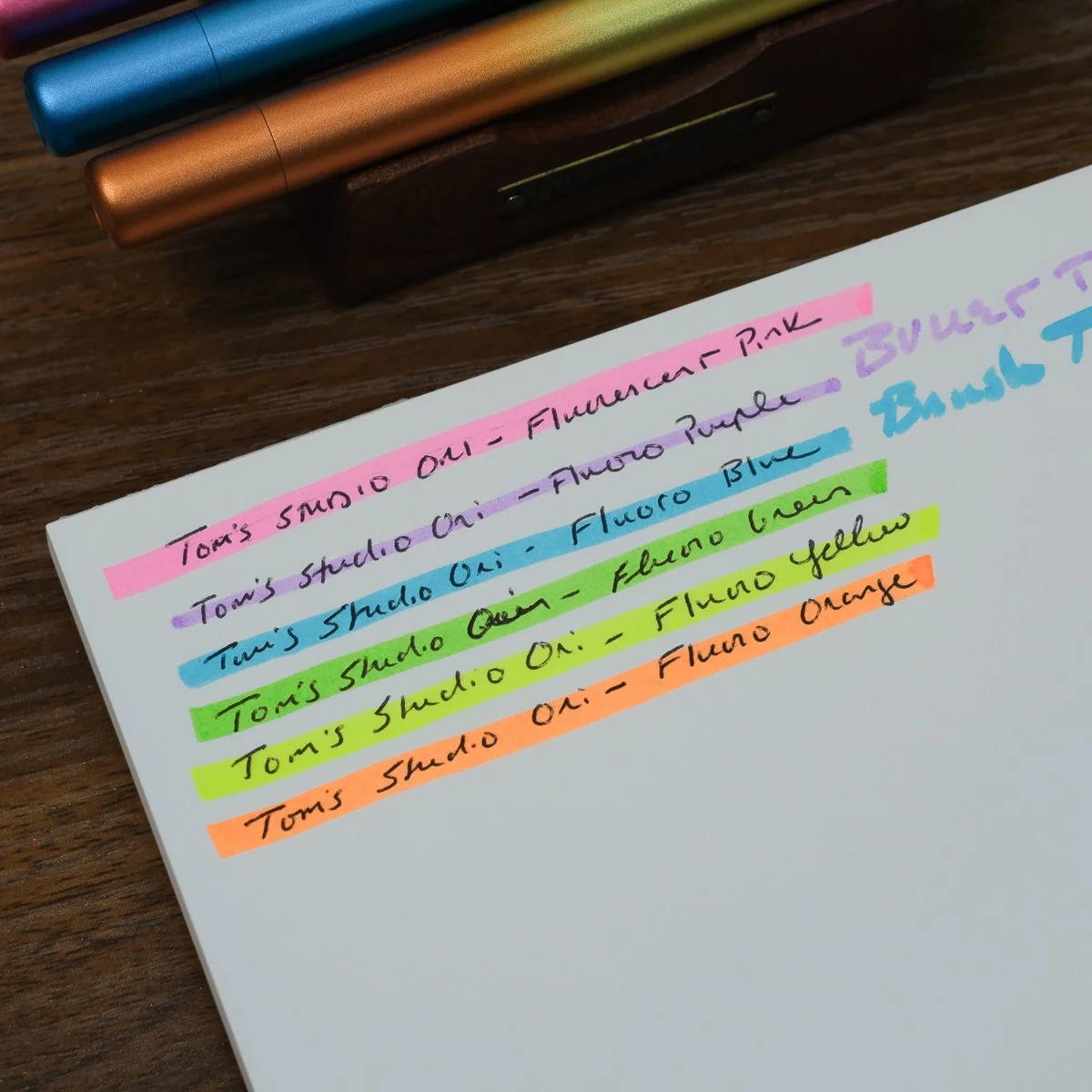
Tom's Studio Ori Fluoro Highlighter Ink Writing Samples

These colors are all super saturated and appear as bright as your standard disposable highlighter. Even on the cheapest paper, I’ve had minimal bleedthrough.

The chisel tip on the Lumos (left) is much finer than the Ori’s tip, though it’s not angled and will need to be held vertically.

The brush tip on the Lumos can also be used as a highlighter. For both the brush tip and the chisel tip, I’ve chosen not to use the brass tip protector because it covers too much of the marker.

Another note: given how brightly colored these fluorescent highlighter inks are, and the fact that most of them use pigment, I do not expect that it will be easy to rinse out the reservoirs and tips and change colors. Fortunately, both replacement tips and reservoirs are fairly inexpensive, and even with the Tom’s Studio Lumos and Wren refillable fineliners, I’m finding it easier to simply use a new reservoir or tip rather than spend the time required to rinse these things clean enough to change colors. These reservoirs can be flushed a few times before they will no longer hold ink, but it requires a LOT of work. As you can see below, with certain brightly colored inks, you will likely never get the reservoir completely clear of ink residue.

Despite a lot of washing, these are about as clean as you will get a used reservoir. The top two are probably fine to change colors. The bottom one should only be used with a similarly-colored ink.

The TGS Curated Shop is an authorized retailer of Tom’s Studio products, including pens and inks. We also sell replacement nibs, marker tips, and reservoirs. In addition to our online store, you can see all of these products in our Nashville shop.

In Pens Tags Tom's Studio Lumos Fineliner, Tom's Studio Ori Highlighter, Tom's Studio, Refillable Fineliners, Refillable Highlighters

For those looking for the clearest of clear demonstrators.

Workhorse Pens: Pilot Custom Heritage 92 Fountain Pen

June 6, 2026

Pilot’s Custom Heritage 92 piston filler stands as both a source of joy and one of my greatest regrets. Joy because I appreciate that this excellent everyday writer continues to be accessible to the North American market, even if it doesn’t always get the attention it deserves. Regret because I didn’t snap up all three colors (orange, blue, and smoke) when they were still available many years ago. And, of course, extra regret that I sold off my transparent orange version with the fine-medium nib. Regardless, nib choices aside, earlier this year I picked up a Custom Heritage 92 demonstrator with a medium nib and realized it was long past time that this pen went into the “Workhorse Pens” review bucket.

Pilot doesn’t have many piston fillers in its lineup. In fact, the Custom Heritage 92 may be it. Mine is shown here freshly filled with dark green ink.

A simple cap band, with barely visible branding.

This particular Custom Heritage 92 went with me to Japan and back, so I had a lot of uninterrupted writing time with the pen. One benefit of a longer trip where you only take a few pens with you is that you get to spend more dedicated time with each one, and you quickly figure out your likes and dislikes. For the Custom Heritage 92, it’s pretty much all positives:

  • Size and Balance. I find the Custom Heritage 92 similar to the Pilot Custom 74 and Lamy 2000 in terms of weight and balance - all three pens align perfectly with my own personal preferences. While the Custom Heritage 92 can be used posted or unposted, to me the pen feels best posted, and for a “Workhorse Pen” I consider posting important because I don’t want to have to keep track of the cap when I’m focused on writing or running between meetings.

  • Nib. The Custom Heritage 92 features the same 14k Pilot No. 5 nib as the Custom 74 - one of my favorite nibs of all time. Pilot medium nibs in general operate as my personal default, so whenever the fine-medium (FM) or soft fine-medium (SFM) is unavailable, I’ll opt for this one. I consider this nib to be a moderately wet writer, which allows for a smooth writing experience (and the ability to showcase ink) while still performing well on decent paper.

  • Filling Mechanism. It’s a shame Pilot doesn’t make more piston fillers, because this piston is exceptional. It’s not only super smooth, which makes filling and cleaning the pen pleasant and easy, but it’s also lightweight, allowing you to post the cap without making the pen back-heavy. While the ink capacity isn’t huge, it’s adequate for a pen of this size.

  • Aesthetics. Pilot makes some of my favorite clear demonstrators. The Custom Heritage 92 is perfectly polished, and I struggled to find any flaw in the finish. While I tend to lean towards darker inks, and therefore don’t take as much advantage of the clarity as I should, those heavily into brightly colored or shimmer inks will love how this pen looks when it’s inked. (Yes, I’ve used shimmer inks in my Pilot pens and have found that the nibs and feed handle these inks just fine. Just be sure and clean your pens thoroughly when changing colors!)

Pilot Custom Heritage 92 Compared to Pilot Custom 74 and Pilot Custom 823

The Pilot Custom Heritage 92 (left) compared to the Pilot Custom 74 (center) and the Pilot Custom 823 (right).

The design of the Custom Heritage 92 does differ from the Custom 74 and other pens in the Custom series (like the Custom 823) in some ways. For example, it features a sword-style clip instead of the rounded ball-style found on the 74 and 823, plus it has flat ends.

The Pilot Custom Heritage 92 Fountain Pen, to me, feels best in-hand when posted.

You can read further on our “Workhorse Pens” series, and the various fountain pens I have reviewed which fall into this category, but as a TLDR version I would re-emphasize that the Custom Heritage 92, the Custom 74, and the Lamy 2000 sit at the top of my own personal arsenal. All three are reliable, comfortable, and portable, with aesthetics that are interesting yet still subtle enough so that they’re inconspicuous in a work meeting. Their classic designs have remained essentially unchanged since their introduction, and while some might consider that fact boring, I prefer to put it as “getting it right the first time.”

Three of my favorite everyday workhorses: In addition to the Custom Heritage, the Custom 74 and Lamy 2000 are fountain pens with a similar feel and balance. All three post exceptionally well.

Takeaways and Where to Buy

Whether you’re looking for a crystal clear demonstrator to showcase your ink collection, a reliable workhorse for everyday writing, or both, you can’t go wrong with Pilot’s Custom Heritage 92. Personally, I wish that Pilot would do more with this model, and last year’s release of the Custom 74 as the most recent North American exclusive gives me some hope that this model will appear on the special/limited release schedule at some point. At $264 (current price as of the time of publication), it’s also currently one of the few remaining sub-$300 gold-nib fountain pens that still punches well above its price point, and I never hesitate to recommend Pilot pens to anyone looking for good value. I’ve recently written an overview of the entire Pilot “Custom” series, which walks through the sizing, nibs, and filling systems of the various models.

You can’t have it all: I probably prefer the vintage-style Pilot clip on the Custom 74 and Custom 823.

The Gentleman Stationer is an authorized retailer of Pilot fountain pens, including the Custom Heritage 92. We currently have this pen stocked in all nib sizes, and I usually have my personal pen inked up if you would like to try it in person or compare it to the rest of the Pilot lineup, should you come visit us in store or at a pen show.

The Gentleman Stationer is supported by online purchases from the T.G.S. Curated Shop and pledges via the T.G.S. Patreon Program.

In Pens Tags Workhorse Pens, Pilot Custom Heritage 92, Pilot Pens, Pen Review
1 Comment
Older Posts →
Store Hours and Events
Shop T.G.S. Online
Updated 2026 "Best Pens" Guide
No results found
On The Paper Trail: Live In Nashville Event Tickets Now Available!
TGS_25 Roterfaden Restock Notification
Hierarchies of Fountain Pen Friendly Paper

Join Our Patreon!
Subscribe to the TGS E-mail List

Featured Posts

Featured
Graphilo-Kobeha-Paper.jpg
July 11, 2026
Paper Review: Graphilo by Kobeha
July 11, 2026
July 11, 2026
Pilot-Custom-Heritage-92.jpg
June 6, 2026
Workhorse Pens: Pilot Custom Heritage 92 Fountain Pen
June 6, 2026
June 6, 2026
Kakimori-Inkstand-Before.jpeg
May 30, 2026
Japan Trip Journal: A Visit to Kakimori, Including Custom Notebooks and the InkStand!
May 30, 2026
May 30, 2026
The Gentleman Stationer RSS

View Cart

© Digital Divide Media, LLC, 2014-present.

All content is the exclusive property of Digital Divide Media, LLC, d/b/a The Gentleman Stationer, including “The Gentleman Stationer” website and trademark, and should not be reproduced without express written permission.  All rights reserved.

All content containing paid advertising, affiliate links, or sponsored content will be plainly disclosed by a disclaimer when/if featured.

Contact Information

Website Terms and Conditions

Store Shipping Policy and Return Policy

Privacy Policy and Cookie Policy

Accessibility Statement

Powered by Squarespace