• Blog
  • Shop
  • Resources
  • FAQ (Ask TGS)
  • About
  • Archive
  • Contact
  • Sign In My Account
Menu

The Gentleman Stationer

Vintage Living in the Modern World.
  • Blog
  • Shop
  • Resources
  • FAQ (Ask TGS)
  • About
  • Archive
  • Contact
  • Sign In My Account
Platinum-Curidas-Converter.jpeg

Filling Systems: Pros and Cons of Piston Fillers, Vacuum Fillers, and Cartridge/Converter Fountain Pens

May 8, 2021

Vintage vs. modern, steel nib vs. gold nib, extra-fine vs. triple-broad, Safari vs. Al-Star: the fountain pen community has always had - and always will have - various “debates” over what’s better. Of course there’s no right answer, but endlessly discussing the minutiae is part of what makes this hobby interesting, and the community so much fun. (Well, 99% of the community, setting aside the 1% that tends to take everything far too seriously.)

When it comes to my own personal collecting, my interests focus on two areas: materials (mainly celluloid) and filling systems. Acquiring pens made from rare and/or vintage celluloids, which have a depth and warmth that modern acrylics and resins lack, caters to the aesthetic/artistic interest I have in pens. On the other hand, exploring different filling systems brings out the true pen nerd in me, and is probably the reason I have an ever-expanding, wildly diverse accumulation of fountain pens. When manufacturers keep experimenting with new methods to fill fountain pens, you can’t help but try them all!
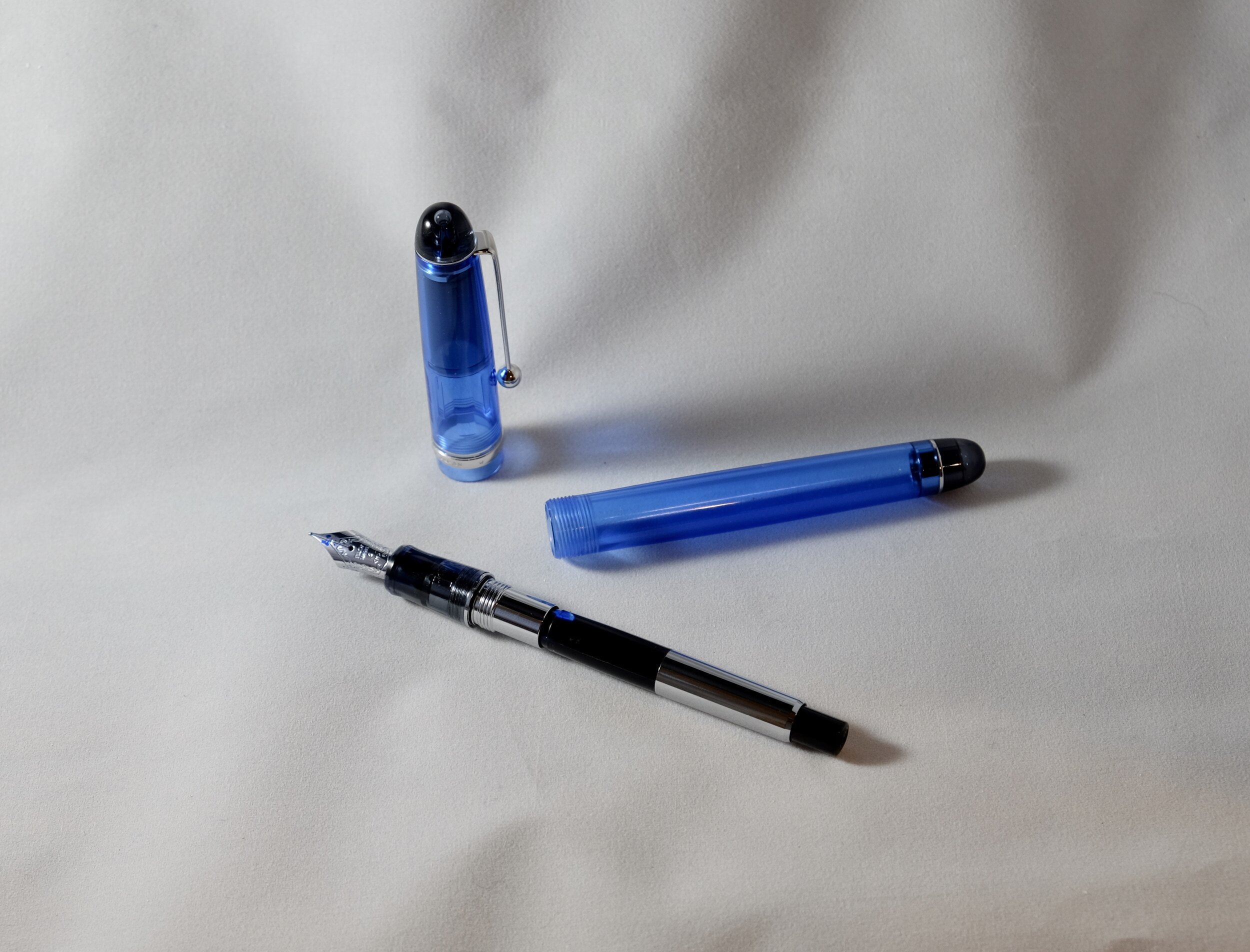
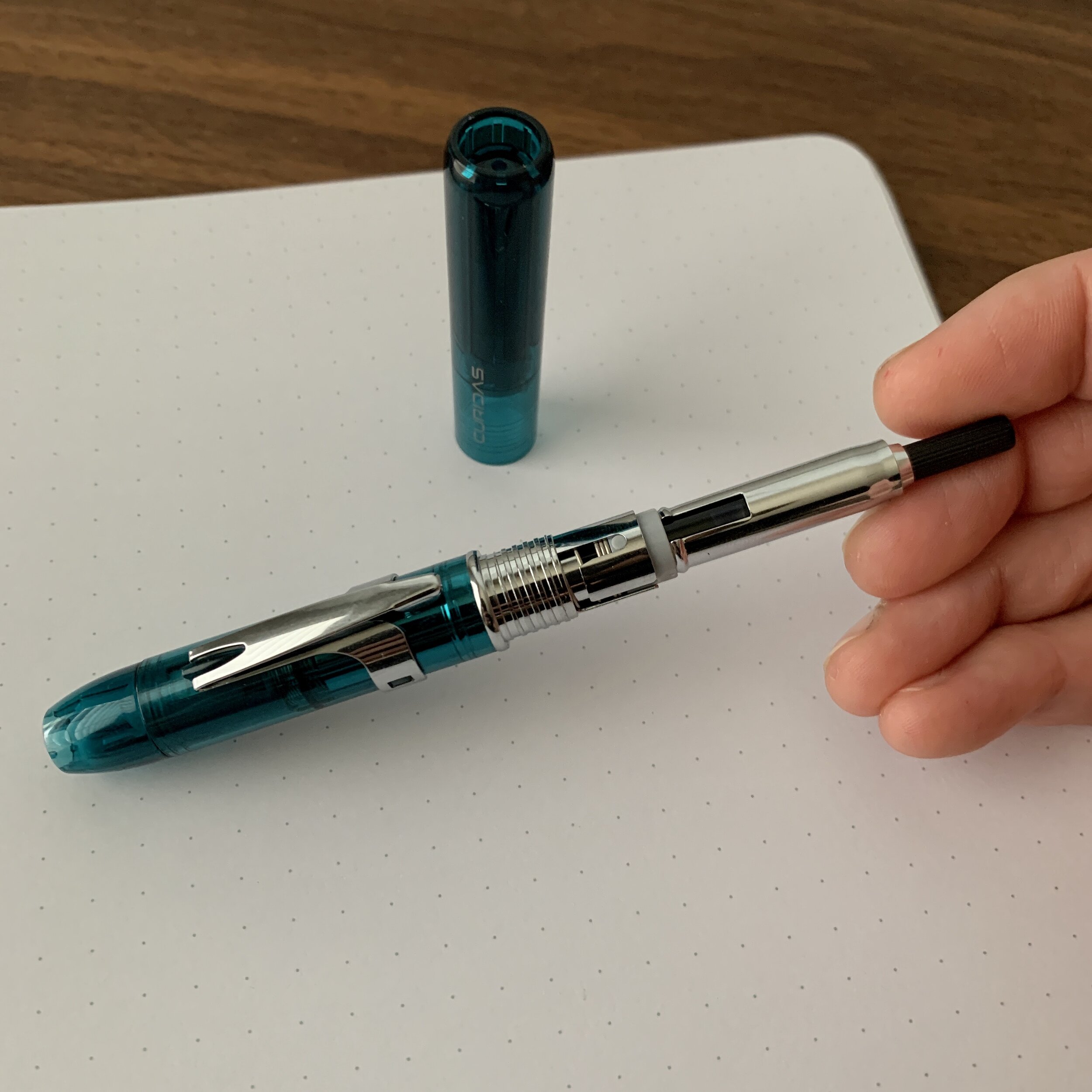
The Pilot Custom 74 fountain pen, featuring Pilot’s proprietary Con-70 Converter. While I love this particular converter, Japanese companies such as Pilot and Platinum (shown at the top) all use their own converter design, so you will need to buy separate converters fore each brand of pen.

The Pilot Custom 74 fountain pen, featuring Pilot’s proprietary Con-70 Converter. While I love this particular converter, Japanese companies such as Pilot and Platinum (shown at the top) all use their own converter design, so you will need to buy separate converters fore each brand of pen.

Cartridge-Converter: The Best Filling System for Most People

People often ask me, what’s the best filling system for the everyday user? For the casual enthusiast, this answer is clear: Cartridge/converter offers a user-friendly, versatile mechanism that’s straightforward and especially appropriate for first-timers and those who travel a lot or otherwise need to be able to refill on the go. I enjoy many cartridge/converter fountain pens myself, and I certainly won’t pass on a pen that I otherwise find interesting or attractive simply because it’s not exclusively bottle-fill. Pros and cons of cartridge-converter filling systems include:

Pros:

  • Versatility. Cartridge/converter filling systems allow you to use ink cartridges and fill from an ink bottle. It’s not just about whether you’re a beginner - I’ve been in this hobby a decade or more, and still keep cartridge/converter fountain pens in rotation because they’re great for travel. (You can read more on why I like ink cartridges here.)

  • Ease of use. If you’re new to fountain pens and simply want to get to writing without worrying about making a mess learning to fill from a bottle, just pop in a cartridge and you’re on your way.

  • Easy to Clean. Cartridge/converter pens are also exceptionally easy to clean by flushing them out with an inexpensive bulb syringe, or soaking the nib unit in water or running it through an ultrasonic cleaner. If you enjoy using highly saturated or shimmer inks that might stain or otherwise be hard to clean out of a pen, cartridge/converter pens are typically the way to go.

Cons:

  • Small Ink Capacity. Both cartridges and converters generally hold less than 1ml of ink. On a busy day, I can easily write one or more cartridge/converter pens dry. If you enjoy changing inks frequently, you might view this as a “pro,” but high-volume writers looking to go a full day or more on a single fill might prefer something with a bigger ink capacity.

  • Proprietary Cartridges and Converters. While some pen companies have moved towards a universal, standard international converter that is freely interchangeable between different pens, many major brands (including Pilot, Platinum, Sailor, Lamy, and Parker, just to name a few) use proprietary cartridges and converters that only work in their pens. To add insult to injury, many pens don’t actually ship with a converter, so it creates an added expense when you can’t use one of the dozens of converters already in your desk drawer.

  • Limited Ink Selection. If you stick to cartridges, you won’t have as many ink options. Don’t get me wrong, you’ll still have plenty, as brands like Diamine, Herbin, Sailor, and Caran d’Ache release more of their ink lines in cartridge form, but you’ll likely be excluded from most of the boutique and specialty inks unless you buy the converter and fill from a bottle.
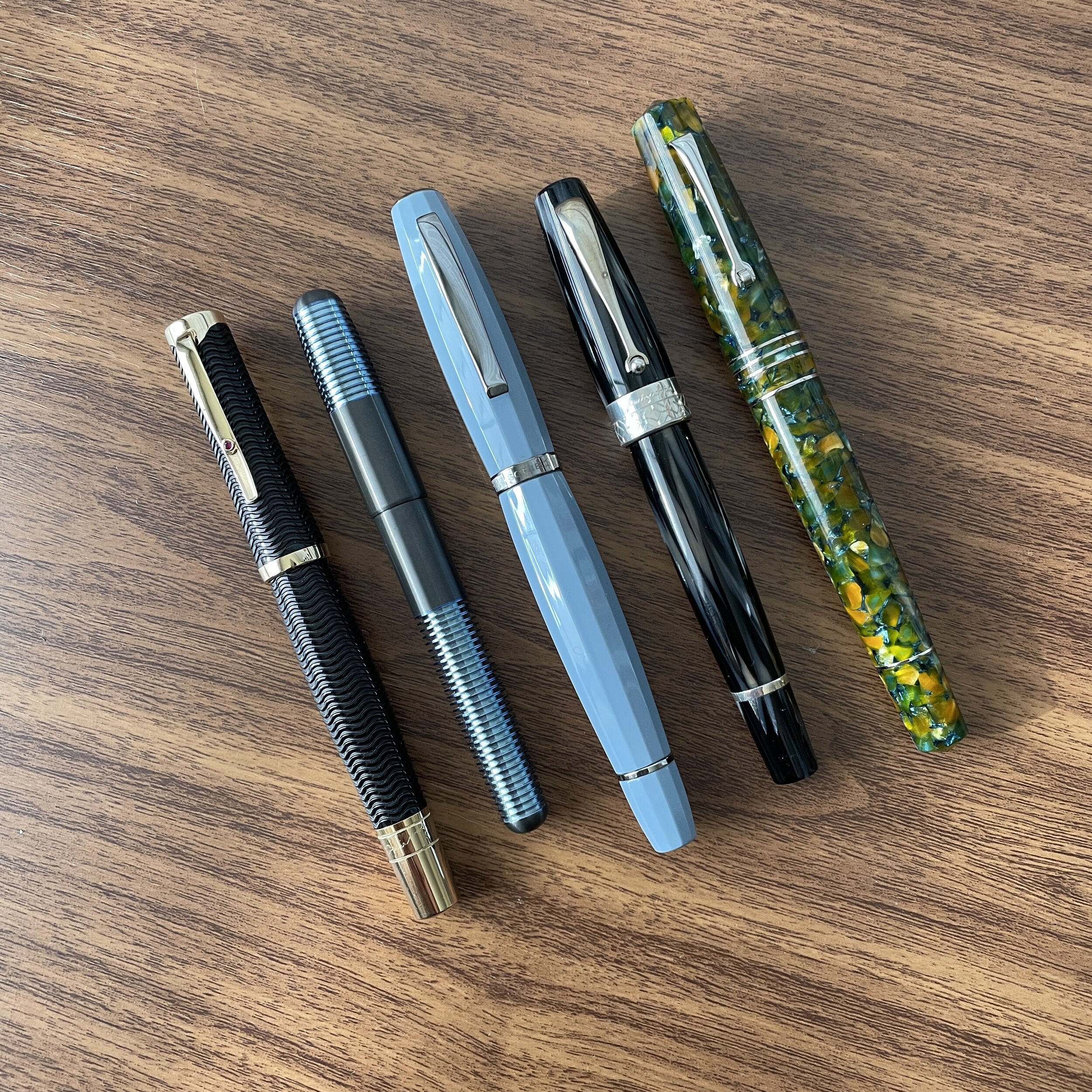
Many piston filling fountain pens are larger, to maximize ink capacity. The smaller pens, second from left and second from right, are cartridge converter, and the rest are piston-fill.

Many piston filling fountain pens are larger, to maximize ink capacity. The smaller pens, second from left and second from right, are cartridge converter, and the rest are piston-fill.

Piston Fillers and Vacuum Fillers Are More Fun

Even though I’m not a true filling-system snob, and frankly the majority of the pens I use on a daily basis are still cartridge-converter, I get the most enjoyment out of my piston and vacuum fillers. For those who may be new to fountain pens and unfamiliar with the terminology, a piston filler uses, well, a piston mechanism to draw ink into the pen when you dip the nib into an ink bottle and rotate the piston knob. A vacuum filler, such as the Pilot Custom 823 or TWSBI Vac 700R, takes in ink when you submerge the nib-end of the pen in an ink bottle and depress a plunger to create negative pressure. Both types of pens hold more ink than your typical cartridge/converter pen because the entire pen body becomes an ink reservoir, as opposed to a smaller plastic tube (i.e., a cartridge or converter) inside the barrel. In my opinion, this increased ink capacity is the primary benefit.
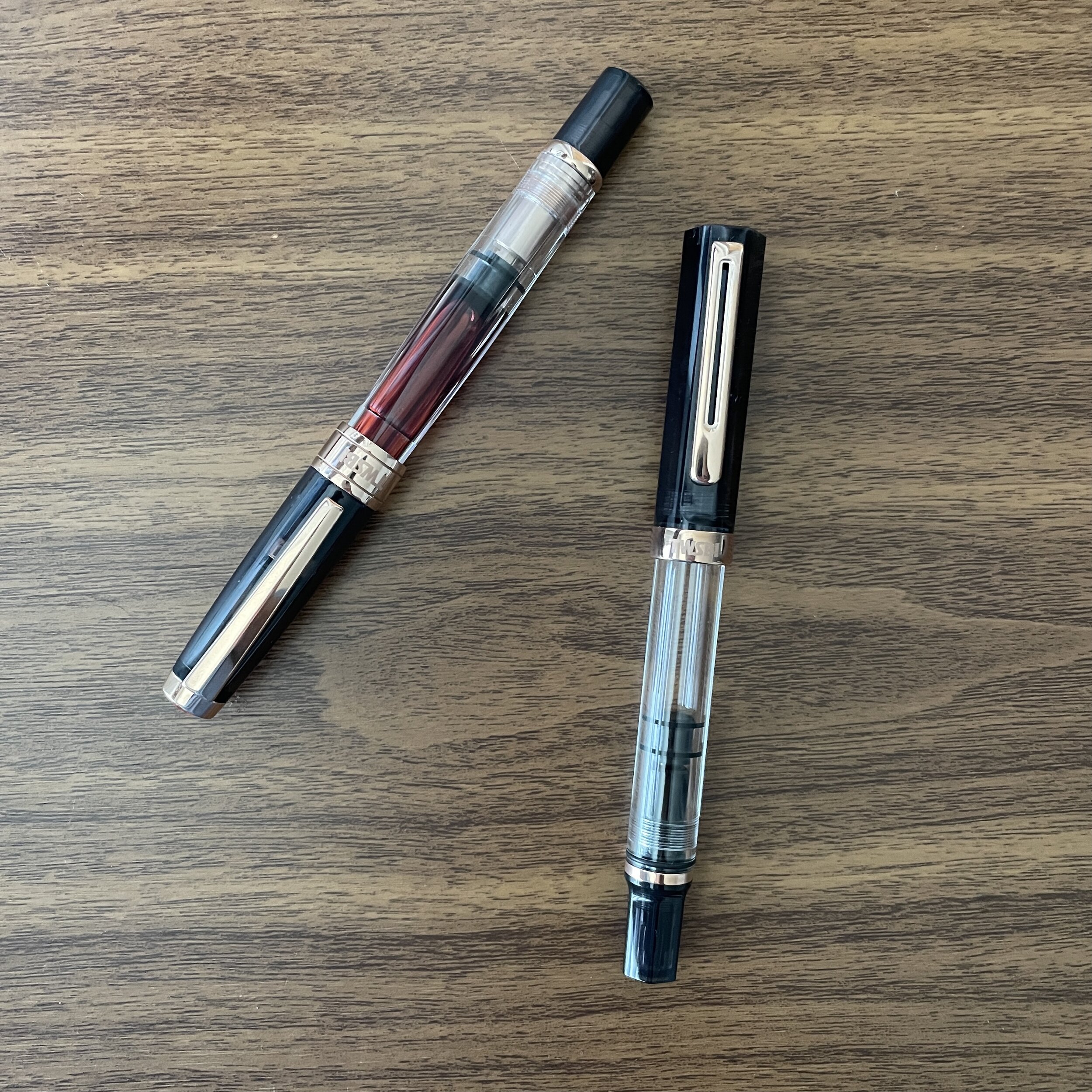
But piston fillers don’t need to be expensive. TWSBI makes a wide range of piston filling fountain pens for as little as $32.

But piston fillers don’t need to be expensive. TWSBI makes a wide range of piston filling fountain pens for as little as $32.

That said, another huge part of why I love writing with a fountain pen is a sense of not just nostalgia but continuity - there’s something inspiring and even motivating about filling a pen and writing the same way that people did nearly a hundred years ago. For this reason, after cartridge/converter, piston fillers are probably the second most-represented category of fountain pens in my own collection, and what I recommend to most people as a first “upgrade,” followed by the vacuum filler.

Pros:

  • Huge Ink Capacity. Piston fillers and vacuum filler fountain pens can easily hold up to 2ml of ink per fill, and sometimes more. For me, that means I’m good to go for at least two full days of writing. Vacuum filler pens can hold a bit more ink, but as I discuss below, sometimes these are a bit more difficult to fill to capacity.

  • Sustainability/Less Waste. Using a fountain pen that exclusively fills from an ink bottle creates less plastic waste than using a cartridge/converter system. Even if you use the converter, those don’t last forever, as I note above, requiring replacement. If you’re focused on using fountain pens because you like the idea of not contributing to the endless morass of disposable ballpoints, rollerballs, and gel pens clogging landfills, then you may want to take things a step further and forego cartridges and converters.

  • Typically Higher Quality. Because piston and vacuum filling systems take more work to build, as a general matter these filling systems are found in higher-quality pens that may or may not be a pen company’s “flagship” pen. A piston or vacuum filling system is typically built to withstand the test of time, whereas I’ve had converters wear out or break in less than a year. Again, this is a generalization - there are very high quality cartridge-converter pens out there, and some very badly made complex filling systems, but overall I find this accurate.

Cons:

  • Generally More Expensive. With greater complexity and quality often comes greater expense. TWSBI and PenBBS are the two main exceptions to this rule, with TWSBI making both high-quality piston and vacuum fillers for well under $100. While PenBBS makes an exceptional vacuum-filling fountain pen (the No. 456), their pistons leave something to be desired.

  • Only Uses Bottled Ink. If you want to be able to refill one of these pens while you’re traveling, you’ll either have to bring a bottle of ink or a traveling inkwell. That can be an inconvenience for some, myself included, and I often opt for cartridges when I travel, or I make sure to fill one of my larger vacuum filler pens to capacity before I leave.

  • Messier to Fill and More Difficult to Clean. Cartridge/converter pens are easier to clean because you can simply unscrew the nib section and flush water directly through the feed. In a piston or vacuum filler, you basically have to work the piston or plunger mechanism multiple times until the water runs clear, which can take a while. This can be a real pain, especially if you’re changing colors. Moreover, any time you fill the pen from an ink bottle, you have the risk of a spill, which doesn’t exist with a cartridge.

The Pilot Custom 823 is probably my favorite vacuum-filler.

You can see the plunger rod through the transparent barrel. For a demonstration of how to fill a vacuum-filler pen, Matt’s video over at The Pen Habit has a useful demonstration.

Yes, I Know There Are Other Options Out There

Including eyedroppers, pump/vacumatic fillers, aerometric, bulk/syringe fillers, magnet fillers, etc. But other than maybe the Opus 88 Japanese-style eyedropper system (which I very much like), the three filling systems I’ve discussed here are the ones most pen users are likely to encounter on a regular basis, especially those new to the hobby. I may even publish a follow-up post on some of the less common variants, and video demonstrations of how exactly to fill and clean each type of pen.

What are your favorite filling systems, and why? Does anyone stick to just one? I want to hear from you!

This post does not contain affiliate links. The Gentleman Stationer is supported exclusively by subscribers to the T.G.S. Patreon and via purchases from the T.G.S. Curated Shop.
In Editorial Tags Filling Systems, Editorial, Guide, Fountain Pens
12 Comments

My “Personal Favorites” List got a lot more colorful this year!

It's That Time Again! Updated 2021 "Best Pen" Recommendations Are Live

May 1, 2021

Every year, around this same time, I update the “Best Pen” recommendations to account for new releases, discontinuations, price increases, industry developments, and changes in my own use preferences. For the 2021 update (which coincides with the recent 8th “Bloggiversary” of T.G.S.), I’ve made some fairly significant overhauls to the page, particularly the “Best Fountain Pens Under $100,” “Personal Favorites,” “Pocket Pens,” and “Refillable Rollerballs and Ballpoints.” Here are some highlights:

  • Opus 88 and PenBBS have made appearances as core recommendations in a couple of places. I’ve spent enough time with both brands to feel comfortable recommending them, though with PenBBS I generally shy away from anything other than the cartridge converter, eyedropper, or vacuum fillers, due to reliability issues with the more “experimental” filling systems.

  • The Schon DSGN Pocket Six fountain pen and the Traveler’s Company Brass Pens make appearances on the “Pocket Pens” list. I love both designs and it’s rare that I don’t have one or the other inked up and in rotation at any given time.

  • I’ve completely reworked my “Personal Favorites” list, which swaps out the Leonardo Momento Zero Grande for the standard Momento Zero, adds the Kanilea Pen Co. “Classic Flush” design, and brings back the Pilot Custom 823.

You can read the rest of this year’s “Best Pens” lists here, and as always, I’ve left the lists from the past several years live so that you can see how my tastes and recommendations have evolved over time. Enjoy!

In Editorial Tags Best Pens 2021, Top 5, Editorial
3 Comments

Organizing A Pen Collection: Pulling It All Together

March 6, 2021

Many thanks to all of you who wrote in or commented in response to Wednesday’s post, in which I talked about the “struggles” in managing a larger pen collection and ensuring that all pens get used. The comments were varied, ranging from “I don’t worry about it at all and keep as many pens inked as I like” to descriptions of sophisticated spreadsheets or database systems programmed to track which pens and inks haven’t been used lately and recommend a fresh pairing. I thought I’d share some of the top recommendations:

  1. Fountain Pen Companion. By far the most popular recommendation I received for managing a pen collection was Fountain Pen Companion, which is not only a sophisticated online database for tracking your pens, inks, and usage, but a community with 800+ registered users. FPC features an ink “leaderboard” with collection rankings by bottles, colors, samples, and brands, and can serve as a platform to trade ink samples. I registered for Fountain Pen Companion last year, but never got around to entering my pen and ink collection into the system. That will change soon. (I’m registered under “GentlemanStationer".)

  2. Figboot on Pens Spreadsheet. Second to Fountain Pen Companion was David’s “EDC Log” spreadsheet that he developed and generously released to the community several years ago. The “EDC Log” functions similarly to Fountain Pen Companion, only offline in an excel file that will automatically track your most-used pens and inks.

  3. Filemaker Pro and Other Database Software. Several readers described how they built their own custom pen and ink databases that include pictures, purchase details, and usage history, using Filemaker or other database software. I don’t have the knowledge or technical skill to build one of these myself, and my experience with database tools is limited, so I can’t offer much guidance here but if you’re looking for your own customized collection management solution, building a database or your own custom excel template is likely the way to go.

  4. “Currently Inked” Lists and Notebooks. Most of us started here, and many of us never abandon the tried and true “Currently Inked” list, kept on an index card, in a notebook, or logged in a dedicated, special-purpose notebook like Ink Journal. Personally, I keep a Reporter’s Style Notebook that (theoretically) shows all of the pens and inks I currently have in rotation, though I often forget to log them. These lists sit on my desk and are intended to serve as a quick reference in case I forget which shade of blue is in which pen, and they don’t get saved long-term. I may also start keeping a running list of pen-and-ink pairings in my Traveler’s Notebook to retain for posterity.

  5. No System at All. Many of you were adamant that forcing an organizational system on pens and inks would drain the fun from the hobby, and I totally get that. For me personally (since I’m a nerd), part of the fun of collecting, whether it be pens, books, coins, stamps, music, etc., lies in the selection and curation process, but it’s not for everyone.

It’s not just my pen collection that I’m sorting through. I recently received my custom “Ex Libris” stamp in the mail and have begun the process of marking all the “keeper” books in my home library.

So why am I so hung up on this? I think it stems from the fact that I’ve been spending so much time at home and noticing how much unused stuff I have lying around, including different “collections” I’ve accumulated over the years. But for things to truly be considered a “collection,” I’ve always subscribed to the view that there needs to be some basic level of curation or organization. Otherwise it just becomes clutter. As I mentioned, that curation process is part of what I’ve traditionally enjoyed about my hobbies, and I think some of the “hobby burnout” I’ve been experiencing is due to the fact that I’ve let that aspect get away from me. I get even less enjoyment when the disorganization gets to a point where it prevents me from actually using what I have. This year, a major goal of mine is to sort through my various accumulations, organize and keep what I love into actual collections, and pass along anything that needs a new home.

In Editorial Tags Collecting, Pen Collection, Editorial, Storage
8 Comments
Bless this mess.

Bless this mess.

How Many Pens Is Too Many (To Have Inked Up at Once): Managing a Collection

March 3, 2021

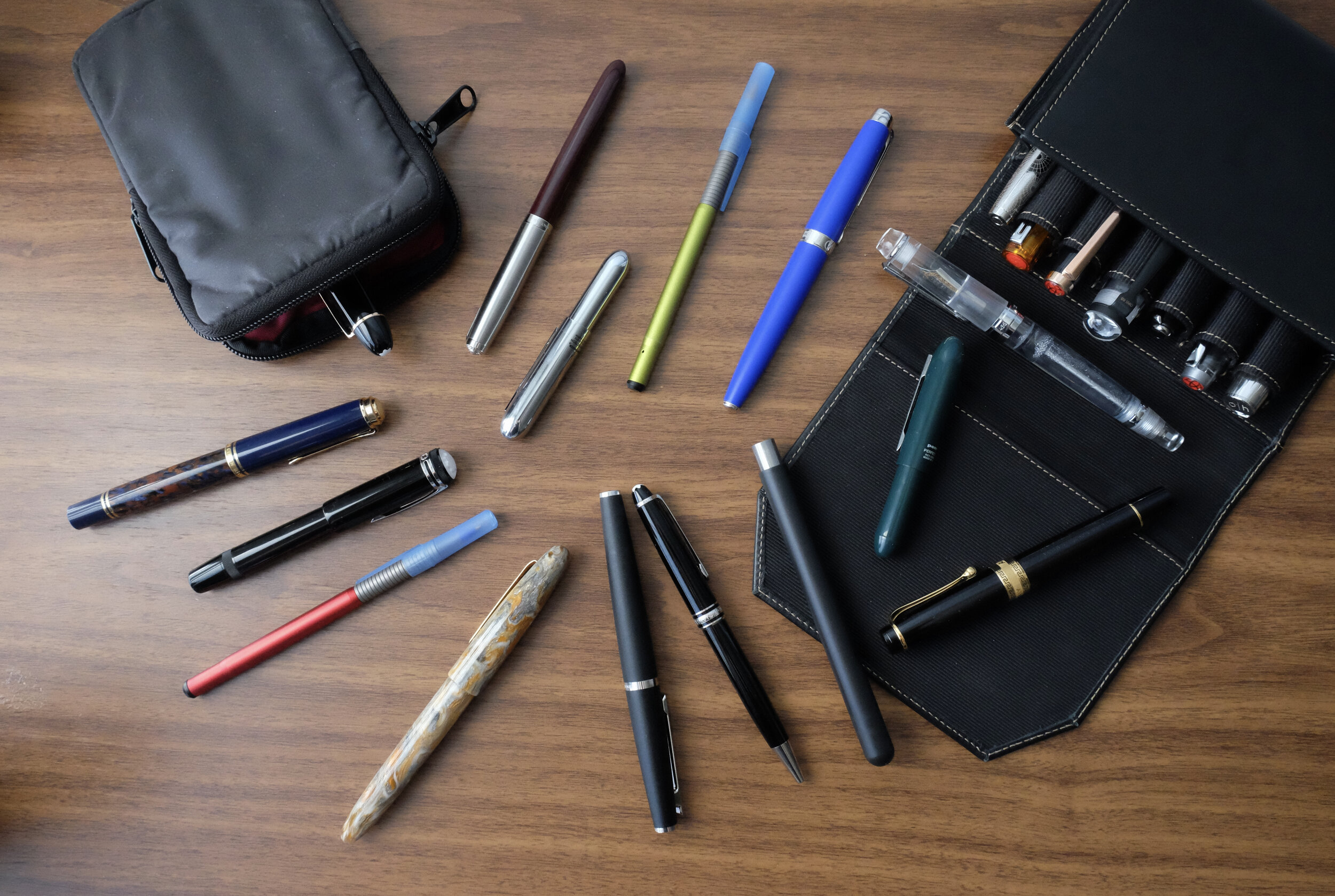
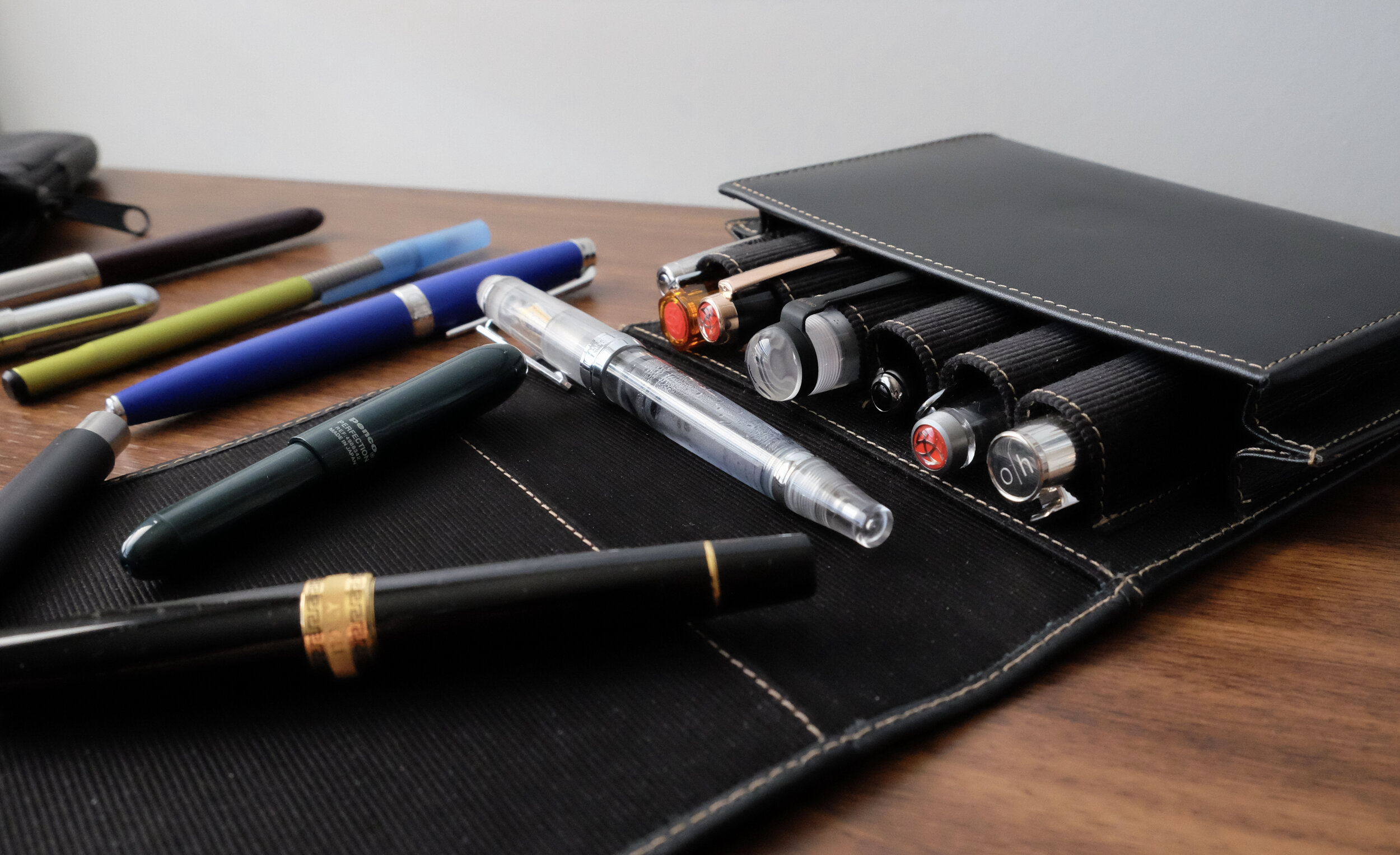
Though I generally enjoy working from home, one downside has been easy access to my pen collection. When I was leaving the house more, much less commuting several days per week, I typically would pick out 3-6 pens on Sunday night or Monday morning, ink up those that were fountain pens, and use them through the week before cleaning and replacing those I wrote dry and repeating the cycle. Now, I’ve developed this tendency to pick out pens throughout the week to ink up whenever I need a distraction. As I sit here today at my desk typing this, I count 11 inked fountain pens, two more than I’ve written dry and need to clean, five fountain pens that are “next up” waiting to be inked, and six non-fountain pens. It’s starting to make my head spin.

A06A8268-88BF-42CB-A197-0B51A18FFA25_1_201_a.jpeg

Having a lot of pens inked is one of the “perils” of the review business. As much as I’d like to carry personal favorites exclusively, I have to keep three or so pens inked for review to make sure that I have enough blog content in the pipeline. Even then, it’s a challenge to make sure I’m organized enough to use these pens for an appropriate enough amount of time that I feel comfortable writing a review or adding them to The Curated Shop.

Of course, the pictures above don’t even touch the pencils I have in rotation (and in multiple pencil/pen cups around my office).

To the point of today’s post: This is a long-winded way of saying that I’m looking to hear from you all on how people manage and/or track their pen (and ink) usage in this hobby. The topic came up on last week’s TGS Patreon Meetup, where several of us dialed in to Zoom to chat for an hour or so, and ended up talking about how many pens we kept inked (answer: anywhere from six to two dozen), and whether/how we tracked our usage to make sure we were actually using all of the pens in our collection. Later that night, I downloaded Figboot’s “EDC Log” Spreadsheet as an experiment. While it’s going to require an initial investment of time to enter all of my pens and inks into the log, that will give me the the opportunity to take inventory and possibly thin things out.

Let me know! Do you set “rules” for yourself on how many pens you can keep inked at once? Do you force yourself to write pens dry before you change inks? Do you track which pens you are/are not writing with to make sure you rotate through your entire collection? I’m interested in hearing from readers. Drop me a line in the comments or through the “Contact Me” link on the site. If i get enough interesting responses I’ll write a follow-up post with the results.

In Editorial Tags Editorial, How To
15 Comments

A Closer Look: Best Notebooks for a Commonplace Book

February 10, 2021

One of the new habits I've been trying to adopt in 2021 is keeping a commonplace book, which, to me, is a notebook that serves as a repository of notes, quotes, and clippings from books and articles I've read. There are many different ways “to commonplace,” in terms of how you organize your notes and index the information. Personally, I'm still experimenting with different techniques and plan to write more on this in the future, as it's become a bigger part of my everyday life and writing setup.

One thing I have thought a lot about (unsurprisingly) is which notebook works best for my style of notetaking and commonplacing. There are a range of different factors to take into account, but for me the key considerations are (1) paper versatility, meaning that the paper works well with a wide range of writing instruments; (2) portability, meaning that the notebook can move with me, not only when I travel but also when I change work locations; and (3) archival options, meaning that the notebook will hold up to long term storage and can easily be organized for posterity - after all, one reason to organize reading notes in this manner is to be able to go back and look things up later. I don’t feel like this is mere “gear obsession.” Rather, by finding a system that works for me on the front end, I will have a consistent set of notes that will be easy to reference for years to come.

  1. Write Notepads Hardcover Notebook. My current commonplace book lives in one of these lined A5 hardcover notebooks from Write Notepads. Lined paper typically isn't my preferred ruling, but ultimately (1) the paper quality and (2) the ability to store a durable hardcover notebook over the long-term won out. I can't emphasize how great these notebooks look on a shelf, and the sturdy binding will ensure they last a long time. While I’m happy with this notebook, the downside is size, as you end up having to carry an extra hardcover book with you - not a minor thing if you’re like me and prefer to read physical books as opposed to using e-readers.

  2. Traveler's Notebook. Though I’ve enjoyed the Write Notepads Hardcover Notebook, I'm considering moving my commonplace book inside my Traveler's Notebook, likely to a 128-page, "Lightweight Paper" refill. The paper quality on this refill is excellent, and while it's not labeled as such, I assume it is Tomoe River paper. Why move to a Traveler's Notebook? Portability and the ease of having all of my various notes, planners, and journals under one cover, but separated into different refills. I also use one of the PVC zippered pouches to carry some Book Darts linemarkers, and if you use sticky notes, there's even an insert for that! The downside to Traveler's Notebook inserts would appear to be the ability to archive them, but the availability of refill binders, each of which holds five used Traveler’s Notebook inserts, may solve this issue.

  3. Nanami Paper Seven Seas Writer or Crossfield. If you exclusively use fountain pens, and/or want a notebook with as many pages as you can cram into it, Nanami Paper’s Seven Seas series offers nearly 500 pages of Tomoe River Paper. This A5 notebook also fits many standard leather covers, including those sold directly by Nanami, and the stand-alone notebook is durable enough to withstand a long "shelf life" after it's filled. You'll want to keep up on your indexing as you go, however, as 500 pages will hold a LOT of notes.

  4. Index Cards, or Alternatively, Pocket Notebooks. Ryan Holiday, who writes The Daily Stoic website and has published several books, is a big proponent of commonplacing, and he also uses an index card system that's incredibly versatile, especially if you plan to use your reading notes as research for a book or another larger writing project. (Obviously, index cards are much easier to organize by topic than notes in a notebook.) The downside to this system, at least for me, is storage, since it requires a large box (or boxes) to store and index the cards. I also see how one could utilize this system with pocket notebooks, if you don't fancy the idea of carrying loose cards with you on the go. Field Notes pocket notebooks are relatively inexpensive, and you can file them away by topic using the Archival Box with included dividers.

And finally, something different...

Day One Journaling App. I’ve actually started to use two tools for commonplacing: a physical notebook and the Day One app on my phone and computer. Basically, I use a notebook if I'm taking notes on a book or magazine article that I'm reading in physical form, and I use Day One to collect links, book recommendations, and quotations from articles that I'm reading on my phone, tablet, or computer. If you haven't used Day One, it was originally designed as a journaling app but can also serve as a flexible notetaking or commonplacing tool for organizing information using dates and tags. While I don’t necessarily encourage anyone to go entirely paperless because I believe there are concrete benefits to thinking “offline” and writing things out by hand, this app is very deep, with lots of functionality.

UPDATE: A Late Addition….

I don’t recall exactly where I picked this tip up, but sometime during 2020 I started sticking “library pockets” in the back of my books, that I would use to hold index cards for notetaking while I was traveling or reading. I’d later transcribe my notes from the notecards into my commonplace book. The habit has stuck (especially for books I can’t or don’t want to annotate or mark up), but I WAY over-purchased library pockets, and accidentally ordered more than a hundred of them. I don’t want to just throw them out, so I’m giving them away. If you order a notebook from the Curated Shop (hopefully for commonplacing but it’s not necessary), I’ll throw in a couple of these pockets, free of charge. The promotion will last until I’ve exhausted my excess supply. (Just to be clear, you’ll receive two pockets per person, per order, not two pockets per notebook.)

Disclaimer: This post does not contain affiliate links, though I have chosen to stock many of my favorite items in the T.G.S. Curated Shop so that I can sell them directly. Sales through the Curated Shop and the T.G.S. Patreon Program are how I support the site.

In Editorial, Notebook Review Tags Commonplace Book, Best Paper
8 Comments
← Newer Posts Older Posts →
Store Hours and Location
Visit the T.G.S. Curated SHOP
*New* Updated "Best Pens" Guide (2025)
T.G.S. 2025 Holiday Gift Guide
TGS x Roterfaden TGS_25
Hierarchies of Fountain Pen Friendly Paper

Join Our Patreon!
Subscribe to the TGS E-mail List

Featured Posts

Featured
Cover On the Paper Trail Intro Clip.jpeg
Dec 3, 2025
Introducing "On the Paper Trail," a New Podcast/Video Collaboration with Lisa Vanness of Vanness Pens!
Dec 3, 2025
Dec 3, 2025
Iro-Utsushi-Fine-Dip-Pens.jpeg
Oct 1, 2025
The Pilot Iro-Utsushi Dip Pen (and in General, Simple vs. Fancy Dip Pens)
Oct 1, 2025
Oct 1, 2025
Levenger-Annotation-Pad.jpeg
Sep 20, 2025
Five Boutique Paper Brands I'm Watching Closely and Why
Sep 20, 2025
Sep 20, 2025
The Gentleman Stationer RSS

© Digital Divide Media, LLC, 2014-present.

All content is the exclusive property of Digital Divide Media, LLC, d/b/a The Gentleman Stationer, including “The Gentleman Stationer” website and trademark, and should not be reproduced without express written permission.  All rights reserved.

All content containing paid advertising, affiliate links, or sponsored content will be plainly disclosed by a disclaimer when/if featured.

Contact Information

Store Shipping Policy and Return Policy

Privacy Policy

Cookie Policy

Terms and Conditions

Powered by Squarespace