A Modern Classic: The Parker Sonnet

One of the more underloved modern pens is the Parker Sonnet.  There are some good reasons for this.  Parker's quality control has been less than pristine in recent years, since their acquisition by Newell-Rubbermaid and moving production to France.  While I was writing this review, I glanced through the pen forums and many new Sonnet owners complain that their pens skip, or are hard starters after the pen's been sitting for more than a day or so.  I've experienced these problems intermittently and will discuss further below. 

That said, I love the look of this pen and couldn't resist, so when I saw a used Sterling Silver Cisele ("Chiseled") model at the DC Pen Show last year, priced well below what I would have paid for a new one, I jumped and walked it over to Mike Masuyama to tune before I ever used it.  For the most part, it's a good writer, with a springy 18k nib that I ended up landing for sub-$100, including nib work. 

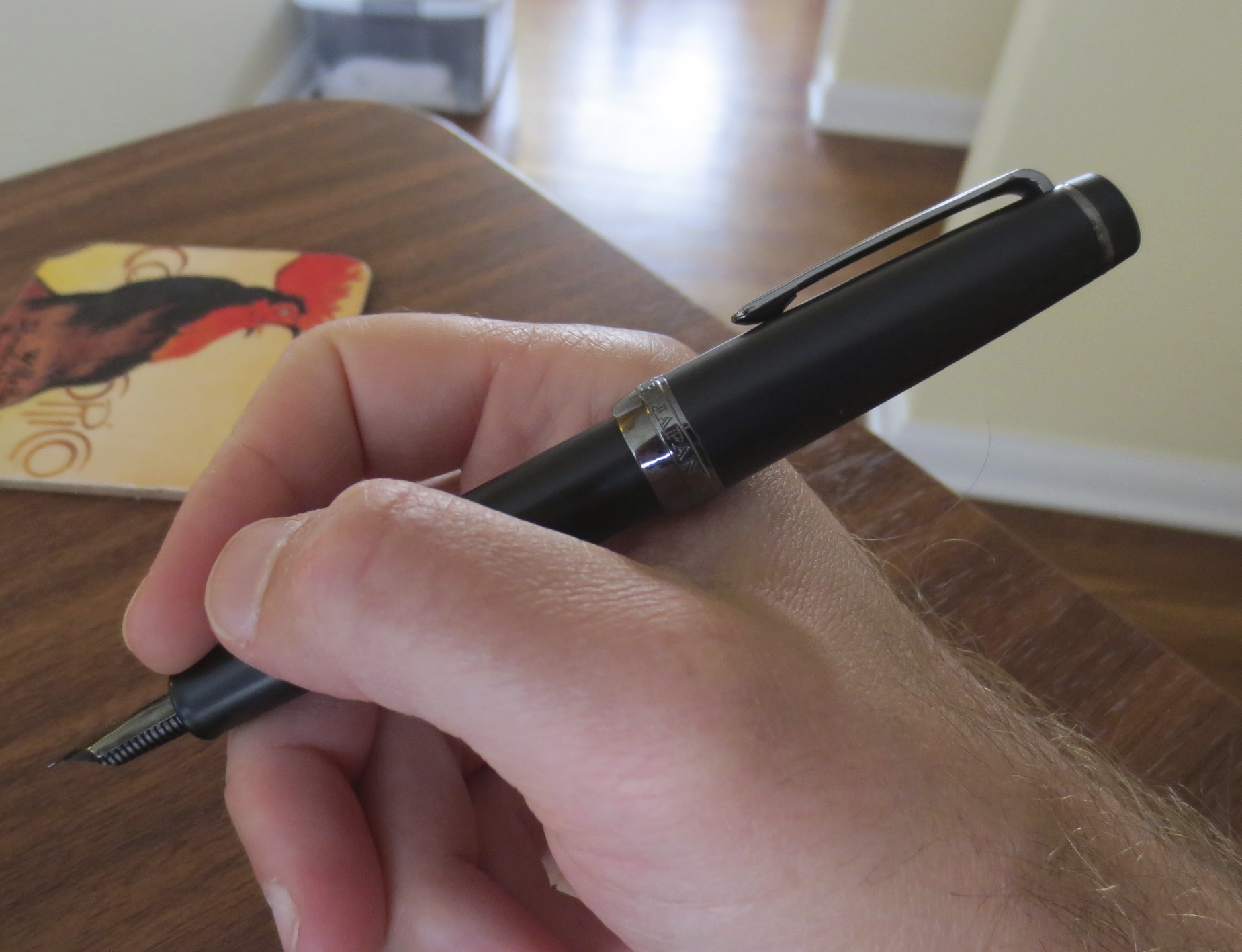
Early model Parker Sonnet Cisele.  My research dates this pen to the early to mid-1990s, because of the two-toned cap band. 

The pen has a black plastic grip section.  It's sturdy, and doesn't become overly slick during long writing sessions. 

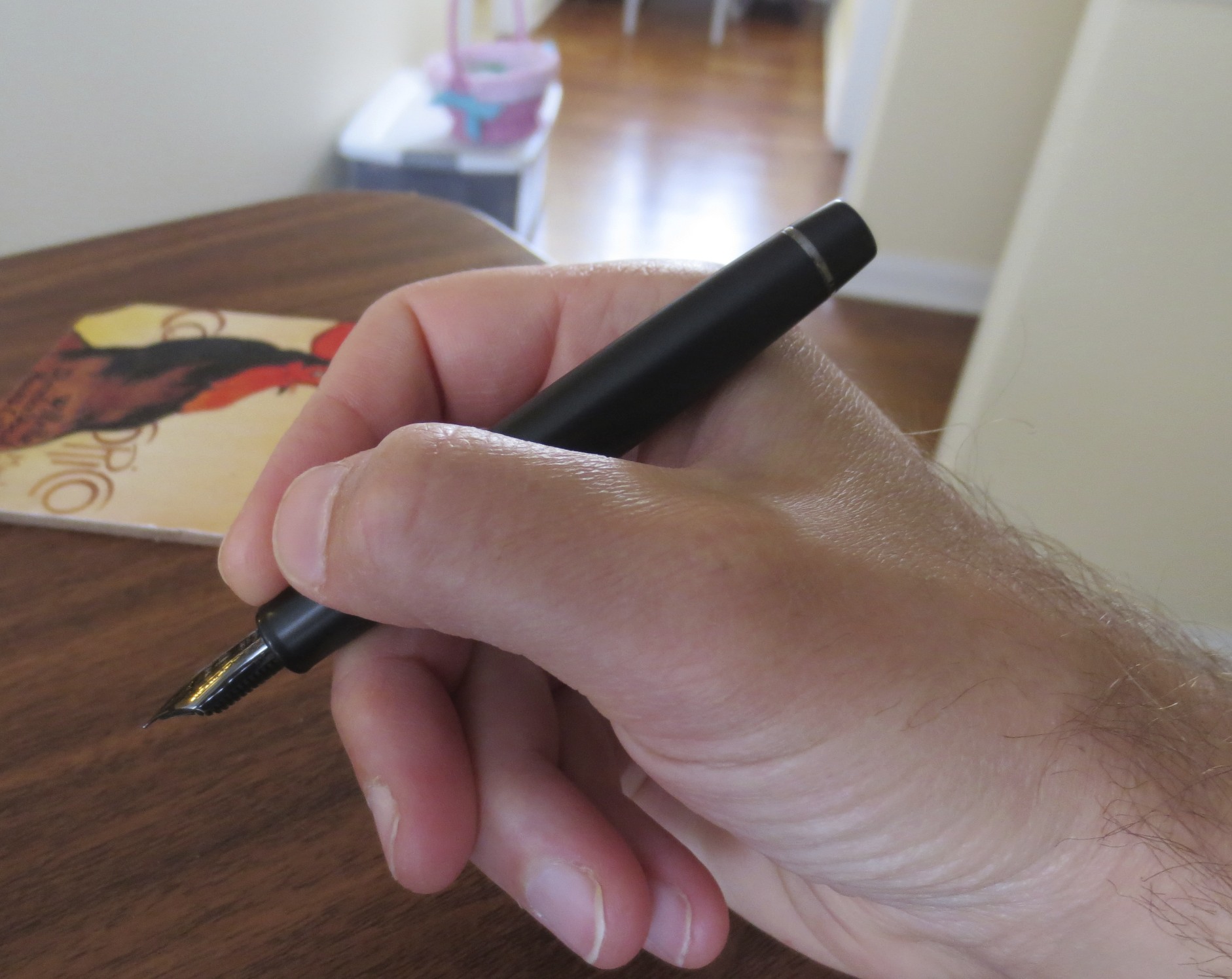
The Build.  This pen is hefty, given that it's sterling.  I'm not sure whether it's pure sterling silver or plated, but it looks nice and feels durable.  The cap is a slip-cap, which pops on and off securely.  There's no rattling involved.  The clip is still tight.  To me, this pen has near-perfect weight and balance, posted or unposted.  It sits in my hand well, which is why I find it keeps its place in my rotation despite the fact that it's the one pen in my collection that cannot handle a wide range of inks well (see below).

Posted, this pen is the perfect length and weight for me.

I can use this pen posted or unposted, but I prefer to use it posted.

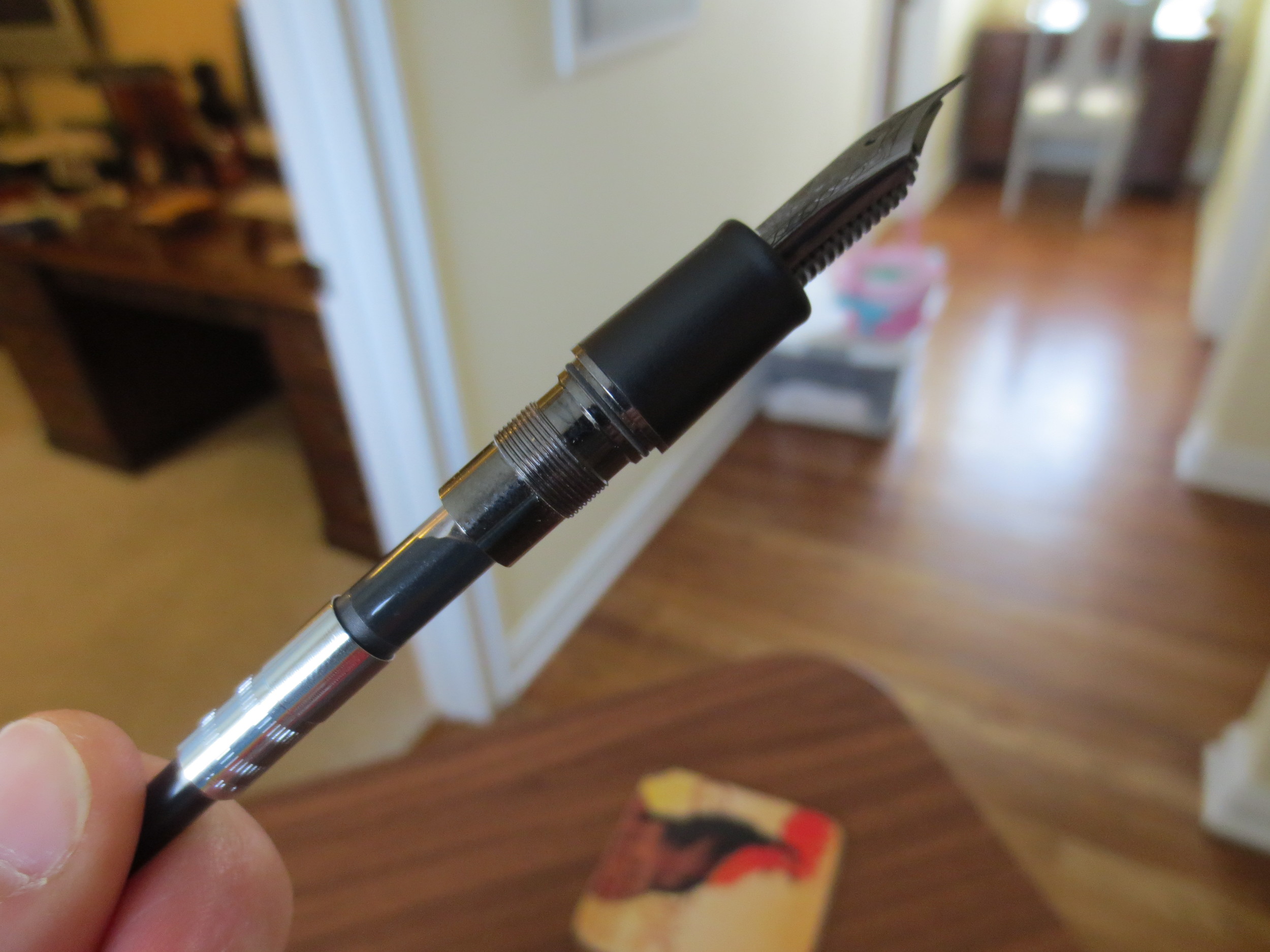
There is nothing special about the pen's cartridge/converter filling system, but mine came with Parker's old style large-capacity converter, which holds almost 1ml of ink. 

The Nib.  The nib is 18k, which gives it some spring.  Sonnets do NOT have flexible nibs, as many understand that term.  I've heard second hand that more recent versions of this pen (mine likely dates from the early to mid 1990s) have stiffer nibs, with some describing them as nails.  Mine has just enough give in it to lend my writing a bit of flair, but the feed is nowhere near good enough to allow me to actually "flex" the pen.  

Parker's 18k Sonnet Nib is understated and generally an excellent writer, if a bit picky about what types of ink you use it with.

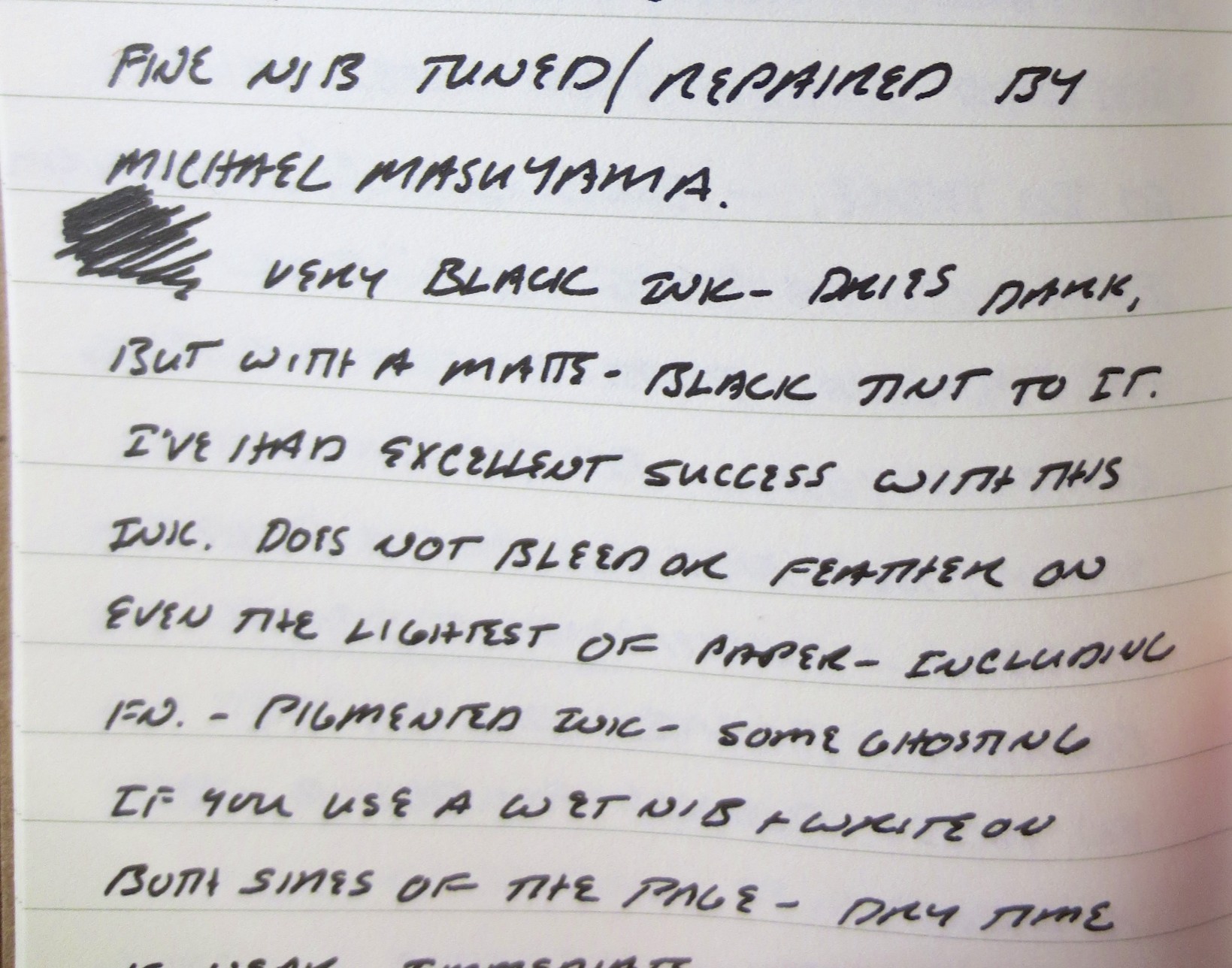
A basic writing sample in Aurora Black, probably my favorite ink to use in this pen.  There's no crazy flexing going on, especially in my day-to-day print-style.  However, under certain circumstances the softer nib can give your handwriting a touch of line variation.

Apparently a common problem with the Sonnet is that the nib skips, and can be a hard starter.  This likely has something to do with the feed not being able to maintain sufficient ink flow to the nib.  If I use a particularly dry ink, and write quickly, I will experience occasional railroading.  For example, well lubricated inks like Iroshizuku Kon-Peki, Aurora Black, or any of the Watermans work fine.  Inks with iron gall content such as Montblanc Midnight Blue (old IG formulation) or Pelikan Blue-Black make the pen temperamental. 

The Finish.  The reason I love this pen so much, and put up with its quirks, is the chiseled sterling silver finish, which is reminiscent of the old sterling silver Parker 75 in a larger pen.  As I mentioned earlier, my pen could use a good polishing to restore its shine, but it still looks great after 20+ years of heavy use.  The silver has developed a patina, which in my opinion adds to its character.  

The Verdict.  For all its quirks, I would still call the Sonnet a modern classic.  Parker has made this pen for nearly twenty-five years, and it has a loyal following, myself included.  If I were to purchase another, I would pick it up at a pen show where I could have a nibmeister tune the nib. For certain pens, this is well-worth a slight premium in price. 
Pen Review: Sailor Professional Gear Imperial Black Edition

One of my personal favorites, that until recently was always inked and used on a daily basis,  is the Sailor Professional Gear Imperial Black Edition.  Following a close call (and near total tragedy), my Imperial Black recently rejoined the rest of my collection thanks to Mr. Mike Masuyama, but more on that later.  

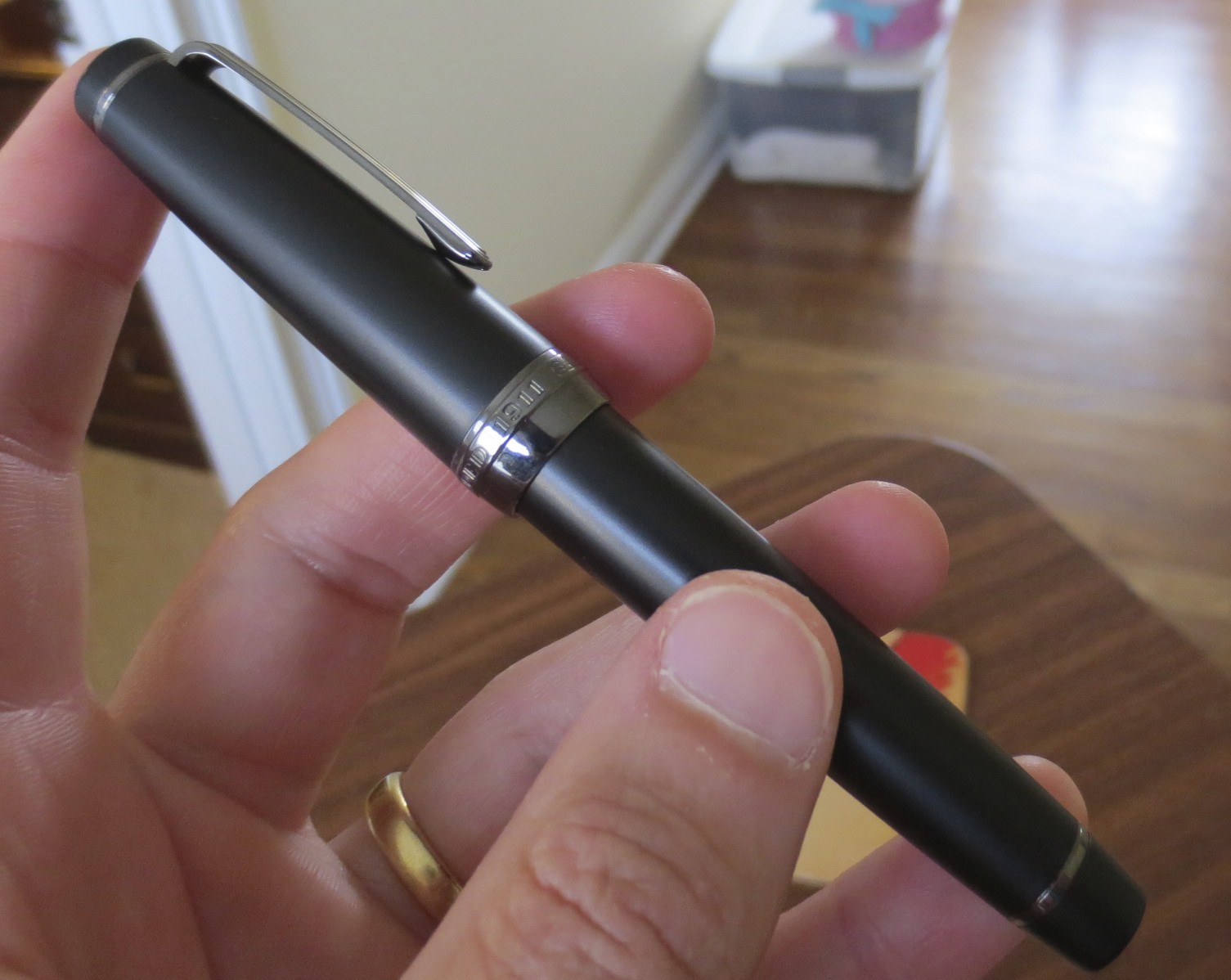
Aesthetically, this is one of the most beautiful pens that I own.  Sailor nailed it on the design.  I love the flat top cap and base, and the dark trim sets off the matte black color. 

I won this pen approximately a year ago in an eBay auction held by a Japanese eBay seller, and by sacrificing quick shipping and the U.S. display box option, I saved a little bit of money.  This pen has special meaning to me because I received it in the mail the day my daughter was born, and was carrying it and using it (with permanent Kiwa Guro pigmented ink, of course) to sign paperwork our entire first weekend with her.  Thus, you have my answer to that eternal question:  What pen would you use to sign your child's birth certificate?  (For me, it's not the Visionnaire.  I will give Morgan and his team credit, though.  They nailed the packaging on their product, as opposed to the hideous faux crushed velvet brown box in which this pen arrived.)  

If Elvis had purchased a pen in 1973 (which I'm sure he did), it probably would have come in a box like this. 

All joking aside, I knew from the eBay listing that this product was not coming to me in its original packaging (in order to save on shipping), so needless to say I wasn't expecting much in that regard.  This was my first Sailor pen, and what I was looking for here was one of Sailor's excellent nibs in a matte black pen with dark trim.  Apparently, Sailor uses Titanium ion plating to darken their trim, as opposed to Ruthenium.  Either way, I like the way this pen looks.  

Close-up of the titanium ionized trim.  My completely non-scientific survey of the pen industry revealed that Ruthenium is more commonly used in "stealth trim" than other metals, so Sailor's process may be unique?  Don't take my word for it--it's entirely speculation, and it doesn't really matter.  Both look great. 

I opted for the fine nib, which is equivalent to a western extra fine or narrower.  Despite the fact that it is 21k gold, the nib is not "soft."  In fact, it's a fairly stiff nib that lays a very fine line.  For example, the Sailor "fine" lays down a line of ink approximately one-half the width of my Pelikan M600 with an extra fine nib.  This is perfect for my needs, since I spend the majority of time at my day job editing others' written work product and scrawling marginalia.

A writing sample is included below.  The ink used is Sailor's Kiwa Guro nano-black.  As you can see from the photos, I'm working up a review of that as well. 

Nib Close-Up.  The tip is so fine that I had a hard time getting my camera to focus on it.  My photography skills need work.  Anyway, take a look at the classy scrollwork on the nib.  Tastefully done, in my opinion, with Sailor's iconic anchor symbol.   

Close-up image of the writing:  Note the very tight lines.  Paper is Field Notes Shelterwood edition.

The Good

  • Sailor nibs are amazing.  Although I had the nib tweaked to perfection by Mike Masuyama (who I believe used to work for Sailor), the nib wrote extremely well out of the box and I used it for several months before having it slightly tuned at the D.C. Pen Show.

  • Weight:  The pen is very light and fits nicely in the hand.  You can use this pen for long writing sessions without your hand becoming tired. 

  • Looks:  I love Matte black "stealth" pens, even though they are on the verge of becoming played out with every pen company trying to bring out a stealth model. 

The Cons:

  • Weight:  The pen is very light and can fly out of your hand if it becomes sweaty.  As I alluded to above, this happened to me once, and a slight drop of four inches onto my desk bent the 21K nib nearly in half.  Regardless of how stiff the nib writes, 21K gold is a soft material, and bends easily.  I managed to straighten it somewhat myself, but I had to send it to Mike Masuyama to restore the ink flow to a proper level.  Of course, it's now as good as new, but I'm much more careful with this pen.  

  • Size:  If you don't post your pens, the Sailor Pro Gear model might be too small for you.  I have to post this pen in order for it to write comfortably, but I post nearly every pen I own and don't have a problem with doing so. 

  • Sailor pens take proprietary cartridges and a proprietary converter.  It is what it is. 

The Overall Verdict.  this is one of the best, if not the best, writing pens in my collection.  The nib is superb.  That the pen also looks great is a bonus.  It's hardly ever out of rotation, and even then it's only to make sure that other pens in my collection get regular use. There are multiple buying options for this pen, and as I mentioned in the review I purchased directly from a Japanese seller, since for whatever reason Sailor has elected to price this pen at nearly double the Japanese price in the U.S. market.

Pen Review: Kaweco Liliput

The Liliput is one of those pens that doesn't get as much attention as its slightly larger pocket pen brethren, the Kaweco Sport Series.  I understand why--the pen is very small, and is a "pocket pen" in the truest sense of the word.  While the Sport and the AL Sport both post in a way that makes them almost full size, the Liliput remains, well, liliputian.  This pen probably appeals to a smaller group of users than the rest of Kaweco's offerings:  those people who absolutely must carry a fountain pen with them everywhere they go.  

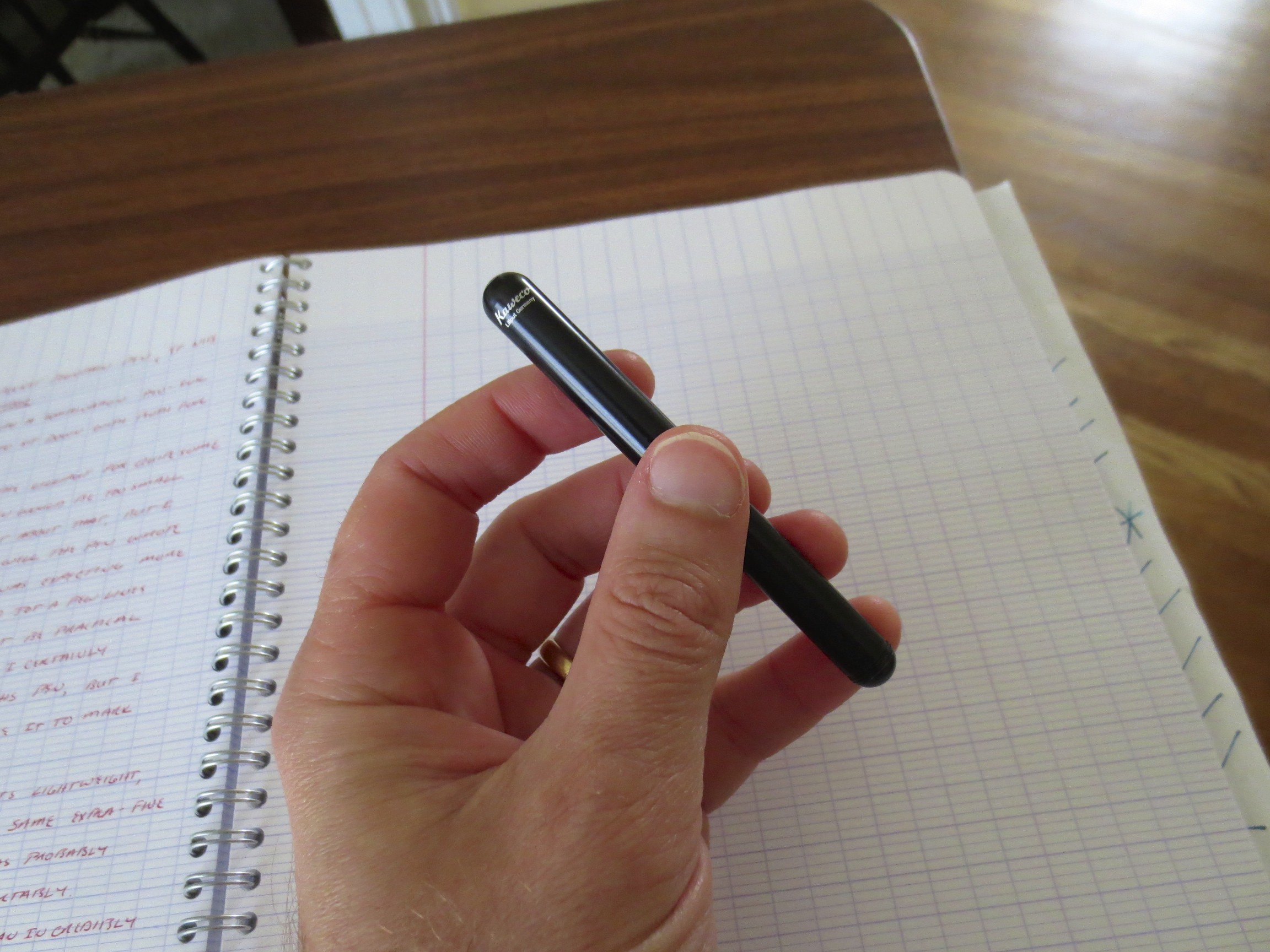
As you can see, the pen is small, but not so small as to render it unusable.  I like this pen a lot, and use it regularly as a pocket carry. 

The pen certainly is not so small as to render it unusable.  I use this pen a lot, particularly as a pocket carry when I'm out and about.  With the right ink, it's a good Field Notes/pocket notebook pen because it slides into your pocket easily and the EF nib that I have is not so wet that the ink bleeds through the page significantly.  I can still write on both sides.

Other reviewers have found the pen too light.  The version I have is the black aluminum version, and true, there isn't much weight to it.  BUT, Kaweco now offers a brass version available from Jetpens.com here in a new "Wave" styling.  Brad at the Pen Addict has reviewed this pen and likes it a lot.  (Link Here)  If you're concerned about the weight of the pen, and would like a pen with more heft, consider the brass version.

It goes without saying that this pen is cartridge-fill only.  The much-maligned Kaweco mini-converter might fit, but I would not recommend it.  Instead, pick up some cartridges of Kaweco's great ink, and refill those with a syringe.    

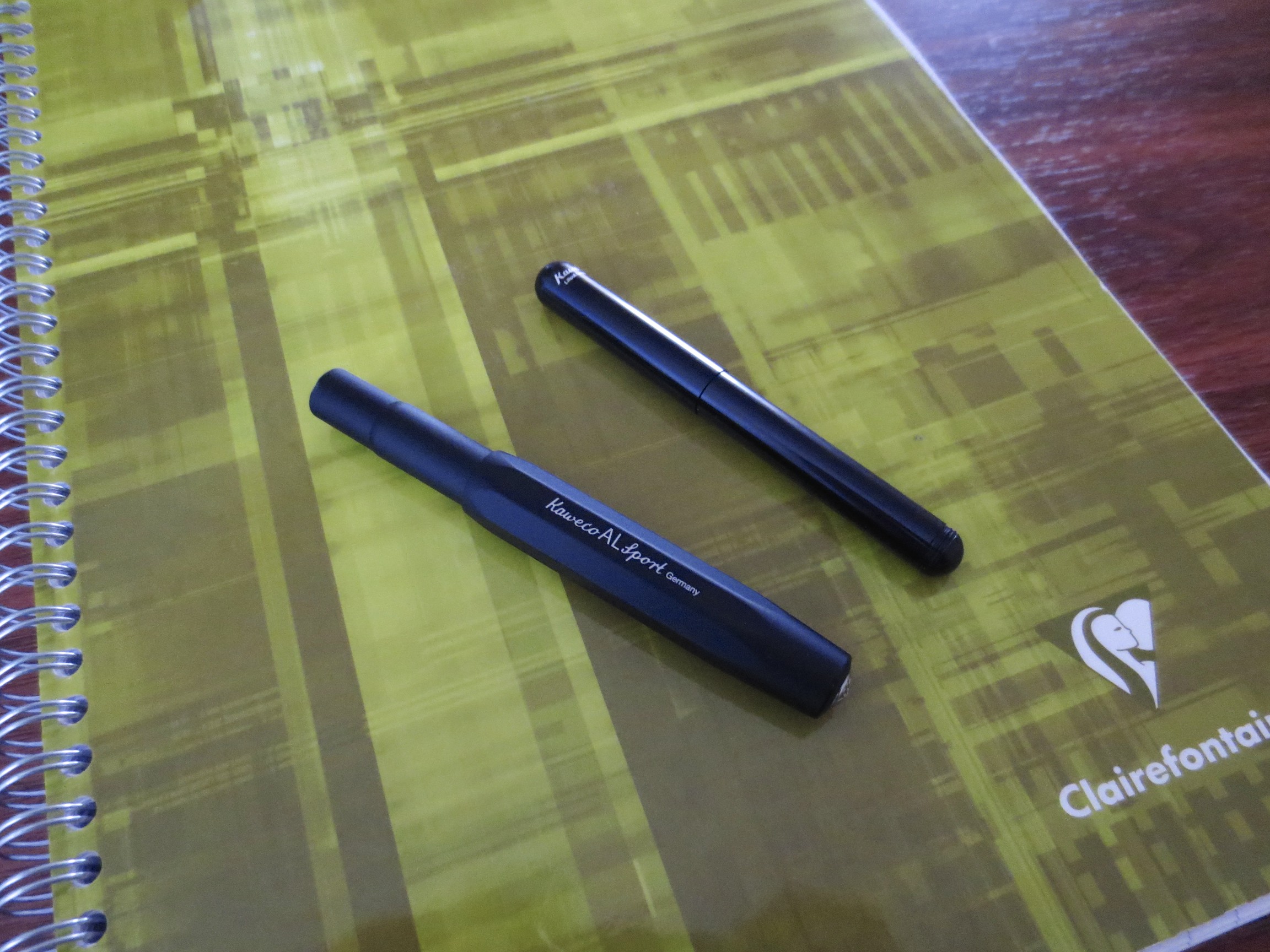
The Liliput is ultraportable.  See here compared to the Kaweco AL Sport.

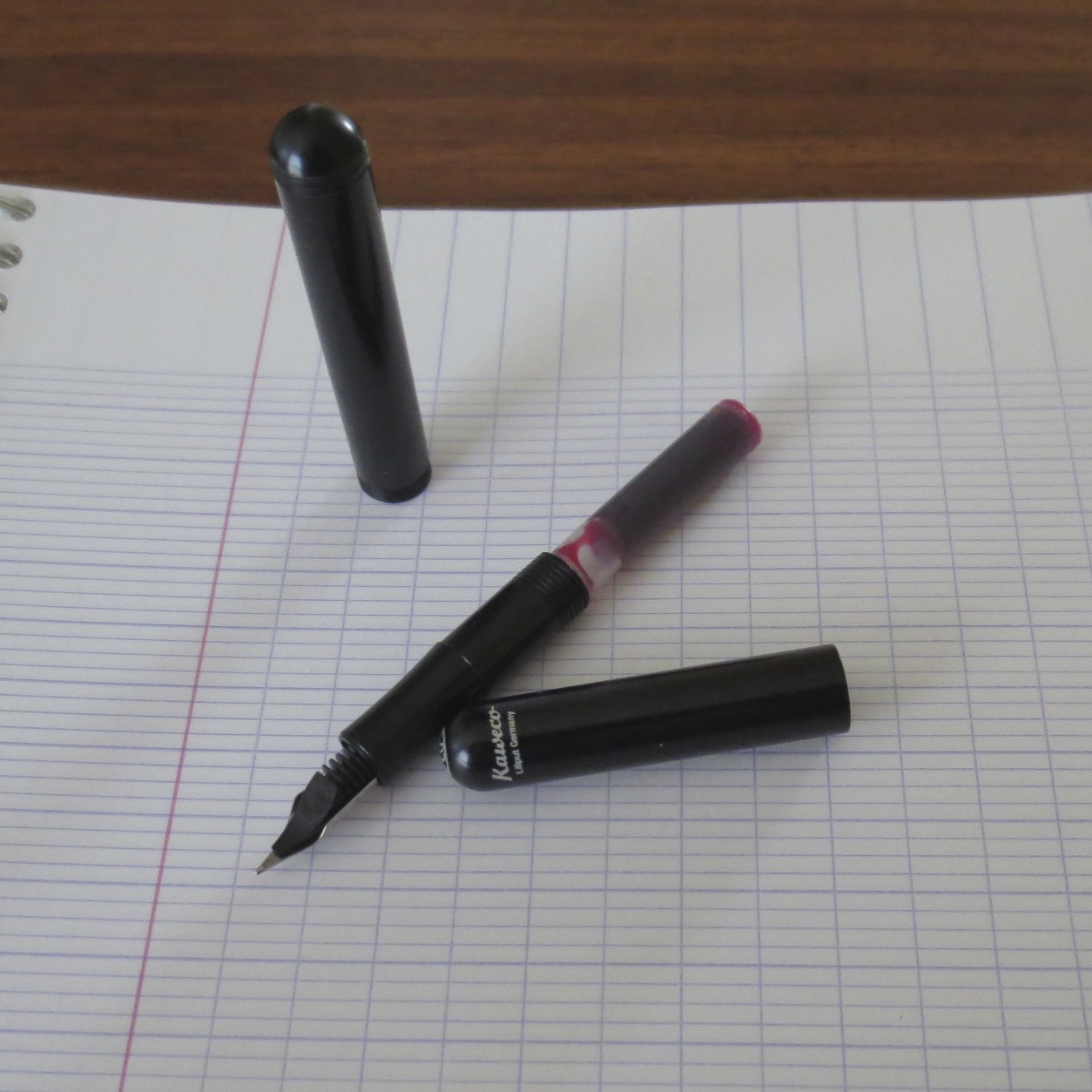
If I had to choose one "negative" to discuss, I would raise an issue with the nib that I chose.  The tines of my EF nib are cut unevenly, which you can see in the picture below.  This causes the pen to write with slightly more tooth than I would otherwise prefer and to dig into the paper if I catch a wrong angle.  I've not seen the same issue with the Kaweco Medium I own, or the fine or broad nibs that I've tried.  In the future on Kaweco pens, I would probably stick to the absolute basics (F,M,B).    

Overall, the verdict on this pen is positive.  For a pocket pen, It's a definite "recommend," but it's important to keep the "pocket pen" part in mind.  This pen was not designed to take 20 pages of longhand notes in a sitting or write a novel.  I'm glad to have it as part of my Kaweco collection.  

The nib slit looks unevenly cut on this pen.  I'll probably purchase a new nib eventually, and switch to the smoother writing fine or medium.  Kaweco nibs are interchangeable, at least for the Sport and Liliput models. 

Scan of handwritten review in Kaweco Ruby Red, and ink I've grown to love but a discussion of which is outside the scope of this review.

Scan of handwritten review in Kaweco Ruby Red, and ink I've grown to love but a discussion of which is outside the scope of this review.

PUBLIC SERVICE ANNOUNCEMENT:  To all of those who participated in my giveaway last week, check the comments of that post to see if you've won!  I've only heard from two of my four winners and if I don't hear from the other two by Sunday I'm going to have to pick two new ones. 

Pen Review: Kaweco Elite

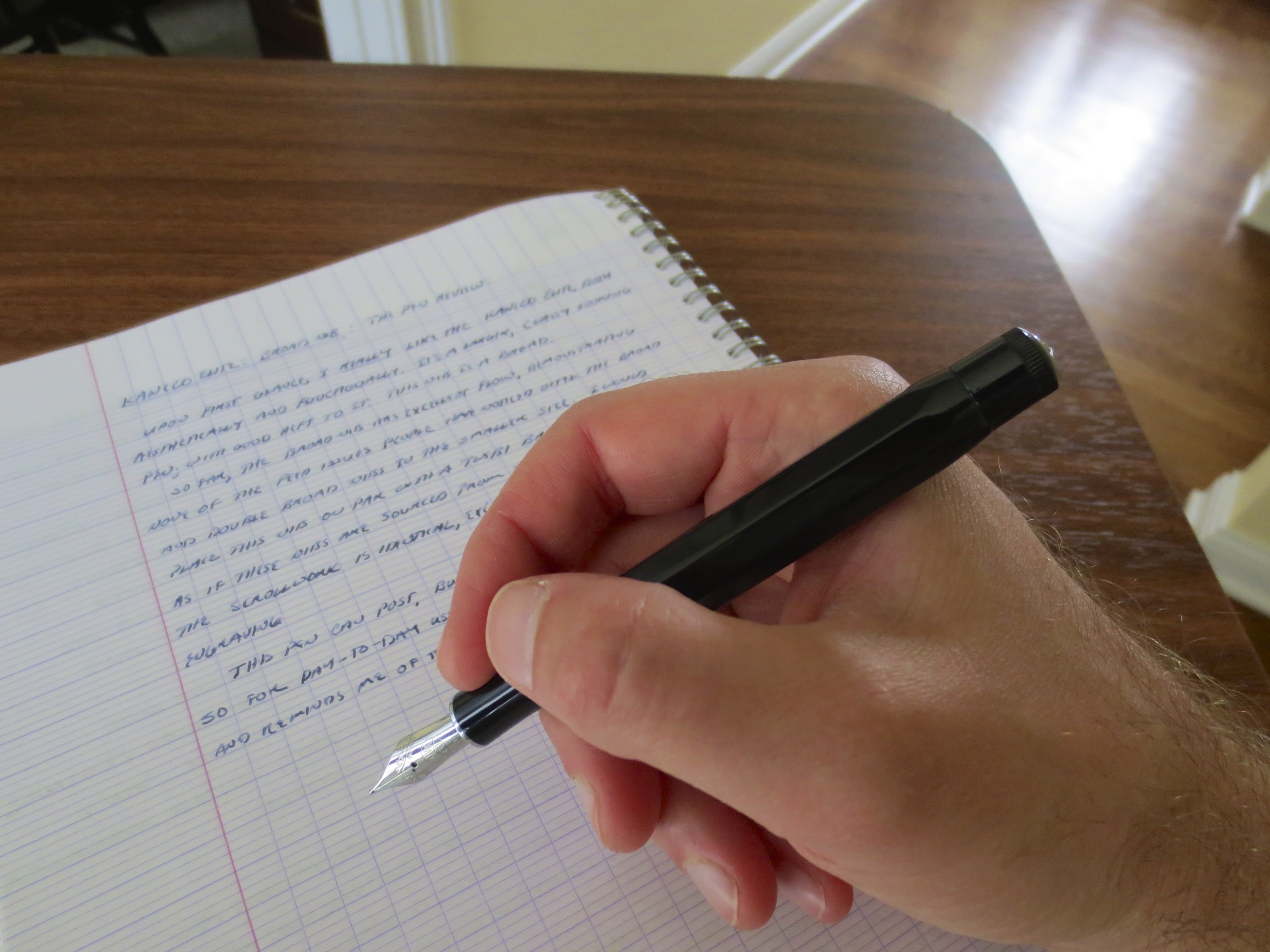
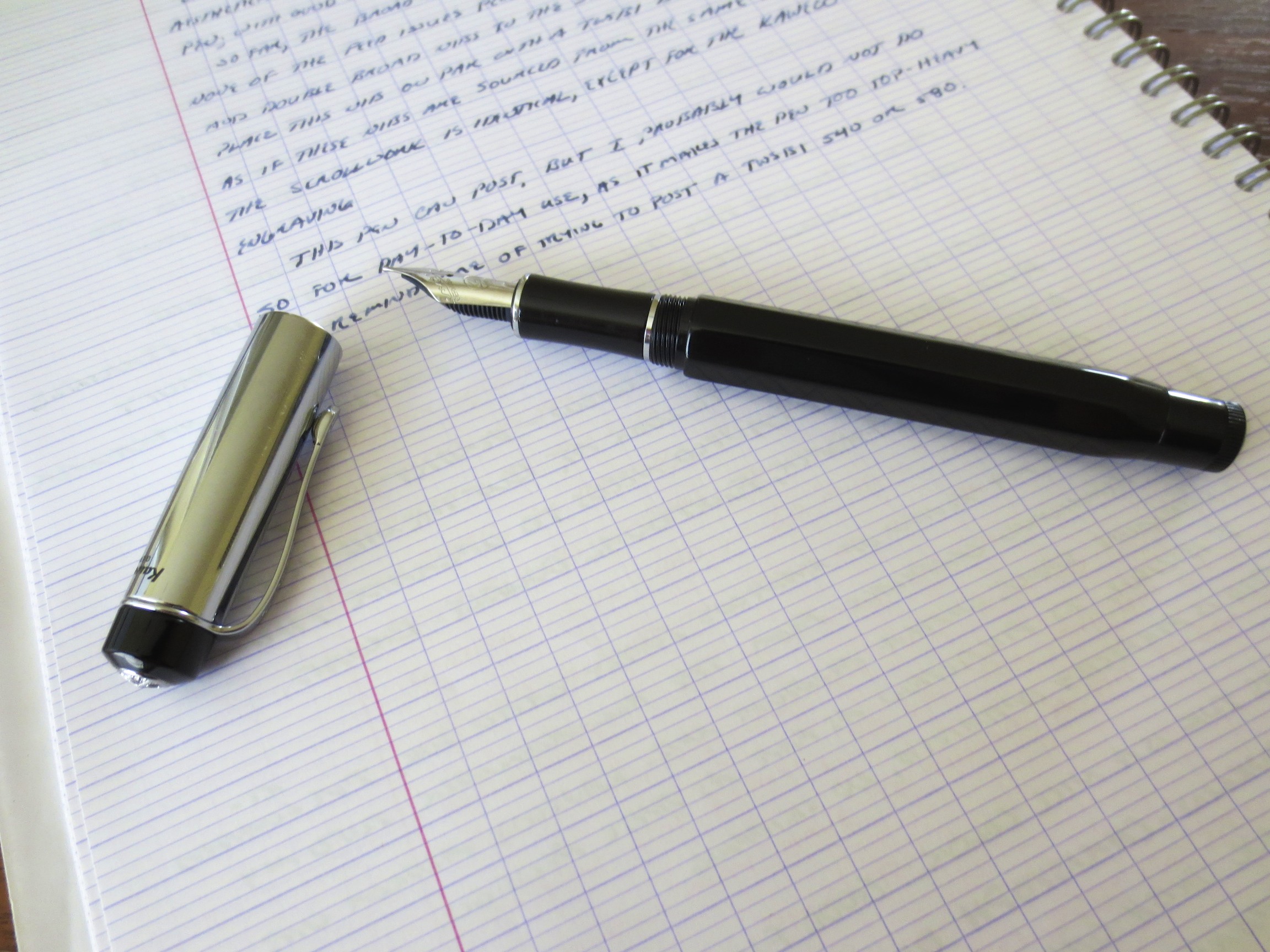
The second of two Kaweco pens loaned to me for review purposes is this Kaweco Elite, with a broad nib.  This review will be brief because I can be short and to-the-point on this one:  there's nothing wrong with this pen, but it's not for me, and certainly not at the $150+ price point where Kaweco has it listed. 

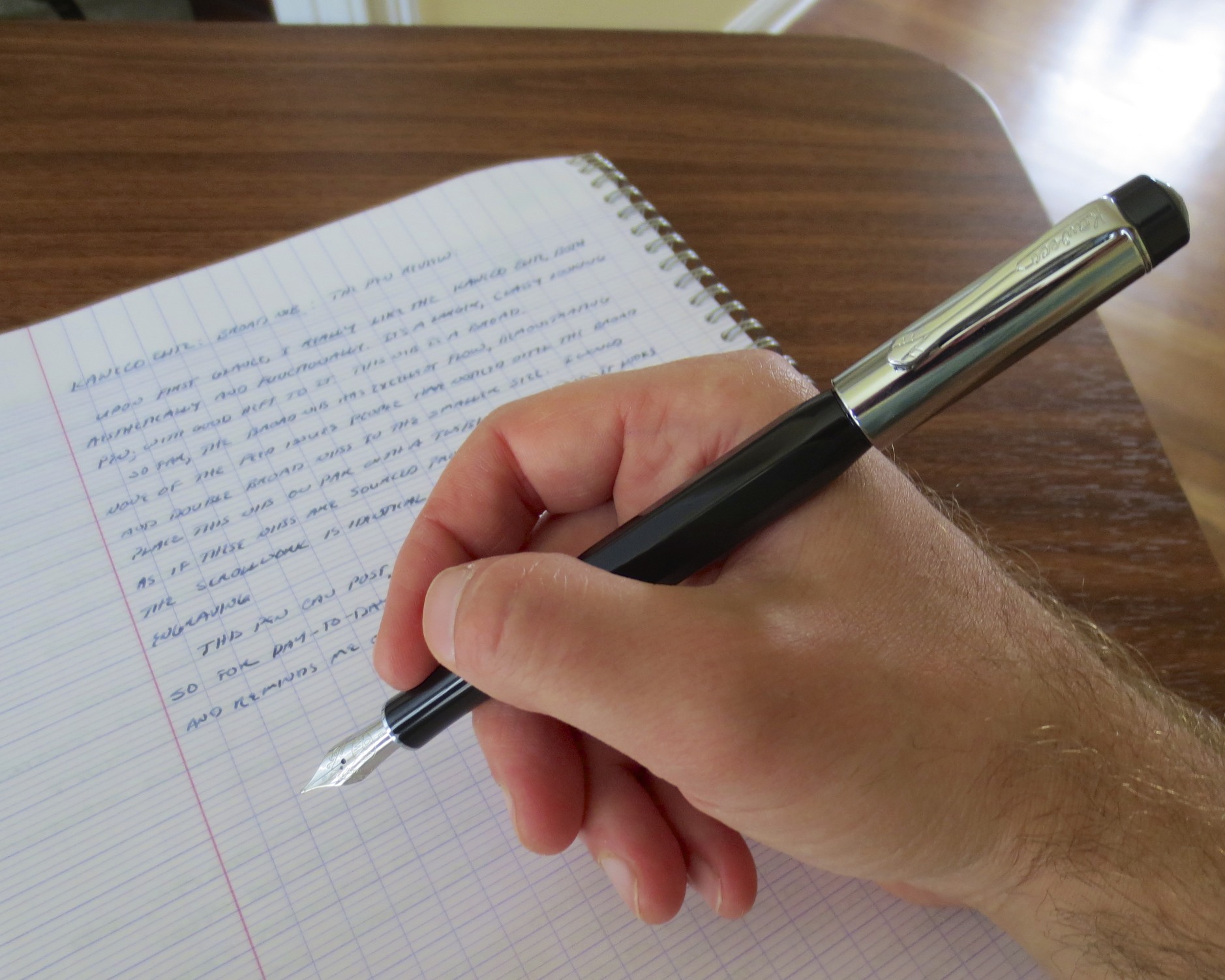
This is a nice-looking pen, albeit a bit clunky when posted.  It's a multifaceted resin body, with a metal/chrome cap.

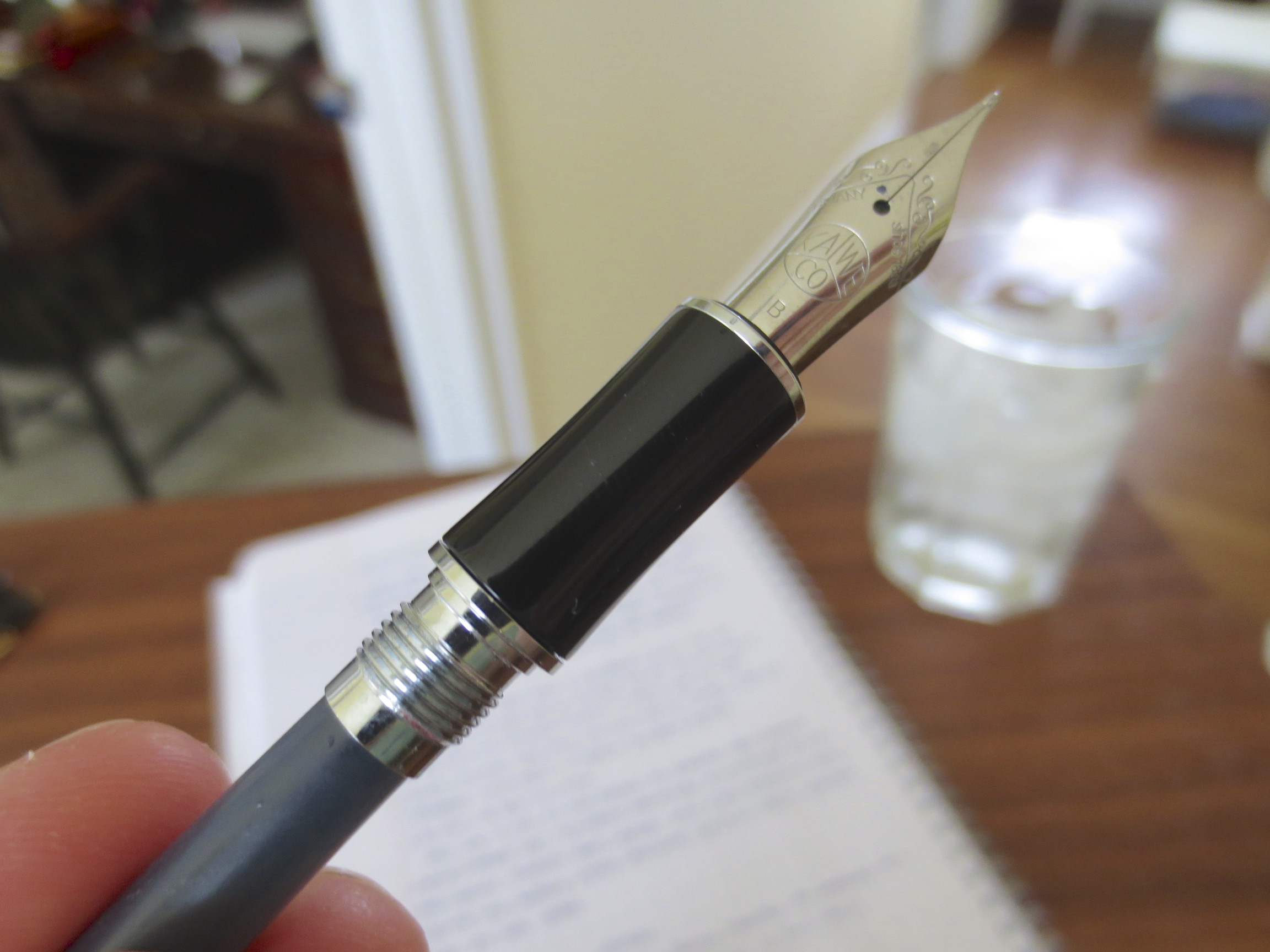
The broad nib is much larger than the nib on the more common "sport" line of pens.  In fact, it looks nearly identical to the nib on the TWSBI 580, and writes very similarly as well.  I believe the TWSBI nibs are made by Bock or Jowo, two of the major German nib manufacturers, so it very well could be the same nib.   

A nice, high quality, stainless steel German broad nib.

This pen is very heavy due to the metal cap, and as a result was difficult for me to use posted.  I found no major flaws on either the body or the cap--it's a very nicely made pen.  I don't understand, however, where Kaweco thinks this pen fits in today's market.  This is a cartridge-converter steel-nibbed plastic/metal pen priced at $150, while TWSBI is currently selling a piston-filler that uses the same (or similar) nib for $55.  No matter how good a writer this pen is, that's a considerable delta on the price, and I'm not sure what the consumer is getting for that additional $95. 

In fairness to Kaweco, I only used this pen for the morning before I had to return it, so it's possible it would have grown on me.  I suspect, though, that the Elite is simply not a pen for me, and I'll continue to hold out until I get to try my Dia2 or an Allrounder with a larger nib.

Handwritten review of Kaweco Elite fountain pen.  You may recognize the mini-review of the Kaweco Blue-Black Ink at the bottom.

Pen Review: Kaweco Allrounder

I mentioned to a friend of mine that I was considering purchasing one of the full size Kawecos, and he offered to loan me two from his collection to test out for a day or so:  the Kaweco Allrounder and the Kaweco Elite.  I popped in a couple of Kaweco ink cartridges I had been meaning to try, and spent a long morning trying to decide whether these two pens were the pens for me.  After spending the morning with the Allrounder, I'm not 100% sold on Kaweco's full size pens as opposed to the Sport line.  That said, I'm sufficiently intrigued by the looks of the Kaweco Dia2 that I'm going to wait until I have a chance to try that pen before making a final decision whether or not to take the plunge.

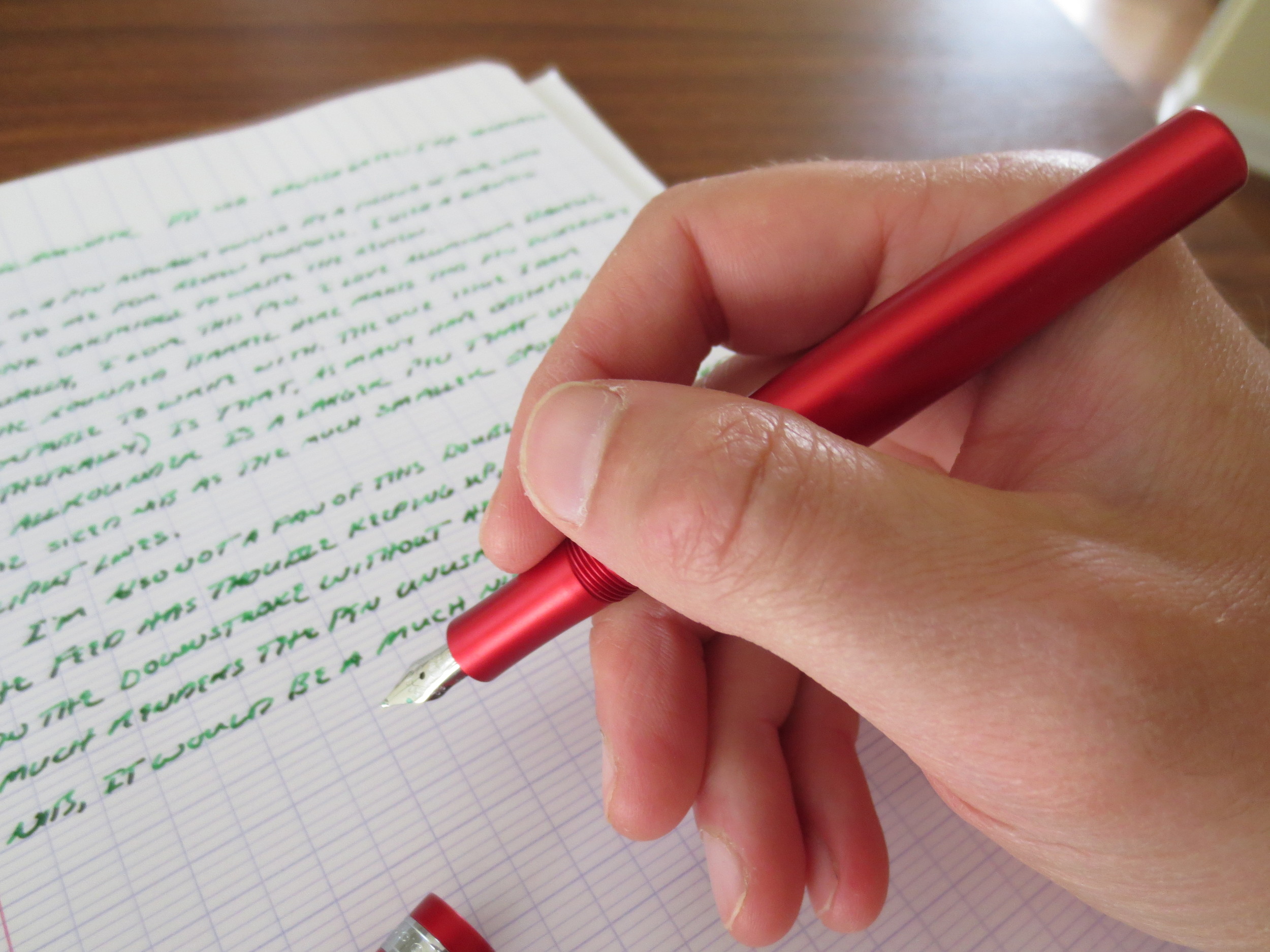
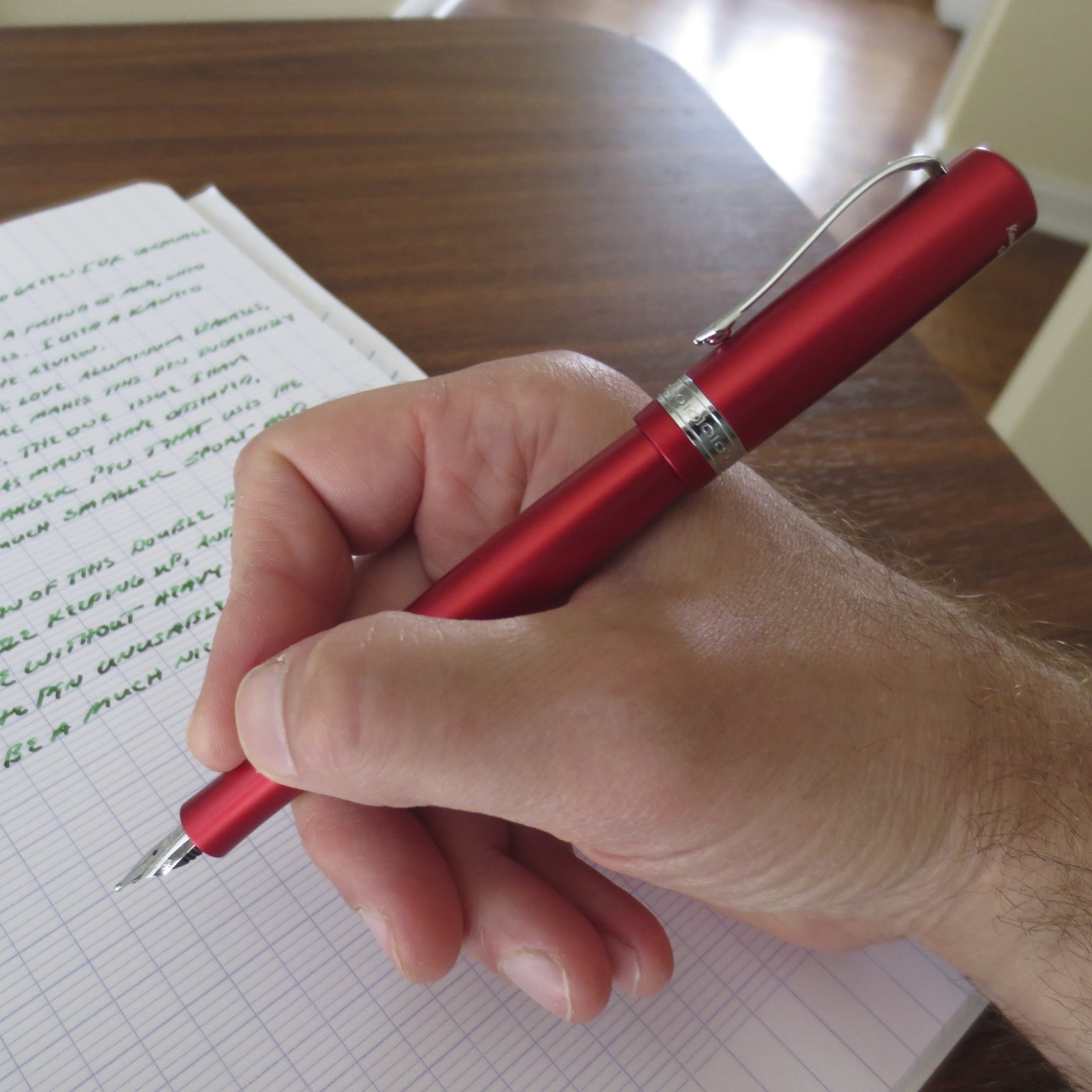
The Kaweco Allrounder is a gorgeous pen.  It's also solidly constructed from machined aluminum, with stainless trim.  I'm a sucker for red pens, so this one had me from the get-go.

Build Quality

The Allrounder is an aluminum pen, much like the AL Sport, though this pen has a round barrel (as the name reflects).  The pen is very well machined and constructed.  Like the AL Sport, I imagine that it will collect some dings and scrapes with use and age, but as with the Sport that will add to the pen's character.  Despite being a metal pen, it's light (one of the virtues of aluminum as a material).  The cap screws on firmly, with no jiggling or rattling, and the clip is secure.  Typical high quality German construction from Kaweco!

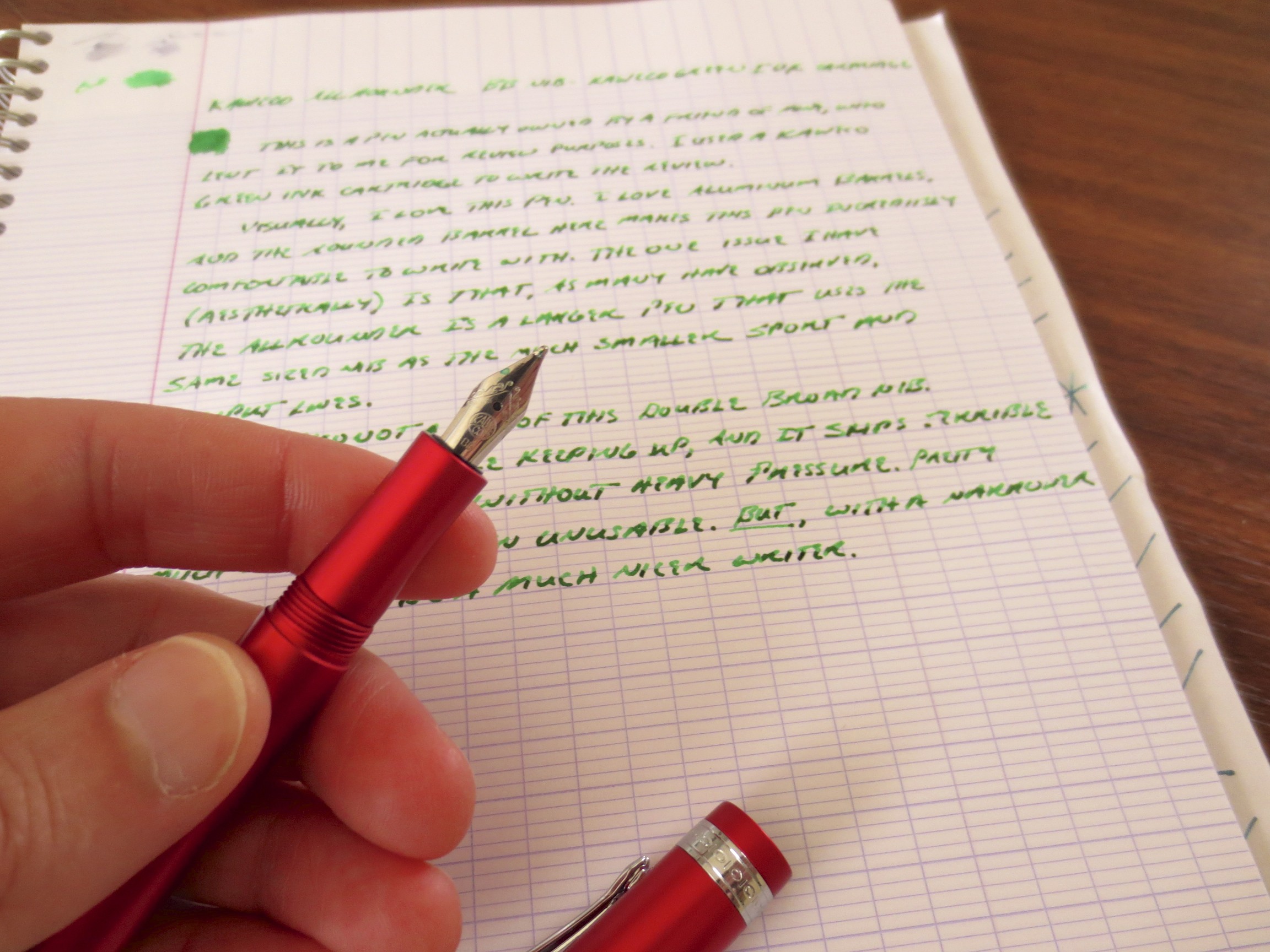
You can get a sense of how nice looking and well constructed this pen is.  Note the nib, which I would venture is disproportionately small to the size of the pen.

The Nib

The nib is where this pen may have lost me.  Much has been made of the size of the nib:  it arguably looks too small for the pen.  Kaweco has used the same great nib from the Sport line, but on this larger pen, it seems a bit undersized.  Also, this particular nib was a double broad.  I'm not one to use a double broad for general day-to-day writing, unless it's a stub.  However, I can still appreciate a smooth, generously flowing B or BB nib when I use one.  This nib gave me some trouble because the ink flow was inconsistent and required me to use heavy pressure in order for the pen not to skip.  If I do end up purchasing this pen (or the Dia2, which also uses this nib), I think I will opt for the fine or the medium.

A Note on the Ink

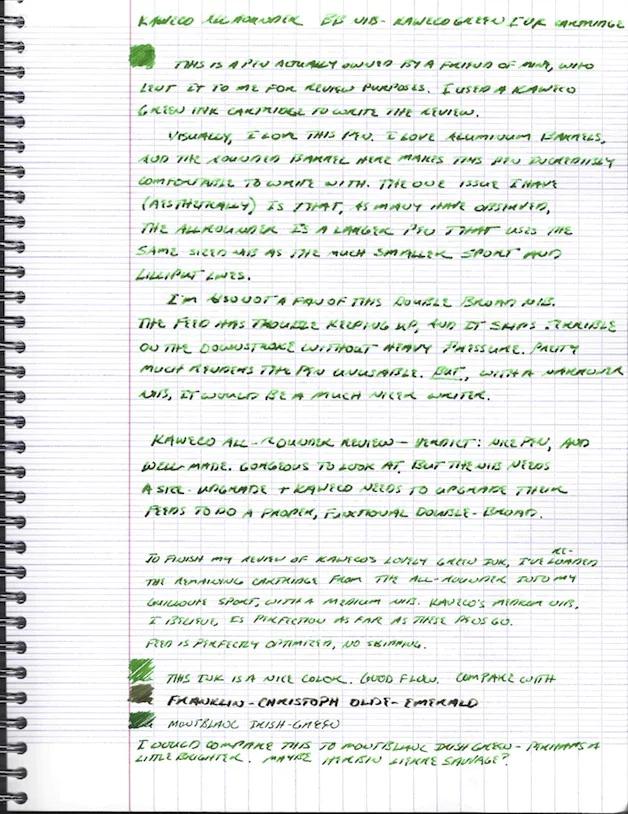
This review was written with a cartridge of Kaweco's "Palm Green" Ink.  I have to say, I've been extremely impressed with the quality of Kaweco's ink offerings.  The Green is a vibrant green color that is well-behaved and exhibits great shading.  It flushed right out of the Allrounder with one squirt of a bulb syringe when it was time to clean the pen up and return it to my friend.  Once I've worked my way through some of my ink horde over the summer, I may pick up a bottle or two of Kaweco's colors at a pen show, to save on shipping and maybe secure a discount off the relatively steep price of the ink ($14 for 30ml!?). 

I did a quick comparison with two other green inks I have loaded up:  Franklin Christoph's Olde Emerald and Montblanc's Irish Green.  The Kaweco ink is pretty close to the Montblanc; I would venture to say slightly brighter. 

A close-up shot of Kaweco's vibrant Palm Green ink exhibiting gorgeous shading in a double broad nib.

My Verdict

I'm undecided right now.  I LOVE the way this pen looks.  It has everything I typically look for in a good mid-range fountain pen:  good materials, tight tolerances and excellent quality control on the pen's body.  Plus it's red!  Kaweco's double broad nib, however, left me wanting more.  I'm sure with a little tweaking, it could be turned into a fairly good writer, but as I get deeper into this hobby, and at this price point, I'm not so eager to spend time doing nib work or sending it off to be tweaked.  From reviews I have read elsewhere, I suspect the problem may lie with the small feeds used in these pens, which seem to have a hard time keeping up with the ink flow on a broader nib if you write fairly quickly, like I do.  That said, I'd love to try this pen again with Kaweco's medium nib, which I think hits the sweet spot for me in terms of line width and ink flow. 

Handwritten review.  As you can see at the bottom, I loaded the remainder of the Palm Green cartridge into my Kaweco Sport with a medium nib.  The flow was much more consistent than the BB. 

Handwritten review.  As you can see at the bottom, I loaded the remainder of the Palm Green cartridge into my Kaweco Sport with a medium nib.  The flow was much more consistent than the BB.