• Blog
  • Shop
  • Resources
  • FAQ (Ask TGS)
  • About
  • Archive
  • Contact
  • Sign In My Account
Menu

The Gentleman Stationer

Vintage Living in the Modern World.
  • Blog
  • Shop
  • Resources
  • FAQ (Ask TGS)
  • About
  • Archive
  • Contact
  • Sign In My Account

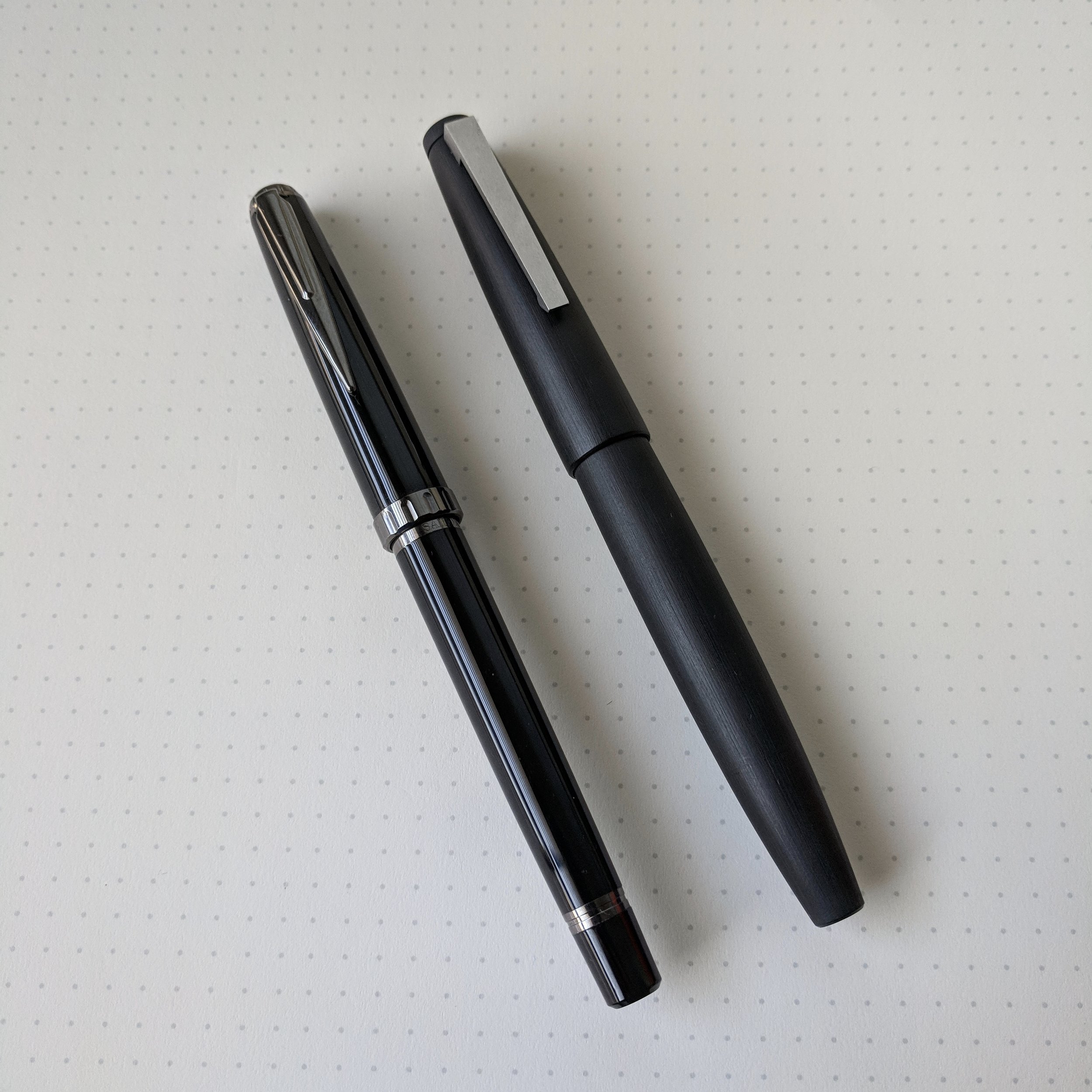
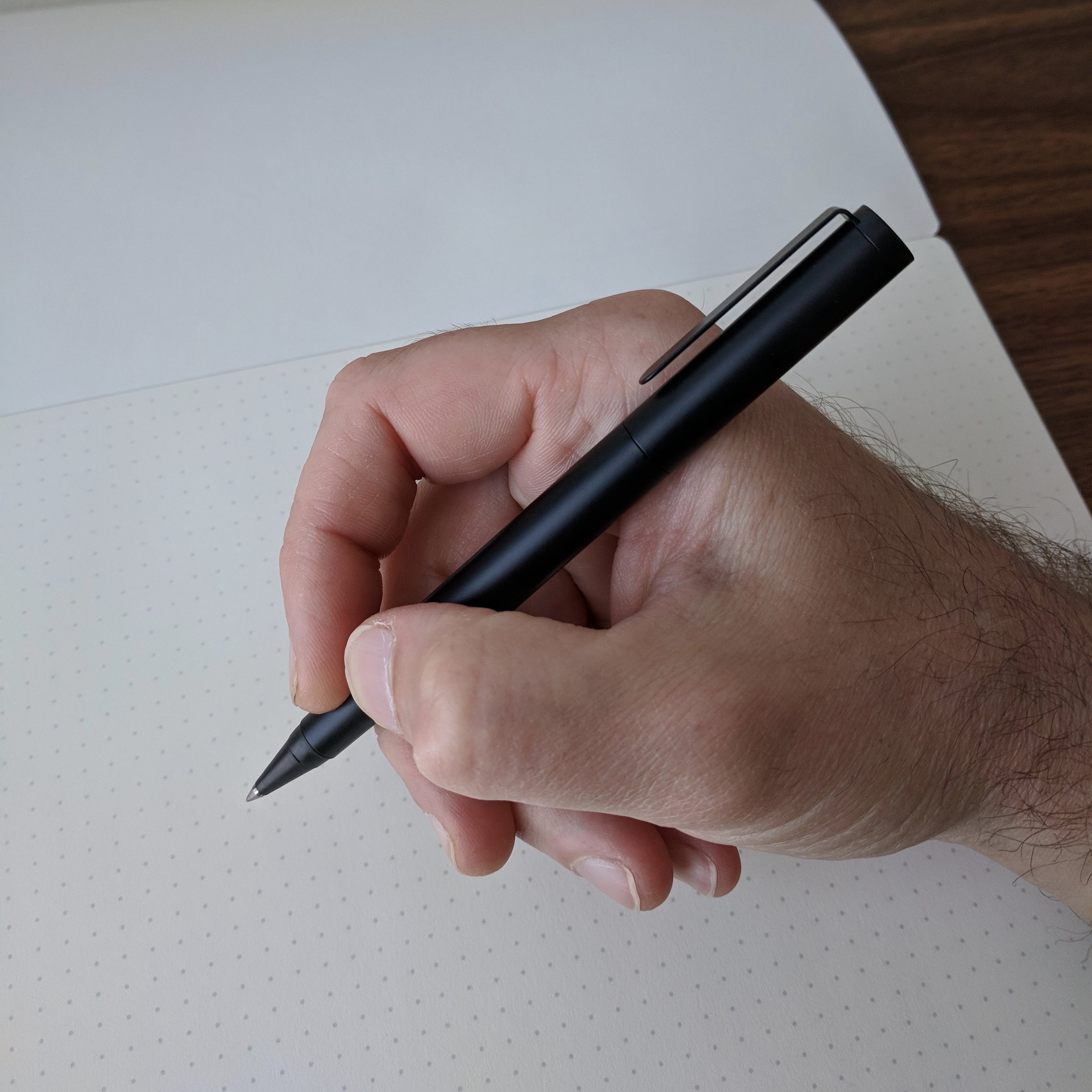
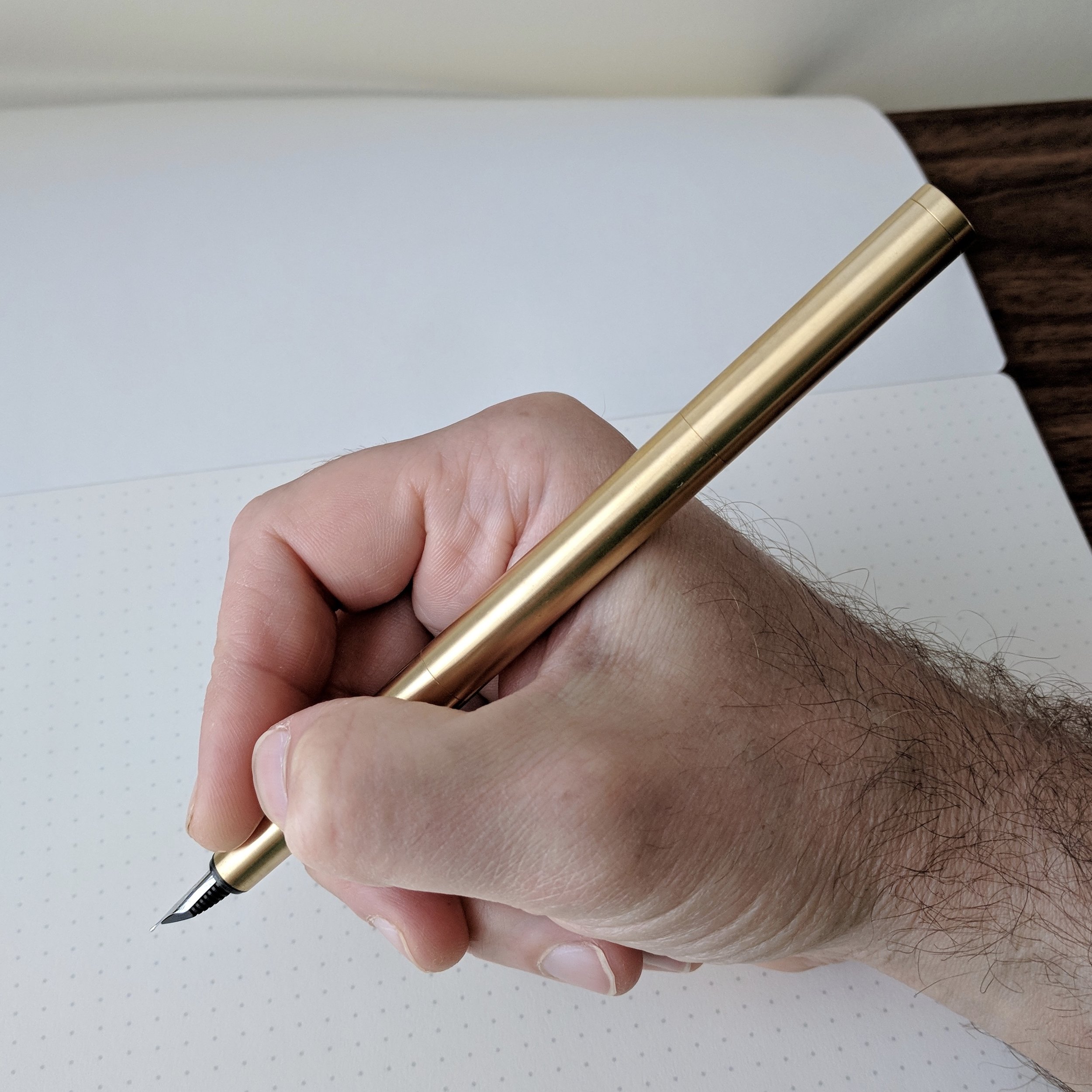
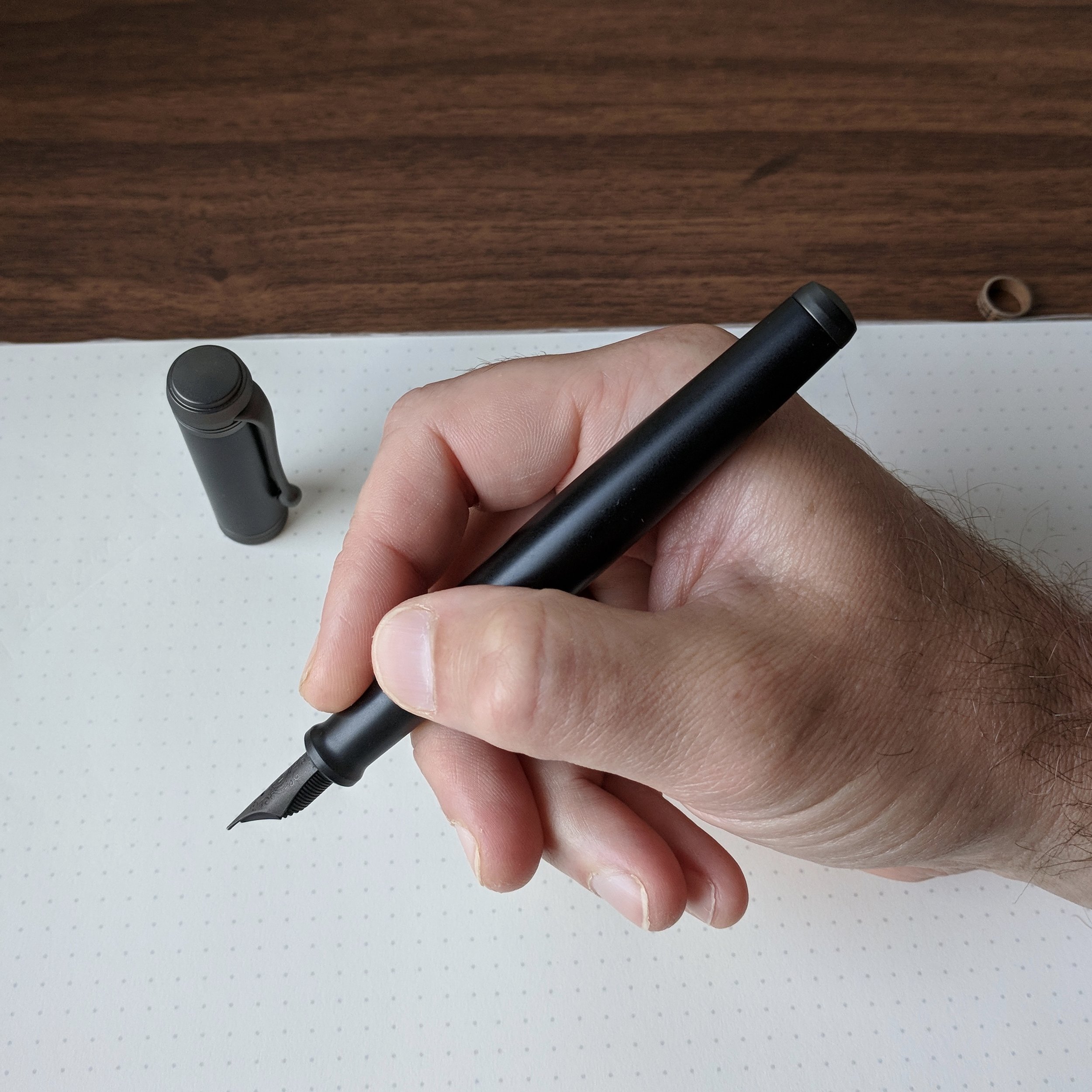
From left, the upcoming "Reaktor" Pens: Starliner XL fountain pen, Starliner pocket fountain pen, Galaxie XL rollerball/gel, and Galaxie ballpoint

First Impressions: Karas Pen Company "Reaktor" Series

June 28, 2018

I'm pleased to announce that Karas Pen Company was kind enough to send me a review set of the "Galaxie" and "Starliner" pens from their new "Reaktor" series. These pens have been making the rounds lately, and while they're not yet available for purchase, I can see these becoming big hits that nicely complement their higher-priced Decograph (which I reviewed not too long ago).

The pens will be available in a smaller range of color options than the typical Karas pens. Options will include black, tumbled aluminum, polished aluminum, and polished aluminum with red or blue anodized sections. 

The pens will be available in a smaller range of color options than the typical Karas pens. Options will include black, tumbled aluminum, polished aluminum, and polished aluminum with red or blue anodized sections. 

Featuring midcentury modern designs inspired by the "Atomic Age" of the 1940s and 1950s, the Reaktor pens are more pocket-sized than Karas' typical offerings and designed to be manufactured for sale at a lower price point. All of them feel good in the hand and feature a slip/snap cap that works flawlessly. The cap closes and posts securely using an o-ring. The Reaktor lineup will include: 

  • Galaxie. A clipless pocket ballpoint that ships with the Schmidt 950M pressurized refill, which is Schmidt's answer to the Fisher Space Pen. Of all the pens, this is probably my least favorite refill option, as "ballpoint gunk" tended to collect on the tip. That said, it's a Parker-style refill, so there are likely other options you can use. 
  • Galaxie XL. A gel/rollerball pen with a clip that accepts the Pilot G2 refill, which is one of my personal favorites. Ana says the Galaxie XL also accepts the Schmidt P8126 rollerball, and since she's the refill guru I'll take her word for it! 
  • Starliner. A clipless, pocket-sized fountain pen featuring a design that pays homage to the "flat-top" pens of the 1920s. It's short, so the pen accepts cartridges only. 
  • Starliner XL. A more full-sized fountain pen with a clip, designed to use either cartridges or the Schmidt K5 converter. 

The Starliner and Starliner XL fountain pens both use standard Bock nibs. A perfectly appropriate choice, especially at the price point. 

Each of the Reaktor pens is designed around a specific refill and/or converter, and I've not had the opportunity to play around with them to see if anything else fits. Like the Decograph, these pens grew on me the more I used them. The ergonomics are very nice, especially on the "XL" series, and the pens feel much more expensive than their anticipated price point.

The Starliner XL, featuring a classic flat-top profile and engraved lines with a "3-2-1" countdown-themed pattern. 

The "Galaxie" series has more of an automotive feel to it, especially on the cap. 

The "Galaxie" series has more of an automotive feel to it, especially on the cap. 

Takeaways and Where to Buy 

Following up on the Decograph, the team at Karas has created yet another new series of pens that has left me with very positive first impressions. The Galaxie and Galaxie XL rollerball/ballpoint pens will be priced at $40 and $45, respectively, with the Starliner and Starliner XL fountain pens priced at $50 and $55. The "XL" pens should be released sometime in late June, early July, with the others arriving later this year. Be sure to follow the Karas Kustoms/Karas Pen Company website for updates! As I've observed elsewhere, there's not much currently on the market other than TWSBI and Lamy in that $40-60 price segment, and if Karas can figure out a way to make these pens profitable, they could have a big hit. 

View fullsize Karas Pen Co. Galaxie Ballpoint
View fullsize Karas Pen Co. Galaxie XL Gel/Rollerball
View fullsize Karas Pen Co. Starliner Fountain Pen
View fullsize Karas Pen Co. Starliner XL Fountain Pen

Disclaimer: Karas Pen Company sent me the pens featured in this review free of charge, for review purposes. Information on pricing and availability was provided to me by Karas. I was not otherwise compensated for this review. 
In Pens Tags Karas Pen Company, Galaxie, Karas Kustoms, Karas Reaktor, Starliner
Comment

First Impressions: Aurora Talentum "Black Ops"

June 16, 2018

It's the summer of the "Stealth Pen", or at least it is for me. I've been thinking for years that pens with black-plated trim - sometimes referred to as "stealth pens" or "blacked out" models - were a fad or trend that would quickly pass. Well, that was back in 2012 or so when I first got back into the hobby and picked up a matte black Pilot Vanishing Point. Fast forward to six years later, where I just received my fourth black-plated Sailor and am very much enjoying this recent release from Aurora, the Talentum "Full Black" or "Black Ops" model. Though I've only had the pen for a couple weeks, I wanted to expedite this review / first impressions post since I've heard availability is somewhat scarce and people might have to act quickly in order to secure a pen. 

I love the combination of the matte-black resin and ruthenium trim. It looks especially sharp on the Talentum's cap, which features a metal "crown" of sorts. 

What I Like About the Aurora Talentum "Black Ops"

  • Looks. Though I'm obviously biased towards the "all-black" look, the Talentum Black Ops is a beautiful pen. Among all the various models Aurora offers, the Talentum never really caught my eye until now. Unposted, the shape and size remind me somewhat of a Nakaya Neo-Standard. Posted, it's longer, but still a touch shorter than a Lamy AL-Star or Safari.
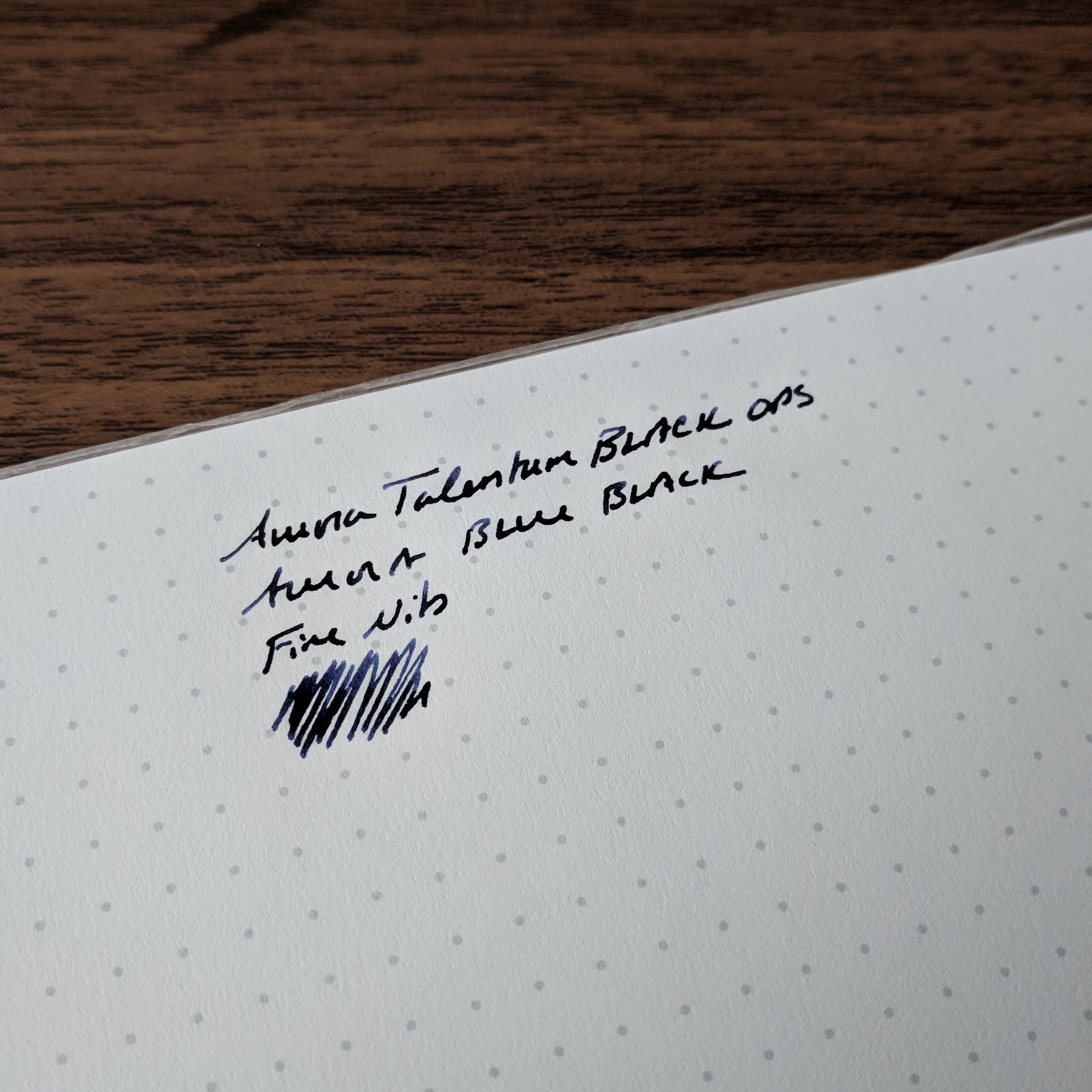
  • The Nib. The black 14k nib is gorgeous. I understand that part of the reason this pen took so long to actually hit the market is because Aurora took their time getting the plating right. They did a great job. Some black-plated nibs can be a little skippy, or even squeak when you write, but this one is a firm, smooth writer with just a hint of the tooth that Aurora is known for. This particular nib is a fine, though the ebonite feed makes it a bit wet, so some might characterize this nib as more of a F-M (Fine-Medium). 
  • Postability. Unlike the Nakaya, the cap on the Talentum posts, and sits fairly deeply on the barrel. Although the Talentum is a larger pen, posting doesn't make it unwieldy for me. I think this has a lot to do with the fact that this Aurora uses a cartridge-converter filling system, and is therefore lighter-weight. 

The barrel of the Aurora Talentum has a slight taper. 

IMHO, Aurora absolutely killed it with this black-plated nib. 

Aaaand the ebonite feed. 

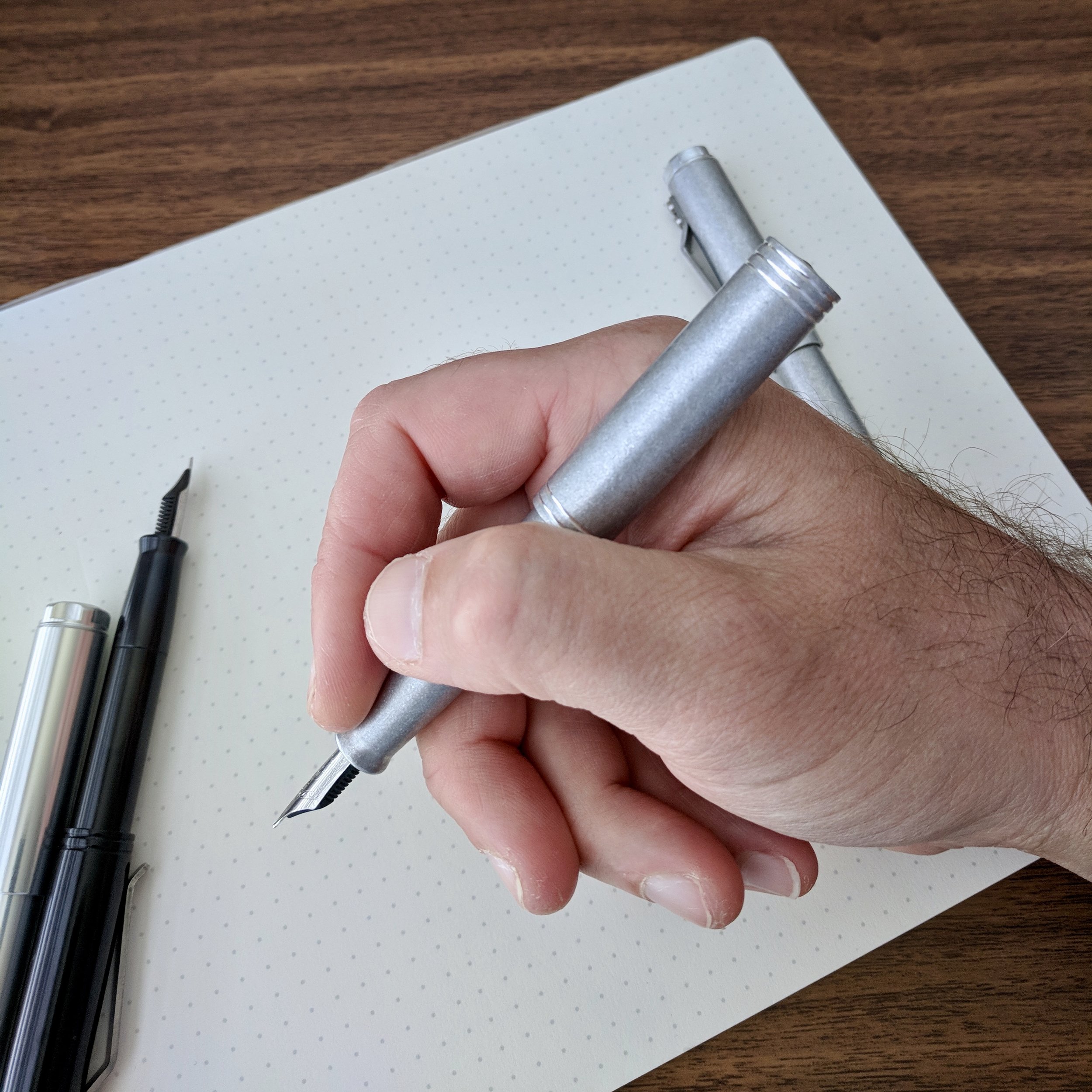
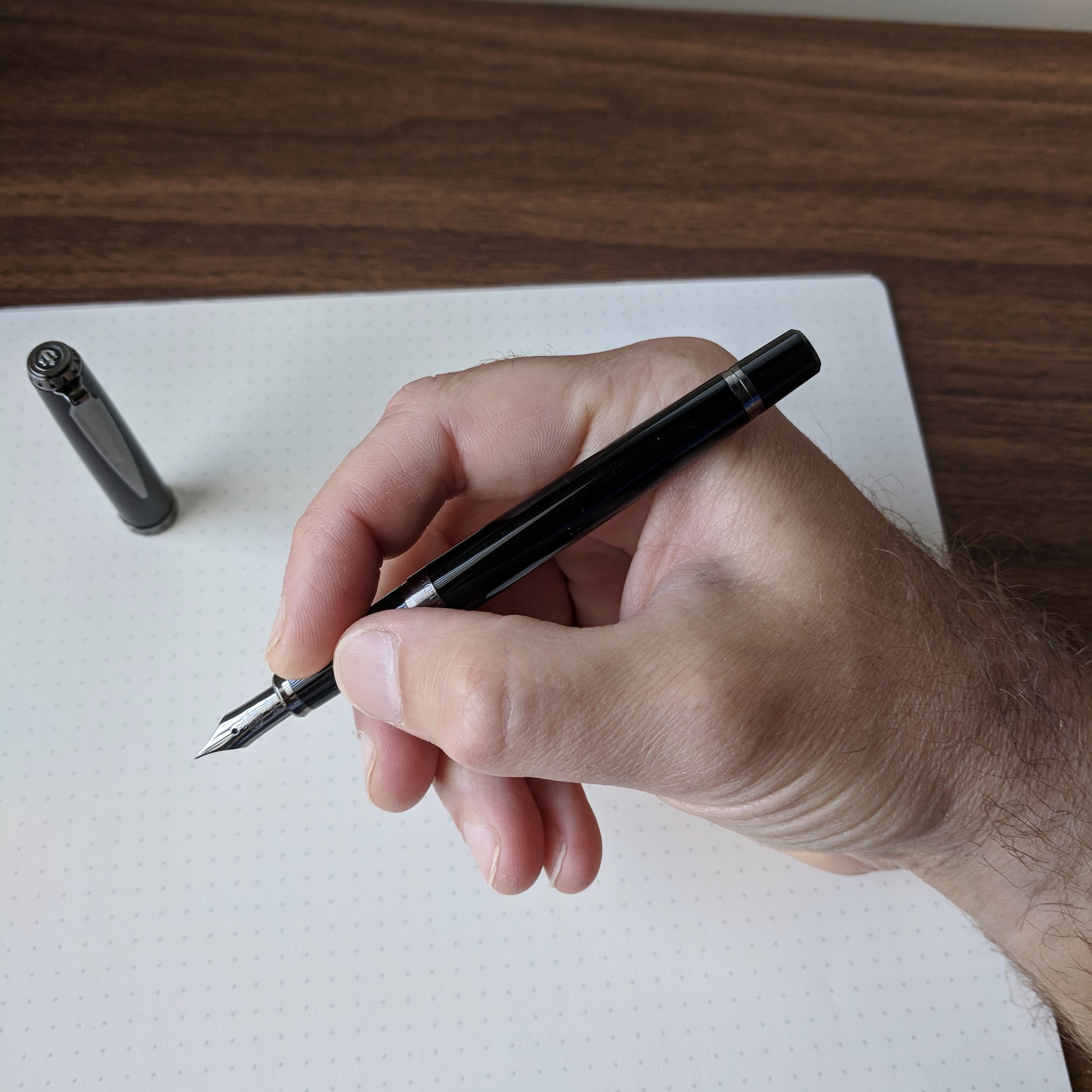
View fullsize Aurora Talentum Unposted
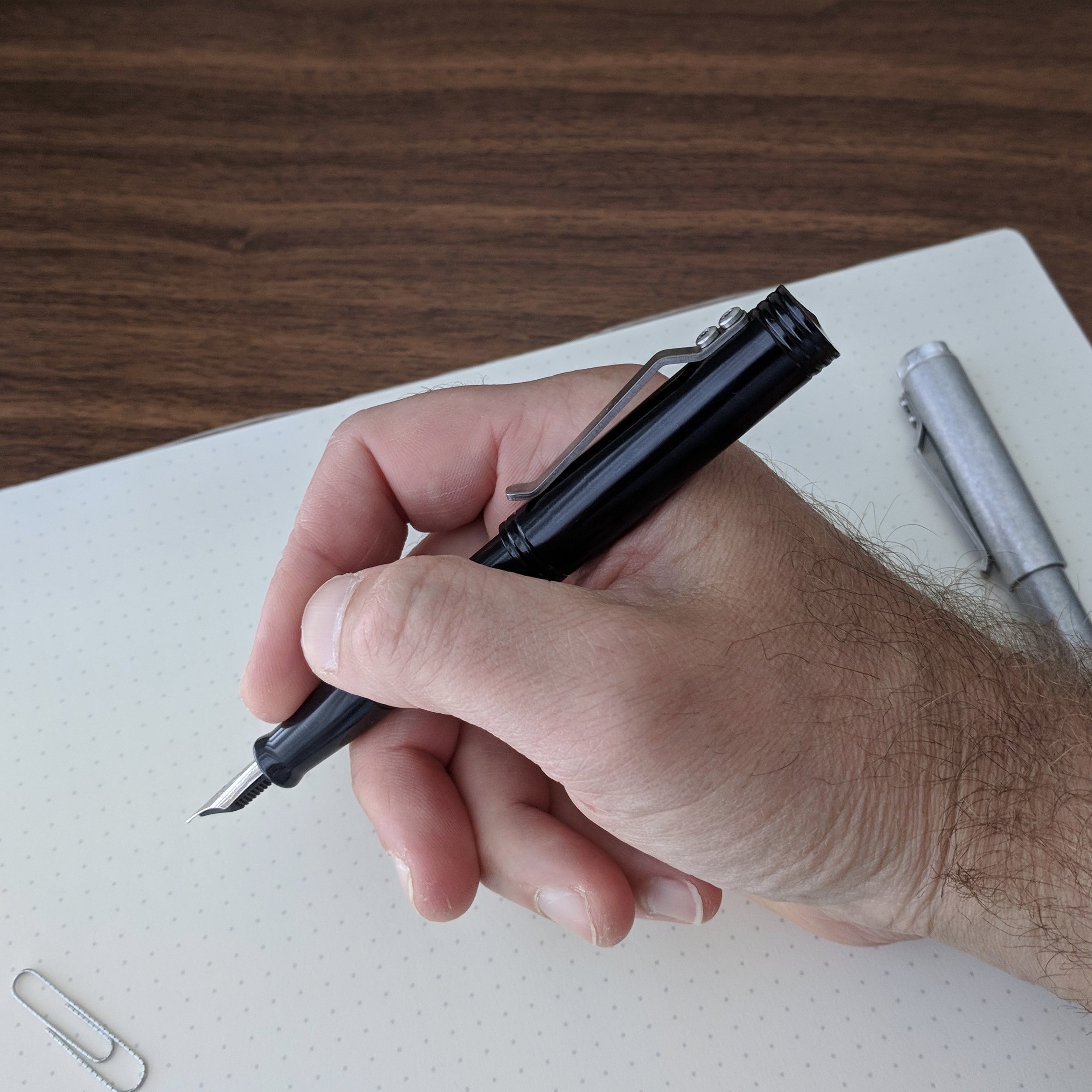
View fullsize Aurora Talentum Posted
View fullsize Aurora Talentum Writing Sample

Is There Anything I Don't Particularly Like? 

Me personally? No. Depending on your preferences, however, others may find the Talentum too long, especially posted. While it's definitely on the longer end of what I can comfortably use, the pen's light weight and good balance prevent the length from being an issue. I'm glad this is a cartridge-converter pen because the weight of a piston filling system seems like it would have been too much. (It also serves to keep the cost down.)  

Posted, the Aurora Talentum Black Ops is about the same size as the Lamy LX/AL-Star (top) and the Lamy Safari (bottom). The Talentum is a bit shorter. 

Another size comparison, from left: Lamy 2000, Aurora Talentum Black Ops, Platinum 3776 (Shungyo limited edition), and Pilot Custom 823. 

Takeaways and Where to Buy

If you're a fan of pens with ruthenium trim, consider ordering one of these now. The Talentum "Full Black" or "Black Ops" is currently available for purchase at sponsor Pen Chalet, priced at $360 before any applicable coupon code or promotion. In addition to the pen featured here, there is also a "Full Metal" version with a ruthenium-plated metal cap, which is more expensive at $460. While expensive, the price point for the resin-cap version comes in well below the Sailor Pro Gear Imperial Black or 1911 Black Luster, and it's unusual to find a pen with these specs - especially the ebonite feed - at this price point. As I mentioned up top, please keep in mind that these are my initial impressions, as I've only had the pen for a couple weeks. If anything changes, I will of course update this post or publish a revised review based on any issues that may arise during longer-term use. 

Disclaimer: I have an affiliate relationship with Pen Chalet, which generates store credit that I can use to purchase pens such as this one for review. I was not paid or compensated for the content of this review, and all opinions here are my own. 

The Talentum Black Ops is a great looking addition to your everyday kit, shown here alongside the gray-face Raven Venture automatic watch. 

The Talentum Black Ops is a great looking addition to your everyday kit, shown here alongside the gray-face Raven Venture automatic watch. 

In Pens Tags Talentum, Aurora, Talentum Black Ops, Black Pen Society, Stealth Pen
3 Comments

Pen Review: Sailor Reglus Night Black

June 13, 2018

Though Japanese pen company Sailor makes a wide range of pens, and releases new special editions on a near-monthly basis, most of these pens feature gold nibs and, accordingly, a relatively high price point. Over the past year or so, this has started to change somewhat, as pens that were previously Japan-only have found their way into worldwide circulation, including steel-nib models such as the pen that I'm reviewing today, the Reglus. I was perhaps most happy to see that Sailor has incorporated into the "Night Black" and brown Reglus models the same ion-plated black trim that it uses on the Pro Gear Imperial Black and the 1911 Black Luster. Overall, the Reglus exceeded my expectations, and offers a high-end Sailor writing experience at a very reasonable price point. 

Sailor makes several pens with black ion-plated trim. From left: Reglus "Night Black", Pro Gear Imperial Black, 1911 Black Luster, and 1911 Standard Demonstrator (special-edition from Nagasawa Department Store in Kobe, Japan)

Build Quality and Writing Experience

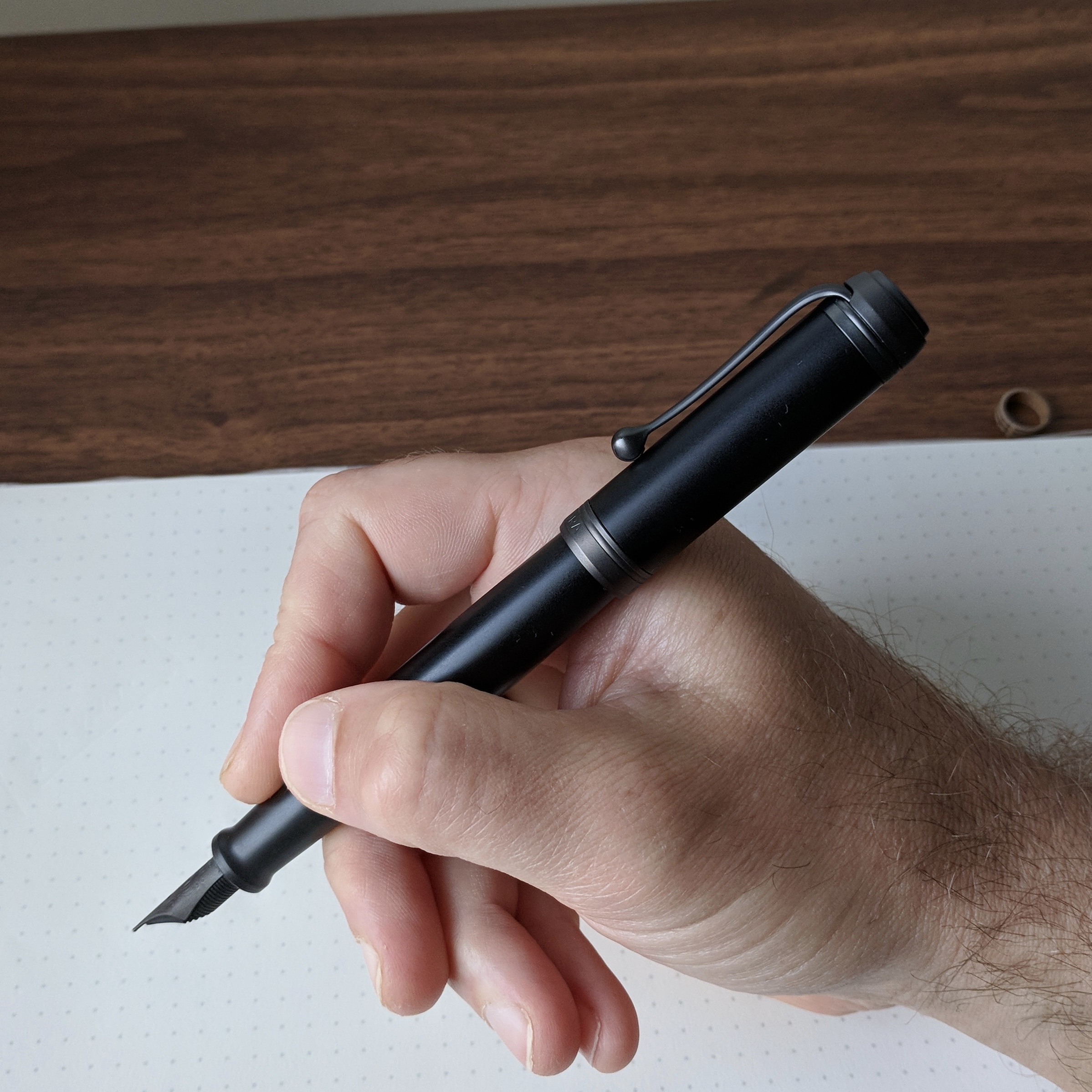
The Reglus is a Sailor pen, so of course it's well made. The biggest thing to note is that the Reglus is significantly slimmer than any other pen from Sailor that I've used, including the 1911 Standard or the Pro Gear Slim. The girth will probably determine whether you like this pen - if you have larger hands or prefer a more substantial writing instrument, you may want to stick with the Pro Gear or 1911 lines, or even the ProColor if you prefer a steel nib.  Personally, I've found the Reglus to be a comfortable writer, though I do use it posted to give the pen better weight and balance. Sometimes a slimmer pen is a handy tool to have in the arsenal, because it fits in notebook/planner pen loops and is more portable for certain situations. 

View fullsize Sailor Reglus Night Black Unposted
View fullsize Sailor Reglus Night Black Posted
View fullsize Sailor Reglus Night Black Compared Against Lamy 2000

As far as steel nibs go, the medium ion-plated steel nib on the Reglus is outstanding. It's firm and smooth, and I dare say I can't tell too much of a difference between the steel nib on the Reglus and some Sailor 14k nibs I've used in the past. (Another pen I've reviewed that features Sailor stainless steel nibs is the Taccia Spectrum.) As you would expect at this price point, and from Sailor in general, this is a cartridge-converter pen that uses the typical Sailor proprietary converter. 

The nib on the Sailor Reglus is slightly smaller than the typical 1911/Pro Gear nibs, and has a different, slightly more understated, engraving. I like the look! 

Takeaways and Where to Buy

The Reglus is a welcome addition to Sailor's lineup, and I hope it becomes more widely available. Sailor's nib technology continues to impress me, and it's great to see that they can largely duplicate the smooth, firm writing experience of their gold nibs in a stainless-steel package. This pen would be a great option for someone tempted by the Pro Gear Imperial Black or Black Luster fountain pens, but who doesn't want to spend at the $200-400 price point. Be aware, however, that it is a slimmer pen than either of those two models.

Currently, one of the few retailers who stocks this particular model is The Pen Company, who graciously sent me this pen for review. The Reglus is available in several colors: black or brown with black ion-plated trim, or black, white, bordeaux, or blue with rhodium-plated trim. The black-trim models cost around $100 USD, with the standard rhodium trim versions running around $89 USD, though prices may vary with the exchange rate. Many thanks to The Pen Company for making this review possible!

Disclaimer: The pen featured in this review was sent to me free of charge by The Pen Company for review purposes. I was not otherwise compensated for this review. 
In Pens Tags Sailor, Sailor Reglus, Black Pen Society
Comment

Comparison: Baron Fig Squire vs. Retro 51 Tornado

June 9, 2018

The Baron Fig Squire and the Retro 51 Tornado are two of the most popular - if not the most popular - liquid ink rollerball pens on the market. Both are well-made products from smaller, "boutique" manufacturers. Both pens also regularly make their way onto recommendation lists, and are among a handful of pens that I recommend to those approaching me about a "nice non-fountain pen for work" or a gift for someone graduating or starting their first job. You can't go wrong with either pen: they are both excellent, but still different. In this post I'll highlight some of the pros and cons of each, and talk about which pen I personally prefer and why. 

Retro 51 Tornado: Pros and Cons

The first pen from the left is the Retro 51 Tornado Joey Feldman Artist Series from Vanness Pens. The next two from left are the Bioworkz Artist Series set, also from Vanness, though both have long been out of stock. Check the secondary market if you're interested in either design.  

  • Availability. If you like the look of Retro 51 pens, a key advantage is that almost any specialized pen retailer sells them, and there are dozens of different colors, designs, and special editions to choose from, including store editions specific to a given location. If you have a local pen store, you likely will be able to walk in and pick up a Retro 51 quite easily. 
  • Refill. The Retro 51 also uses the excellent .7mm Schmidt P8127 ceramic capless rollerball refill, which is the gold standard in terms of availability and reliability. You can also swap in the Schmidt Easyflow 9000, another Parker-style gel refill, or the finer-tip Schmidt P8126 rollerball. 
  • Fun Designs. Many people partial to Retro 51 love the pens for their special and limited editions, as well as their outright crazy designs and themes. Designs range from the understated Tornado Classic to the more intricate Metalsmith series, or all the way to the new KISS-themed pens. The Retro 51 that I use the most, however, is this vintage-style desk pen that I reviewed a while back. 
  • Clip. If you prefer a pen with a clip, or clipless pens flat-out don't work for you, you'll want to go with the Retro 51 Tornado. The Baron Fig Squire only comes clipless.
  • Price. The classic Retro 51 lacquer Tornado sells for as little as $25, and even the special edition rollerball pens rarely exceed $55 or so. You can get a great pen at a reasonable price.
  • Cons. I personally find the Retro 51 less comfortable to use due to the fact that the pen tapers towards the front, as opposed to the Baron Fig Squire, which has a thicker grip section and tapers towards the back. Also, because I have a tendency to rotate my ballpoints and rollerballs as I write, the clip on the Retro 51 sometimes digs into the webbing of my hand between my thumb and index finger. The clipless Squire doesn't have that issue. 

My Joey Feldman Retro 51 in hand. Note the "V" shape to the Retro 51, which differs from the Baron Fig Squire, pictured below. 

Baron Fig Squire: Pros and Cons

  • Ergonomics and Balance. What makes the Baron Fig Squire such a great pen to me is the shape. Though some may find the pen a bit boring and overly minimalist, the teardrop pen body sits perfectly in my hand, and the fact that the pen tapers towards the back makes it comfortable to write with for long periods of time. The matte aluminum finish of the standard editions makes for a nice grip. I don't mind the lack of a clip - I typically carry the Squire in a Baron Fig leather pen sleeve, tucked into a pen case or the inside of one of my notebook covers. 
  • Understated Special Editions. For their special and limited edition Squires, Baron Fig has thus far chosen to stick with solid colors and small, understated engravings, even for what could be considered their most "out there" editions, like the green "Experiment" and the orange "Mysterium". The "Precious Metal" Squires in brass and stainless steel (still available!) also turned out really well, and the pen's ergonomics counteract the added weight of the materials. 
  • Price. The Squire starts at a higher price point than the Tornado, with the basic pen priced at $55, standard special editions priced at $60, and the "Precious Metals" rollerballs priced at $85. That said, these pens still don't break the bank. 
  • Cons. There aren't many for me personally, and I've gone so far as to say that the Squire is pretty close to my perfect non-fountain pen. Some might be put off by the lack of a clip, and I understand how that could be a deal breaker depending on how you use your pens. Also, the Squire may roll off a slanted work surface, though given how the pen is weighted it tends to roll much less than many clipless pens. 

The Baron Fig Squire "Mysterium" edition in-hand. Note the subtle "teardrop" shape as the pen tapers toward the front. 

My good friend Thomas thought it would be helpful to have a side-by-side comparison, so I added a photo of the Mysterium edition Squire compared against the Joey Feldman Tornado.  Many thanks for the recommendation! 

Conclusions and Where to Buy

For my own daily writing needs, I use the Baron Fig Squire as my rollerball of choice. The teardrop shape and overall balance of the pen just works better for my hand, and I like that the default refill is the Schmidt P8126 .6mm. Finally, I simply like the look of the Squire better than the Tornado, as some of Retro 51's designs can be a bit busy for my taste. While Baron Fig has released a bunch of special and limited editions over the years, and recently introduced different color pens into their standard lineup, most of their pens are relatively understated and forego a lot of the somewhat crazy patterns for which Retro 51 is known (and loved by many).  

The Fig Wine Baron Fig Squire - my personal favorite of the standard edition Squires. 

In terms of where to buy these pens, as I mentioned above, the Retro 51 Tornado is a relatively easy pen to find at most pen retailers. Pen Chalet carries the entire range, including most of the annual special editions, and has even partnered with Retro 51 on their own "in-house" edition, a sci-fi take on the myth of Jason and the Argonauts which is well worth a look. Vanness Pens also stocks Retro 51, and has partnered with the Company on a series of "Artists Series" pens, including the pens pictured in this review. The most recent "Artist Series" pens have sold out, but keep your eyes peeled as new ones are always right around the corner. Finally, to give you an even better idea of some of the unique design partnerships out there, check out the Anderson Pens "Chicago" edition, as well as Mike Dudek's "The System" space-themed pen.  

The Squire can be purchased directly from Baron Fig, via their website. Currently, the standard Squire is available in four colors: Fig Wine, Rose Quartz, Blue Slate, and Silver. At the time of this review, two limited editions are also available: the Stainless Steel "Precious Metals" and "Mysterium" orange. The latter two likely won't last forever, so if they interest you, pick them up now. Though I haven't used one, Baron Fig recently released a Squire "Click" ballpoint, which is a bit slimmer than the standard Squire and has garnered good reviews to date. 

Disclaimer: This post contains links to paid sponsors and affiliates. The pens pictured here are a combination of pens purchased with my own funds, pens for which I received a discount in exchange for a review, and pens sent to me for review purposes free of charge.  

In Pens, Comparison Tags Rollerball, Baron Fig, Squire, Retro 51, Retro 51 Tornado
3 Comments

Pen Review: Inventery Pocket Fountain Pen

May 19, 2018

When we last heard from Inventery, they had launched their Mechanical Pen, a retractable rollerball that made my list of favorite new pens from 2017, and has since found a regular place on my desk. Jeff from Inventery recently reached out and asked whether I wanted to review their new Pocket Fountain Pen, and of course I said yes. I enjoy pocket pens, and the one thing that's eluded me over the years is a pocket fountain pen that's small enough to conveniently carry in my pants pocket, while still offering an adequate combination of durability and a comfortable writing experience. Inventery's latest offering may get me there.

Three versions, from left: Brushed Chrome, Brass, and Onyx.

Three versions, from left: Brushed Chrome, Brass, and Onyx.

As with the Mechanical Pen, the Pocket Fountain Pen is made of brass. If you tend to avoid brass pens because of that metallic smell they leave on your hands, read on, because Inventery offers two options in addition to raw brass: Onyx (black) and Brushed Crome. While the base of these pens is still brass - giving them weight and durability - the pens themselves have been coated. 

Inventery has great packaging. Pictured is the kit for the Pocket Fountain Pen with Extender, in Onyx. I've opted to swap in the Rollerball tip, with the clip, but you can see the options for fountain pen nib, clipless cap, stylus cap, and keychain cap, as well as the extender with converter. 

The main selling point of the Pocket Fountain Pen is customization. If you opt for the base model, the Pocket Fountain Pen comes with an interchangeable cap system, allowing you to swap out the clip for a clipless look, or add a stylus or keychain option. Perhaps most intriguing to me is Inventery's decision to include a .5mm PRS "interchangeable ballpoint head," which will transform the Pocket Fountain Pen into a rollerball pen that accepts fountain pen ink from either short international cartridges or a standard converter. In order to use the converter, you will need to purchase the "extender," which screws into the barrel to give the pen additional length, much like that featured on the Kaweco Supra. 

Overall, the Pocket Fountain Pen offers a quality writing experience. Inventery has chosen Schmidt nibs - always a solid and reliable choice - and I found the length, weight, and balance of the pen to be excellent. The cap posts securely, attaching to threads on the end of the barrel as with the Kaweco Liliput. (Note: I found that posting the cap on the "extended" pen made it too long.) The rollerball option surprised me the most. In the past, rollerball pens that accept fountain pen ink cartridges have tended to either leak, clog easily, or scratch the paper like a nail. I've had this one inked up with the same cartridge (Kaweco Ruby) for over a month, with no issues. I will note that since fountain pen ink is water-based and very wet, the .5mm tip will write wider than an equivalent gel or ballpoint pen, as fountain pen ink spreads more on paper than gel or oil-based ink. Think more "Uniball Vision Elite."  

View fullsize Brass Pocket FP with Extender (Unposted)
View fullsize Onyx Pocket FP with Roller Tip (Posted)
View fullsize Onyx Pocket FP with Roller Tip (Unposted)
View fullsize Brass Pocket FP with Extender (Posted)

The one aspect of this pen that I didn't really like was the clip, which has no tension and isn't particularly functional, at least not in the traditional sense. This isn't a pen that will attach securely to your shirt pocket, though it will hook onto the edge of your pants pocket or a pen slot inside a bag, which may have been the idea.

I keep the clip on to use as a roll-stopper. Otherwise, I'd probably choose to go clipless. Kudos to Inventery for providing you with the option.  

Takeaways and Where to Buy

I really enjoyed using the Inventery Pocket Fountain Pen, with my one quibble being the clip. That said, if you are truly carrying this as a "pants pocket" pen, or clipping the pen to the front of your jeans, the clip may work just fine. You also have the option to go completely clipless. Pricewise, the Pocket Fountain Pen is comparable to the Kaweco Supra, which I've reviewed before, and from a functionality perspective the Pocket Fountain Pen has an edge on the Kaweco Liliput because it feels more substantial in-hand and has a bit more girth and weight to it.   

The pens have minimal branding, and the "I" logo on the cap is a nice touch. Don't forget to check out Inventery's line of leather pen sleeves, available in three sizes. (The medium size fits the Mechanical Pen.) 

You can purchase the Inventery Pocket Fountain Pen, as well as the Mechanical Pen and a range of great accessories, directly from Inventery's online store. The kit shown here, which includes the Pocket Fountain Pen, extender, .5 PRS interchangeable rollerball/ballpoint section, and various interchangeable clip/stylus options, is priced at $165. Without extender and converter, the price drops to $135. As mentioned above, color options include Onyx, Brass, and Brushed Chrome. 

Disclaimer: Inventery provided me with the pens featured in this review free of charge. Many thanks to Inventery for making this review possible! 

In Pens Tags Inventery, Inventery Pocket Fountain Pen, Pocket Pens
3 Comments
← Newer Posts Older Posts →
Store Hours and Location
Visit the T.G.S. Curated SHOP
*New* Updated "Best Pens" Guide (2025)
T.G.S. 2025 Holiday Gift Guide
TGS x Roterfaden TGS_25
Hierarchies of Fountain Pen Friendly Paper

Join Our Patreon!
Subscribe to the TGS E-mail List

Featured Posts

Featured
Cover On the Paper Trail Intro Clip.jpeg
Dec 3, 2025
Introducing "On the Paper Trail," a New Podcast/Video Collaboration with Lisa Vanness of Vanness Pens!
Dec 3, 2025
Dec 3, 2025
Iro-Utsushi-Fine-Dip-Pens.jpeg
Oct 1, 2025
The Pilot Iro-Utsushi Dip Pen (and in General, Simple vs. Fancy Dip Pens)
Oct 1, 2025
Oct 1, 2025
Levenger-Annotation-Pad.jpeg
Sep 20, 2025
Five Boutique Paper Brands I'm Watching Closely and Why
Sep 20, 2025
Sep 20, 2025
The Gentleman Stationer RSS

© Digital Divide Media, LLC, 2014-present.

All content is the exclusive property of Digital Divide Media, LLC, d/b/a The Gentleman Stationer, including “The Gentleman Stationer” website and trademark, and should not be reproduced without express written permission.  All rights reserved.

All content containing paid advertising, affiliate links, or sponsored content will be plainly disclosed by a disclaimer when/if featured.

Contact Information

Store Shipping Policy and Return Policy

Privacy Policy

Cookie Policy

Terms and Conditions

Powered by Squarespace