Pen Review: Pilot Razor Point II (Ultra Fine Tip)

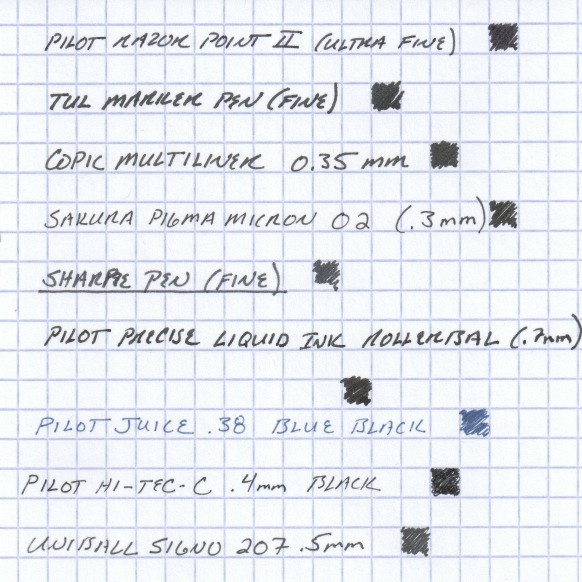
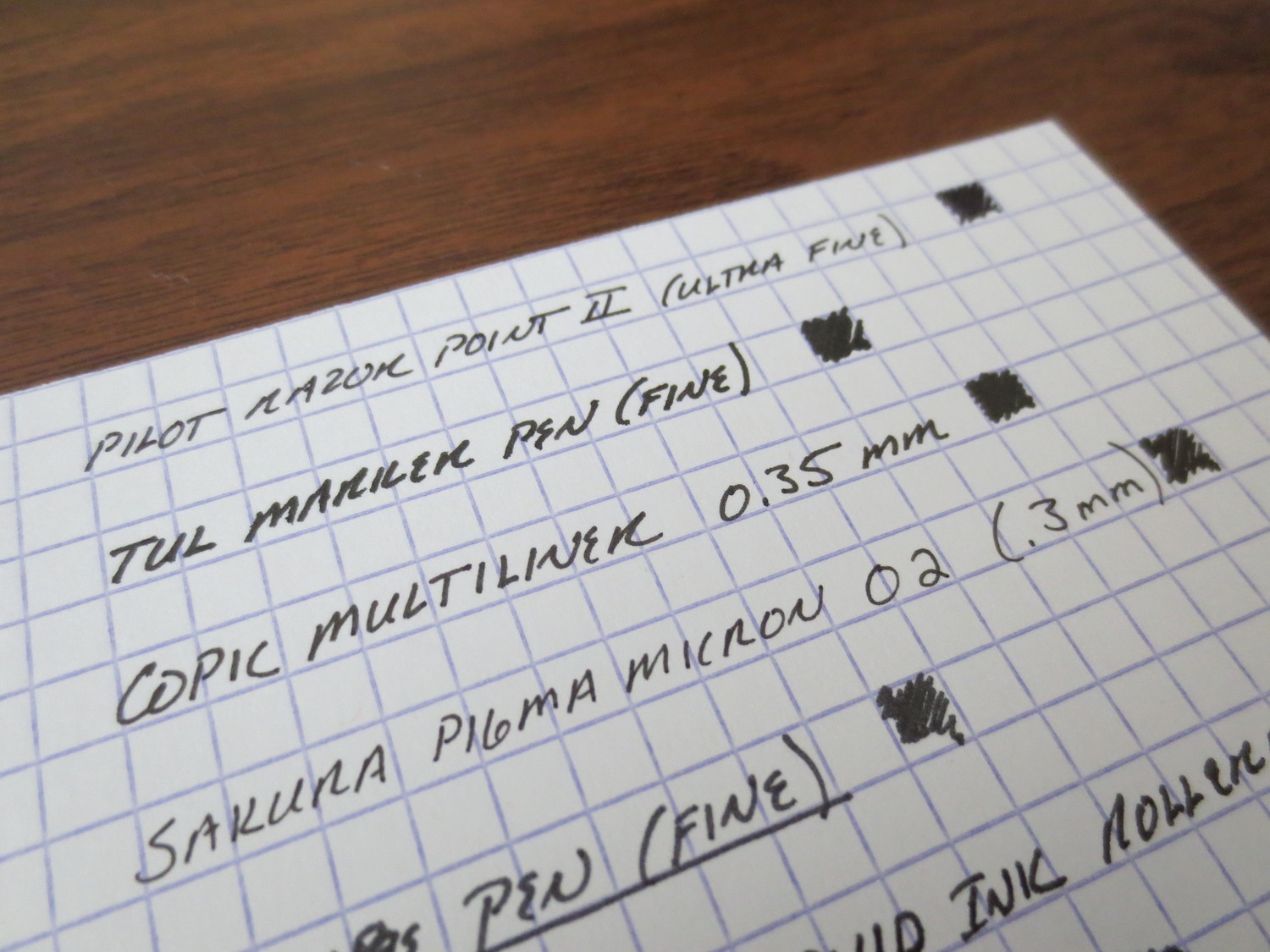
Until recently, felt-tipped or porous-tipped marker pens (often simply called "fineliners") were never something I had considered using on a day-to-day basis.  It wasn't until I had read the Pen Addict's reviews of the Sakura Pigma Micron--a pen I had never tried--that I picked up some marker pens on a business trip to New York City at the inimitable DaVinci Artist Supply.  This first lot included a Micron in a .3mm tip (the "02" model), a Copic Multiliner in a .35mm tip, and a pack of the "Fine" Sharpie pens.  I use all of these pens, and plan to post a thorough review of each of them in due time, but neither of these initial purchases really did it for me in terms of an everyday writer.  They work great for jotting notes and doodling--and the Micron is the Field Notes Pen if you want dark black ink and absolutely no bleed through--but the Micron's tip felt a little fragile for heavy use, and I found the inks in the Copic and the Sharpies not quite dark and wet enough for my preference. 

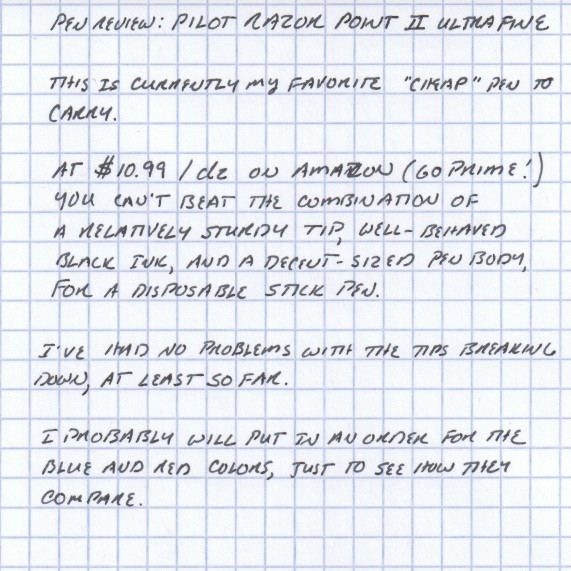
Enter Pilot.  I'm a longtime user of Pilot pens, and as I mentioned in an earlier post, the Pilot Precise Liquid Ink Pen was the first pen I ever purchased by the box, way back when I was in school.  Pilot has excellent dark black ink, even in its disposable pens.  (If, like me, you can handle a bit of bleedthrough on super-cheap papers, a black Pilot pen might meet all of your black-ink needs.)  On a whim, I picked up a four-pack of Pilot V Razor "Extra Fine" Marker Pens.  Too broad.  They wrote that great dark black line, but the width didn't allow me to do the type of tiny note-taking and annotation that I need to do at work.  So I went online to see if Pilot made an even finer version of the pen, and I found these, at 10.99 for a dozen, on Amazon.

At 10.99/dz, you certainly can't beat the price.

After using this pen nearly exclusively for a week, I can safely say that this is a great fineliner.  There has been no breakdown in the tip, from what I can tell, and the inkflow has remained consistent.  That said, there is some (I would say minimal) bleedthrough with the ink.  This is a true fineliner, intended for writing, so the ink is not super-precise and well-behaved like you would find in a technical drawing pen such as the Pigma Micron or the Copic Multiliner.  What you lose in ink properties you gain in durability, and any issues with the ink still has not stopped me from using this pen on both sides of the page in a Field Notes notebook.  I would say the bleedthrough is less than you would experience with any sort of fountain pen or rollerball.    

This is the tip after two-weeks of heavy use.  Minimal, if any, breakdown, and the pen is still going strong.  I suspect that if I had used fineliners prior to using fountain pens, tip durability might be an issue, but for fountain pen users who are accustomed to writing with less pressure, durability is less of a concern.

If you are looking for a purchase that will run you approximately $.92 / pen, IMHO the Razor Point II can't be beat.  You can find a Micron in the $2-3 range (for a single pen), but to me, who is more or less a cheapskate, that still stings a bit if/when you lose it, or when the tip breaks down when the pen is only half empty.  I'm pretty sure I've already misplaced one of the Pilot V Razors (if it didn't "walk" of my desk at work when I was out of town last week), and even that is eating at me.  Don't laugh, I know I have problems.  
      

Ink Review: Sailor Jentle Apricot

Over the past two weeks I've had two pens inked up with Sailor Jentle Inks.  My Lamy 2000 (EF Nib) has been loaded up with Epinard, and my Sheaffer Legacy Heritage (one of my personal favorite pens) has been loaded up with Apricot. 

A great combination for annotating documents:  Sheaffer Legacy Heritage with Mike Masuyama-tuned EF Nib, loaded with Sailor Jentle Apricot Ink.

Orange ink is new to me.  I definitely have a think for reds in all shades, particularly darker wine-colored reds like Montblanc Hitchcock (my favorite red ink of all time), Visconti Burgundy, and Franklin-Christoph Syrah Syrah.  I decided to try orange fountain pen ink after discovering the Pilot Hi-Tec-C gel pens, which have outstanding shades of both orange and apricot, and realizing that I like to be able to distinguish between different types/categories of annotations, especially when I'm editing a lengthy document such as a 100+ page legal brief.  But I digress....

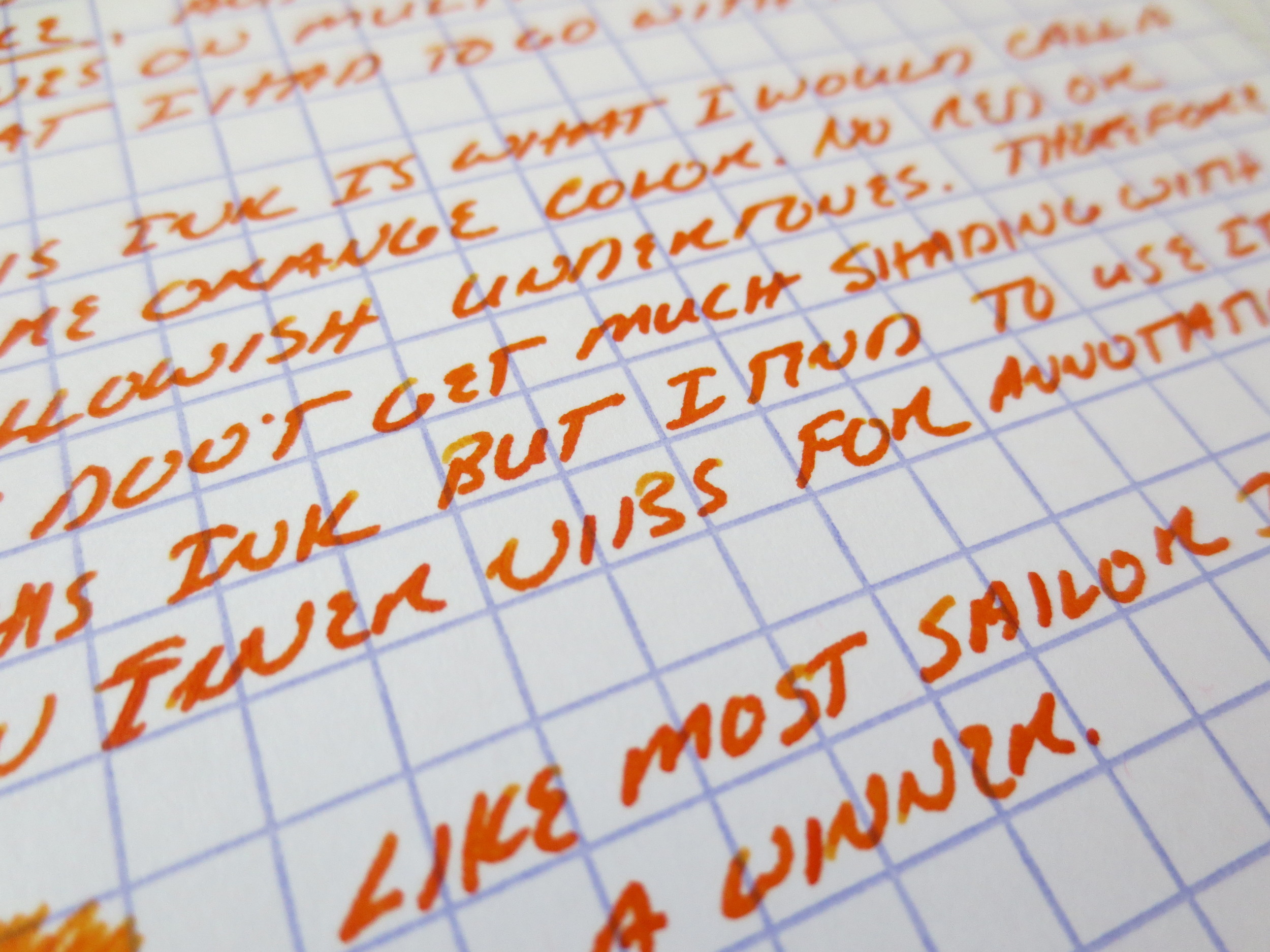
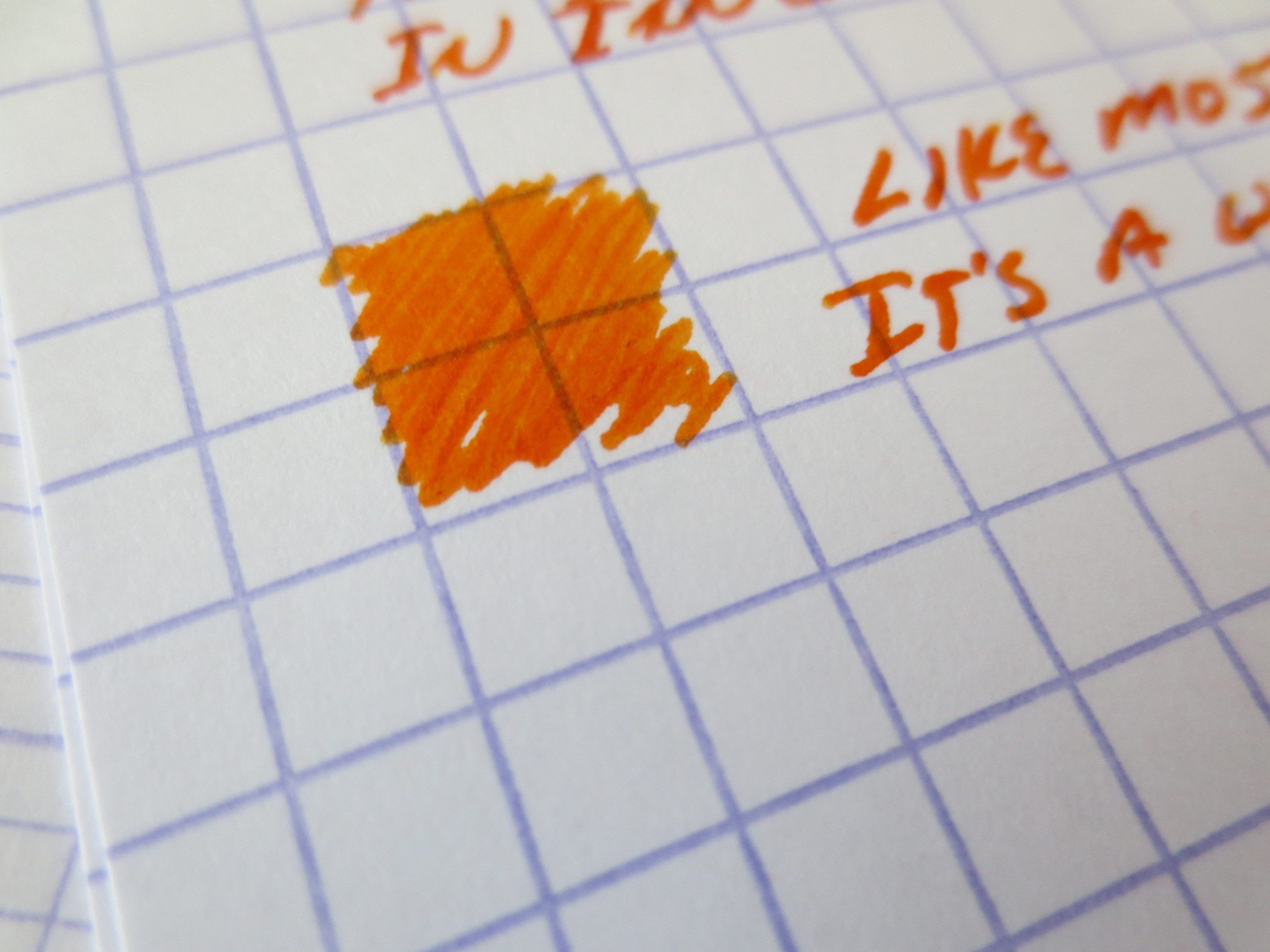
This scan makes the ink color appear slightly more red than it is in real life.  The pictures I've taken and posted below in the gallery or truer reproductions of the actual color. 

Apricot is extremely well behaved and low-maintenance for such a bold-colored ink.  It doesn't feather much, even on the cheapest paper, and bleedthrough is minimal.  So far, I've not had any difficulty cleaning the ink out of any of my pens.  One thing that distinguishes this ink from other popular orange inks such as Noodler's Apache Sunset, and even Iroshizuku Yu-Yake, is the relative lack of shading.  Some shading is there, especially in a wetter nib, but if its highly visible shading you're looking for, Apache Sunset wins that battle hands down. 

Travel Edition: The Gentleman Hits the Road

Just a quick post for the beginning of the week, since I've been traveling since Thursday (and, at least for the time being, am stranded in the airport.  What pens/stationery/writing equipment do you all take on the road?  For this particular trip, I've chosen my "non-fountain pens of choice."  If I'm going on a particularly long vacation or business trip, where I might be doing a lot of journaling or writing, I will take one or two fountain pens, but since this was a long weekend where not much writing was going to get done, I went with convenience.  

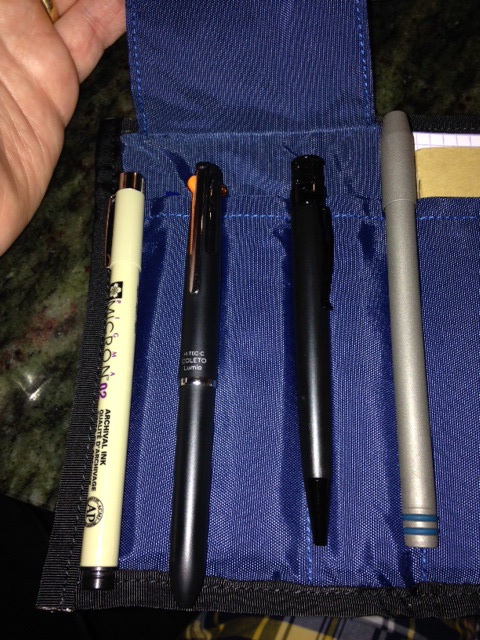
Four of my preferred "road pens"

Four of my preferred "road pens"

So, from left to right, the Sakura Pigma Micron 02 (.3mm); Hi-Tec-C Coleto Lumio in Matte Black; Retro 51 Tornado Stealth with the .7mm black refill; and the TiPen with a 0.4mm Blue-Black Hi-Tec-C refill.  The Coleto has four .4mm refills in black, purple, apricot, and orange.  I tucked these into my Nock Co. Hightower with a ruled kraft paper Field Notes and four or five Exacompta index cards and I was ready for pretty much anything:  

So far, I think the Hightower has been the favorite of my Nock Co. cases.  I received all of them, but this is my favorite so far.  Reviews forthcoming.

I'm comfortable with this as my "travel rig" for now.  I've been experimenting with various setups on recent business trips and nearly always have come home concluding that I've carried too much stuff that never gets used and just bulks up my bag.  We'll see where this goes. . . . 


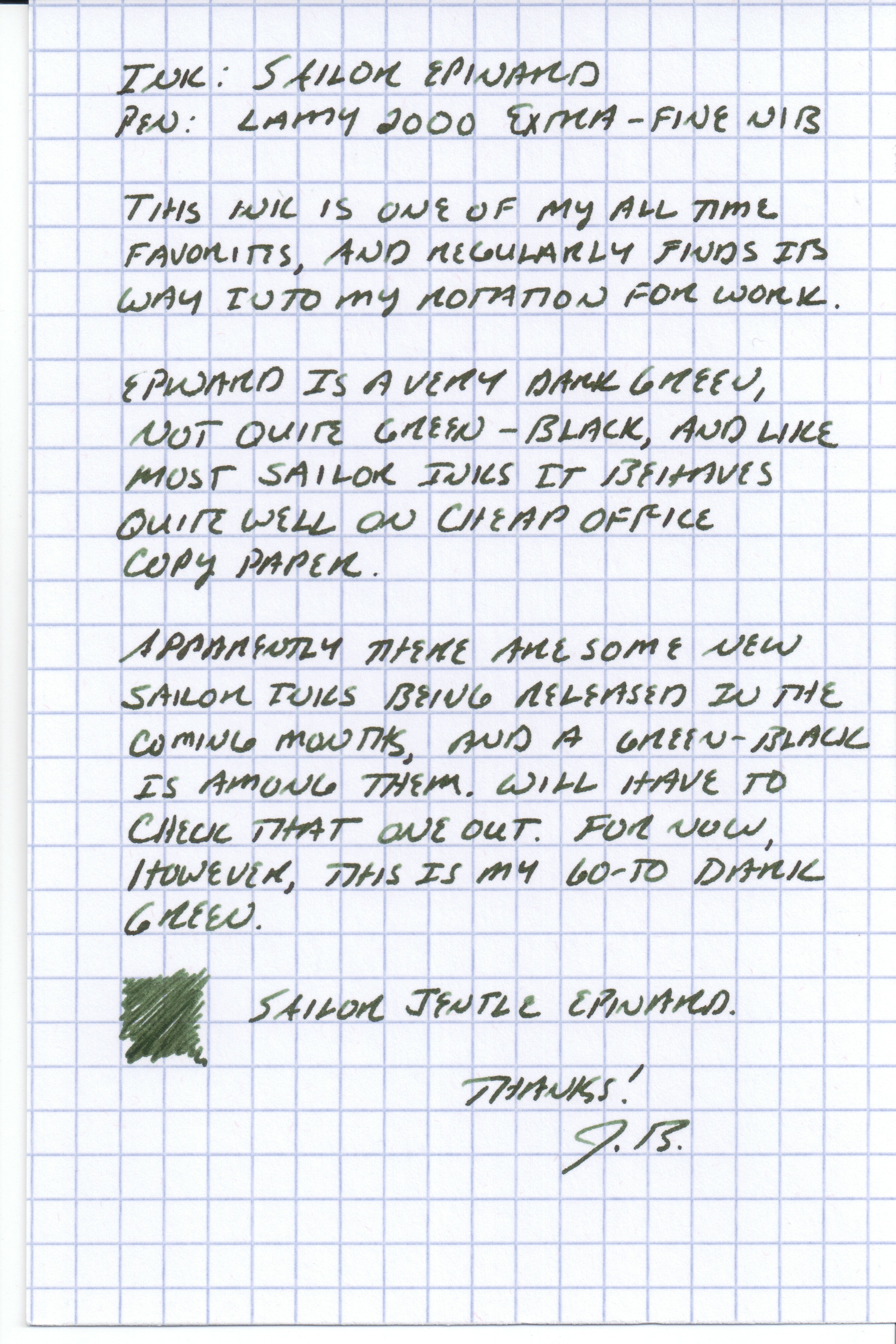
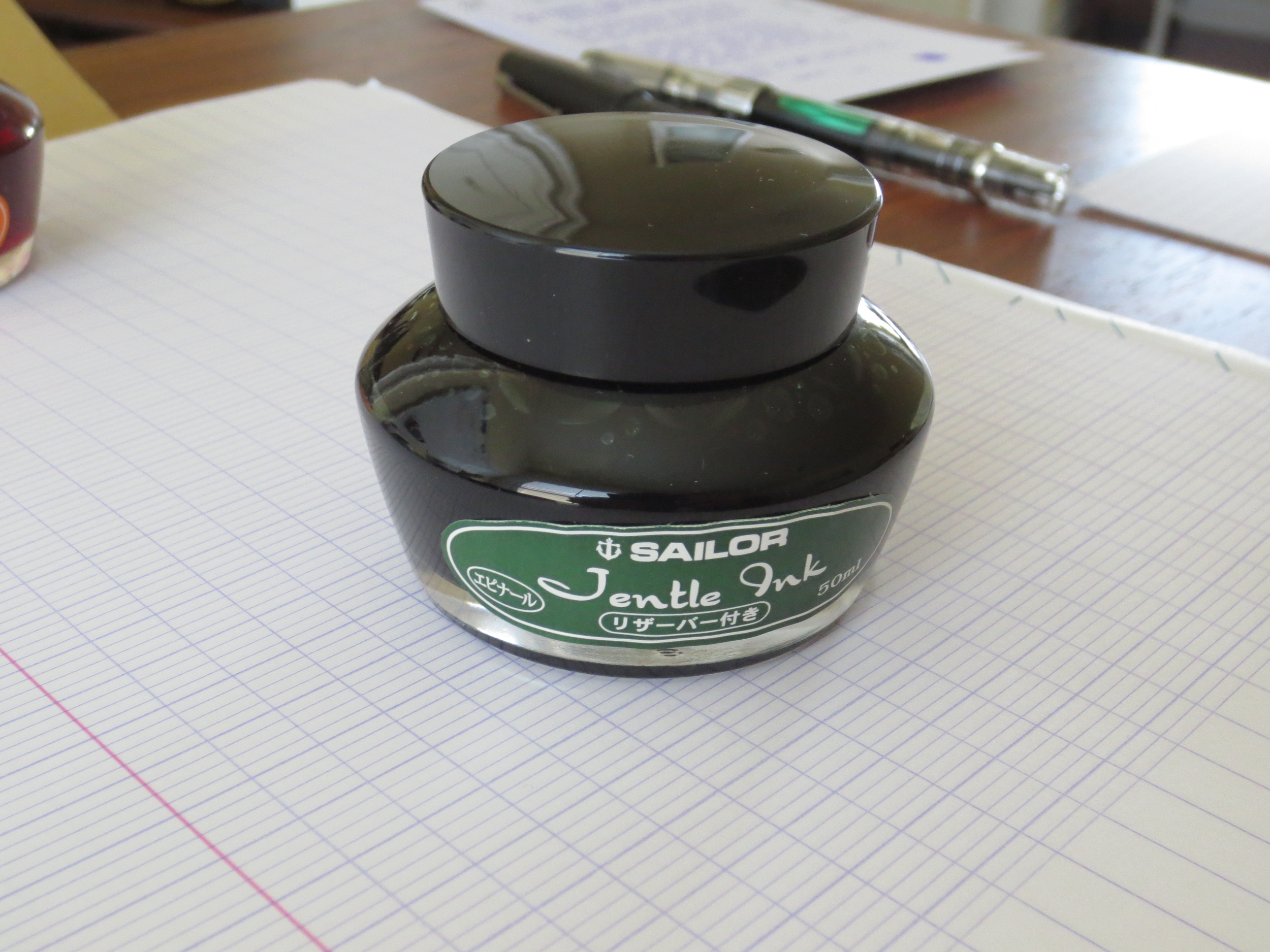
Ink Review: Sailor Epinard

This is a review for one of my "professional inks," that I regularly use at the office, in court, or anywhere else that I don't want to turn heads.  Not that this ink won't turn the head of anyone who's paying attention--it's a great color.  I apparently just missed out on the Montblanc British Racing Green ink by entering this hobby in 2010, just as that ink was discontinued.  People often suggest that Epinard is a comparable ink and fair substitute, along with Diamine Green Black, Diamine Evergreen, and Noodler's Zhivago.  Having never tried the original, I can't give an opinion.  What I can say is that this ink more than stands on its own. 

For the non-Francophones, "Epinard" is the French word for spinach.  It's a fair descriptor.  Although there's a good bit of black in the green, you're still writing with green ink.  This ink is loaded into my Lamy 2000 with an EF Nib.  A very professional ink in a professional pen.

What makes this ink great for work is the fact that like many Sailor inks, it's incredibly well-behaved on cheap copy paper.  If your employer, like mine, buys whatever it can get the most of for the least amount of money, and you absolutely must use a fountain pen at work, Sailor Jentle Ink is a pretty safe bet.  I have bottles of Epinard, Apricot, Grenade, and the ultimate cheap-paper ink, the pigmented nano-black.  All are excellent.  

Rumor is that Sailor is releasing a new range of ink this summer.  One of the colors among them is an even darker green-black, which is on my list.  Stay tuned.  And if anyone wants to send me a sample/full bottle of the British Racing Green, feel free to reach out . . . . :) 

Kickstarter Lawsuit Filed As Backer Fails to Deliver

As some of you might know, when I'm not writing here I spend my days--and some of my nights--as an attorney, and I couldn't help but post this when it landed in my inbox yesterday.  Apparently, Bob Ferguson, the Washington State Attorney General, has filed a lawsuit against the makers of the Kickstarter card game, Asylum, for failing to deliver a finished product to his 810 backers who had provided him with $25,000 in funding.  35 of those backers lived in Washington State.  This unprecedented development certainly came as interesting news to me, as we pen enthusiasts are known to back a Kickstarter project or two, often with little to no assurance of whether or not we are paying for a project that will never deliver, or whether we will end up paying $50 for a "custom-designed" product that the backer purchased in China for $0.89.  The question has been asked in more than one forum, what recourse do we have against obvious fraudsters, when there's no real economic incentive to sue when you're out of pocket less than $100?  Apparently some state attorney generals are listening to consumer concerns, and it merits watching whether or not this becomes a trend.       

Some other links and stories:

Gamer Rant, Kickstarter Lawsuit May Set Precedent on Future Successful Campaigns

Gizmodo, The Government is Finally Trying to Make Kickstarter Scammers Pay