• Blog
  • Shop
  • Podcast
  • Resources
  • About
  • Archive
  • Contact
  • Cart
  • Sign In My Account
Menu

The Gentleman Stationer

Vintage Living in the Modern World.
  • Blog
  • Shop
  • Podcast
  • Resources
  • About
  • Archive
  • Contact
  • Cart
  • Sign In My Account

Personal Journaling Setup Part 2: Revisiting the Commonplace Book

July 25, 2020

One of the (admittedly few) benefits of the lockdown earlier this year was that all the time at home really jumpstarted my reading. Without a daily commute, I find myself with blocks of unoccupied “extra” hours for the first time in years. I’ve tried to fill most of it with constructive activity like reading, a favorite pastime that I’ve neglected over the years as we’ve all been pushed increasingly online. It’s also given me the opportunity to address an issue that’s concerned me for some time: I feel like I don’t have a good system for organizing and retaining what I read, particularly nonfiction. This, to me, presents a real problem and a serious opportunity to put the pens and paper I love to actual use in real life. The solution is obvious - start a commonplace book - but with so many options out there for tracking and organizing information, both analogue and digital, where do you even begin?

What Is a Commonplace Book?

A commonplace book, in its most basic form, is a type of scrapbook in which you record quotations, passages, aphorisms, notes, and more from your reading. Think of it as your own personalized encyclopedia, curated from the books, articles, or whatever other inputs you process throughout the day. A commonplace book is distinct from a traditional journal in that you record information, as opposed to serving as a place for thoughts and reflections.

Commonplace books have been around since the Renaissance, use by writers and scholars from Isaac Newton to Mark Twain to Virginia Woolf. Originally, of course, commonplace books were actual books. Today, modern practitioners use everything from index cards organized in boxes to digital apps. I don’t plan to address the digital option - part of the reason why I’m drawn to the idea of a commonplace book is because I process and retain information much better when I write it down by hand. That really leaves me with two options: notecards and notebooks. While each has its own advantages in terms of ease of organization and indexing (notecards) and long-term durability (notebooks), it probably won’t surprise most readers to hear that I’m a notebook guy.

When I read, I typically take notes in the margins or in a pocket notebook, and if it’s a key passage I want to remember (or, going forward, record in my commonplace book), I’ll mark the passage with a Book Dart.

Why a Notebook?

Honestly? Mainly because I’m a creature of habit. I enjoy the act of writing in a notebook, I’ve become accustomed over the years to jotting stuff down on loosely indexed pages, and I’m not doing academic research or organizing large amounts of information for a longer writing project. If you fall into the latter category, you probably really want to consider index cards, or even a digital option, because it will make it much easier to track sources for attribution, etc. My own commonplace book will be for my personal enjoyment and to source material for the occasional blog post, so I can live with the inefficiencies.

One thing I love about Write Notepads’ new Classic Hardcover is that you can easily maintain a continuous matching set as you fill up notebooks, or separate your notes by subject matter using different colors.

More Importantly, Which Notebook?

The answer to this question is: whatever notebook you will use regularly. Find something that’s relatively portable, contains paper versatile enough to use with the full range of writing instruments you use in a typical day, and finally, isn’t so nice that you’ll be afraid to use it. Most importantly, choose something durable that will hold up over time. Personally, my notebook of choice is a Write Notepads Classic Hardcover Notebook (which, full disclosure, I sell in my shop). Not only does this casebound hardcover notebook contain high quality, versatile paper, but the cover will hold up to repeated perusing over the years, and the notebook stores nicely on a shelf. If you like to organize your reading notes into volumes by subject, as many people do, it’s easy to pick up a matching set of notebooks, and you can even use different colors to signify subject matter. Other great options to consider are the Baron Fig Confidant and the MOO Hardcover Notebook. But use whatever you want - I write here about my own personal preferences, and as I always say on this blog, the key is to find something that works for YOU.

I plan to track my commonplace book project moving forward, either on Instagram or here on the blog. In addition to writing out quotes and passages that I find meaningful to me, I may even incorporate clippings from articles or paper notes. I’ve been following with interest Brad’s visual journal project over at the Pen Addict, and I’ve got the glue sticks and Washi Tape. If only I could find decent pair of scissors….
In Editorial Tags Journal, Commonplace Book, Reading Accessories
Comment

My Galen Leather writing box, set up per my actual everyday use. Ok, so I cleaned it up a bit, but all of this stuff lives in the box and it will close. It holds a bunch.

My Personal Journaling Setup

July 23, 2020

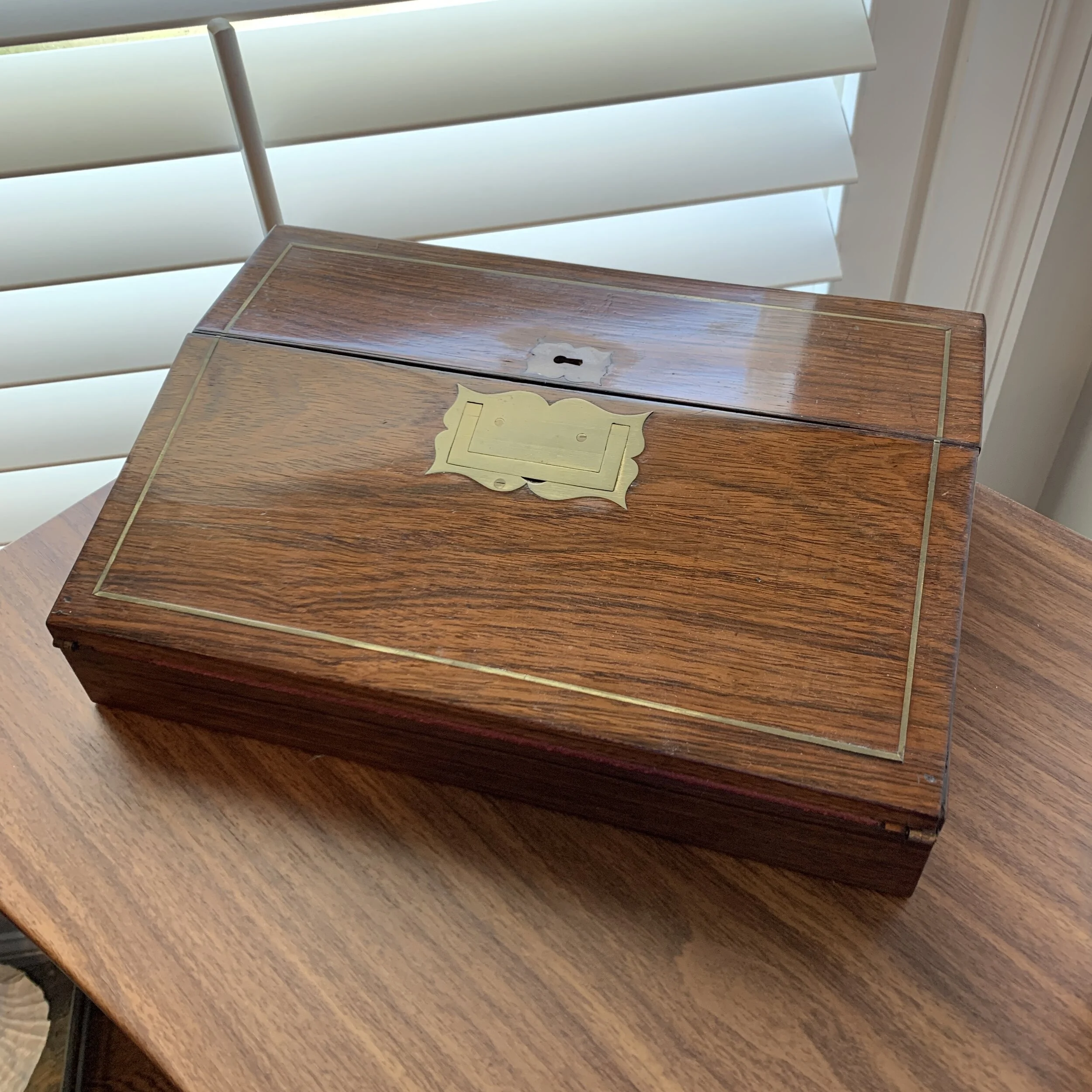
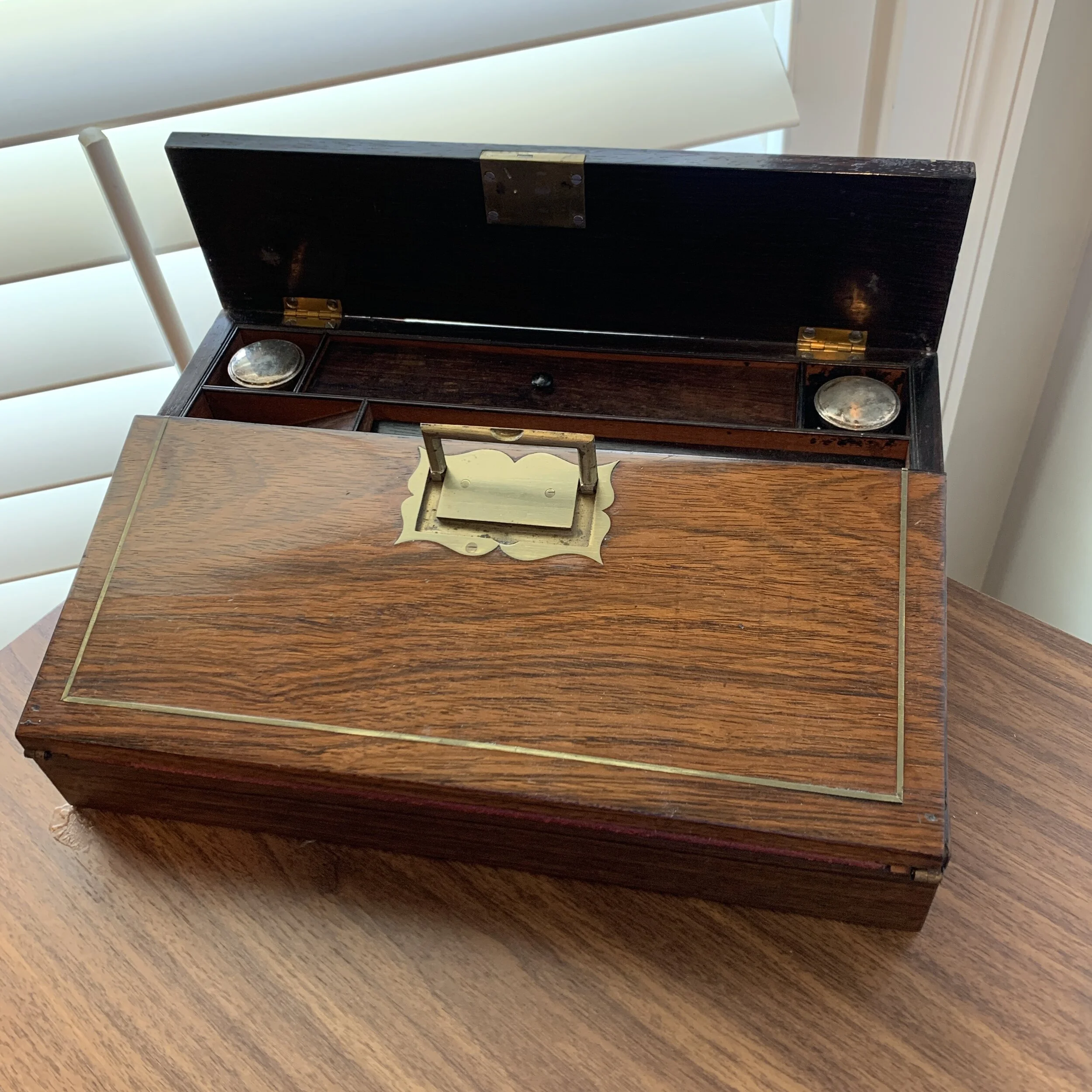
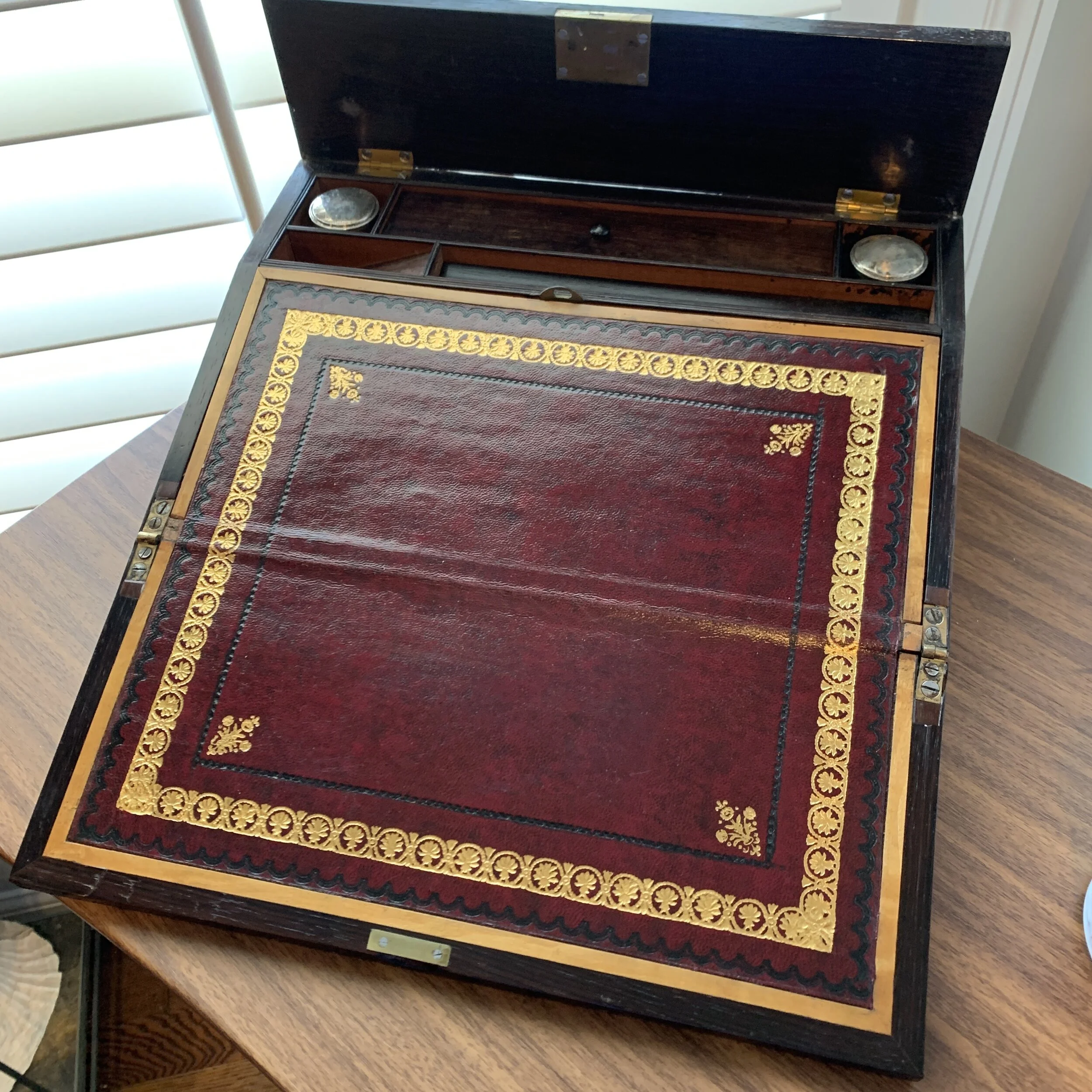
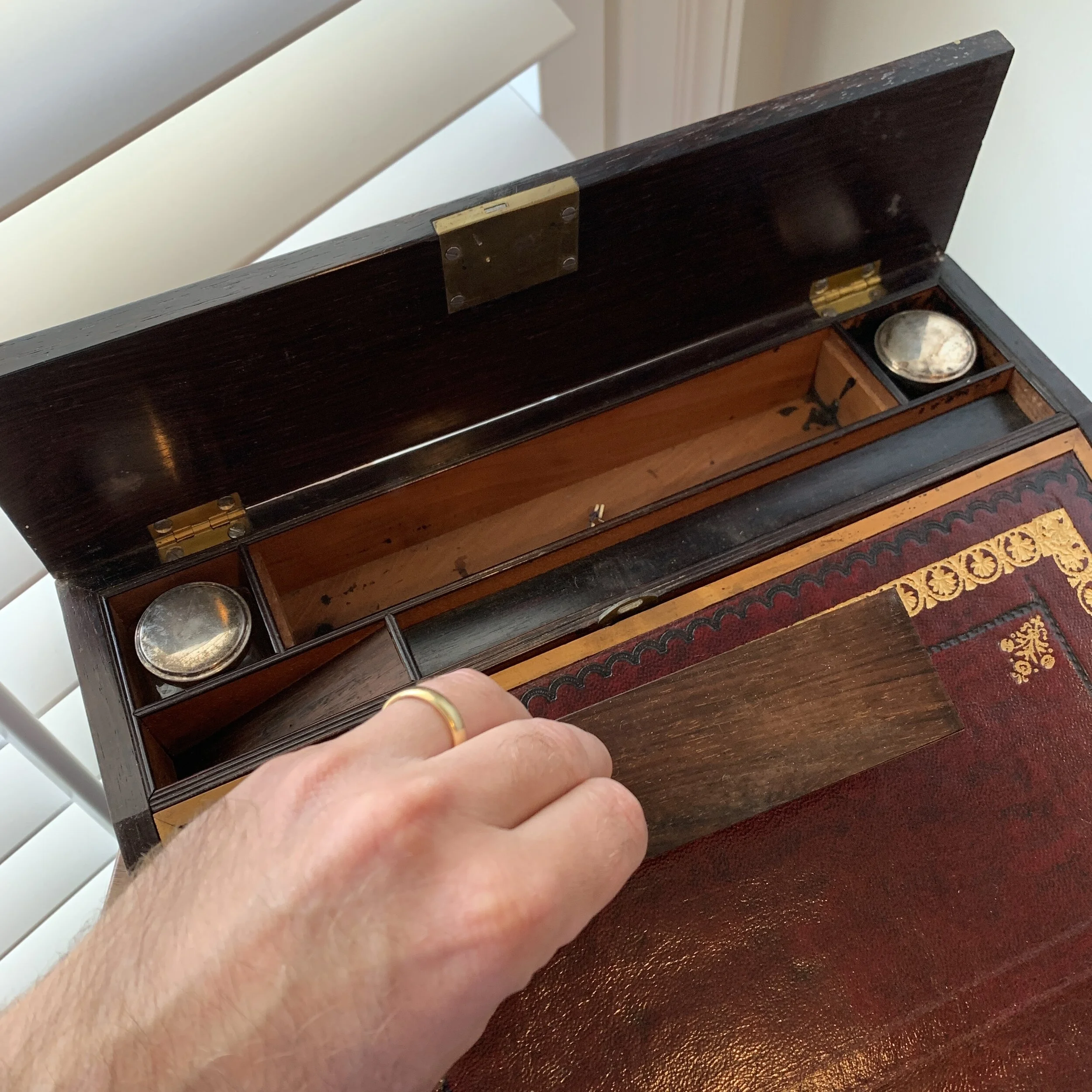
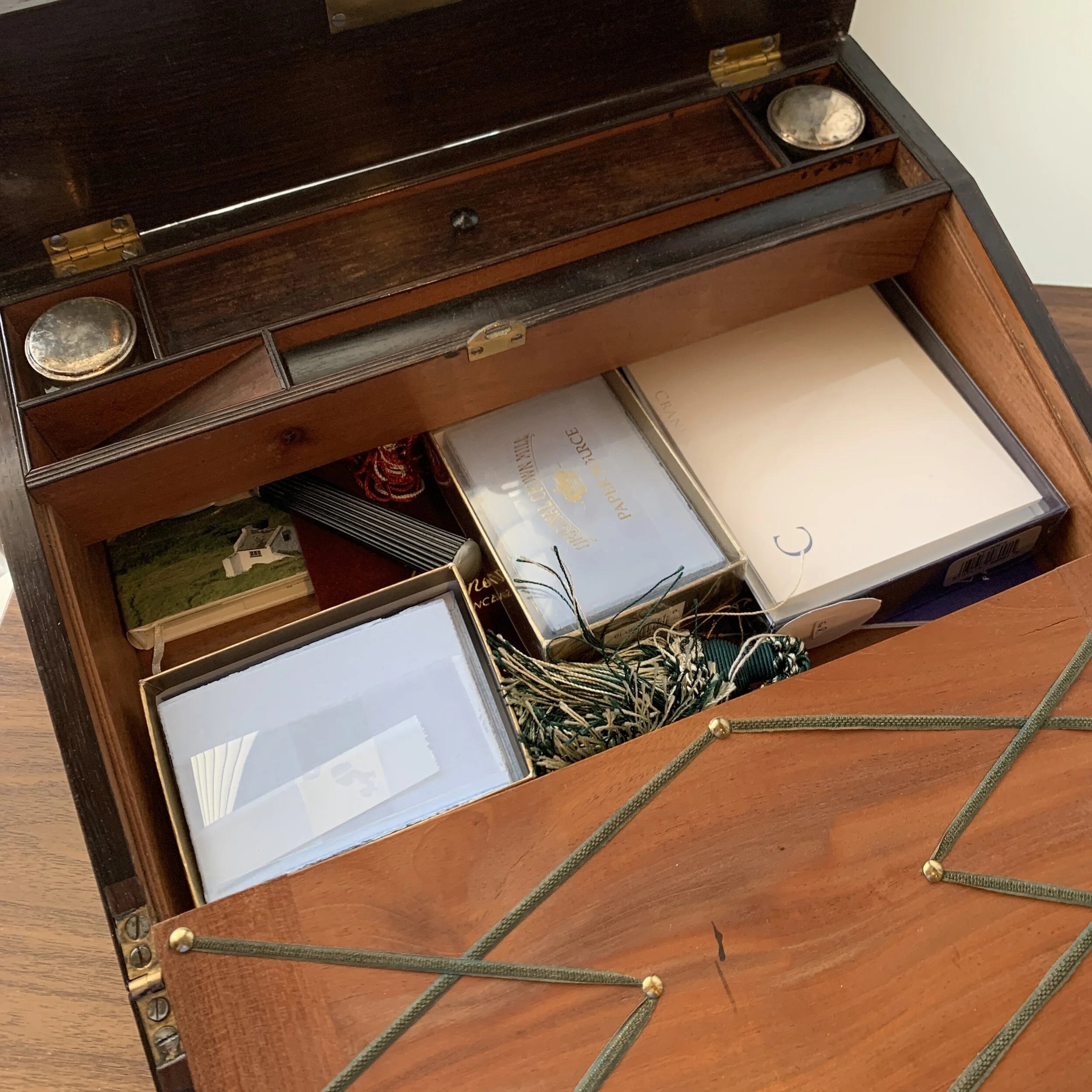
Instead of a traditional Deals & Drops setup this week, I wanted to give you all a glimpse behind the camera into my everyday “writing life,” including a product that I’ve had for a while but have never featured here: the Galen Leather Writing Box. I’ve kitted this out as my “journaling station,” which sits beside the armchair in my office and holds most of the stationery supplies I use frequently. Over the past several months, this setup has received a lot of use. I’ve long been a fan of antique writing boxes, and Galen Leather’s version apparently was inspired by Thomas Jefferson’s own design. As a bonus, at the bottom of this post I’ve included shots of my own antique writing box that I’ve owned for 20+ years. Enjoy!

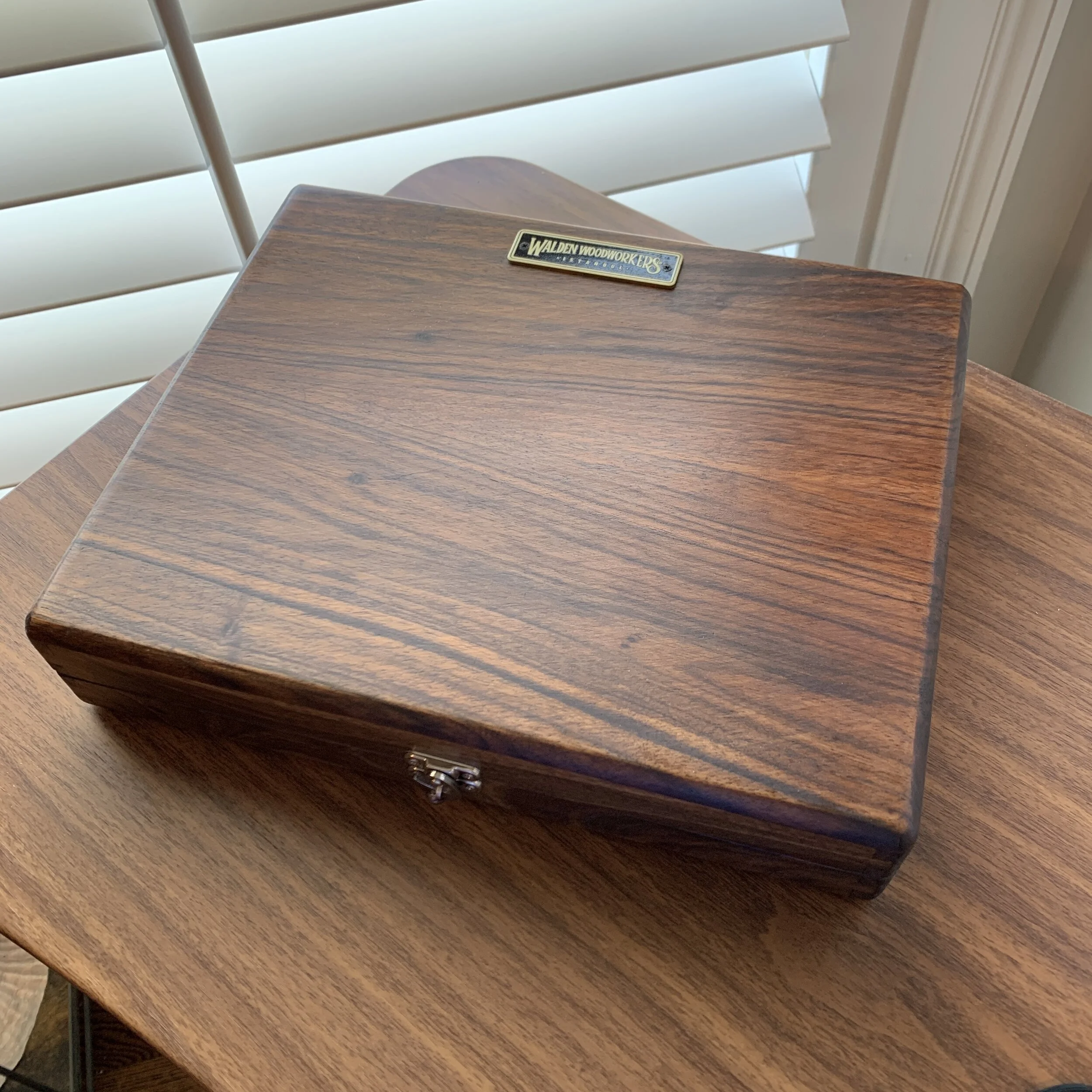
View fullsize Galen Leather Writing Box Closed
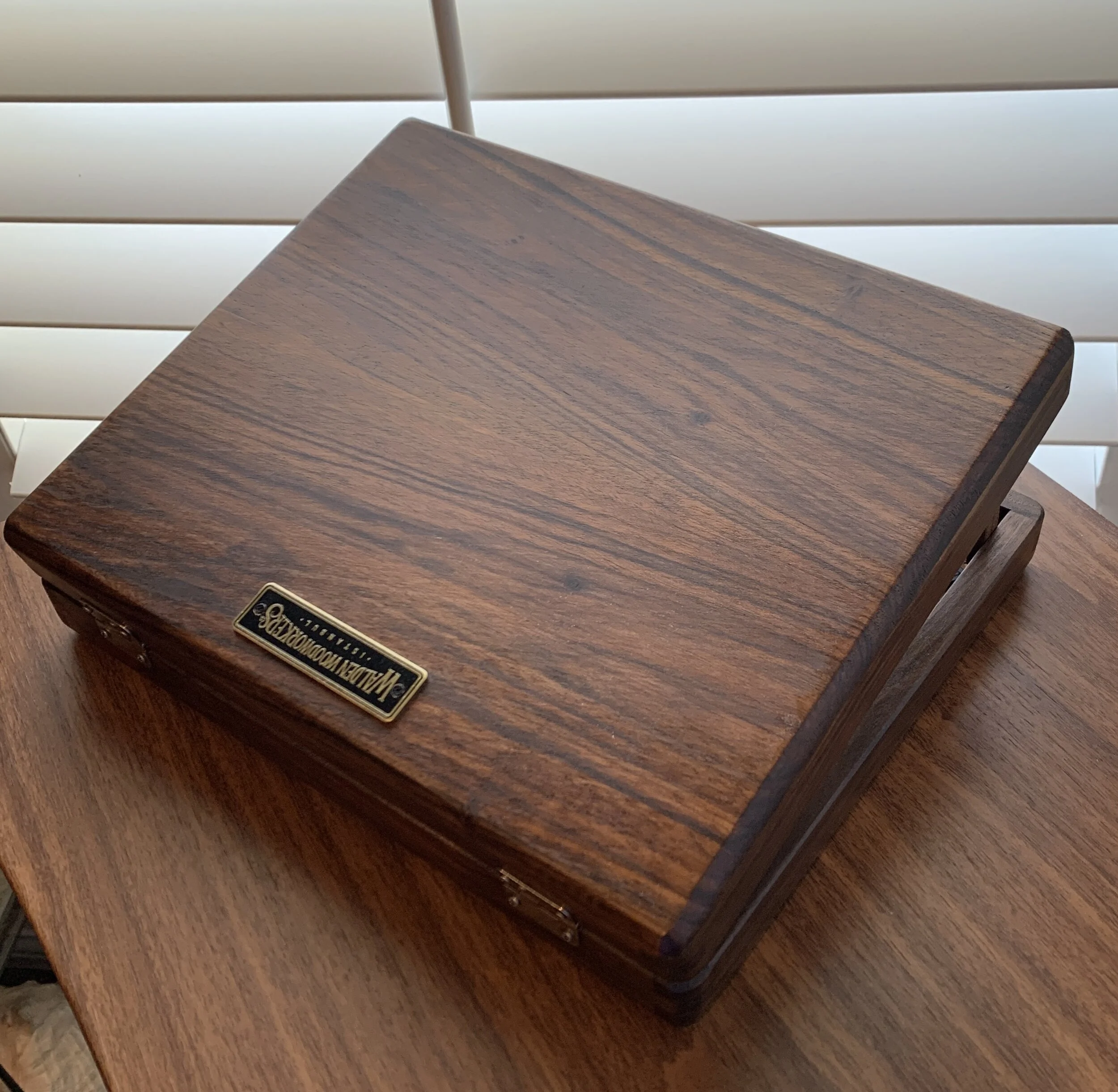
View fullsize Galen Leather Writing Box Open
  1. Galen Leather Writing Box (via Vanness Pens). I finally picked one of these pieces up at last year’s D.C. Pen Show, and once the pandemic hit I outfitted it with everything I needed for my daily writing sessions. I might not use it in “briefcase mode” with the included leather straps, but it makes a great lap desk with interior storage and organization. I’ve had no issues with warping - I’ve owned the box for nearly a year and I can say that problem appears to have been fixed. They are out of stock on the main Galen website but Vanness has some available.

  2. Nanami Paper Cafe Note (via Nanami Paper). For most of my journaling and personal writing, I use either the B6 Cafe Note or the Hobonichi Techo A6, the latter of which you will have to wait a couple of months to buy when the 2021 editions are released. (Honestly, buying anything “2020” right now just seems like it would be asking for bad karma.) Go ahead and get a Cafe Note in B6 or A6 instead.

  3. Field Notes Pocket Notebooks (via TGS Curated Shop). I’ve gone back to Field Notes as my mobile repository for reading notes. I tend to take notes in the margins with pencil as I read (especially nonfiction), and Field Notes pocket notebooks work well because they are slim and tuck well inside a book. I’m falling back in love with these things as I use them more, and will end up stocking most of the line shortly.

  4. TWSBI ECO Fountain Pens in Yellow and White/Rose Gold (via Pen Chalet). When I’m journaling, I tend not to want to be distracted by the pen I’m using at any given time. Rather, I want a simple pen that holds a lot of ink (typically something versatile and reliable). The TWSBI ECO fits the bill here.

  5. Book Darts (via TGS Curated Shop). I always read with a tin of Book Darts nearby, especially if I’m reading nonfiction or a book that I plan on re-reading or perusing again in the future. Book Darts are archivally safe (meaning they won’t cause the page to deteriorate) and can be removed and reused, though they’re relatively inexpensive so I tend to leave them in place long-term.

  6. Duncan Shotton Sticky Page Markers (via Duncan Shotton Design Studios/Etsy). Book Darts are great, but sometimes you just need a temporary sticky note-type page marker. I went with the “Mars” version, because if aliens is an option, I’m definitely going with aliens.

  7. Washi Tape (via TGS Curated Shop). Washi tape is useful for sticking things into your journal, such as pictures or old sticky notes/scraps of paper you end up wanting to keep. You can also take a small piece and fold it over the edge of a page in a notebook, to make a permanent place marker or to mark off sections if you index your notebooks.

  8. NJK Long Point Pencil Sharpener (via C.W. Pencils). NJK makes an exceptional long-point pencil sharpener for the money, especially if you want one that’s portable enough to carry around in your pocket.

  9. Caran D’Ache Graphicolor Highlighter/Graphite Pencil (via T.G.S. Curated Shop). My pencil of choice for reading, so I keep several stashed in my writing box. I love highlighter pencils, and Caran D’Ache graphite is firm enough to let you annotate and take notes while reading without having to worry about sharpening excessively.

  10. Pokka Pens Ballpoints (via TGS Curated Shop). Honestly, I never leave the house without these things. I have clear cap Pokkas in stock, even though they are now sold out on the main Pokka site.

View fullsize 7D295889-3927-4418-9C56-A5194140B73D.jpeg
View fullsize 5DC43FB4-1020-42A1-94CC-D5D677500DE3.jpeg
View fullsize B49090DF-52FF-48A0-BB74-DC6AC0A5EDEC.jpeg
View fullsize CA9EFC2A-3264-4908-81F0-2FF7113A4A1D.jpeg
View fullsize 0E98743C-6DA2-416B-B871-C66202EE0D26.jpeg

The TGS Patreon Program, Deals & Drops and sales through The Curated Shop are how I fund The Gentleman Stationer. Your support is greatly appreciated! This post contains affiliate links. Please see our privacy and cookie policies for additional information.

In Deals, Editorial Tags Deals
Comment

Clockwise from top: Blackfeet Indian Pencil, Leonardo Momento Zero Grande Arlecchino, Platinum Procyon, Matthew Martin OG1, and CW&T Pen Type-B.

2020 Mid-Year Recap: Five Favorite Products from the Year So Far

July 18, 2020

Notwithstanding the fact that 2020 has turned out to be a general s&*^show, resulting in the cancellation of all pen shows since March and for the foreseeable future, the past six months have not been entirely without bright spots. Actually, being stuck at home working remotely has provided me with much more time with my stationery and the products I review, and I’ve enjoyed having this opportunity to do more in-depth dives. Each of the following products that appear on this year’s July recap list is something that I’ve ended up using extensively at various times throughout the first half of 2020. If I had to pick the two that get the most regular use, I would say the Platinum Procyon (an excellent inexpensive daily writer that sits in the Penwell on my desk at home), and the CW&T Pen Type-B, which has been my non-fountain pen of choice. My favorite, however, is easily my Leonardo Momento Zero Grande Arlecchino, and I can’t wait to get my hands on the next three I have on order.

Here’s to hoping that the second half of 2020 is better than the first, and that we can all see a return to normalcy, including visiting and sharing pens in person once again! Enjoy my five favorite reviews of 2020 to date:

  1. Leonardo Momento Zero Grande Arlecchino Fountain Pen. I’ve enjoyed watching Leonardo grow their brand over the past few years, and I’ve long been a fan of the standard Momento Zero. The Momento Zero Grande takes it to a new level with gorgeous custom materials (including the much-hyped, forthcoming “Primary Manipulation” collaboration with Jonathon Brooks) and a larger body size. The “Arlecchino” was Leonardo’s re-creation of a beloved OMAS celluloid that unfortunately had a tendency to deteriorate over time. This version is resin, so hopefully I expect to enjoy this pen for years to come.

  2. Matthew C. Martin OG1 Fountain Pen. I discovered Matt’s work at the 2019 Atlanta Pen Show, but didn’t pick up one of his pens until Philadelphia in January. This pen didn’t leave my pen case for four months, and will be going back into rotation soon. Combining superb machining with a comfortable design and indestructible materials, the OG1 has become one of my favorite EDC fountain pens.

  3. Platinum Procyon Fountain Pen. Platinum continues to dominate the low-cost and lower mid-range pen market, with the Procyon making a strong showing in the $50-60 price bracket. The Procyon has definitely grown on me throughout the year, and features Platinum’s signature “Slip & Seal” technology that reduces ink evaporation and prevents the nib from drying out. While Slip & Seal might not be a critical feature for everyone, it can come in handy if you like to keep an inexpensive pen permanently inked up on your desk or another location for infrequent use.

  4. Blackfeet Indian Pencil. My “blast from the past” review of the pencil I recall fondly from my childhood. I went on a bit of an eBay stockpiling spree and now have several dozen of these in my discontinued stationery archive. And yes, they’re as good as I remember.

  5. CW&T Pen Type-B. I resisted the call of the Pen Type-B for years, but I have to agree with Brad. It’s good. Sure, it’s not for everyone, but if you’re a die-hard fan of the Pilot Hi-Tec-C, there’s no better pen body out there, in my humble opinion. Here’s another pen that’s found its way onto my “quarantine desk,” and isn’t leaving anytime soon.

In Editorial Tags Six Month Review, Editorial, Top 5
Comment

Pen Review: Pilot Custom Heritage 912 with PO Nib

July 15, 2020

Three years ago I reviewed the Pilot Custom Heritage 912 with Pilot’s flexible “FA” nib, and decided that while I enjoyed the classic look of the pen, that particular nib wasn’t for me. At the time, I predicted that once I had the chance to try the “PO” (or “Posting”) nib - Pilot’s take on the “ultra extra fine” or “needlepoint” trend - I would end up purchasing a Custom Heritage 912 for myself. It took longer than expected, but I was right.

In certain aspects of my work (i.e. annotating documents and working on very cheap recycled paper) it’s advantageous for me to be able to write extremely small. In addition to standard Japanese extra-fine nibs, my collection features several hand-ground needlepoints and also standard “specialty” nibs like Platinum’s “Ultra-Extra Fine”, which I’ve previously reviewed and which is now increasingly available at retail outside of Japan. I’m just now getting around to exploring what the other Japanese pen companies like Pilot and Sailor have to offer in this regard.

Yes, that’s how the tip’s supposed to look!

The first thing you need to understand about Pilot’s PO nib is that it’s intended for a very specific user, meaning that you shouldn’t purchase this pen without careful consideration. For starters, the Custom Heritage 912 costs around $200 whether you purchase from your domestic U.S. retailer or overseas, so it’s not in the “impulse buy” category. While you used to be able to save money buying on eBay or Amazon, the current pandemic has caused shipping rates to rise, cutting into the “discount.” Second, the PO nib is extremely stiff - firmer than any nib I’ve ever used - so if you’re someone who likes even a little cushion when writing, you’ll probably want to take a hard pass on this pen. Those two things notwithstanding, I can comfortably say that Pilot’s PO nib offers my favorite out-of-the-box “ultra fine” or “needlepoint” writing experience on the market.

This nib was originally intended for writing on cheap postcards, which apparently used to cost much less to send through the Japanese postal system than standard mail. The point of the nib has been turned down to reduce ink flow and to prevent feathering on this less expensive, more fibrous paper. While you may still get some bleedthrough, in my experience this nib makes a fountain pen usable on even the cheapest recycled copy paper.

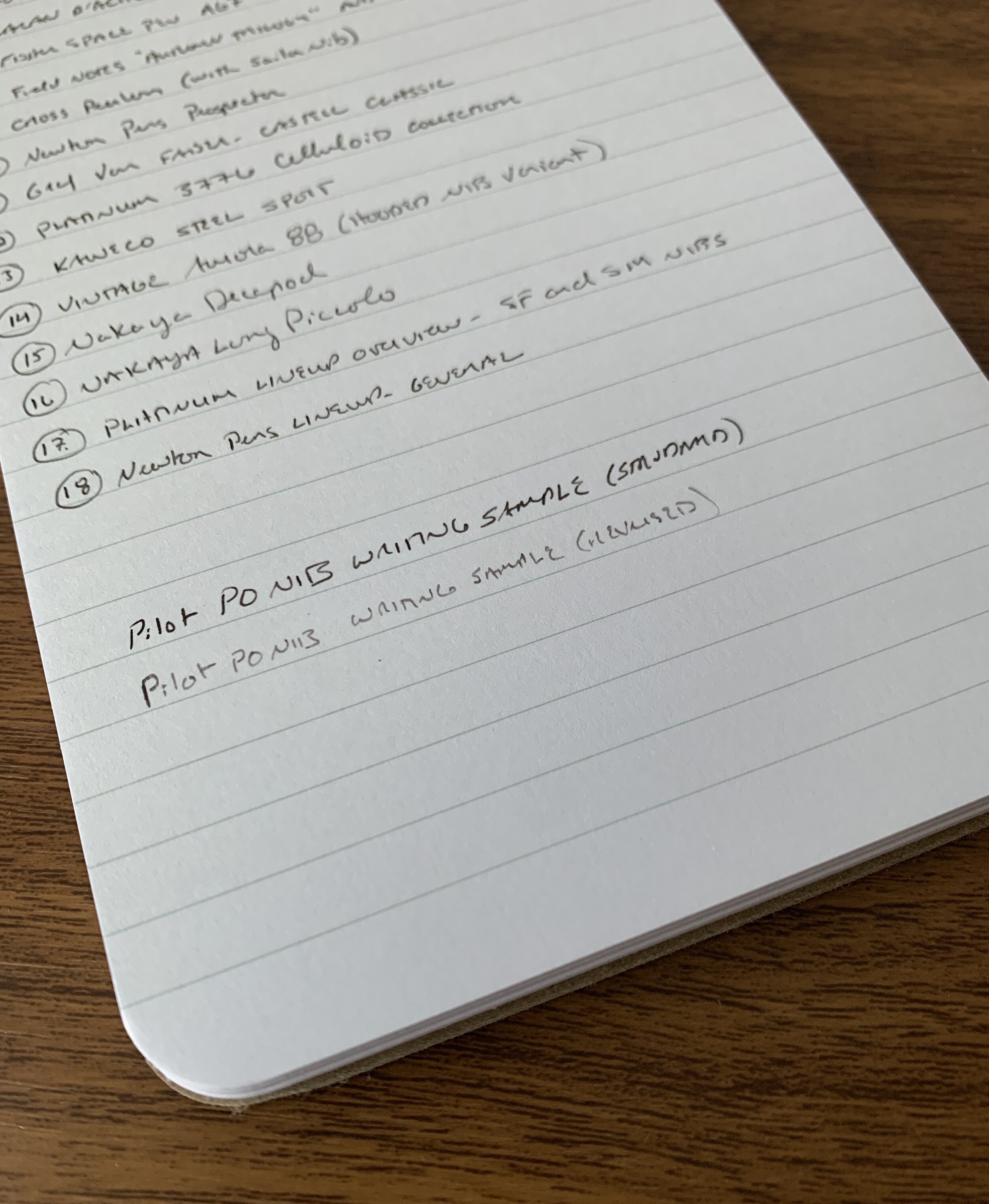
A writing sample showing how you can write even smaller if you flip the PO nib over and write using the reverse side.

A writing sample showing how you can write even smaller if you flip the PO nib over and write using the reverse side.

Takeaways and Where To Buy

Dare I say that the Pilot Custom Heritage 912 with a PO nib might be the “ultimate note-taking pen” for those of us that like to cram as much writing as possible onto a page? This workhorse might not be flashy, but it showcases the best of what Pilot has to offer nib-wise. While you can purchase this pen with a couple different standard nib sizes (EF and Soft Fine), most people opt for a specialty nib, including the PO nib featured here, the SU (stub), music, FA (flexible), and Waverly. As you can tell from my review above, I love the PO nib, and just wish it wasn’t so hard to find in the U.S.

Update: As of 2026, Pilot has expanded its specialty nib offerings stateside, including making a range of nibs available in the Custom 912 and Custom 743 models. We stock a selection of both, including the PO nib as available.

The Gentleman Stationer is supported by purchases from the T.G.S. Curated Shop and pledges via the T.G.S. Patreon Program. You can also come visit us at our physical stationery store in Nashville, Tennessee.

The Pilot Custom Heritage 912, shown here compared against a Write Notepads Reporter-style Notebook, available for sale in the TGS Curated Shop.

In Pens Tags Pen Review, Pilot, Pilot Custom 912, Pilot PO Nib
1 Comment

Up Your Pocket Writing Game in the T.G.S Curated Shop!

July 14, 2020

I’m fully stocked on everyone’s favorite fountain pen-friendly pocket notebooks, the Write Notepads Copper Anniversary Edition, as well as several of my favorite Field Notes releases! If you’re looking for something a little different than the traditional side-bound pocket notebook, you may want to consider a reporter-style notebook, which lays flat on a desk and is perfect for making lists of all the at-home projects you need to get done. (Seriously, what else are you going to do these days?) Available in both Write Notepads and Field Notes versions.

Visit the T.G.S. Curated Shop to view our ever-expanding assortment of carefully selected goods with an “analog” bent, including notebooks, reading accessories and more. All domestic orders over $50 automatically ship free!

In TGS Curated Shop Tags TGS Curated Shop, Field Notes, Write Notepads
Comment
← Newer Posts Older Posts →
Store Hours and Events
Shop T.G.S. Online
Updated 2026 "Best Pens" Guide
No results found
On The Paper Trail: Live In Nashville Event Tickets Now Available!
TGS_25 Roterfaden Restock Notification
Hierarchies of Fountain Pen Friendly Paper

Join Our Patreon!
Subscribe to the TGS E-mail List

Featured Posts

Featured
Pilot-Custom-Heritage-92.jpg
June 6, 2026
Workhorse Pens: Pilot Custom Heritage 92 Fountain Pen
June 6, 2026
June 6, 2026
Kakimori-Inkstand-Before.jpeg
May 30, 2026
Japan Trip Journal: A Visit to Kakimori, Including Custom Notebooks and the InkStand!
May 30, 2026
May 30, 2026
Five-Foundational-Fountain-Pens.jpeg
April 22, 2026
T.G.S. 12th Anniversary: 5 Fountain Pens Everyone Should Experience
April 22, 2026
April 22, 2026
The Gentleman Stationer RSS

View Cart

© Digital Divide Media, LLC, 2014-present.

All content is the exclusive property of Digital Divide Media, LLC, d/b/a The Gentleman Stationer, including “The Gentleman Stationer” website and trademark, and should not be reproduced without express written permission.  All rights reserved.

All content containing paid advertising, affiliate links, or sponsored content will be plainly disclosed by a disclaimer when/if featured.

Contact Information

Website Terms and Conditions

Store Shipping Policy and Return Policy

Privacy Policy and Cookie Policy

Accessibility Statement

Powered by Squarespace