• Blog
  • Shop
  • Podcast
  • Resources
  • About
  • Archive
  • Contact
  • Cart
  • Sign In My Account
Menu

The Gentleman Stationer

Vintage Living in the Modern World.
  • Blog
  • Shop
  • Podcast
  • Resources
  • About
  • Archive
  • Contact
  • Cart
  • Sign In My Account

Thursday Drops: Launch Day for the TWSBI ECO in Cerulean Blue, and a Glow Green Restock!

September 29, 2022

TWSBI Ecos in Cerulean Blue start shipping today! If you missed it, the Cerulean Blue ECO is the latest solid-color ECO, on the heels of the glow-in-the-dark “Glow Green” and in the wake of the retirement of the TWSBI ECO Lilac. (Note: We still have a few of the Lilac pens available, if you missed out on this release!) Along with our shipment of ECOs in Cerulean Blue, we also received a fresh restock of the TWSBI Glow Green fountain pens in all nib sizes. Finally, a reminder that our Nahvalur (formerly Narwhal) promotion ends tomorrow, with a free ink sample shipping with each new purchase of Nahvalur fountain pens. No coupon code necessary.

Happy Shopping!

The T.G.S. Curated Shop is an authorized retailer of all brands sold.

  1. TWSBI ECO Cerulean Blue Fountain Pen. The latest solid-color Eco release arrives in “Cerulean.” What ink are you going to choose to match with this one?

  2. TWSBI ECO Glow Green Fountain Pen. The TWSBI Glow Green sold faster than any pen we’ve ever stocked, and for good reason - it’s the glow-in-the-dark TWSBI ECO that everyone has been demanding for years, and TWSBI absolutely nailed it.

  3. Nahvalur Fountain Pen Ink Sample Promotion. Through September 30 (tomorrow!) we’re offering a complimentary ink sample with any purchase of Nahvalur fountain pens, including the new Original Plus as well as the Nahvalur Nautilus. Check out the review of the Original Plus, published yesterday.

  4. Anderillium Inks: Cephalopod and Avian Series. Earlier this week we launched a new ink line, in order to be able to offer our customers more ink choices along with their fountain pen purchases. Anderillium is an excellent series of nature-themed inks, and I’ve been doing a lot of writing with “Colossal Squid Dark” from their Cephalopod series.

  5. TWSBI Bottled Fountain Pen Ink. We’ve been out of stock of several colors of both the TWSBI 1791 Inks, and running low on standard workhorse favorites such as the Midnight Blue and the Blue-Black. All are restocked!

  6. TWSBI Lilac Fountain Pen. This one’s going away, so get our remaining limited selection while you can!

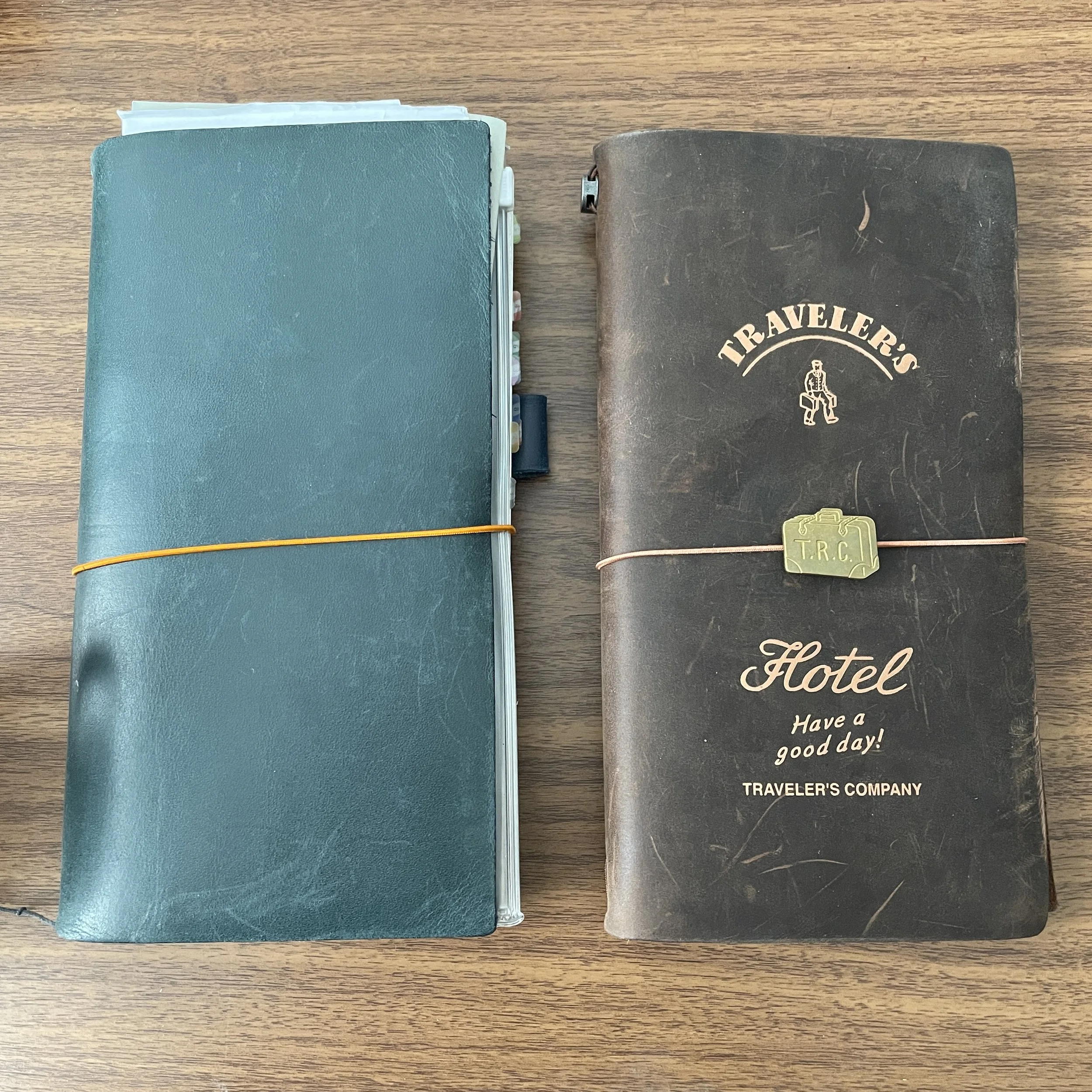
  7. Traveler’s Notebook “Airplane” Series Limited Edition Cover. The LAST ONE is in stock and available for purchase! If you’ve been holding out, now’s your chance. We’re also restocked on regular Traveler’s Notebook Covers, accessories and refills, including undated planner inserts.

  8. Midori MD Notebooks in A4 Size. Those who appreciate a larger writing surface love the Midori MD paper in full-size A4. In addition to having the notebooks back in stock, we also have the full range of A4 covers, including paper and leather versions.

  9. Midori MD Notebooks in B6 Slim Size. Similarly, we’re fully restocked on the popular B6 Slim “Cafe” or “Novel” sized notebooks in grid, lined, and blank rulings.
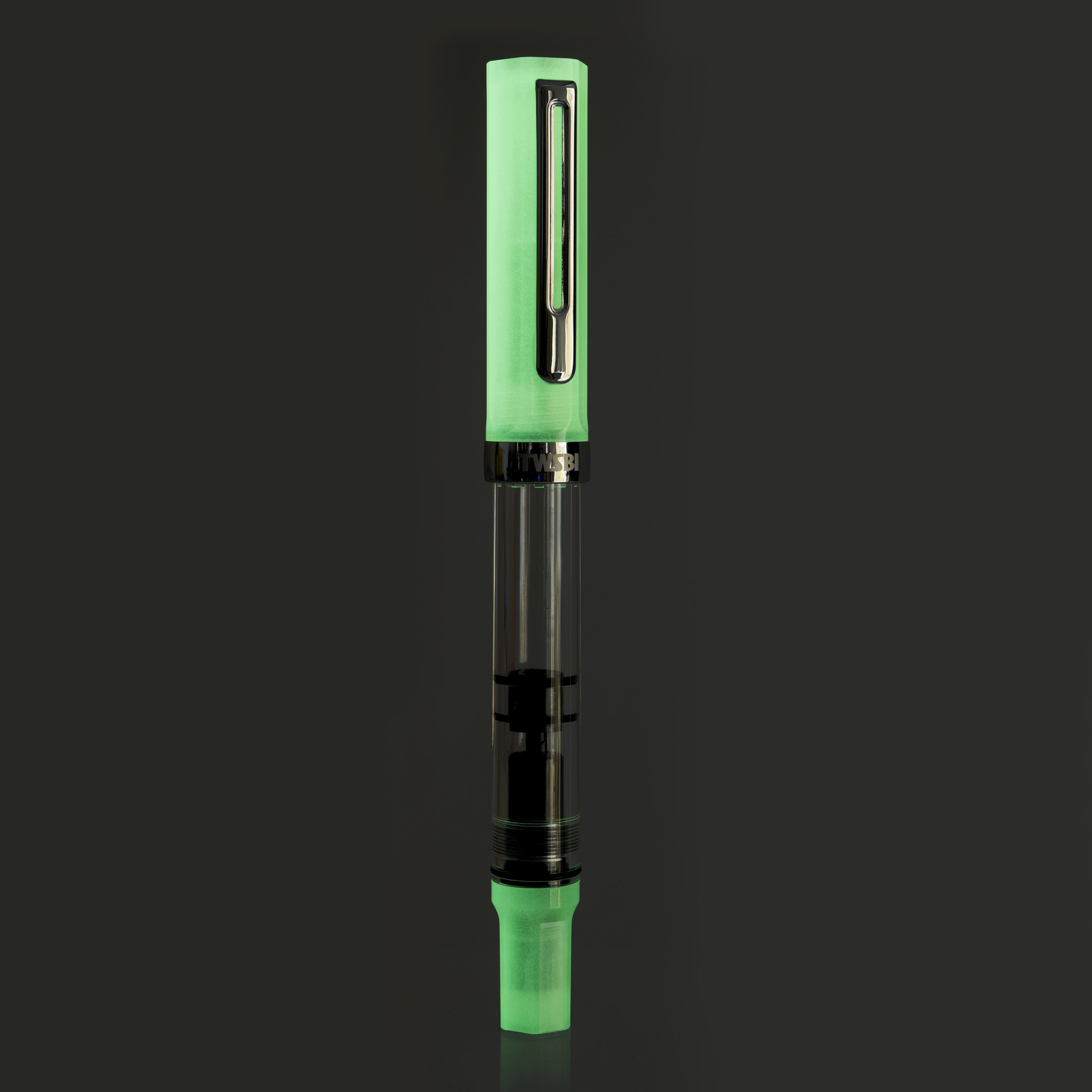
TWSBI Glow Green Dark Shot

Yes, it really does glow like this in the dark!

In Deals, TGS Curated Shop Tags Thursday Drops
Comment

A Review Sort-of Revisited: The Nahvalur Original Plus Fountain Pen

September 28, 2022

I say “sort-of-revisited” because I previously reviewed the “original” Narwhal Original, and in the three years or so since publication Narwhal fountain pens has not only introduced a new version of the pen with a different filling mechanism, but has rebranded with a new name and logo, and will be known as Nahvalur Pens going forward. Nahvalur made the announcement at this year’s D.C. Pen Show. Apparently “Nahvalur” is the Icelandic word for “Narwhal,” and the choice was made for unspecified branding/trademark purposes. I don’t necessarily find this aspect of the pen industry all that interesting or exciting, though there has been much discussion elsewhere about the rebrand and “other matters.” I prefer to focus on the writing experience, but I will say that I like the new Nahvalur logo, and the new “Original Plus” fountain pen continues to move the company in the right direction.

We have yet to see the new Nahvalur logo and branding on the pens themselves, as the rebrand was only recently announced. Therefore, the current stock of Nahvalur pens still bear the name “Narwhal” on the box and cap band. (Hey - it could increase the collectibility if the design changes in the future, right?)

“Original” vs. “Original Plus”: What’s the Difference?

In terms of functionality, the biggest change is that on the Original Plus, Nahvalur switched the filling system from a piston to a vacuum-filler. More on that below. Aesthetically, the two pens share a lot of the same design language, with a few key distinctions. As I mentioned in my “Original” review, the bright swirled acrylic used in the first pen didn’t speak to me. As in, at all. Here, the look is much more subtle, as Nahvalur opted for a more transparent material that offers excellent visibility into the barrel while keeping swirls of the four signature colors: purple, yellow, green, and blue. It’s a subtler look that I believe will ultimately appeal to a wider audience.

Those who own both the “original Original” and the “Original Plus” will note that the band has been moved from the body of the pen to the cap, probably to accommodate the change in filling system.

Build Quality and Filling System

The first thing I remarked when I picked up the Original Plus is how solid the pen feels in the hand. At the sub-$100 price point, and especially at the sub-$60 price point, one of the first things I look at is whether or not the pen feels flimsy or insubstantial, and whether I think it will hold up to true “workhorse” use as a daily writer. Here, the Original Plus easily feels as well-built and durable as the pens I consider to be its peers, the PenBBS 456 and the TWSBI Vac700R. All of the components feel tightly threaded, with no rattling or loose parts. The longer section is comfortable to hold, and the cap quickly deploys with 2.5-3 turns.

The advantage of a vacuum filler is that it uses the entire barrel as an ink reservoir, and here the more transparent material allows you to easily see your ink supply.

As I noted, the major design change is to the filling system. Nahvalur chose to substitute a vacuum-filling system for the piston, and I commend them for doing so. Though a vacuum filler can appear intimidating to new users, they’re fairly simple to use and hold a ton of ink. To fill the pen, you unscrew the blind cap at the end, extend the plunger, place the nib into an inkwell or ink bottle, and press down. The negative pressure will suck ink into the barrel, and you can repeat once or twice more to increase capacity. Even with one fill, however, you will typically get much more than your standard piston filler and certainly more than your standard cartridge-converter pen. Note that like a Japanese-style eyedropper, a vacuum filler has a “safety valve” that engages when the blind cap is screwed all the way down, which helps prevent leaks and makes these great pens for airplane travel. At some point, however, with the valve closed the feed may run dry, and you will need to slightly unscrew the blind cap to allow more ink to flow from the barrel to the nib. If I’m using a vacuum-filler for a longer writing session, I’ll go ahead and open the valve before I get started.

The Nahvalur Original Plus unposted. While the cap technically posts on the barrel, the pen ends up being so long that I can’t imagine anyone would be able to use it that way.

Overall Writing Experience

Those who enjoy smooth nibs will enjoy Nahvalur pens. Nahvalur/Narwhal has performed a lot of tuning on their nibs and feeds in-house, resulting in what I would characterize as a “glassy smooth” writing experience that requires very little pressure. As a result, the nibs write a slightly broader line than their designation and there is no “extra fine” nib option. (Even the “fine” writes more like what I’d consider a “fine-medium”.) Despite the smoothness, I’ve found Nahvalur’s nibs to perform well, and of the four different Nahvalur nibs I’ve used over the past few years, I’ve not experienced any skipping or other symptoms of “over polishing” (i.e., a baby’s bottom).

I really do hope that they keep the “leaping Narwhal” logo on the nib - it’s a charming touch.

A writing sample with a comparison between a medium and fine Nahvalur nib. Pro Tip: The broader Nahvalur nibs, and especially the “BB” option available in the Nautilus model, have a fair bit of tipping and therefore make excellent platforms for nib customization.

Takeaways and Where to Buy

With a cool vacuum filler system and priced at only $55, the Nahvalur Original Plus is a worthy successor to the Narwhal “Original,” and - at least in my opinion - improves upon the company’s original release. I personally prefer the more subtle look of the new pen, and for me the vacuum filling system is an upgrade. Of all the different fountain pen filling systems out there, vacuum-fillers seem to be the least represented, and while the Original Plus fountain pens have only been available for a short while, they seem like reasonably priced, reliable high-capacity workhorse options comparable to the TWSBI Vac700R and the PenBBS 456.

My two personal Nahvalur fountain pens that I’ve been carrying recently: the Nahvalur Nautilus in “Stylophora Berry” ebonite (left) and the Original Plus in “Gold Ocellatus”.

The Gentleman Stationer recently became an authorized retailer of Nahvalur Pens, as we expand the number of brands we can offer you directly. You can therefore purchase the Nahvalur Original Plus directly from the T.G.S. Curated Shop, in each of the four color options, priced at $55. Through the end of this week, we are running a promotional offer in which you will receive a complimentary 4ml ink sample with the purchase of any Nahvalur fountain pen. No coupon code is necessary to take advantage of this deal!

Disclaimer: The T.G.S. Curated Shop is an authorized retailer of Nahvalur Pens.

The four colors of the “Original Plus,” from left: Ocellatus Gold, Azureus Blue, Altifrons Green, and Melacara Purple. From the photos, I thought the gold/yellow would be my runaway favorite, but it turns out that they all look even better in person and I had a hard time picking. (Ultimately, “yellow pen” won.)

In Pens Tags Nahvalur, Narwhal, Fountain Pens, Pen Review
3 Comments

In The Shop: Welcome Anderillium Inks

September 27, 2022

Please join me in welcoming Anderillium Inks to the Curated Shop! Based in Tampa, Florida, Anderillium makes sixteen different inks inspired by nature. The inks themselves are divided into two different “series”: the octopus and squid-inspired “Cephalopod” series, and the bird-inspired “Avian” series. If you’re a fan of darker, more muted colors, you’ll want to check out the Cephalopod series, while the Avian series leans a bit brighter.

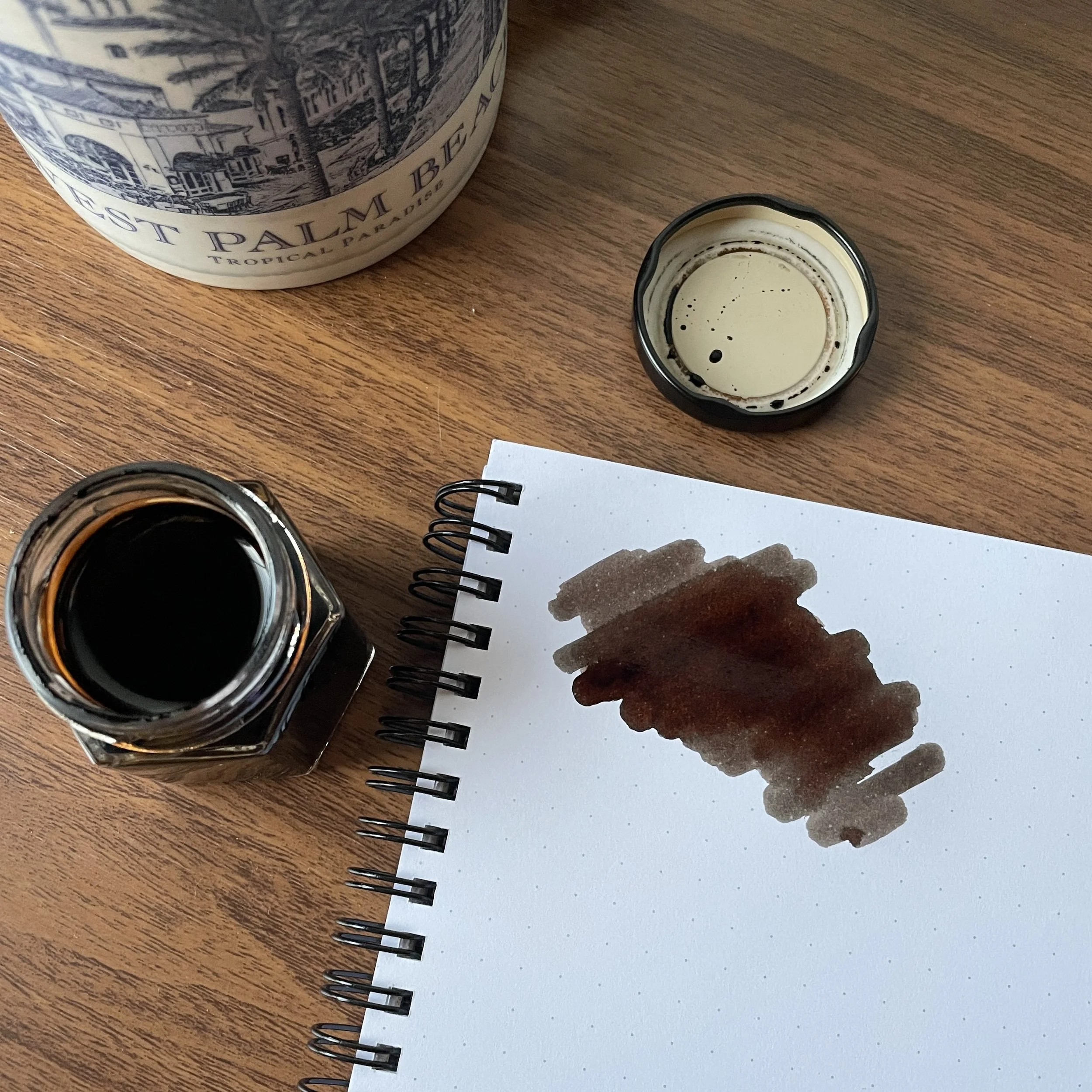
You can see the slight color shift as the Cuttlefish brown dries to a grey-toned sepia.

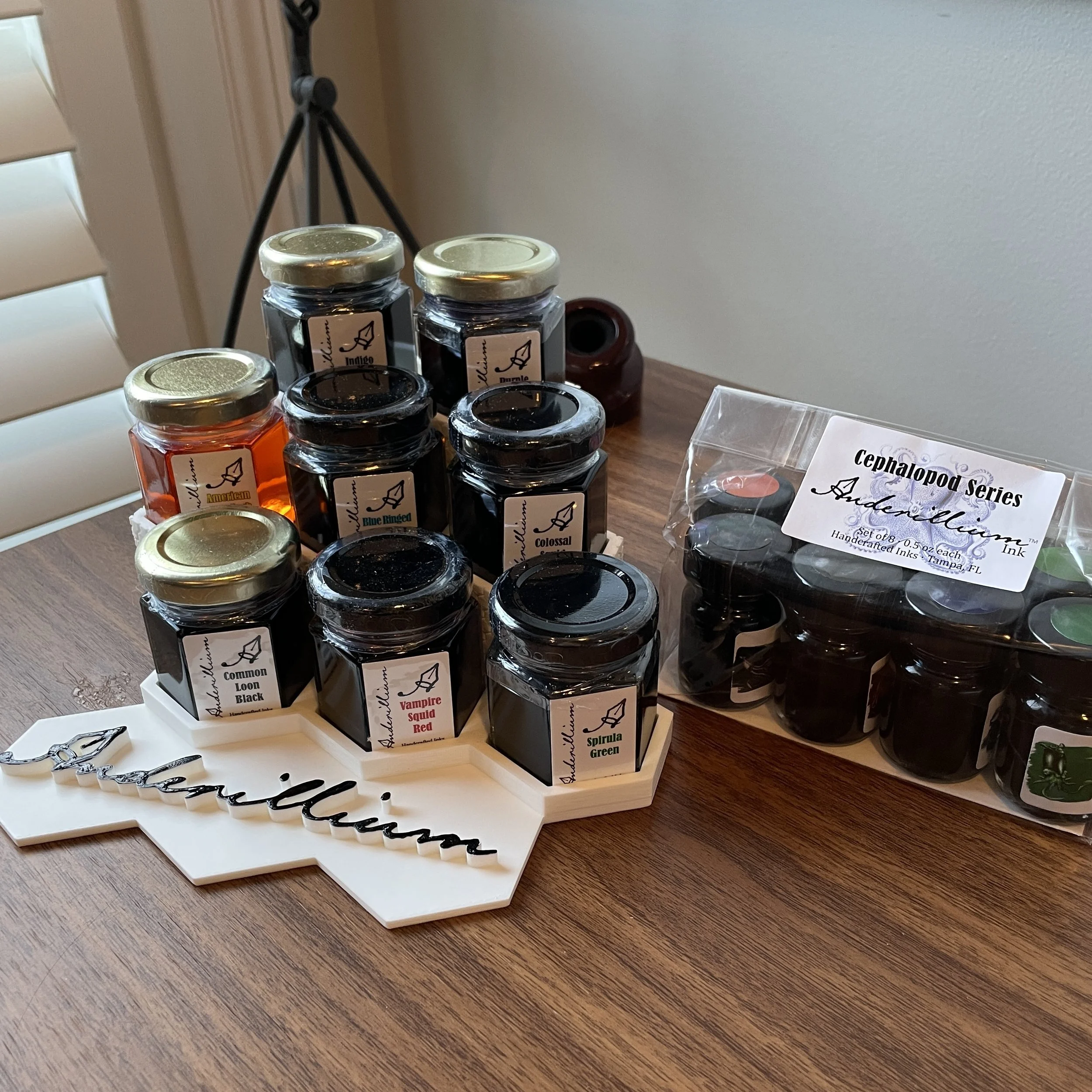
So far, my favorite Anderillium inks include Cuttlefish Brown (a sepia-toned ink that has some color shifting properties, which I picked up at last year’s Chicago Pen Show and previously reviewed), as well as the recently discovered “Colossal Squid Dark” - both from the Cephalopod series. Anderillium ships their ink in 1.5oz, wide-mouth glass bottles for ease of filling. The inks are currently available for purchase in the T.G.S. Curated Shop, and are priced at $14.50 for individual bottles, or alternatively $50 for an eight-ink “Series Set” (currently only in stock for the Cephalopod series), which contains one .5oz bottle of each ink in the series.

Remember that through the end of this week (September 30, 2022), we are running a promotion in which any purchase of a Nahvalur (formerly Narwhal) fountain pen ships with a 4ml sample of Anderillium ink, so you can get to writing immediately! Also, be sure to check out T.G.S. “Gently Used,” a place to pick up a good deal on pre-loved fountain pens and more, as items were recently added.

The T.G.S. Curated Shop is an authorized retailer of Anderillium Inks.

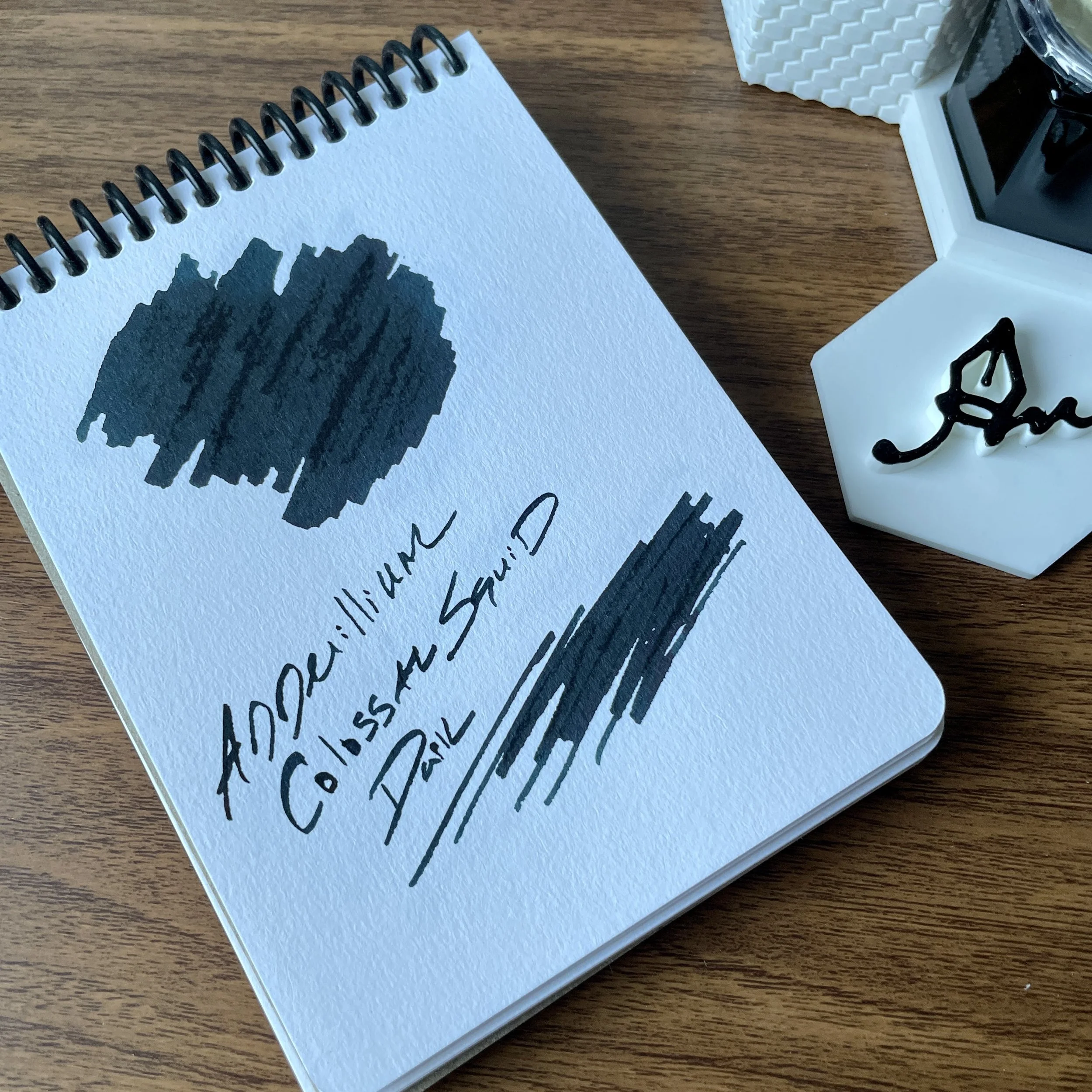
“Colossal Squid Dark” is a rich teal-black.

These .5oz bottles are only available in the Anderillium “Series Sets,” but are a convenient size for both sampling and travel.

In TGS Curated Shop Tags TGS Curated Shop, Anderillium Ink
Comment

Did I mention we’re doing another Instagram giveaway which closes tonight?

Sunday Reading for September 25, 2022

September 25, 2022
  1. The True Value of Indie Pens (via Rachel’s Reflections). I did not have the chance to take Rachel and Jim’s Indie Pen class at either D.C. or Baltimore, but it looks like it’s on the list for next year. I also get frustrated with people complaining about the “value proposition” of handmade fountain pens that I consider - at their essence - pieces of art.

  2. Meet Your Maker - Shawn Newton of Newton Pens (via Pen Addict - Caroline). I had the pleasure/honor of having a table next to Shawn at this year’s D.C. Pen Show, and in terms of Indie penmakers, I consider his work to be among the best out there.

  3. Pen Collection Thoughts: Niche or Narrow? (via Pete Denison). Pete’s posts on this hobby are always great, and I’m fully in agreement with his observations that just when you think you’ve fully explored every aspect of this hobby, there are always new niches and rabbit holes to run down.

  4. The Commonwealth Pen Show 2022 Recap (via Gourmet Pens). Azizah recaps the 2022 Commonwealth Pen Show, which is now a 2-day show in the Boston area. I’m glad to see this show growing and may consider visiting in the future.

  5. Lamy Ideos Fountain Pen Review (via Blake’s Broadcast). The Lamy Ideos has a unique shape that makes it stand out, and those who purchased one have been happy with it, finding it comfortable to write with.

  6. Golden Leaves: Inkebara Deer Brown & Earth (via a fleeting ripple). This autumnal ink from Inkebara (a brand I have not tried) appears to have some nice dark brown shades to it.

  7. Early Thoughts on the Jinhao 80 Fountain Pen (via Fountain Pen Blog). Look’s like Jinhao is at it again, going after Lamy. Why bother to create your own section while knocking off the cap? Why not just create your own Makrolon pen?

  8. More Bits, Bobs & Bullet Journals: Lesson Plan Outlines (via mnmlscholar). I always love collecting posts about how people actually use their pens and stationery.

  9. Pennonia Méregzöld: Seafoam or Poison? (via Pen Addict - Kimberly). I love a dark teal fountain pen ink that leans blue moreso than green, so this one is right up my alley. Plus it has a fun family story behind it.

  10. Limited Pens Korea x Leonardo Officina Italiana Momento Magico Pink Salt (via Gourmet Pens). Leonardo always manages to find the best materials, and this latest special release is gorgeous.

In Case You Missed It…

This week on the blog I published Installment No. 2 of my series on Notebook Systems, taking a relatively in-depth look at Plotter, the Japanese ring-based system techo that’s received much attention lately. If you missed Part I, you can check that out here, in which I offer some background on the ideas behind the series and preliminary discussions on the various types of Notebook Systems out there. I also revisited a favorite workhorse fountain pen, the Waterman Carène, and published a short post on how people (myself included) use the desktop hourglasses we sell in the shop.

One reason I brought Anderillium into the store is my appreciation for inks that not only have a consistent theme but interesting muted color palettes. “Colossal Squid Dark” is a great blue-green-teal-black.

New In the Shop: Anderillium Inks, Traveler’s Refills and an Expiring Promotion!

Friday and Saturday saw LOTS of new arrivals in the Curated Shop, including one I’m most excited about: The arrival of Anderillium Inks. Based in Tampa, Florida, Anderillium’s line of sixteen different inks is inspired by nature. The “Cephalopod” series draws its inspiration from squids and octopuses, while the “Avian” series is bird-themed. I’ve previously reviewed “Cuttlefish Brown,” which mimics vintage cuttlefish sepia ink in that it goes on brown but when it dries takes on a grey tone. I’ve also reviewed Anderillium’s Chicago Pen Show “Michigan Avenue” special release ink, which I love. Be sure to check out the Anderillium dark greens and blue-greens, including Colossal Squid Dark, Green Kingfisher Green, and Flying Squid Blue, among others. Also, note that our current Nahvalur promotion will expire at the end of the week - all Nahvalur pen purchases ship with a generous 4ml ink sample, and it will be a sample of Anderillium this week!

I have to confess that I’ve also been a bad shop owner - I found a rather large stash of Traveler’s Notebook refills and inserts that had not been listed in the shop. (No wonder they weren’t selling!) Many of the undated diary refills and specialty papers are now restocked in both Passport and Standard size.

Anderillium
Anderillium
Traveler's Company
Traveler's Company
Nahvalur (Narwhal)
Nahvalur (Narwhal)
Gently Used
Gently Used

Many Thanks for Your Shop Support, and Please Consider T.G.S. Patreon!

We’ve been surprised at the level of enthusiasm and support for our curated retail strategy over the past couple of months, and after careful consideration are beginning to build out our inventory with more brands and product categories. I love managing this aspect of T.G.S., as it offers me the opportunity to directly put great stationery - including brands I feel are underappreciated and underemphasized - into your hands. For those who want to support T.G.S. without necessarily adding to their accumulation, the Patreon Program offers two options for tiers of support: $3 and $5, and plan on making monthly meetups, pen show events, and periodic exclusive content the primary benefits. Of course, Patreon members will continue to get first access to periodic sample sales, with right of first refusal on gently used pens. (Reminder that those pens which made it through Patreon are now available to the general readership!)

In LInks Tags Links
1 Comment

Guide to Notebook Systems, Part II: Plotter is NOT a Planner!

September 24, 2022

Last week’s post, “Guide to Notebook Systems/System Techo, Part I”, offered a brief introduction to different types of notebook systems on the market. One of those categories was the “System Techo,” a Japanese term for a notebook system built around a ringed binder. “System Techo” is not as popular or pervasive in the U.S. as it is in Japan. At one point, Filofax was extremely popular, yet most consider it to be a planner/calendar as opposed to a broader notebook or information management system, and dismiss it as something outdated that they’ll never use. The reality is that ring-based systems can be extremely powerful tools for creativity and organization, especially for those of us who enjoy working on looseleaf paper and notepads but lack a convenient way to organize and archive our ideas. The advantages to a system like this is that you can move around and group together individual pages of notes, as opposed to more modular systems that limit you to bound refills.

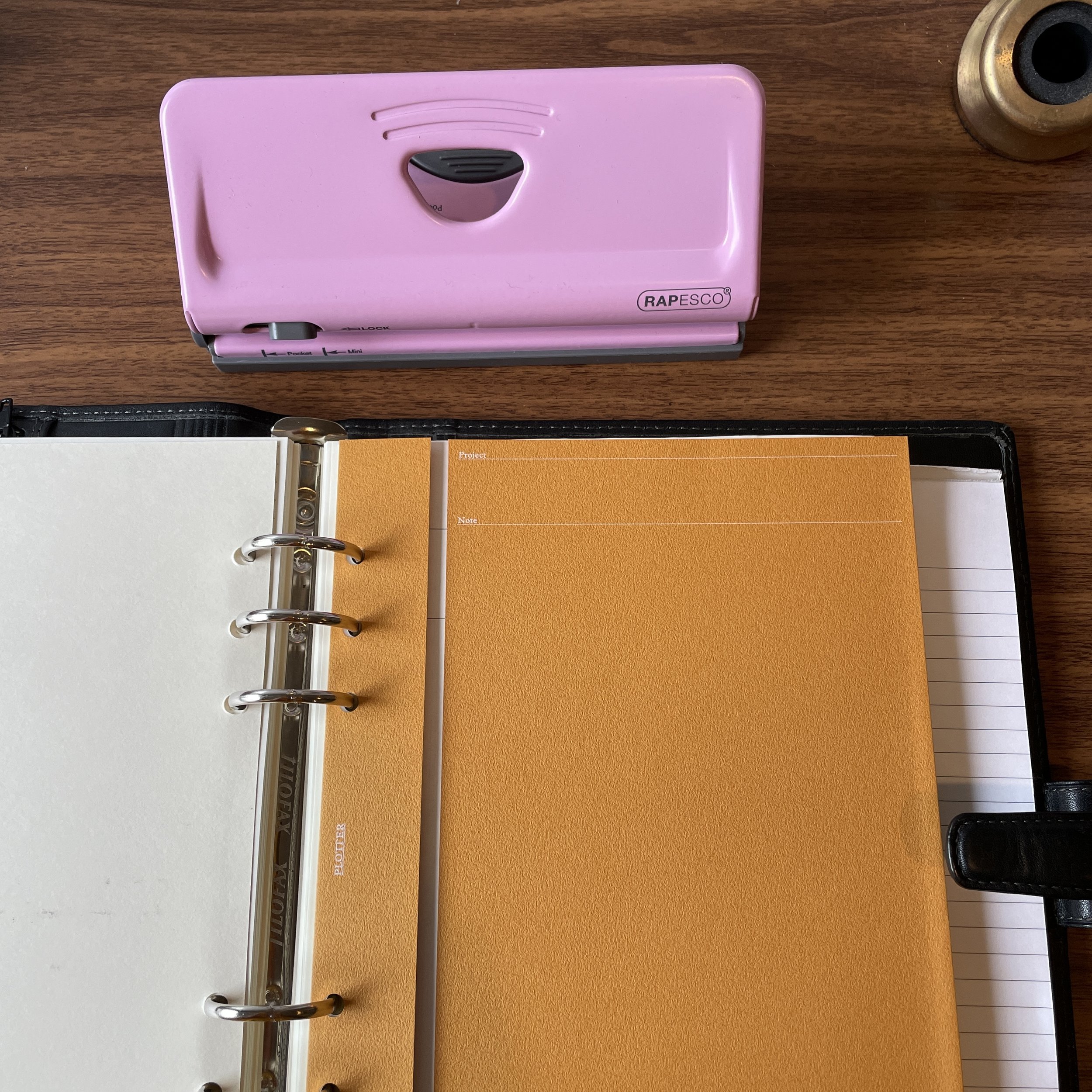
With a hole punch, a ring binder can become a powerful tool for collecting and organizing all the ideas many of us collect on random scraps of paper.

What Is Plotter? (Hint: Don’t Write It Off as “Just a Planner System”)

The star of this year’s San Francisco Pen Show was Plotter, a Japanese notebook system that can be used as a planner or organizer, but is actually designed to be something much more open-ended. Since I own three Plotter binders/notebooks, all in different sizes and with different use cases, I plan to walk you through the design of the system, give a brief overview of how it’s intended to be used, and talk a bit about how I’ve been using it in my own life. Whether Plotter is something that could work for you, well, that’s up to you!

Plotter refills and notepads are well designed, and I especially love the bound notepads that can be used as stand-alone notebooks with removable sheets.

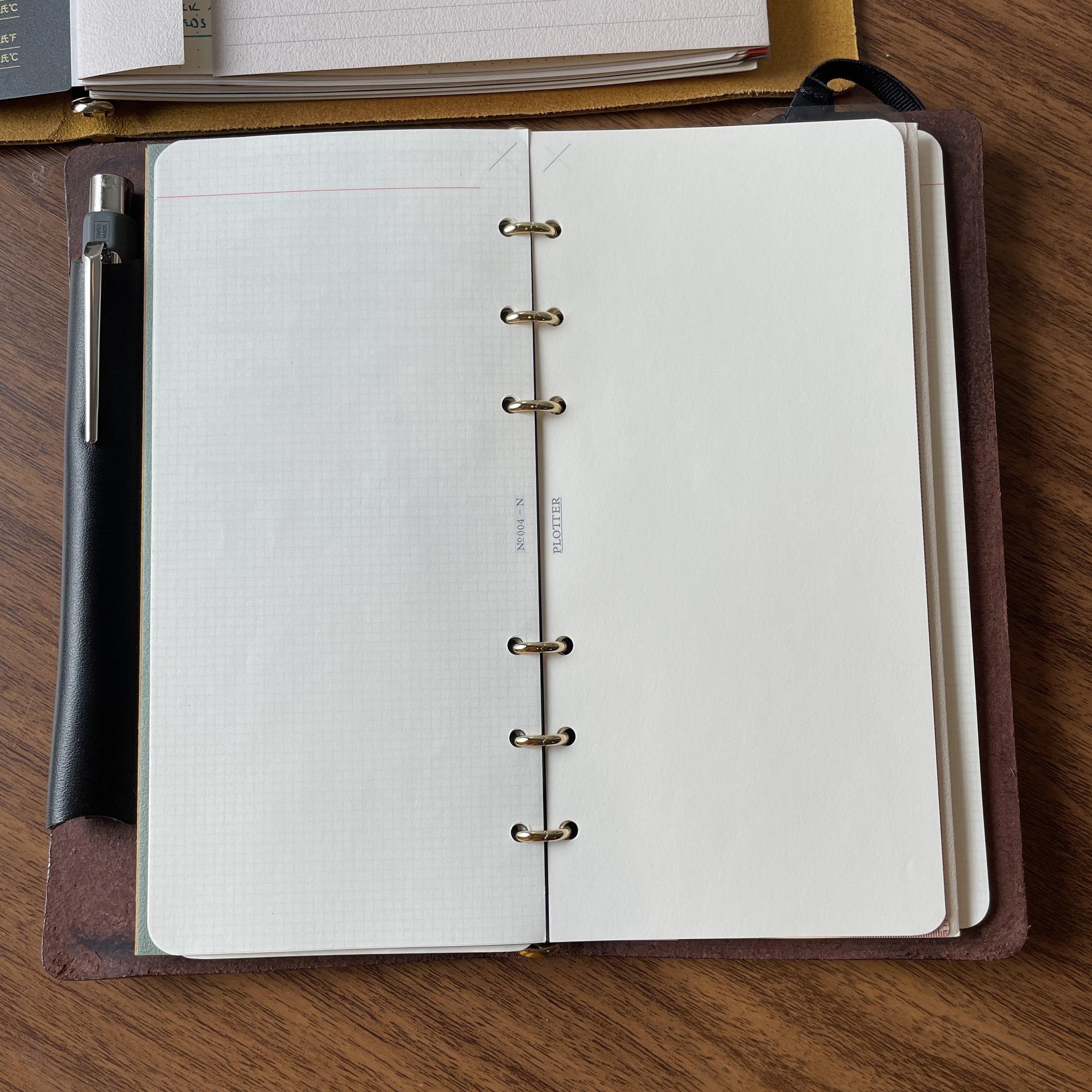
The Plotter system is organized around three main components. First, you have the excellent paper, which is DesignPhil’s own proprietary formula, and which I would compare to a slightly thinner version of Midori MD. While certain refills ship in packages of looseleaf sheets, Plotter refills also come bound in pads or notebooks. This convenient design allows you to use the refill as a stand-alone notebook that you can carry with you, tearing out individual sheets to incorporate into your binder as needed. Yes, there is also a diary refill, so you can use your Plotter as a traditional six-ring planner, but that’s not necessarily how the Plotter system was conceived. (More on that below.)

Plotter paper comes in a variety of rulings (dot, lined, grid, and blank), so that you can assemble a notebook with multiple types of paper to use whenever different needs arise.

The second component of the Plotter system is the binder (i.e.,the leather notebook cover). Currently, Plotter users in the U.S. can select from five different sizes: A5, Bible, Narrow, Mini, and Mini 5. The Plotter binder itself is a fairly simple six-ring organizer sold by itself. To build out your Plotter into something that you can personally use everyday, you will use the paper refills and “Accessory Refills” to customize the system. As you can imagine, this is both a blessing and a curse: A blessing because you aren’t necessarily forced into purchasing an overly complex notebook system if all you want is a nice leather binder that holds looseleaf sheets; a curse because if you do want to take advantage of all the (excellent) Plotter components and accessories, you can spend money quickly. For that reason, I would recommend starting simply, purchasing your binder, maybe a set of dividers, and an elastic cord and/or penholder. You can always add more functionality as you go. (Note: Plotter ring spacing is NOT proprietary, so if you have, for example, Filofax refills, dividers, rulers, etc. in the correct size, they should fit your Plotter. Similarly, if you have a Filofax binder and merely want to test out the Plotter accessories and organizational system, everything should fit your existing cover, though no guarantees.)

All Plotter binders feature six rings and a metal bar on the spine. It’s a minimalist design that I find quite attractive.

Finally, the third Plotter component is the “archiving” aspect of the system. Because the Plotter binder is, by design, not necessarily all that capacious, you may need a larger notebook or refill binder to hold spare refills and older notes and other materials that are no longer immediately relevant but that you still want to keep. Plotter does sell a refill binder for archiving, but you can easily use something like a spare six-ring planner with the same ring size. (I have an older Filofax that I’ve been using to hold A5 Plotter sheets and spare refills that don’t currently live in my binder.)

Adding a hole punch (like the inexpensive Rapesco version shown here) will allow you to use paper that you already have on hand. I’m a huge fan of Midori MD Cotton, and I’ve been punching holes in sheets from a standard A5 pad and using it in my Plotter. Also pictured here is the A5 Filofax I use for archiving and refill storage.

How the Plotter System Is Designed to Be Used

To start, there is no “correct” way to use Plotter, or any notebook system or stationery item for that matter. You should incorporate your stationery into your life in a way that works for you, and which will give you maximum utility and enjoyment. That said, there is a specific philosophy informing the design of the system, and when I was at the San Francisco Pen Show last month, I had the opportunity to sit in on a Plotter seminar in which April from DesignPhil (and Penguin’s Creative and Stationery Cafe!) explained the general principles behind Plotter:

  • Facilitating idea capture and note taking

  • Refining your notes and ideas, with a focus on identifying the most essential ideas and/or information to keep on you at all time

  • Providing a flexible, customizable platform that allows you to work creatively in a format that works specifically for you

In other words, the Plotter system was built to make it easy to (1) capture notes and ideas on paper, (2) organize (or at least retain) those ideas in the binder while you develop them, (3) periodically review and revisit your ideas, archiving what you need while disposing of what you don’t. The slim binder design is therefore intentional, encouraging a minimalist approach to notetaking and workflow. This can be a lifesaver for work projects that have a tendency to spiral out of control. How many of you (like me) have notebooks stuffed with months’ or years’ worth of research and meeting notes, of which a dozen or so pages are actually useful to keep long-term?

My three Plotter notebooks: Mini 5 (top); Narrow (center), and A5 (bottom).

How I Use My Three Plotter Notebooks

So who do I think Plotter is for? For someone involved in too many different things (like me) who tends to be kind of scatterbrained (like me) and who works primarily on pads of paper and notepads for the majority of their writing (like me). I’m both an organized and, at the same time, an extremely disorganized person. While I’m generally “organized” in the sense that I do make a regular effort to collect my thoughts related to different projects I’m working on and group them together in some way, I feel disorganized in the sense that I’m seemingly always working on too many things at the same time, often in the same notebook or notepad, and sometimes I’m not sure where the ideas and concepts I’m working on at the time will go, or even whether they ultimately will amount to anything at all. It can feel like I’m carrying around a chaotic mess of paper and it stresses me out. Enter the Plotter as a “creative inbox”, providing just enough structure to keep me sane. I heard someone describe Plotter as “the place to loosely you organize thoughts and ideas until you figure out where they will live long-term,” and that’s an excellent way to describe the system. I have three Plotters:

  • Plotter A5 (My main “inbox,” containing notes for T.G.S. content and other personal research and writing projects)

  • Plotter Narrow (Notes, lists, and ideas relating to T.G.S. business operations)

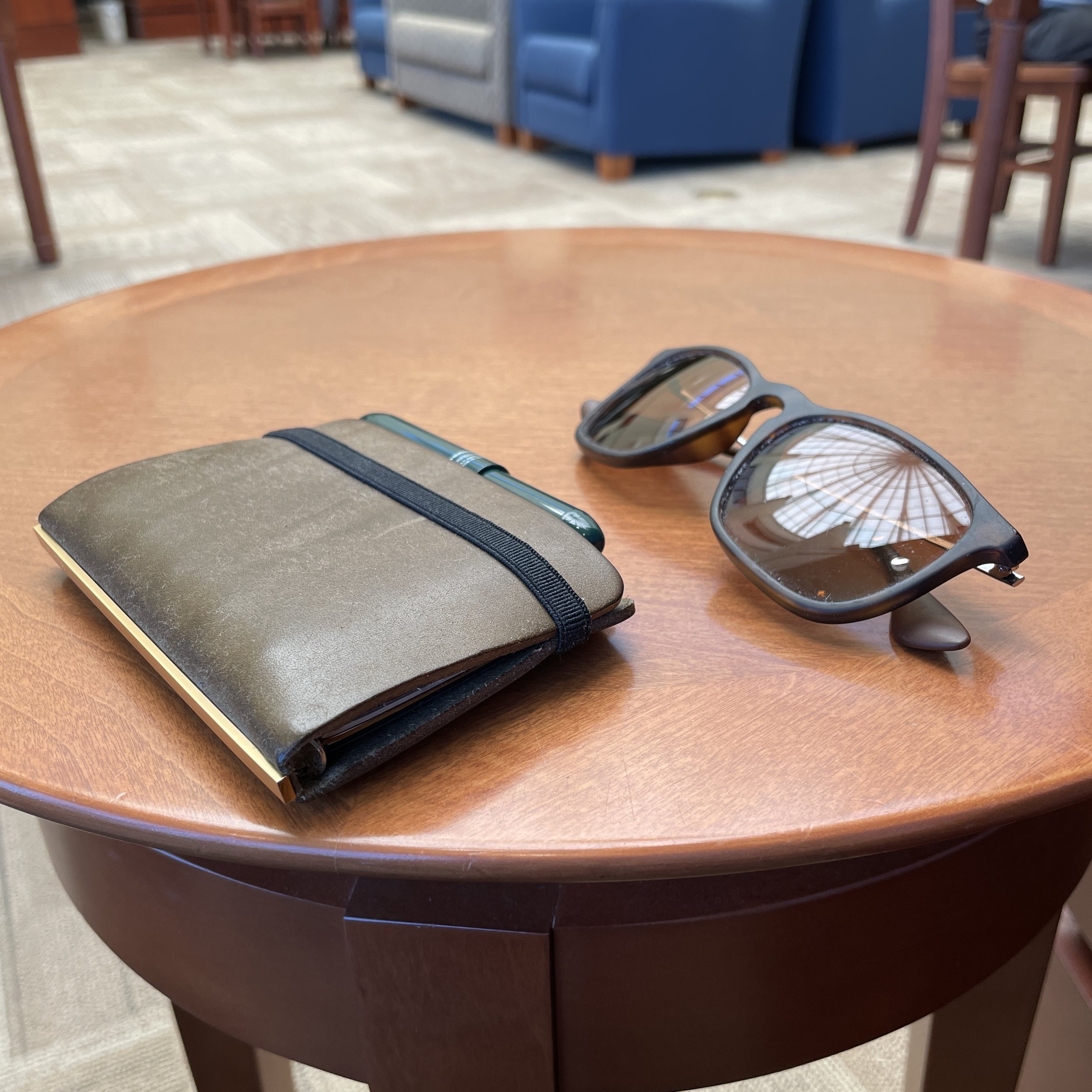
  • Plotter Mini 5 (I use as a wallet and a pocket notebook/jotter that I carry around at all times)

Each of my Plotters includes a handful of “Project Manager” folders, which allows you to organize sheets by topic. The folders themselves are hole-punched, so if you want to devote a folder to a specific project and move it in and out of your binder as you work on it, you can just pull the entire folder and stick it in your archiving system.

Using my own workflow as an example, I typically think of a half-dozen or so ideas for T.G.S content over the course of any given day. I might sketch out the idea on a sheet of A5 paper, stick it in the “TGS Articles” section of my A5 Plotter (grouped with other similar ideas if applicable), and either build the idea out in the Plotter or transfer it to a dedicated notebook or to the computer if it’s something I actually want to publish or incorporate into one of my longer-form writing projects. Every so often, I’ll review the notes in the Plotter and decide whether they warrant archiving or recycling, if they don’t seem like something I’ll be working on in the near future.

My Plotter Mini 5 goes everywhere with me. This particular notebook is used less for content management than for lists and reference notes that I want to have on me at all times (lists of books to check out from the library, pens I’m looking for at shows, etc.), as well as just a general purpose jotter with removable pages.

Takeaways and Where to Buy

Plotter offers flexibility in a convenient and elegant format, and I personally enjoy using this system more than other ringed organizer systems I have tried. I own three different Plotters, and have been using one of them for well over a year, so for me it has staying power. Over the past month, I’ve seen my Mini 5 notebook in particular become a core piece of my everyday carry, and my A5 Plotter also sees daily use. While Plotter is not an inexpensive system to buy into, as long as I actually continue to use the Plotter regularly over a multi-year period, it will be well worth the money spent. The refills themselves are not actually that expensive, and priced commensurately with other paper products of similar quality, so any expense is mainly associated with the initial setup.

If I had to recommend that new Plotter users purchase one accessory, it would be one of the “lifters” with either a pen loop or an elastic band. The “Lifters” can be placed anywhere in the notebook to serve as either a divider, or as a pencil board or firm surface for writing. For a discussion of which pens fit the Plotter, see this post.

Currently, Plotter can only be purchased through the Plotter USA store, which recently restocked after selling out in the wake of the post-San Francisco Pen Show hype. Binders range anywhere from $96 to $250, depending on the size and the type of leather you select. Looseleaf refills are generally priced in the $6 to $8 range, and Plotter-branded stand-alone notebooks and A4 writing pads are priced at $18. (Tip: you can punch an A4 sheet across the top and fold it in half to include in an A5 binder.) Accessories such as the penholder and elastic “lifters,” project manager dividers, etc. range from $6 to $15, approximately.

Again, the Plotter system is not inexpensive, but these prices are comparable both to other binder systems (like Filofax) and high-end Japanese leather notebook covers such as those from Midori. Moreover, the cost of a $250 notebook setup that you wind up using all-day, every day for years vanishes into the background pretty quickly. That said, anything can - and should - be considered “too expensive” if you never use it.

System Techo can be a powerful tool for those who like to work on multiple projects within a single binder, and value the flexibility to move around individual sheets of paper. In the coming weeks, we’ll be looking at other notebook systems that use different refill options and are built around different philosophies.

Disclaimer: I purchased the A5 and Mini 5 Plotters with my own funds at full price, though I was gifted the Narrow version a year ago as part of Plotter’s U.S. market testing. I was not compensated for this review and this post does not contain any affiliate links.

In Notebook Review, Editorial, Guide Tags Notebook Systems, System Techo, Plotter
6 Comments
← Newer Posts Older Posts →
Store Hours and Location
Visit the T.G.S. Curated SHOP
Updated 2026 "Best Pens" Guide
No results found
On the Paper Trail Podcast
TGS_25 Roterfaden New Stock Available
Hierarchies of Fountain Pen Friendly Paper

Join Our Patreon!
Subscribe to the TGS E-mail List

Featured Posts

Featured
Five-Foundational-Fountain-Pens.jpeg
Apr 22, 2026
T.G.S. 12th Anniversary: 5 Fountain Pens Everyone Should Experience
Apr 22, 2026
Apr 22, 2026
Pilot-Custom-Series-Pens-overview.jpg
Mar 14, 2026
The Pilot "Custom" Series: An Overview of Some of My Favorite Fountain Pens
Mar 14, 2026
Mar 14, 2026
Pentel-Sign-Pen-Cover.JPG
Feb 28, 2026
Pen Review: The Pentel Sign Pen (Craft Design Technology Version)
Feb 28, 2026
Feb 28, 2026
The Gentleman Stationer RSS

View Cart

© Digital Divide Media, LLC, 2014-present.

All content is the exclusive property of Digital Divide Media, LLC, d/b/a The Gentleman Stationer, including “The Gentleman Stationer” website and trademark, and should not be reproduced without express written permission.  All rights reserved.

All content containing paid advertising, affiliate links, or sponsored content will be plainly disclosed by a disclaimer when/if featured.

Contact Information

Store Shipping Policy and Return Policy

Privacy Policy

Cookie Policy

Terms and Conditions

Powered by Squarespace