• Blog
  • Shop
  • Resources
  • FAQ (Ask TGS)
  • About
  • Archive
  • Contact
  • Sign In My Account
Menu

The Gentleman Stationer

Vintage Living in the Modern World.
  • Blog
  • Shop
  • Resources
  • FAQ (Ask TGS)
  • About
  • Archive
  • Contact
  • Sign In My Account

Ink Review: Laban Greek Mythology Poseidon Green and Hera Dark Green

March 29, 2023

The Laban Greek Mythology Inks continue to impress me with their range of colors, and today I’ll look at the two excellent greens from the lineup (though one I would characterize as a bit more blue/teal). Either way, as someone who loves ink in both of these particular shades, both the Poseidon Green (Blue?) and Hera Dark Green have become standbys in my work pens.

Laban Poseidon Green (or Blue? or Teal?)

First up is “Poseidon Green,” which I view as more of a teal/turquoise blue, but whatever you might call this color, I love it. It’s actually the first ink from this series that I tried, and it has some wonderful shading properties in a nib that provides line variation, especially in those places where the ink pools on the paper. Laban nailed the color matching here. Poseidon (Roman equivalent: Neptune) is the ancient Greek god of the sea, and while this particular color may not necessarily evoke the ocean where I personally go to the beach, they’ve attempted to capture the blue of the Mediterranean islands.

Not a trident, but a fountain pen!

Laban Hera Dark Green

Hera Dark Green is more of your traditional dark green “workhorse ink”. Hera (Roman equivalent: Juno) is the ancient Greek goddess of marriage and “the home,” so I’m not sure I see the connection between the dark green color of this ink and Hera’s traditional affiliations, but it’s a lovely ink nonetheless. As with Poseidon, you’ll experience some shading, with dark teal and grey undertones. Both Poseidon and Hera are drier inks than some of the other Laban colors like Athena Grey, Artemis Navy Blue, and Demeter Brown. That’s not to say they hard-start or dry up in the pen, and I’ve never had that issue with either. It’s more that I’ve noticed they take very little time to dry, making them quite good for work. These are two of the better Laban inks for working on cheaper papers at the office.

Takeaways and Where to Buy

Laban continues to impress me with the Greek Mythology series. As I’ve mentioned before, it’s one of the few ink lines where I purchased a bottle of every color as quickly as I could, but again that says just as much about my personal fascination with mythology as it does about their excellent quality.

You can purchase the Laban Greek Mythology Inks directly from us in the T.G.S. Curated Shop, priced at $25 for a 50ml bottle. At this point, I’ve almost made my way through the entire lineup of the Laban Greek Mythology inks, and have reviewed Athena Grey and Artemis Navy Blue, Apollo Orange and Aphrodite Pink, and Ares Red. Some really interesting options remain, including Demeter Brown, Hermes Sky Blue, and Zeus Purple. Stay tuned as I round out this series of ten!

My Leonardo Momento Zero Maestro in Burkina Celluloid, alongside my Montblanc 146 UNICEF (with the small sapphire on top).

Bonus! The Return of Two Favorite Pens with New Nib Grinds

Back in September at the San Francisco Pen Show, I left a handful of pens with Gena at Custom Nib Studio for modification. Just before the Arkansas Pen Show, I received my pens in the mail, including two to which Gena had added their “Perspective” grind that I love so much. Both of these grinds are just as good as the original I had added to my Pelikan M800 Stone Garden and reviewed last year. You’ll notice that both pens I’ve used for today’s ink reviews feature Perspective nibs, which I highly recommend to those who are looking for some of the line variation of an Architect without the sharp edges. Plus, you get the ability to change line width from EF to Medium by adjusting your writing angle!

The Gentleman Stationer is supported entirely by purchases from the T.G.S. Curated Shop and pledges via the T.G.S. Patreon Program, and is an authorized retailer of all brands sold, including Laban.
In Ink Reviews Tags Laban Greek Mythology, Ink Review
Comment

Ink Review: Laban Greek Mythology Apollo Orange and Aphrodite Pink

March 4, 2023

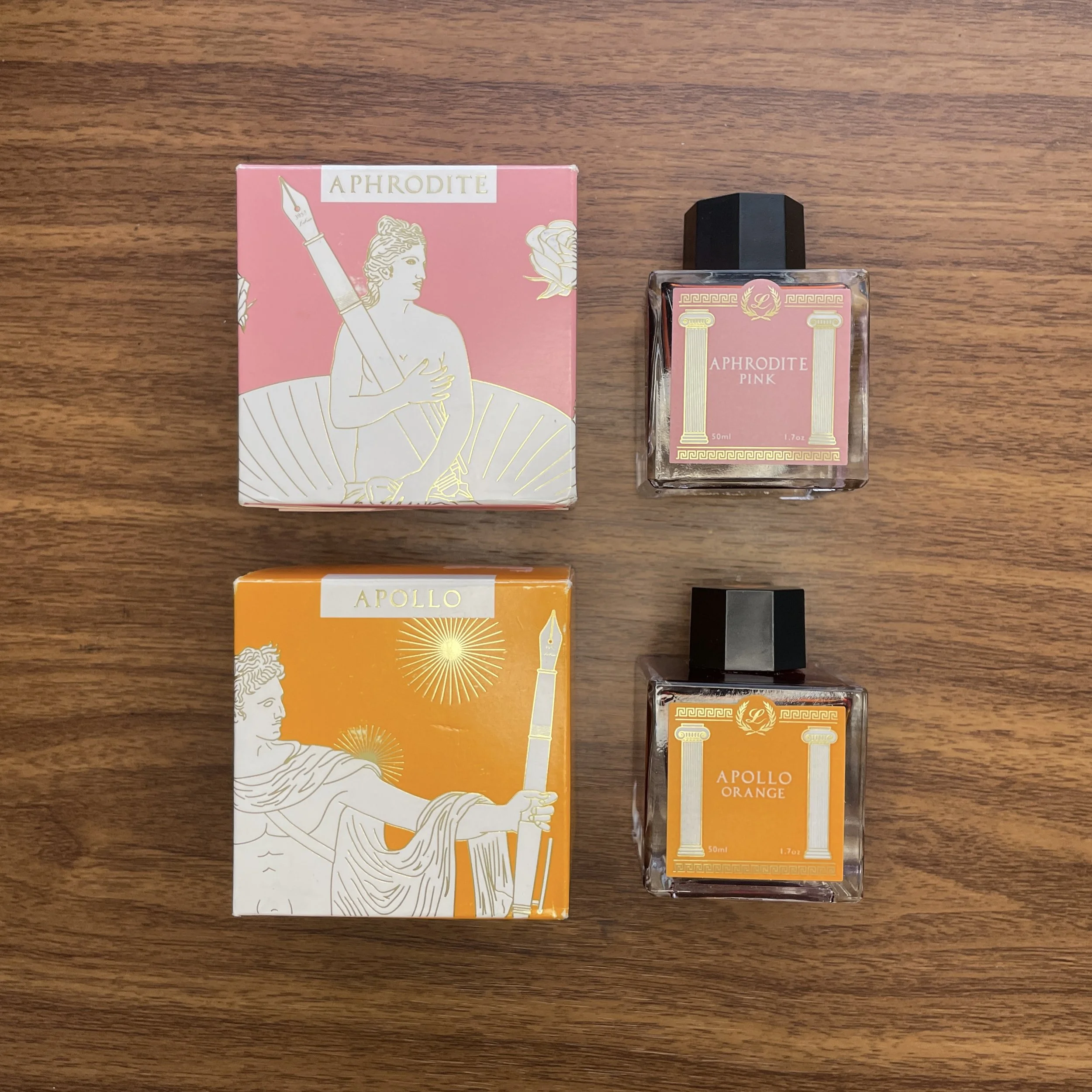
In the interest of building out a library of ink reviews similar to the current T.G.S. Fountain Pen Archive, I’m going to keep plowing ahead with my write-ups of the Laban “Greek Mythology” Ink Series. This week’s inks up for review are Apollo Orange and Aphrodite Pink. Apollo Orange is a solid mandarin orange ink that will see a lot of use as an annotator. Aphrodite Pink is a truly unique shade that’s difficult to describe and even harder to compare to anything else, but I love the muted tone for everyday use.

Aphrodite “Pink” and Apollo Orange, side-by-side.

This isn’t the first review of inks in this series (see below for links to the prior reviews), so I won’t spend too much time rehashing a history of Laban, but the company is based in Taiwan and has been a longstanding fixture at pen shows. I was somewhat surprised to see Laban launch this line of Greek Mythology-themed inks last year, and was pleased at the obvious level of effort that went into putting together not just excellent ink but an aesthetically pleasing product, packaging and all.

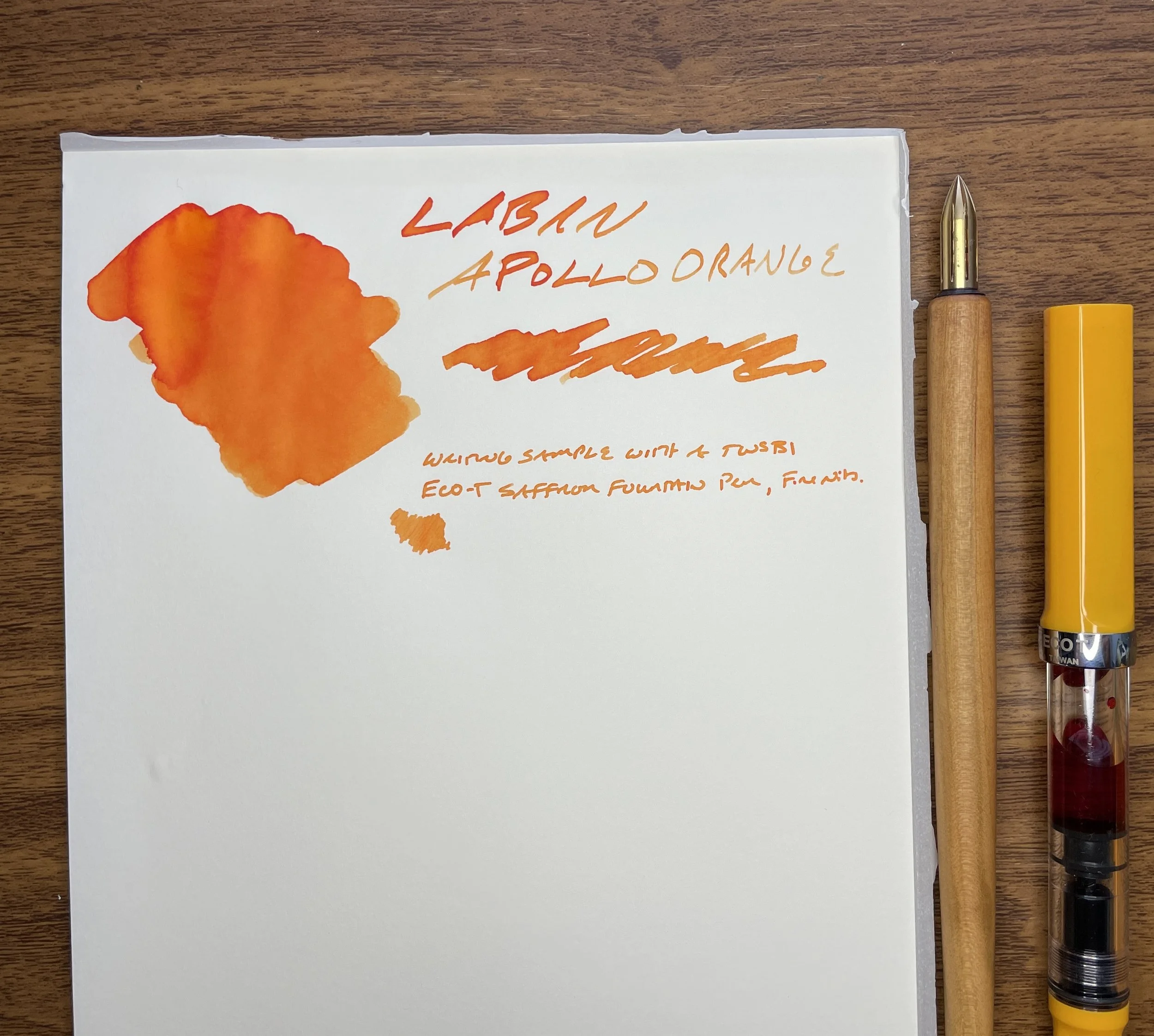
Apollo Orange with my current ink swatching tools. More on that below.

Apollo Orange Should Please Most Fans of Orange Inks

Apollo Orange is named for the Greek God Apollo, God of phrophesy, music, and healing (Roman equivalent: Phoebus), and the traditional association of Apollo with the Sun makes this pairing particularly appropriate! I would describe Apollo Orange as a classic “mandarin orange” with red tones when the ink is wet. Unlike many orange inks, Apollo Orange isn’t a particularly dry writer, so I’ve not had any issues with hard starts or nib crud. I’ve also found the ink cleans out of pens fairly easily, which is always a pleasant surprise with oranges.

Apollo Orange is just different enough from the lighter Saffron TWSBI ECO-T fountain pen to make this pen and ink a perfect match.

Aphrodite Pink: The “Stunningly Weird” Ink From the Series, But Possibly the Best

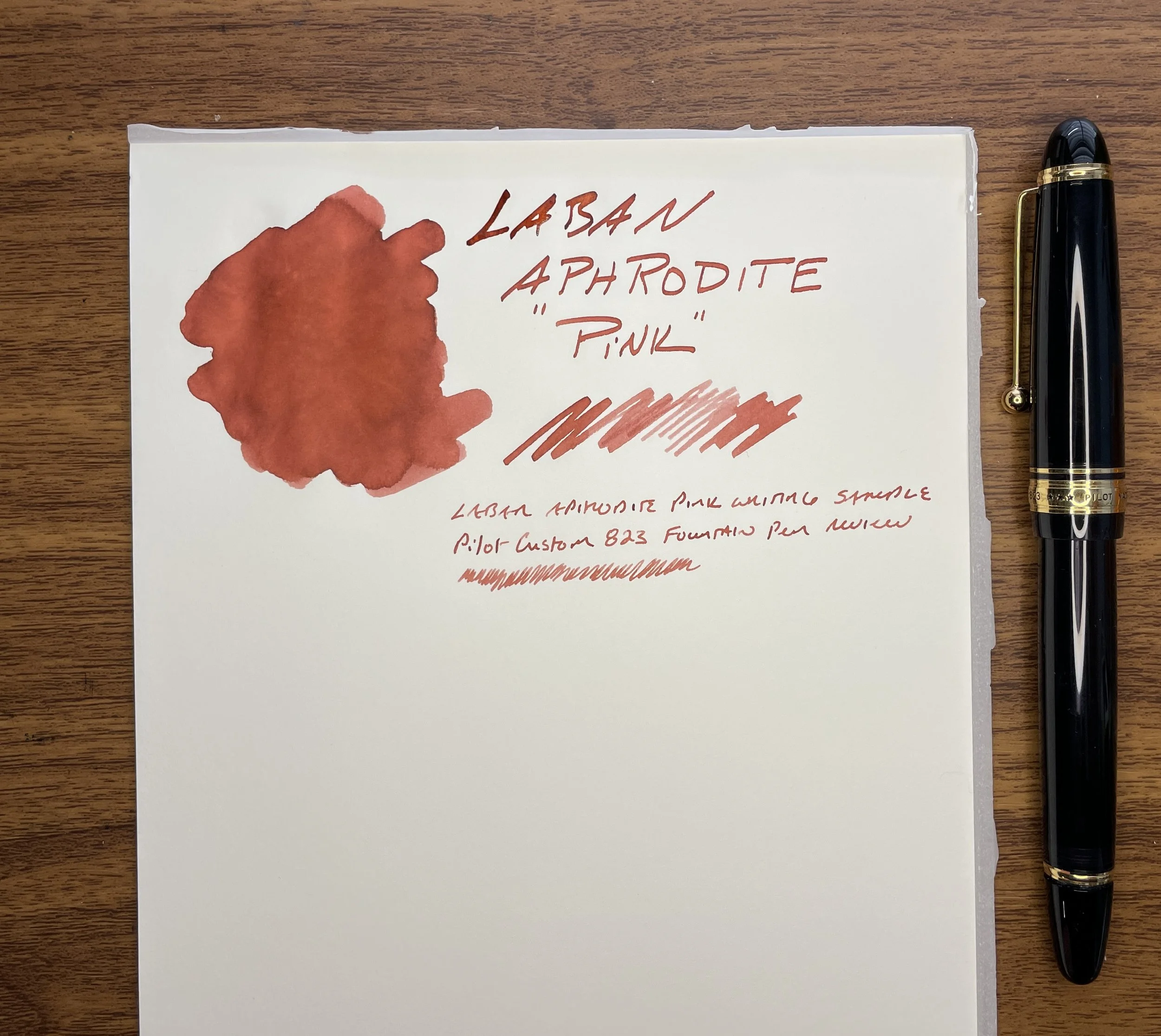
Finally, this brings us to Aphrodite Pink, one of the most popular inks in the Laban Greek Mythology series and, in my opinion, probably the best simply because it’s so unusual. In fact, I would have to put Aphrodite Pink up there as one of my favorite discoveries over the past year, because there just aren’t that many “pink” inks in general, and certainly not many with this unique shade that falls well outside the typical “hot pink” or “electric pink” colors that companies try to release. Named for the Greek Goddess of love (Roman Equivalent: Venus), Aphrodite Pink is more of a dusty brick red with pink undertones than a true pink. At first, I thought it might be comparable to KWZ Brown Pink, but the latter has much more purple. At the end of the day it doesn’t matter - this ink simply makes for a great everyday writer that I’ve used fairly regularly over the past year, and it’s now in my Pilot Custom 823.

I love nontraditional, muted colors like this one. As with all of the Laban Greek Mythology inks that I’ve used, this one dries quickly and has no maintenance issues.

Takeaways, Where to Buy, and Reviews of the Rest of the Line

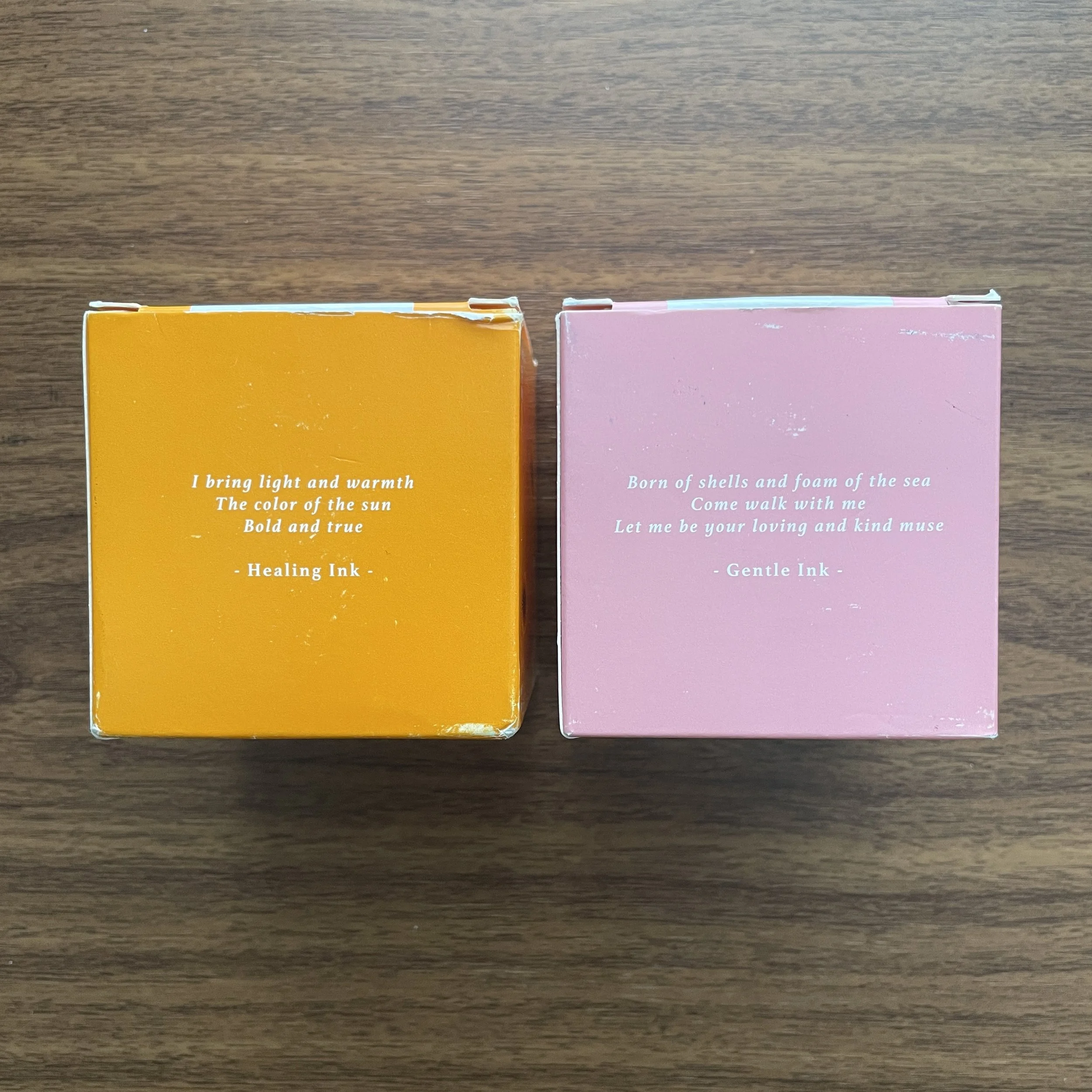
I’m currently five inks into my review of the Laban Greek Mythology Series, and I’ve not yet found one that I don’t enjoy. These inks all behave well, and I’ve personally experienced no issues with feathering, bleedthrough, staining, or slow dry times. You can check out my prior reviews of Ares Red, Artemis Navy Blue, and Athena Grey here. In fact, I enjoyed these inks so much that I purchased the entire line at last year’s Baltimore Pen Show for my personal collection, and recently brought them into our own shop. The T.G.S. Curated Shop stocks all colors with the exception of Aphrodite Pink (currently on backorder), and these Laban inks are priced at $25 per 50ml bottle. The packaging alone is a work of art, especially with the incorporation of fountain pens into the different depictions of the various gods and goddesses.

View fullsize Laban Greek Mythology Bottles
View fullsize Laban Greek Mythology Boxes

A Note on Swatching Inks and my “Organizational System”

Somebody recently asked me how I organize ink swatches (probably prompted by my Ink-o-Dex video), and what paper I use to photograph samples and organize my collection. The simple answer is that I really don’t have any sort of system. I’ve been doing this for a long time, and many different storage and sampling options have come and gone over the years.

Laban Aphrodite Pink on a Col-o-Ring Card. (Stamp courtesy of Angela at Inky Converters!)

Currently, I use a combination of Col-o-ring cards (stored in the repurposed Rol-o-dex), A5 planner paper, and a 68gsm Tomoe River notebook. Typically when I’m reviewing/archiving an ink I’ll use a q-tip and my Kakimori Brass Dip Pen to make a standard color sample on Col-o-Ring paper, which goes into the Col-o-dex. Blog posts nearly always feature ink swatches and writing samples on A5 sheets of Midori MD Cotton paper and 68gsm Tomoe River paper (while I can still get it), since these are the two papers I use the most. Lately, in addition to individual ink swatches, I’ve been creating comparison sheets so that I can easily view multiple colors from a single brand or line.

My ongoing ink comparison sheet for the Laban Greek Mythology Series

The Gentleman Stationer is supported entirely by purchases from the T.G.S. Curated Shop and pledges via the T.G.S. Patreon Program. The Gentleman Stationer is an authorized retailer of certain brands, including the Laban inks shown here. This post otherwise does not contain paid advertising or affiliate links.

In Ink Reviews Tags Laban, Laban Inks, Laban Greek Mythology, Ink Review
Comment

"Boring" Can Be Better: In Defense of Standard Stationery

March 1, 2023

Sometimes what’s fun from a hobby perspective isn’t always what’s best for everyday use. That multichromatic triple-shading ink with shimmer? Probably not the best choice for quick meeting notes or signing closing paperwork on your mortgage. That triple-broad double-eagle reversible stub architect nib? That’s gonna bleed through a legal pad. While most of us enjoy our crazy stationery, it can’t take us everywhere.

The most common questions I get, both here on the blog and in-person when I’m behind a table at a pen show, concern what pen/ink/paper I can use everyday, without worrying how it’s going to perform. I often recommend that those planning on using their pens for everyday writing keep at least a couple of “workhorses,” or pens designed to write, without regard to unique design, collectibility, etc. I feel so strongly about this that I’ve devoted an entire series of articles on the blog to this topic, which I’ve compiled into an archive that’s constantly being updated.

So-called “safe”- dare I say “boring” - inks don’t have to be ugly, especially if you like muted shades. It’s when you get into super-saturated colors and special properties when things get tricky.

But while pens get the most attention, more critical components of “everyday writing” are ink and paper. With fountain pens, I would say that ink is the key variable, since you often cannot control the paper you’re forced to use in a context such as the office. You therefore need to have a handful of “workhorse” inks in addition to your “workhorse” pens, that you can use knowing that they will likely perform decently on most paper options. Back in 2020, I even put together a sample pack of some of my favorite inks, including Waterman Blue, Sheaffer Skrip Red, and Lamy Black. While I may consider running that one back in the future, I’m not sure that recommending specific inks is all that helpful or necessary. For the most part, standard inks made by major pen company such as Waterman, Lamy, Sheaffer, Pilot, TWSBI, etc. will generally be “safe” to use in most pens and on most papers, and even boutique lines such as J. Herbin and Diamine - both made by ink companies that have existed for a very long time - are extremely reliable provided you stick to the water-based core lineup for your office writing, as opposed to inks with special properties such as shimmer that can be unpredictable on anything other than high-quality paper.

“Boring” is relative. I’d consider all three of the inks pictured here to be “safe” inks in the sense that they water-based inks from longstanding, well-regarded brands. The Herbin “Vert de Gris” is a new discovery that I spent all day yesterday using at the office.

Advantages and Considerations When Using So-Called “Boring” Inks

So why don’t quality, reliable inks get more attention? Honestly, the fountain pen internet and social media tends to be driven in large part by people who either don’t actually write with their pens everyday, or use their inks for art and journaling where practical considerations are less relevant. When those creating the content consider the inks “boring,” they don’t get promoted and fall by the wayside. But I’m here to tell you that sometimes “boring” has a lot to offer! Consider:

  • Ease of Cleaning. While some exceptions exist (pinks and purples in particular tend to be hard to clean no matter what), I value inks that flush out of pens quickly when you refill or change colors. Most of the brands I mentioned above take little to no effort to flush, and shouldn’t stain most materials, vintage or modern.

  • Expense. Looking for an ink that you’re going to use a lot? While ink isn’t the most expensive part of this hobby, if you write through several converters a week like I can when I’m really busy, you probably don’t want to be stocking up on ink at $50 per bottle. Most of the inks I consider workhorses are less than $20 for 30-50ml.

  • Permanence. People tend to treat “permanence” (more specifically, the lack thereof) as a negative rather than a positive when it comes to fountain pen ink, but I’ve come to believe it’s overrated. While it’s nice to have some water resistance, I can count on one hand the number of times I’ve spilled water or a drink on some notes, and completely lost what I had written. On the other hand, I’ve frequently spilled ink when filling pens, when a pen leaks during travel, or when I accidentally drag a shirtsleeve across some writing that’s not quite dry. If it’s permanent ink, it’s probably going to stain. On the other hand, a few weeks ago I spilled a sample vial of Iroshizuku Tsukushi onto the rug in my office. I ran the rug through the washing machine and the ink washed out completely on the first try. On the other hand, I spilled a bottle of permanent blue-black on some carpet several years back and had to recarpet the room. Personally, I’ll take the safe/impermanent/washable option for those inks I plan to use everyday, but I’m also a klutz.

Oops.

Now here’s the part where I sort of contradict myself: When I first entered this hobby, it used to be a reliable rule-of-thumb that if you were looking for a “safe” ink (i.e., to use in a finicky, valuable, or vintage pen) any ink made by a “pen company” was generally suitable. Today, I still get e-mails from people asking whether “X” shimmer ink is safe for vintage pens, since it’s made by “X” pen company. Having seen the rapidly expanding market for fountain pen ink, including inks that shimmer, sheen, and multi-shade, pen companies are expanding into these more specialized offerings. So while you can take the “pen company manufacturer rule” into account, it’s no longer something you can solely rely upon, and you have to do some homework. I generally advise people that if you want to purchase a particular ink for use everyday, and you want the ink to be versatile enough to use in as many different pens, on as many different papers as possible, it’s wise to avoid inks with special properties.

Come Visit Us At an upcoming pen show!

As I mentioned above, I’m getting ready to visit this year’s Baltimore Washington International Pen Show, as well as the Arkansas Pen Show the following week, and at both shows I’ll be conducting a free workshop tentatively titled “Stationery for Daily Use with the Gentleman Stationer,” in which I plan to discuss pens, inks, paper, and notebook systems appropriate for managing your daily life and work. The class will be similar to the “Everyday Writers: Choosing the Best Pens for Home and Office” seminar that I held at the last Baltimore Show I attended as a vendor, back in 2020.

We will also plan to bring a curated selection of pens, inks, and notebooks with us to both shows, so you’ll have the opportunity to test out many of the goods in our shop in person. We hope to see you there!

The Gentleman Stationer is supported entirely by purchases from the T.G.S. Curated Shop and pledges via the T.G.S. Patreon Program, and is an authorized retailer of all brands sold, including certain ink brands mentioned in this article.

In Editorial, Ink Reviews, Workhorse Pens Series Tags Workhorse Inks, Fountain Pen Inks, Inks, Editorial
2 Comments

Ink Review: Laban Greek Mythology Athena Grey and Artemis Navy Blue

February 22, 2023

Because I have so many inks in my collection, it generally takes either an unusual color or an interesting story to prompt me to make a purchase. If I’m inspired to buy the entire line, the ink must be really special, and that’s where I found myself at last year’s Baltimore Pen Show, visiting multiple vendors trying to put together a full set of Laban’s Greek Mythology-inspired inks.

This one is all about nostalgia for me: I’m a huge history fan, was an even bigger fan of Greek/Roman mythology as a child, and I now have a child who loves history, including the ancient myths. While there’s nothing particularly unusual about most of the ten colors in this series - they’re all fairly standard riffs on inks you would expect to find in a lineup made by a pen manufacturer - each ink writes really well, and the color has been paired with a god or goddess from ancient Greek mythology. (While the colors themselves are different than what is typically associated with each of the specific namesakes, only a hardcore mythology nerd will catch this, and frankly these colors are far more practical and will appeal to more people than gold or silver, for example.)

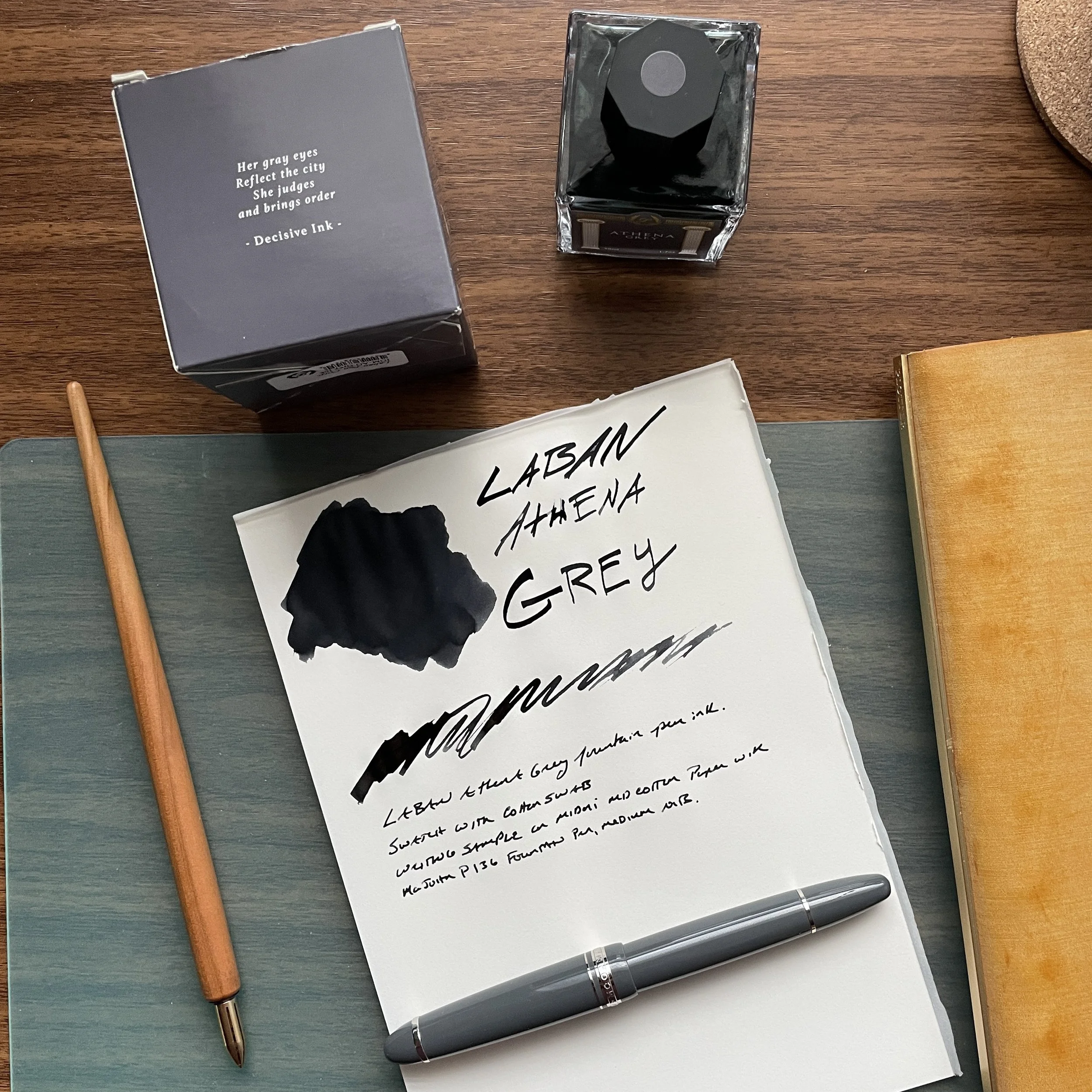
Athena Grey: the “decisive” ink. Writing samples done with Kakimori Brass dip nib and Majohn P136 on Midori MD Cotton Paper.

Athena Grey

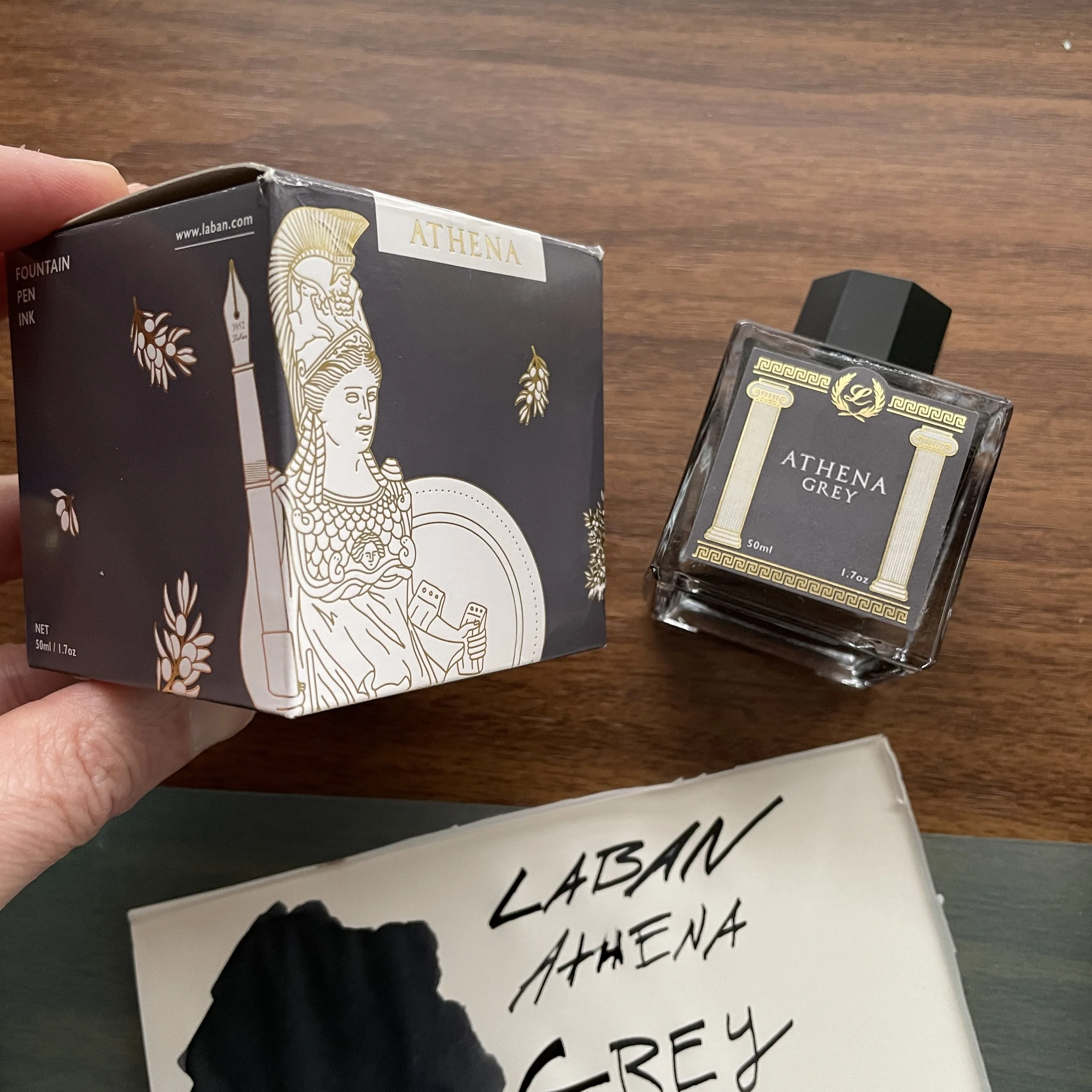
Athena Grey was the Laban ink that I first jumped at, not necessarily because of the color but because of the association. The Greek goddess of wisdom (Roman equivalent: Minerva), Athena holds a special place for me because my hometown hosts a full-scale replica of the Athenian Parthenon, complete with statue of Athena. You can read more about the backstory here, but a version of the Parthenon was first built for the 1897 Tennessee Centennial Exposition before being made permanent, with the Athena statute added later in the 1990s. The venue serves as an art museum located in Nashville’s Centennial Park.

Athena Grey is a very dark grey ink, which some might even consider black, especially when writing with fine or extra-fine nibs. In a wetter, wider nib, the ink will show as more of a dark grey with purple undertones, similar to a dark, more concentrated Sailor Chu-shu. I’ve found this particular color to be an excellent ink for everyday office work, as the color is conservative while still remaining interesting enough to intrigue fountain pen users looking for those slightly offbeat shades of classic tones.

Artemis Navy Blue: the “bright” ink

Artemis Navy Blue

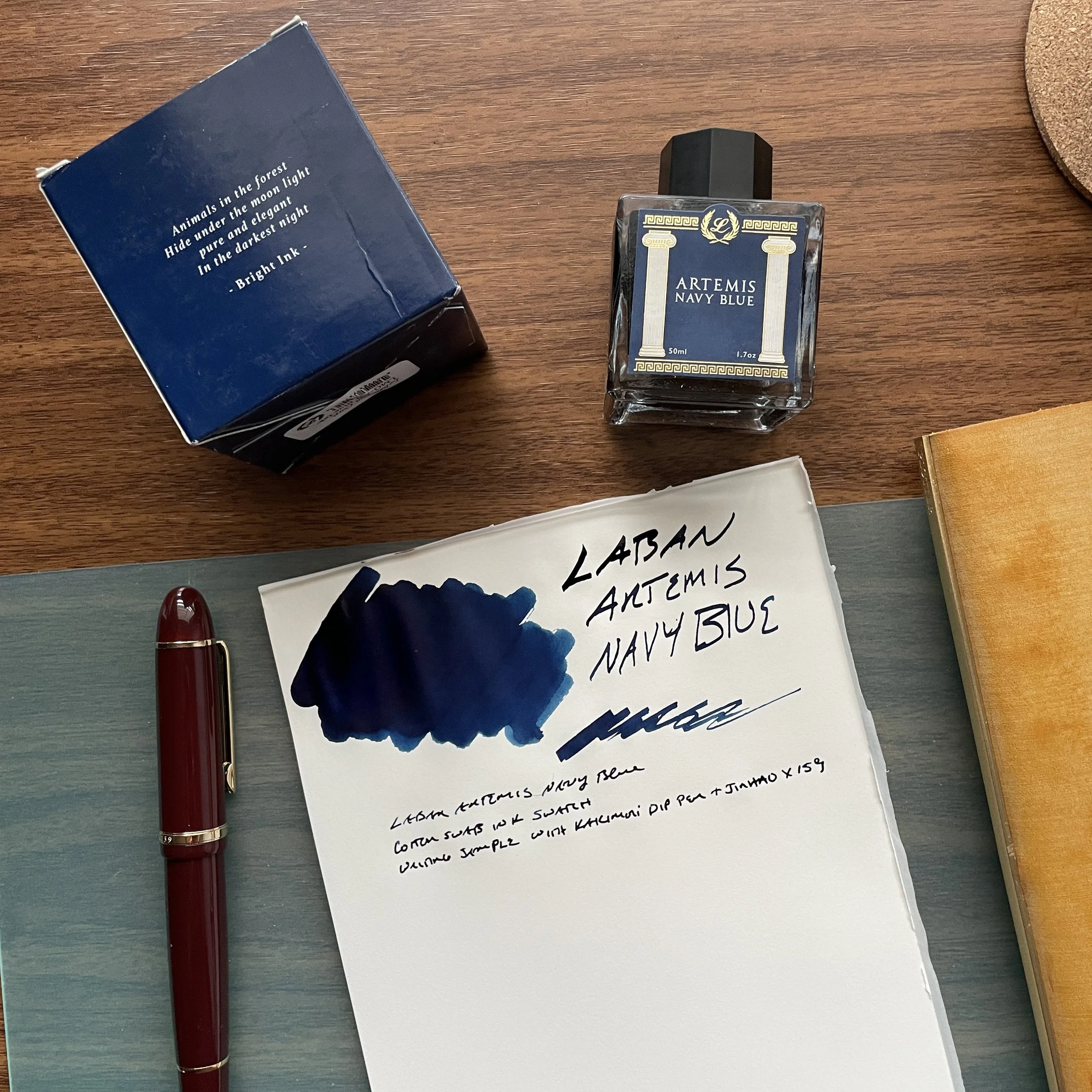
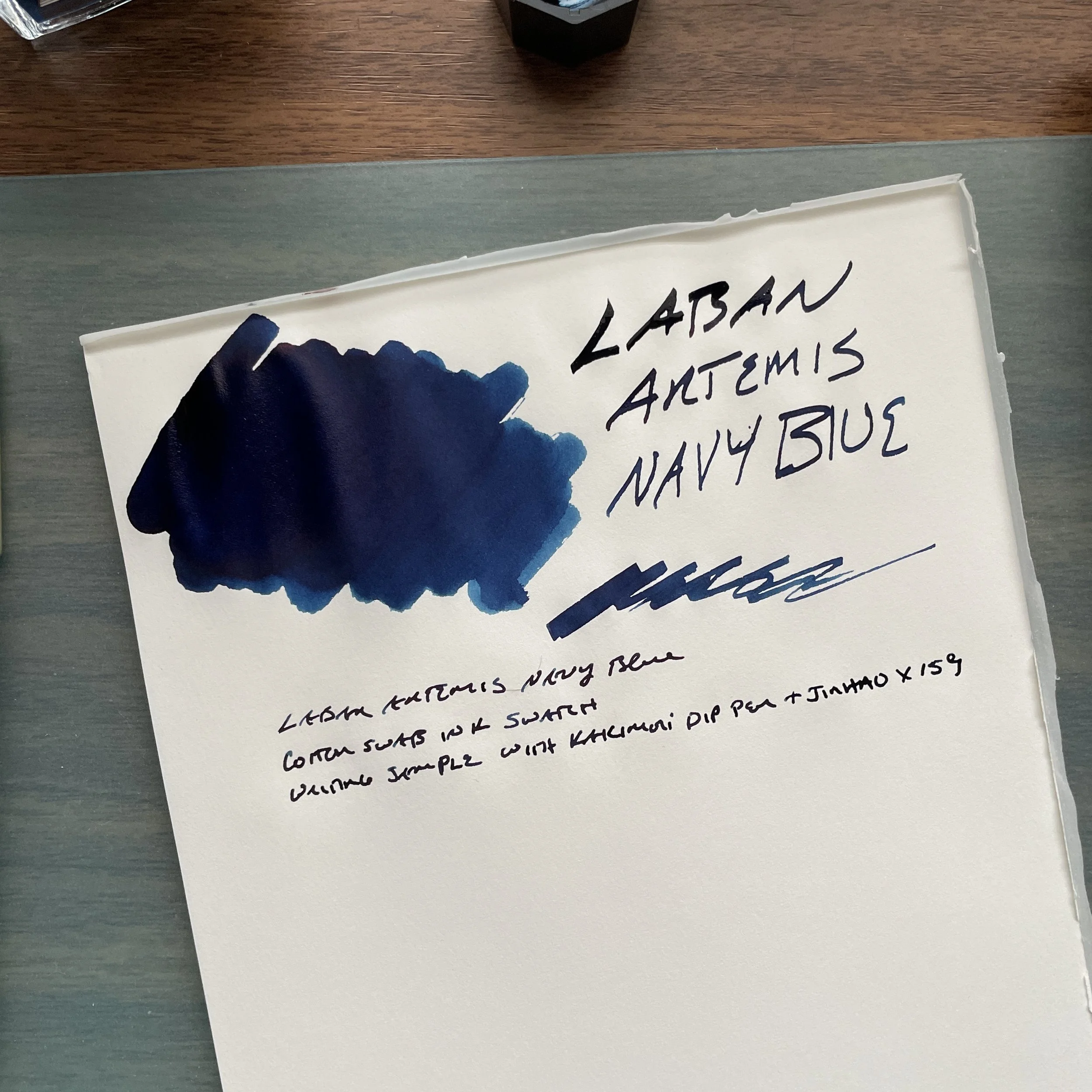
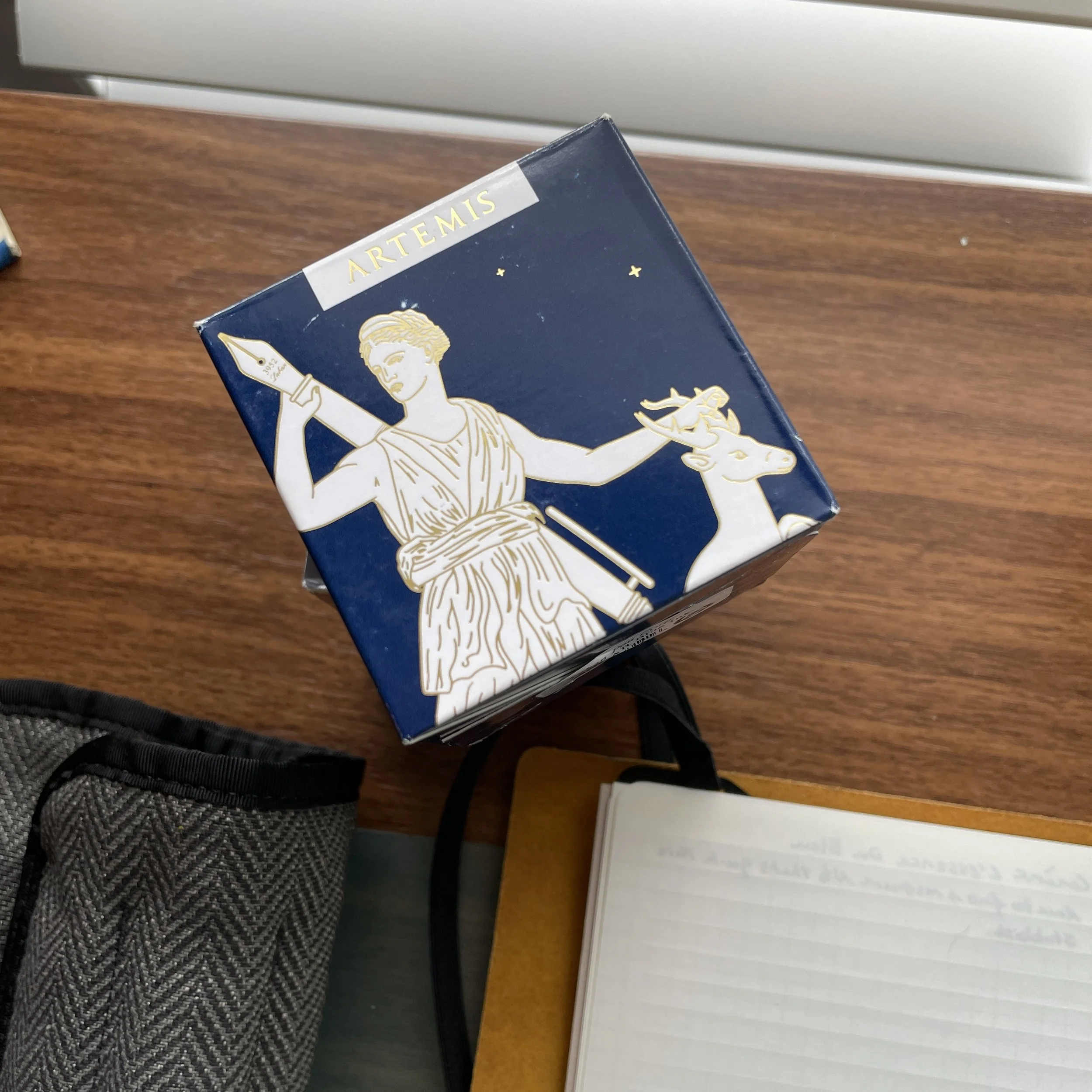
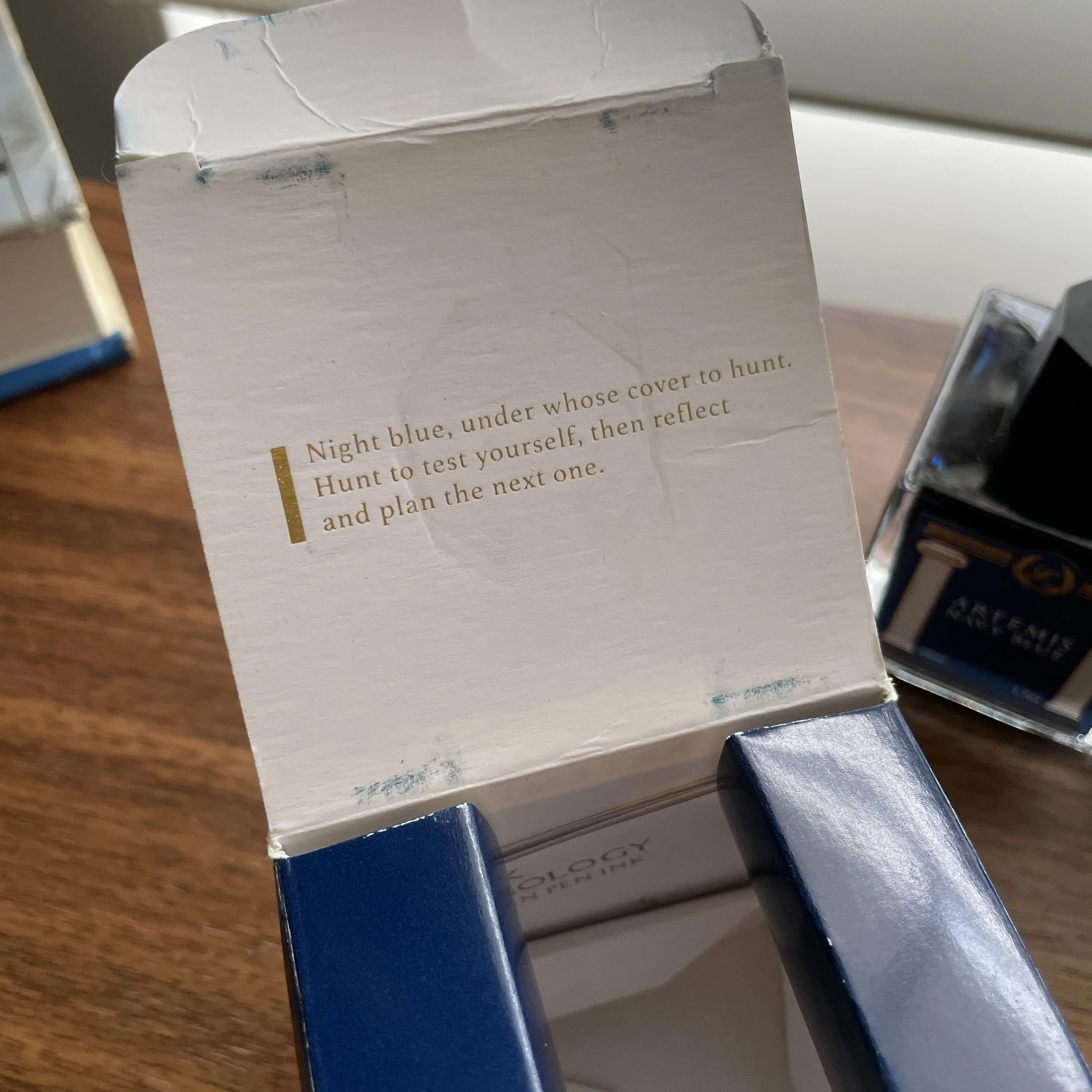
A true navy ink is surprisingly (and somewhat frustratingly) hard to find. Artemis Navy Blue is a dark, rich blue with a touch of sheen - think the now-discontinued JFK Navy Blue from Montblanc, only darker (I would say “richer”) and with less grey. Named after Artemis, the Greek goddess of animals and the hunt (Roman equivalent: Diana), the artwork features the classic motif of Artemis reaching for her bow and arrow, only to find that her bow is a fountain pen! (See the gallery below for the images from the packaging, which I find really well done.)

Like Athena Grey, this ink is a bit of a sleeper and actually one of the last inks I tested from the lineup because I thought it would be a “boring” blue. As it turns out, it has become one of my favorites, and was the surprise hit at pen club a couple weekends back when I brought it for people to test in person.

View fullsize Laban Athena Grey Box Artwork
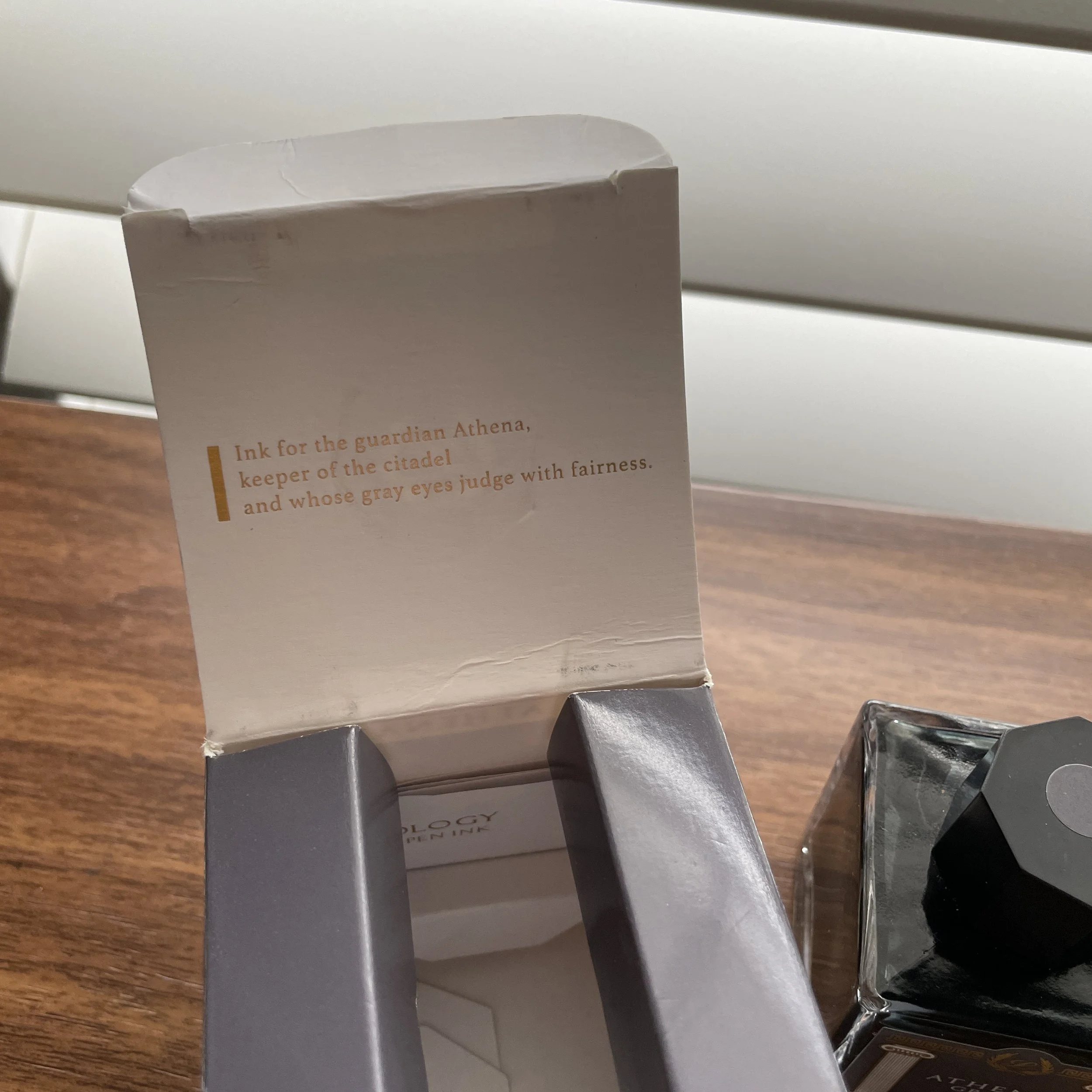
View fullsize Laban Athena Grey Quote Interior Lid
View fullsize Artemis Navy Blue Box Artwork
View fullsize Laban Artemis Navy Blue Quote Interior Lid

Takeaways and Where to Buy

It’s rare that I’ve purchased all of the inks in a given series of releases, much less in a single weekend, so that should tell you something about how much I enjoy what Laban has done here. In fact, I liked these inks so much that I put them on the short list for inks I wanted to sell in our own shop, and we’re happy to be able to offer the Laban Greek Mythology inks directly as of last week. Each ink comes in a 50ml glass bottle, priced at $25.

I’m starting a full comparison ink swatch sheet for this line as I review the rest of them. (Don’t ask me for this paper - go bother the folks at Plotter, because this is exceptionally good Midori MD Cotton Paper with letterpress ruling that they’ve been refusing to make generally available in the US!)

Further Reading

While I’m still personally working my way through this series of ten different inks, you can read my prior post on Ares Red, named after the God of war, here. I’m trying to be better about finishing reviews of full series/sets, hopefully with the goal of creating an organized archive of past content as I’ve done with fountain pens. Stay tuned!

The Gentleman Stationer is supported entirely by purchases from the T.G.S. Curated Shop and pledges via the T.G.S. Patreon Program.

In Ink Reviews Tags Ink Review, Laban Inks, Laban Greek Mythology, T.G.S. Curated Shop
1 Comment

Offbeat Ink Colors for Everyday Writing: Anderillium American Goldfinch Yellow and Ferris Wheel Press Roaring Patina Black

January 21, 2023

This year, I’ve introduced a new rotation system that hopefully will ensure I use more of my pens, especially those favorites that haven’t been getting the attention they deserve. I’ll write more about specifics once things have broken in a bit more, but the gist is that I’ve divided my pens into several categories (“Desert Island/Favorite” pens, pens from independent makers, limited/special editions from standard makers, favorite brands, etc.), and the goal is to have a 1-2 pens from each category inked up at any given time, cycling in a new pen when one is written dry or at the end of the month, whichever comes first. It’s worked well, but a side benefit of this system is that I’ve been re-inking pens more, and therefore also using more of my ink collection and finally getting around to testing out a number of inks that have been in the queue. Today I’ll talk about two that I’ve really enjoyed, both of which are offbeat colors that pleasantly surprised me.

When wet, as shown here on Midori MD Cotton paper, the ink is a brighter yellow. Note the gold tones on the drier writing sample as opposed to the swab.

Anderillium American Goldfinch Yellow: Finally, a Legible Yellow Ink I Can Use Every Day

For years now, I’ve been on a mission to find a yellow ink. I know, it’s a somewhat odd color to fixate on, but I’ve really been wanting an ink that I can use to both highlight and annotate - one that’s not too dark, but at the same time legible. The latter has been the main problem. Most yellow inks are fine as highlighters, but when you try to actually write with them it looks, well, like you’re writing with a highlighter. You can’t read it easily.

On the off-white Plotter paper, Anderillium American Goldfinch dries to a darker golden yellow hue.

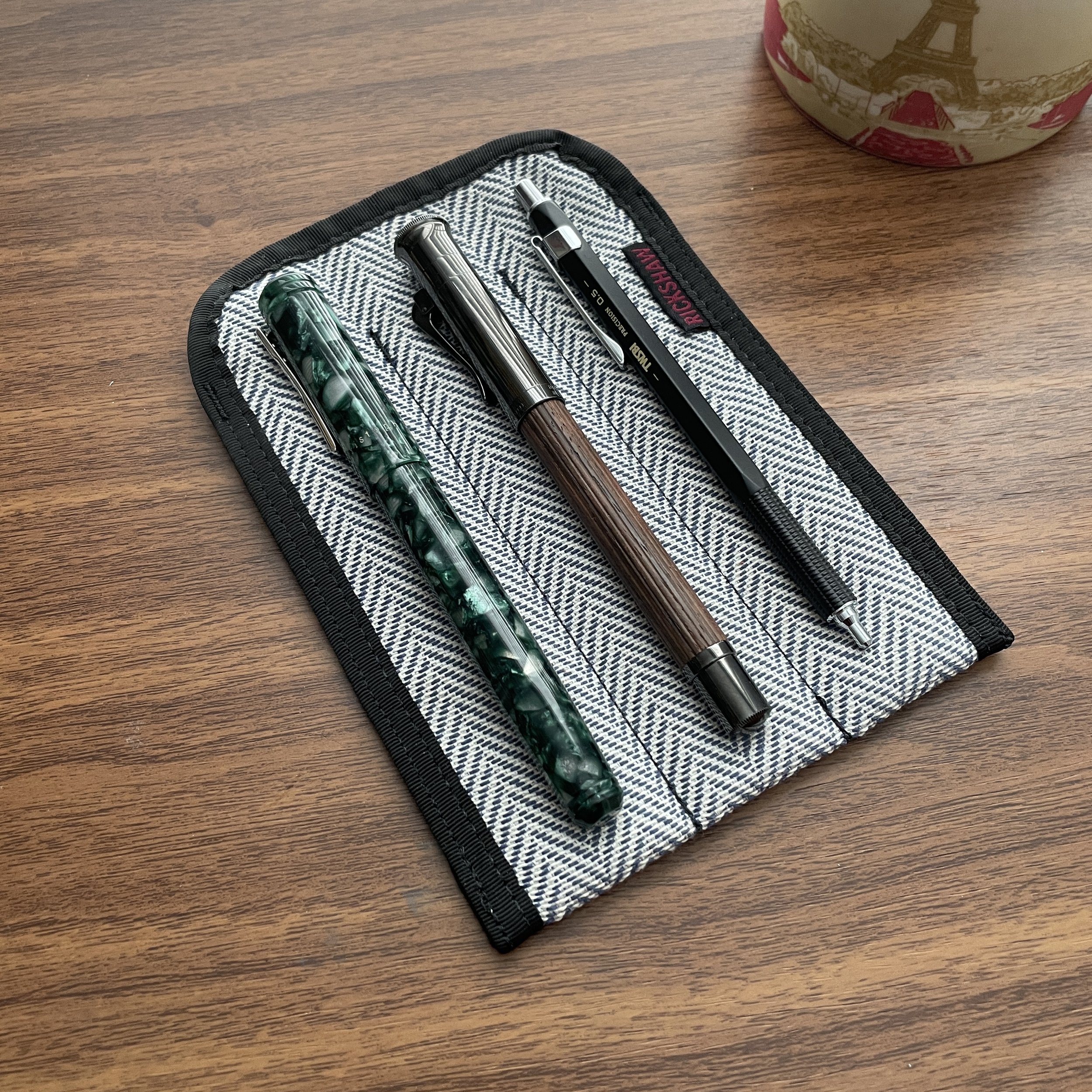
Anderillium inks are known for their offbeat, somewhat unusual takes on classic fountain pen ink colors. As it turns out, “American Goldfinch Yellow,” from their Avian series (based on birds), is exactly what I’ve been looking for. When wet, the ink resembles your classic yellow highlighter, but dries to a richer gold color that’s almost, but not quite, orange. It’s legible enough to use for annotation or everyday writing, depending on your use case. I currently have this ink in my Franklin-Christoph Model 20 in “Winter Pine” acrylic, paired with a medium S.I.G. (Stub Italic Gradient) nib that’s an excellent match for how I want to use this ink.

Of the two inks I’m reviewing today, American Goldfinch Yellow is the one that’s widely available, and we carry Anderillium Inks in the T.G.S. Curated Shop, priced at $14.50 per bottle. I’ve previously reviewed other colors in the series as well, including Cuttlefish Brown, the Michigan Avenue Chicago Pen Show Special Ink, Colossal Squid Dark, and Green Kingfisher Green.

Ferris Wheel Press Roaring Patina Black

One of Ferris Wheel Press’s 2022 limited releases, I hesitated to pick this one up giving my limited use of shimmer ink, but I’m glad I have a full bottle. Roaring Patina Black is a relatively uncommon pairing of a rich black ink with gold shimmer and, according to Ferris Wheel Press, a red sheen. (I’ve not seen much of the sheen, but I’ve also not been using the right paper as most of my writing has been “practical” so far this month.) I wouldn’t characterize this ink as a pure black, as it has some rich blue/purplish-undertones that complement the gold highlights.

View fullsize Ferris Wheel Press Roaring Patina Black
View fullsize Sheen and Shimmer Up Close

Roaring Patina Black features what I refer to as “subtle shimmer” - it’s not so in-your-face glittery that you can’t use it for work, and the shimmer particles are fine enough that they won’t clog your pen. I’ve had this ink in my Graf von Faber-Castell Classic Macassar for the past two weeks without issue, and the “Art Deco” theme of this ink perfectly matches the look of the pen. Unfortunately, Roaring Patina Black was released as a limited edition so it’s no longer widely available, and I was unable to find any retailers with the ink in stock. If you can find it, buy it, because it probably won’t last very long. I enjoy Ferris Wheel Press inks, but looking back I haven’t reviewed very many, other than Peppermint Drop, another red sheener.

This week’s review pens: Franklin-Christoph Model 20 in Winter Pine (left) and Graf von Faber-Castell Classic Macassar.

Longtime readers of this site will know that I don’t use crazy inks: 80% of the time my pens are inked up with standard dark blue / dark green / dark red, but for the other 20% I like to play around with more offbeat colors. That said, even with more unusual ink colors or properties, I have little patience for inks that bleed, feather, and never dry, or only work on certain specific papers with certain nibs. Neither of the two featured here have given me any problems. Sometimes you have to hunt around - sometimes for a very long time - but well-behaved, relatively low-maintenance inks do exist outside of the standard blue/black/blue-black color scheme!

Note: Though I’ve found it to work fine in fountain pens, Ferris Wheel Press Roaring Patina Black is a shimmer ink, meaning that the ink contains fine particles of gold shimmer material. If left in a pen for too long and allowed to dry out, all shimmer inks will clog your pen. If this happens, flushing the pen with water should resolve any issues, but it’s always a best practice to clean your pen every few weeks if you’re using inks such as these.

The Gentleman Stationer is supported entirely by purchases from the T.G.S. Curated Shop and pledges via the T.G.S. Patreon Program. This post does not contain third-party affiliate links or paid advertising. I purchased the Ferris Wheel Press Ink with my own funds, for my own use.

In Ink Reviews Tags Ink Review, Anderillium Ink, Anderillium Ink American Goldfinch Yellow, Ferris Wheel Press, Ferris Wheel Press Roaring Patina Black
Comment
← Newer Posts Older Posts →
Store Hours and Location
Visit the T.G.S. Curated SHOP
Updated "Best Pens" Guide
On the Paper Trail Podcast
TGS x Roterfaden TGS_25
Hierarchies of Fountain Pen Friendly Paper

Join Our Patreon!
Subscribe to the TGS E-mail List

Featured Posts

Featured
Cover On the Paper Trail Intro Clip.jpeg
Dec 3, 2025
Introducing "On the Paper Trail," a New Podcast/Video Collaboration with Lisa Vanness of Vanness Pens!
Dec 3, 2025
Dec 3, 2025
Iro-Utsushi-Fine-Dip-Pens.jpeg
Oct 1, 2025
The Pilot Iro-Utsushi Dip Pen (and in General, Simple vs. Fancy Dip Pens)
Oct 1, 2025
Oct 1, 2025
Levenger-Annotation-Pad.jpeg
Sep 20, 2025
Five Boutique Paper Brands I'm Watching Closely and Why
Sep 20, 2025
Sep 20, 2025
The Gentleman Stationer RSS

© Digital Divide Media, LLC, 2014-present.

All content is the exclusive property of Digital Divide Media, LLC, d/b/a The Gentleman Stationer, including “The Gentleman Stationer” website and trademark, and should not be reproduced without express written permission.  All rights reserved.

All content containing paid advertising, affiliate links, or sponsored content will be plainly disclosed by a disclaimer when/if featured.

Contact Information

Store Shipping Policy and Return Policy

Privacy Policy

Cookie Policy

Terms and Conditions

Powered by Squarespace