• Blog
  • Shop
  • Resources
  • FAQ (Ask TGS)
  • About
  • Archive
  • Contact
  • Sign In My Account
Menu

The Gentleman Stationer

Vintage Living in the Modern World.
  • Blog
  • Shop
  • Resources
  • FAQ (Ask TGS)
  • About
  • Archive
  • Contact
  • Sign In My Account
F1543CF7-A5E1-4FB7-83C6-99CF91BA9D40_1_201_a.jpeg

What Makes a Great Anniversary Edition: Kanilea Pen Company Honokalani Maile Lei

May 29, 2021

I’ve spent the past week or so writing about my frustration with the constant stream of “special” and “limited” edition pens flooding the market, seemingly without a lot of thought or meaning behind each release. But I can gripe all day, and it doesn’t make any difference unless I (1) offer some sort of alternative myself; or (2) offer my thoughts on what makes a good special edition product. Today I’ll open door number two, using the recent release from Kanilea Pen Company, their Fifth Anniversary Honokalani Maile Lei fountain pen, as an example of how a company can do things the “right” way. After thinking on these issues, I’ve come up with four key points that, to me, make a legitimately “special” limited or special edition pen:

  1. It’s made to commemorate an actual event, or otherwise represents something with special meaning.

  2. The design ties to the “theme” of the special edition in a meaningful way.

  3. If the price point of the special or limited edition product is significantly higher than the company’s standard product line, there is something to justify the markup.

  4. If the product is heavily marketed as “limited” or “special”, the actual availability reflects that, especially if the company relies heavily on “FOMO” (Fear of Missing Out) to promote the release.

So How Does Kanilea’s Fifth Anniversary Pen Get It Right?

For starters, it’s a fifth anniversary pen, and it’s more than appropriate to issue a special release to commemorate something like the fifth anniversary of your company! The Kanilea Pen Company officially launched in August 2016 at the Washington, D.C. Pen Show. While I was in attendance, I didn’t have the opportunity to actually buy a pen because they sold out so fast. Since then, Kanilea has grown its lineup deliberately, typically releasing one or two new pens per year, all in keeping with their original company “theme” - places and locations in Hawaii. The Honokalani Maile Lei is no exception, named after the black sand beach on the island of Maui, with the custom-blended, proprietary acrylic designed to reflect the blue water swirling over the black sand.

Between the custom acrylic and the handcrafted design, no two Kanilea pens are identical. Each pen will have a different pattern of swirls and colors, and for that reason I often enjoy purchasing my Kanilea pens in person at pen shows. Hopefully we’ll get the chance to do that again soon!

Per Kanilea, Honokalani translates to “Harbor of the Chief,” and “Maile” refers to a sacred Hawaiian plant with fragrant, dark green leaves. The workmanship on the silver “Maile Lei” band is gorgeous.

Yes, the “Maile Lei” pen is a bit more expensive than a standard Kanilea, reflecting a markup of approximately $160. But you’re not just paying for a “special” or “limited” moniker - the Maile Lei features an Argentium Silver cap band with a three dimensional design depicting a lei of maile leaves. According to the materials provided by Kanilea with my pen, “[a] maile lei expresses many meanings and is used to celebrate important life events or even given as a sign of friendship. Traditionally, a maile lei is worn draped around the neck, open ended, but closed maile leis are also made.” The Konokalani Maile Lei fountain pen is only available in a single design profile, the Classic, which, in my opinion, perfectly showcases both the acrylic and the custom silver band.

Finally, while the Honokalani Maile Lei is an “Anniversary edition” pen, and presumably won’t be available forever (though I could be wrong about that), you don’t see any desperate “buy-it-now-or-you’ll-miss-it” style marketing that’s become so characteristic of modern pen releases. Each Kanilea launch is accompanied by carefully assembled marketing materials explaining the story behind the pen, how the design choices relate to the theme, and how the pen fits into the overall Kanilea narrative.

Your Kanilea pen arrives packaged in a black walnut keepsake box. I have several of these boxes, and each has found new life as a dresser valet, pencil box, or catch-all for office supplies.

Granted, I do want to point out that Kanilea isn’t exactly an apples-to-apples comparison with other brands, because Kanilea isn’t a typical pen company. Their standard lineup of pens isn’t mass-produced. Each model is carefully tied to the company’s core theme, with each aspect of every pen, from shape to material, carefully selected to reflect its namesake. The pens themselves are designed and handcrafted by the small family team behind Kanilea. But I do think the comparison is still instructive, as one could even argue that what Kanilea does with their “regular line” is what more mainstream companies should be considering for their special and limited releases (at least if their goal is to foster the sort of loyal customer base that has allowed companies like Kanilea to flourish).

Kanilea fountain pens feature an extremely comfortable grip section and reliable No. 6 JoWo nibs, each tuned and smoothed prior to shipment to ensure a good writing experience.

Why I Enjoy Kanilea Pens

Apart from the aesthetics, Kanilea pens are extraordinarily well-designed, ergonomic, and comfortable. The section, in my opinion, is one of the best out there, the pens are perfectly balanced, and Hugh’s skill at nib tuning continues to impress me. While a Kanilea fountain pen makes for an expensive purchase, the entire experience - down to the packaging - delivers a level of value that’s hard to find from any other maker.

Where to Buy the Kanilea Honokalani Maile Lei

If you’re interested in learning more about Kanilea’s Fifth Anniversary Release, visit the Kanilea Pen Company website. As I noted above, the Honokalani Maile Lei retails at a higher price point than a typical Kanilea fountain pen ($555 for a steel nib, and $695 for 18k gold), though there is also a Honokalani model (no Maile Lei band) at the standard $395 pricing. Other Kanilea models currently available for purchase include the Mauna Kea, Aolani, and Nui Nalu, which I’ve previously written about as well as the newer Kona Snow and Kona Cherry designs.

Disclaimer: Kanilea Pen Company was kind enough to provide me with the pen featured in this review on a tryout basis. It’s not going to make it’s way back to them. While I did not receive the pen for free, I did receive a discount on the purchase of a gold nib version. Many thanks to Hugh, Karol, and the rest of the team at Kanilea for making this review possible!
In Pens, Editorial Tags Kanilea Holokalani Maile Lei, Kanilea Pen Co., Pen Review, Limited Edition
2 Comments

Pen Review: Tibaldi N.60 in Samarkand Blue

May 20, 2021

Italian brand Tibaldi has a long and storied history in the pen industry dating back to 1916, when it was founded in Florence. Over the years, Tibaldi pens have alternated between prominence and obscurity, most recently achieving a degree of fame/infamy for their absolutely gorgeous - and now scarce and absurdly expensive - “impero” celluloid. After several changes in ownership and management over the years, I understand that Tibaldi is now owned by the Aquila family, which per the Tibaldi website also has an ownership stake in Montegrappa. Given that Tibaldi has been headquartered in Bassano del Grappa (home of Montegrappa) since 2004 (as well as the line of pens released at some point dubbed “Tibaldi by Montegrappa), it’s clear to me that there is common ownership and that Tibaldi is a Montegrappa “sub-brand,” though I can’t find anything online where the companies expressly confirm that relationship.

Until I started researching this review, I was actually unaware of the relationship between these two Italian pen companies, but now that I think about it the business strategy kind of makes sense. I enjoy Montegrappa fountain pens, especially the materials they use, but they do get knocked for their high (some would even say astronomic) price points, even on their introductory or “lower-end” offerings. Since Tibaldi pens seem to top out at less than $250 (and even under $200 depending on where you buy), I would surmise that the strategy is to protect the “premium” image of the Montegrappa brand by releasing a more accessible line of pens under the Tibaldi moniker. It’s not a bad strategy, though I do think Tibaldi might have an easier time catching on if more people readily understood the connection to Montegrappa, an established modern brand.

Design and Build Quality

Any time a pen company releases a fountain pen featuring blue-flecked tortoiseshell material, either celluloid or acrylic, I’m going to buy it. (Don’t ask me - it’s one of those things.) This material reminds me of the blue tortoise celluloid used in my Faggionato Petrarque, though of course this Tibaldi uses acrylic and not celluloid. Regardless, the material is beautiful. The pen itself features a classic vintage-inspired design, reminiscent of various vintage fountain pens from Tibaldi and other brands. The triple cap band is a nod to some of my favorite vintage pens (though this Tibaldi is of course much larger - more on that below). The Tibaldi N.60 shows very little in the way of branding, with only a subtle “Tibaldi” engraved right above the cap band.

Build quality seems solid. The metal clip feels secure and tight, and the cap threads are smooth, opening with less than two turns. Inside the barrel, the acrylic is thick, with just enough room for the converter to fit without rattling.

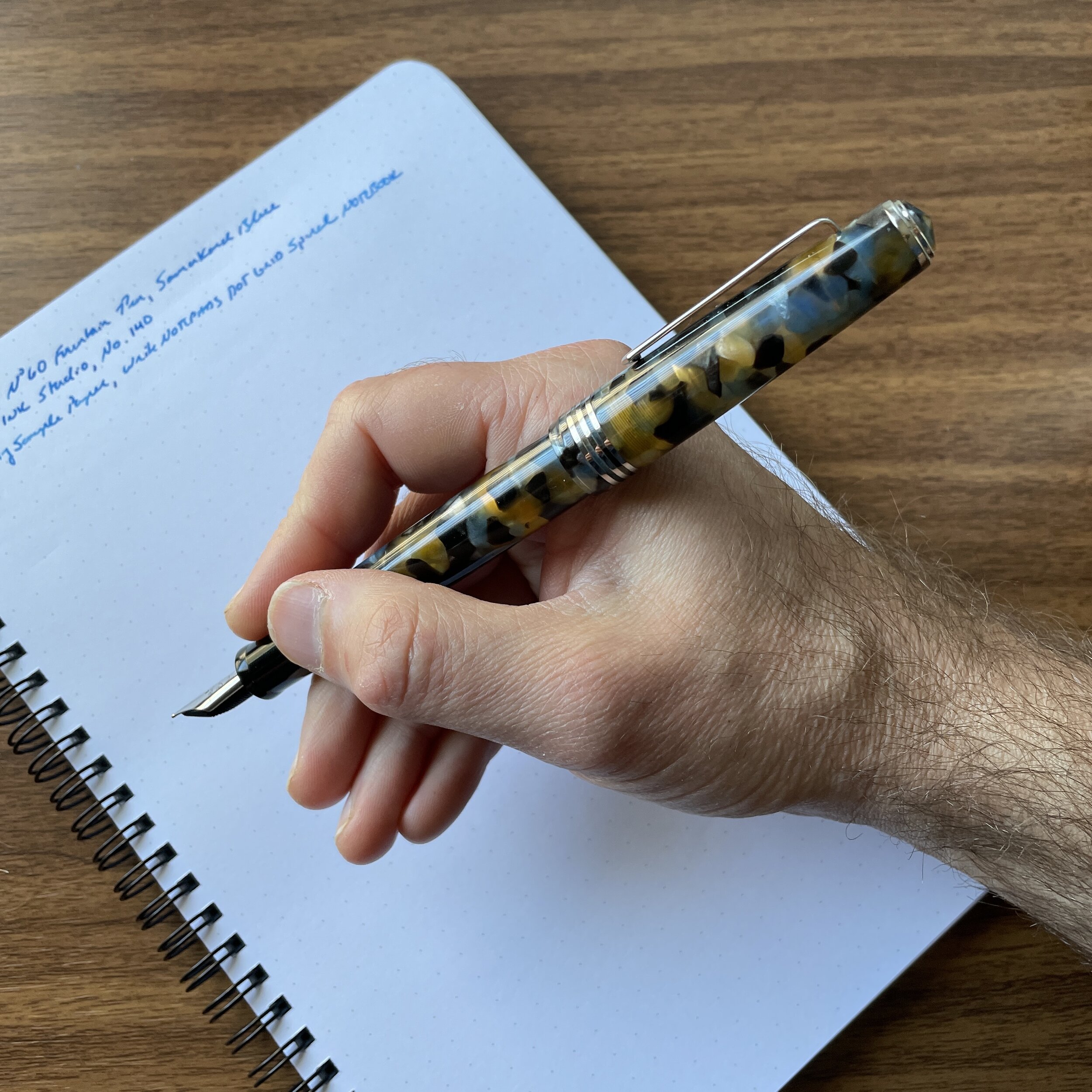
Tibaldi N.60 Posted
Tibaldi N.60 Posted
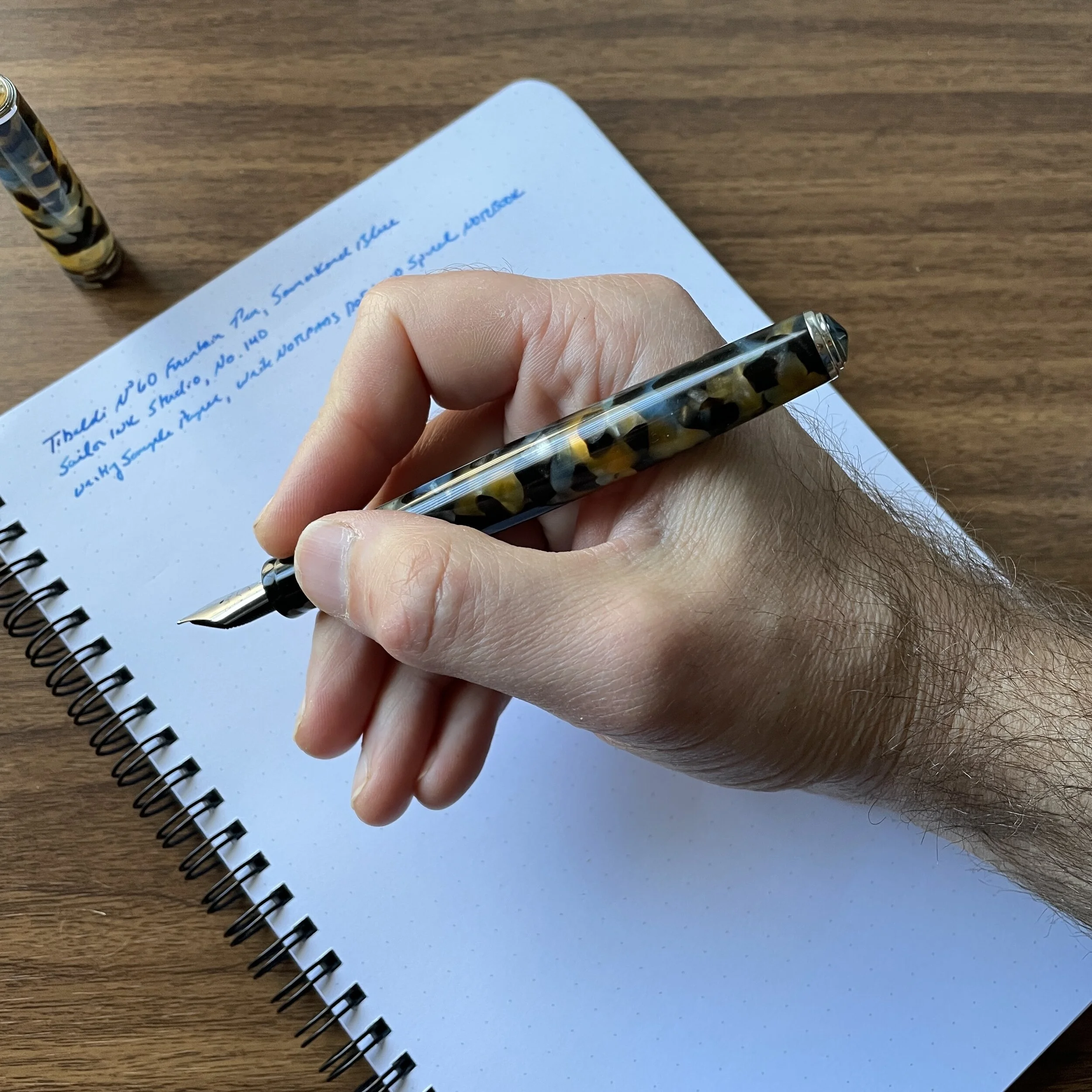
Tibaldi N.60 Unposted

Nib and Overall Writing Experience

The N. 60 is, to me, a larger pen, though in terms of modern sizing it’s best characterized as a mid-size pen. It posts securely, though feels a touch top-heavy when you do post. Most people will probably write with this one unposted. The section is on the shorter side, causing me to tend to grip the threads when writing, though because the threads aren’t sharp I never experienced any serious discomfort.

The nib is where Tibaldi has attempted to distinguish itself from other brands targeting the $150-200 price bracket. While there is nothing necessarily special about the stainless steel nib itself, Tibaldi has paired it with an ebonite feed, typically the hallmark of much more expensive Montegrappa pens. The presumptive benefit of more consistent ink flow, however, doesn’t really appear here. While my N.60 isn’t a dry writer, I’m not sure I can discern that much of a difference between this nib and any other stock Bock or JoWo nib paired with a standard plastic feed. I did experience a couple of hard starts when the pen was new, but those have largely disappeared following a short break-in period of me writing with the pen consistently.

Writing sample with a stainless steel medium nib, Sailor Ink Studio 140, on Write Notepads Dot Grid Paper.

Takeaways and Where to Buy

If I had to point to one thing that would make the Tibaldi N.60 worth buying, it’s the materials Tibaldi has chosen, particularly the “Samarkand Blue” and the “Amber Yellow”, as well as certain design touches such as the triple cap band which give the N.60 a higher-end feel than its price point would suggest. Otherwise, I feel like the N.60 struggles to distinguish itself from its competitors in terms of writing experience, and I guess I expected a bit more ink flow from my ebonite feed. Don’t get me wrong - this isn’t a bad pen, and if you love the look of it, you will get a nice writer that feels built to last. If I had to pick a pen for a close comparison, I would say that the N.60 strikes me as a more upscale Levenger True Writer, which many people love, and which shares some of the same design language.

Similar materials: I like the Samarkand Blue acrylic almost as much as the “Honey Noire” on my Conway Stewart Model 100.

I purchased the pen featured in this review from Appelboom, which carries the full line of Tibaldi pens. The Tibaldi No. 60 is currently priced at around $175, depending on the exchange rate, and in addition to the “Samarkand Blue” model shown here, comes in black and three other marbled colors: Ruby Red, Emerald Green, Amber Yellow, and Emerald Green.

Disclaimer: This post does not contain affiliate links. The Gentleman Stationer is supported via pledges from the T.G.S. Patreon Program and sales through the T.G.S. Curated Shop.

In Pens Tags Fountain Pens, Tibaldi, Tibaldi N.60
Comment
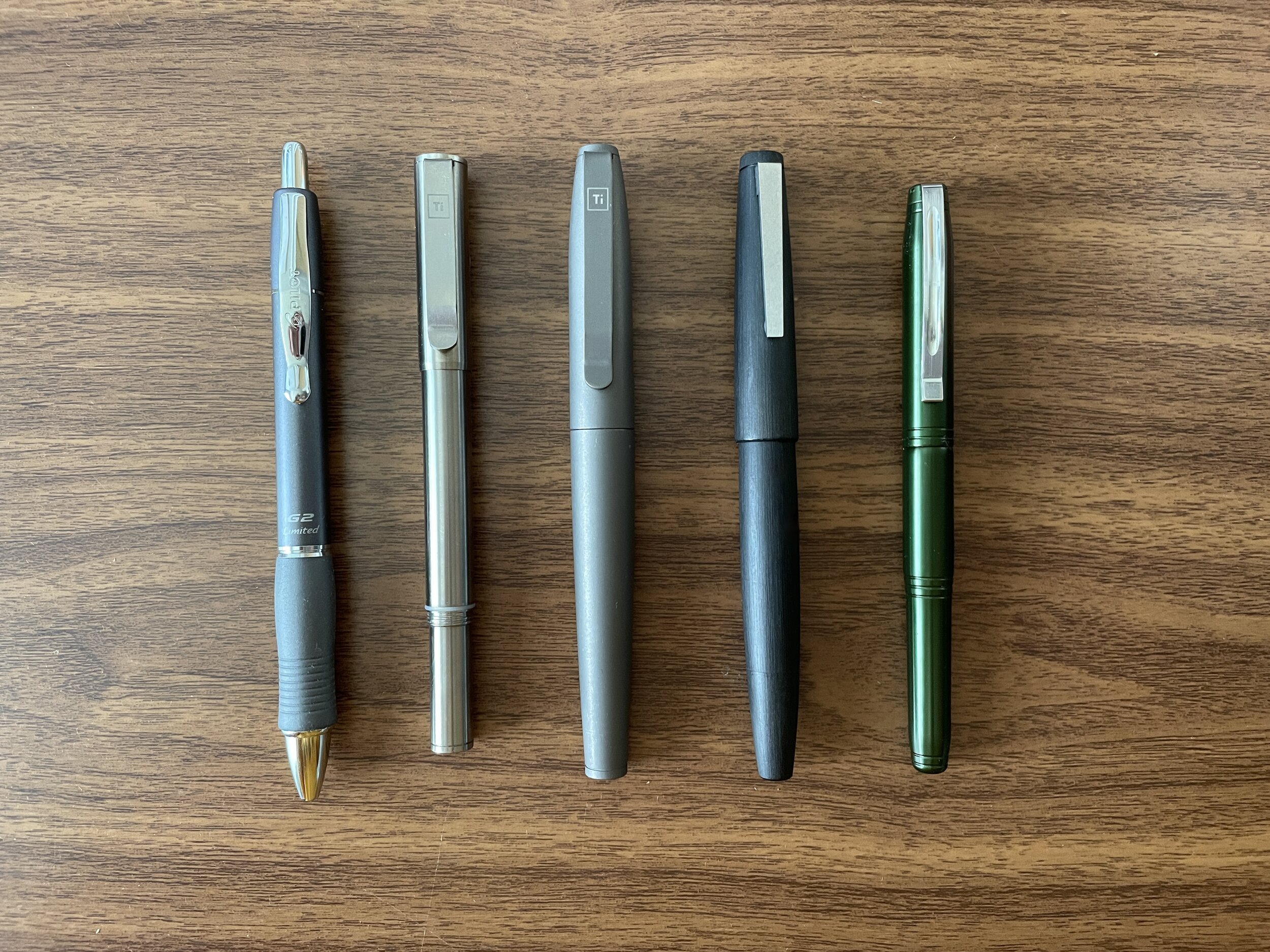
From left, the Pilot G2 Limited, the BigiDesign Ti Arto, the BigiDesign Ti Ultra, the Lamy 2000 Rollerball, and the Sunderland Design Works MK1.

From left, the Pilot G2 Limited, the BigiDesign Ti Arto, the BigiDesign Ti Ultra, the Lamy 2000 Rollerball, and the Sunderland Design Works MK1.

Pilot G2 Update: Pen Bodies and Alternative Refills

April 21, 2021

A couple of weeks ago I re-reviewed one of my favorite gel refills, the Pilot G2, which is not only available at most grocery or drug stores, but fits a wide range of machined pens, including personal favorites from Sunderland Machine Works and Tactile Turn. Following that article, I polled the readership to see how you all used the Pilot G2, and whether there were other alternatives out there that I wasn’t aware of. Here are the results:

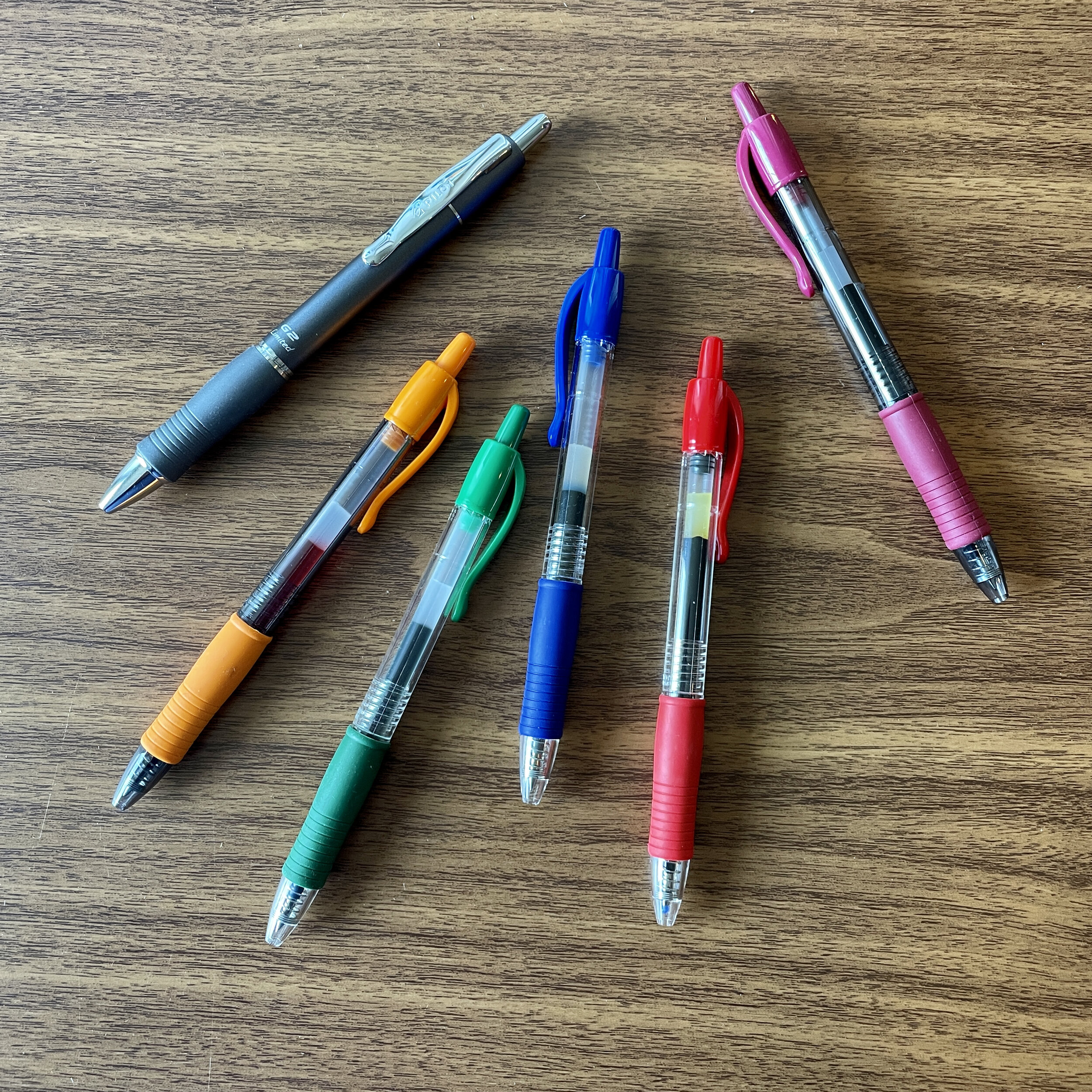
  1. Pilot G2 Limited. I know I’ve mentioned Pilot’s stock “upgrade” before, but it surprised me how many people love this pen. I’m glad I’m not the only one, because I consider the G2 Limited a sleeper recommendation that most people have been passing up for years, even though it’s right there in front of you in the stationery aisle at Target or Staples.

  2. Tactile Turn “Side Click”. My own experience with Tactile Turn has been with the “Mover”, a click pen released on Kickstarter approximately five years ago and now rotated out of the Tactile Turn lineup. The Side Click Standard ships with a .7mm G2 refill, and the Side Click Mini ships with the .7mm G2 Mini refill.

  3. TiScribe Bolt. The Urban Survival Gear TiScribe Bolt is one pen I’ve never tried. A versatile machined pen that ships with the G2, yet also accepts favorites such as the Pilot V5, Uniball 207 Gel, Uniball Jetstream, and Schmidt 5888.

  4. Ti2 Techliner Shorty. Another heavily recommended pen that I’ve never reviewed! The Ti2 Techliner has long had a robust online following, and I need to put in an order and finally do a write up. The “shorty” version of the pen accepts the Pilot G2 and the Uniball Jetstream, both workhorses.

  5. Pilot Metropolitan Rollerball. Pilot’s popular entry-level fountain pen also comes in a rollerball version which accepts - you guessed it - the G2. Fans of the Metropolitan who would like a gel/rollerball to match their Metropolitan fountain pen should consider this one. (I’ve previously reviewed the fountain pen version here.)

  6. Lamy 2000 Rollerball. While I understand that this is not an exact fit, you can add a short spacer, such as a small wad of paper or a piece of plastic tubing, to the barrel of the Lamy 2000 Rollerball and use Pilot G2 refills. The Lamy 2000 is one of my favorite pens of all time, and the rollerball option is incredibly versatile and just as comfortable to use as the fountain pen.

  7. Ti Arto Ultimate Refill Friendly Pen. The Ti Arto from BigiDesign sits on my desk, loaded not with the G2 but rather a Uni Signo DX, so it doesn’t immediately spring to mind when I think of a G2-compatible pen. That said, this pen does accept the G2, along with 200+ other compatible refills. If you value versatility, you really can’t do better than one of the “Ti” series pens. (The Ti Arto was the original refill-friendly pen - they’ve since released several others, most of which accept the G2.)

As always, please leave a comment or reach out through the “Contact” link if you have additional suggestions. One further aside: I’ve discovered that with the addition of a spacer, I’ve also been able to use the Pentel Energel refill in my Sunderland Machine Works MK1. The needle-tip Energel is a long-time favorite going all the way back to my school days, and I feel like I should further explore the various options for that one as well. Stay tuned!

This post contains no third-party affiliate links, and is for informational purposes only. To support The Gentleman Stationer, please consider joining our Patreon, or making a purchase from the T.G.S. Curated Shop. Many thanks!

In Pens Tags Pilot G2, Pilot G2 Refill, Machined Pens
16 Comments

Building a Set: Caran d'Ache 849 Fountain Pen

April 17, 2021

I’ve never given the Caran d’Ache 849 fountain pen a proper stand-alone write-up, even though it’s been on the market for several years now. Like the 849 ballpoint, the fountain pen has grown on me over time, as yet one more way in which Swiss company Caran d’Ache has taken the classic hexagonal barrel and applied it to writing instruments beyond the woodcase pencil. I figured it’s time to take a closer look at this pen.

Caran-d'Ache-849-Fountain-pen-cap.jpg

Back when this pen was first introduced, it was a bit of a departure for Caran d’Ache, as they previously had been known for higher-end fountain pens such as their Léman and Ecridor series. While releasing a fountain pen in the $50-60 price range increased the brand’s accessibility, moving “downmarket” was viewed by some as risky, given the company’s relative lack of experience at the price point and the inevitable manufacturing and quality control compromises that often need to be made to create an affordable fountain pen. Years later, however, the 849 fountain pen is still around, remains widely available, and has garnered a good reputation as not just an entry-level pen but a solid everyday writer for those who enjoy a slimmer format with a couple of different grip options.

Before I continue with the rest of the post, I want to be completely transparent up front that I am an authorized Caran d’Ache retailer and sell these and other Caran d’Ache products in my shop. My goal, as it has always been, is to offer detailed discussions and reviews of products so that you can make an informed decision about what you ultimately decide to purchase. I’m selective about the products I stock, drawing on nearly a decade of prior experience as a pen user and collector, and generally only sell products that I would use myself. That said, I strongly encourage readers to do as much research as they can, including from sources other than me, before deciding on any purchase.

Pen Design: Building on an Iconic Shape

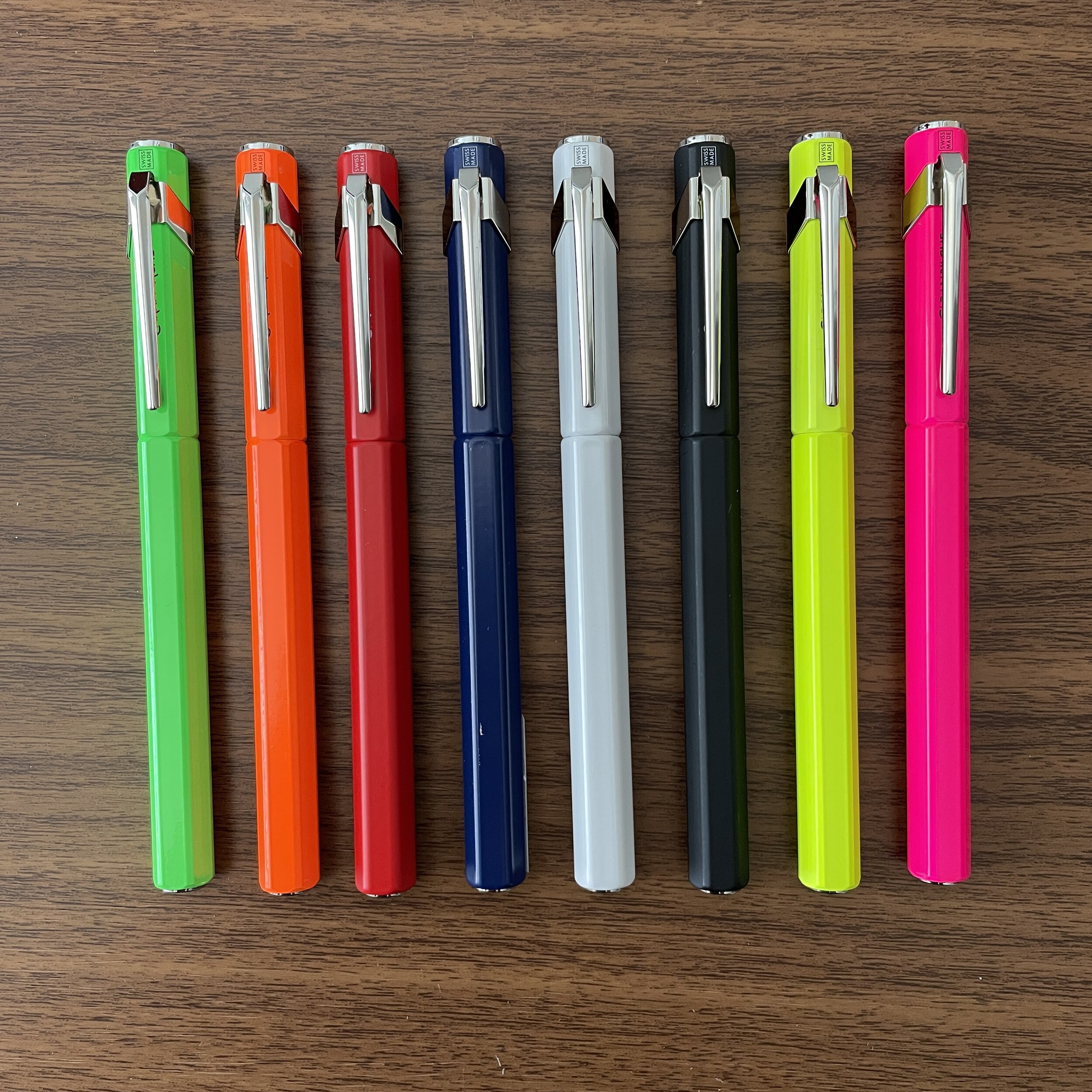
The 849 fountain pen is pretty simple, construction-wise, featuring a lightweight aluminum body that comes in a variety of finishes: classic navy blue, white, red, and matte black, as well as “wilder” green, orange, yellow, and pink fluorescent. The pen accepts short international cartridges, long international cartridges, and will take a Caran d’Ache converter if you want to fill from a bottle.

The full color array of Caran d’Ache 849 fountain pens.

The full color array of Caran d’Ache 849 fountain pens.

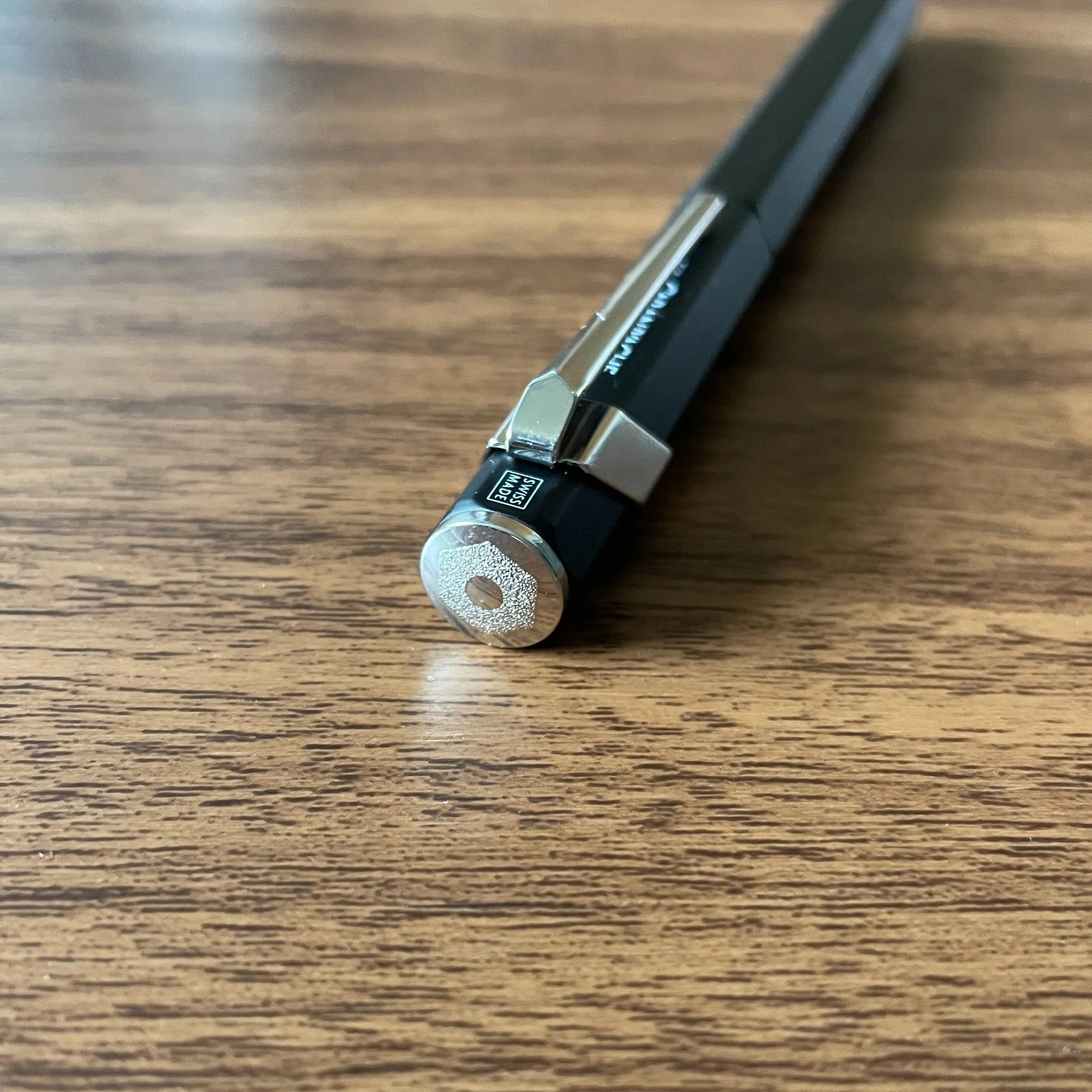
Where the Caran d’Ache 849 fountain pen departs from most pens in this price segment, however, is its unique design. The pen borrows its hexagonal barrel from the 849 ballpoint, with the hex edges slightly rounded for increased comfort. The Caran d’Ache logo appears etched on the cap finial, with branding tucked under clip - another quirky design touch shared by the 849/844/Fixpencil family. Like its siblings, the 849 fountain pen fits well in a planner loop, so it’s easily portable.

The 849 fountain pen will fit in the Traveler’s Notebook pen loop and other similarly sized pen slots.

Nib and Writing Experience

Though slimmer than what I typically prefer in a daily writer, I consider the 849 fountain pen comfortable to use, and it makes for a convenient pen to keep in the pen loop of a planner or notebook. The friction-fit cap snaps firmly closed, and attaches securely to the barrel in case you want to post the pen.

The Caran d’Ache 849 fountain pen stainless steel nib in fine, with a splash of Idyllic Blue.

The pen features a smaller stainless steel nib with a shape somewhat reminiscent of the nib on a Lamy Safari. Though not at all “flexible,” I would describe it as pleasantly springy, and the all of the ones I personally have used have been smooth. Given the pen’s light weight (even posted), you can comfortably write for longer sessions, provided a slimmer format works for you.

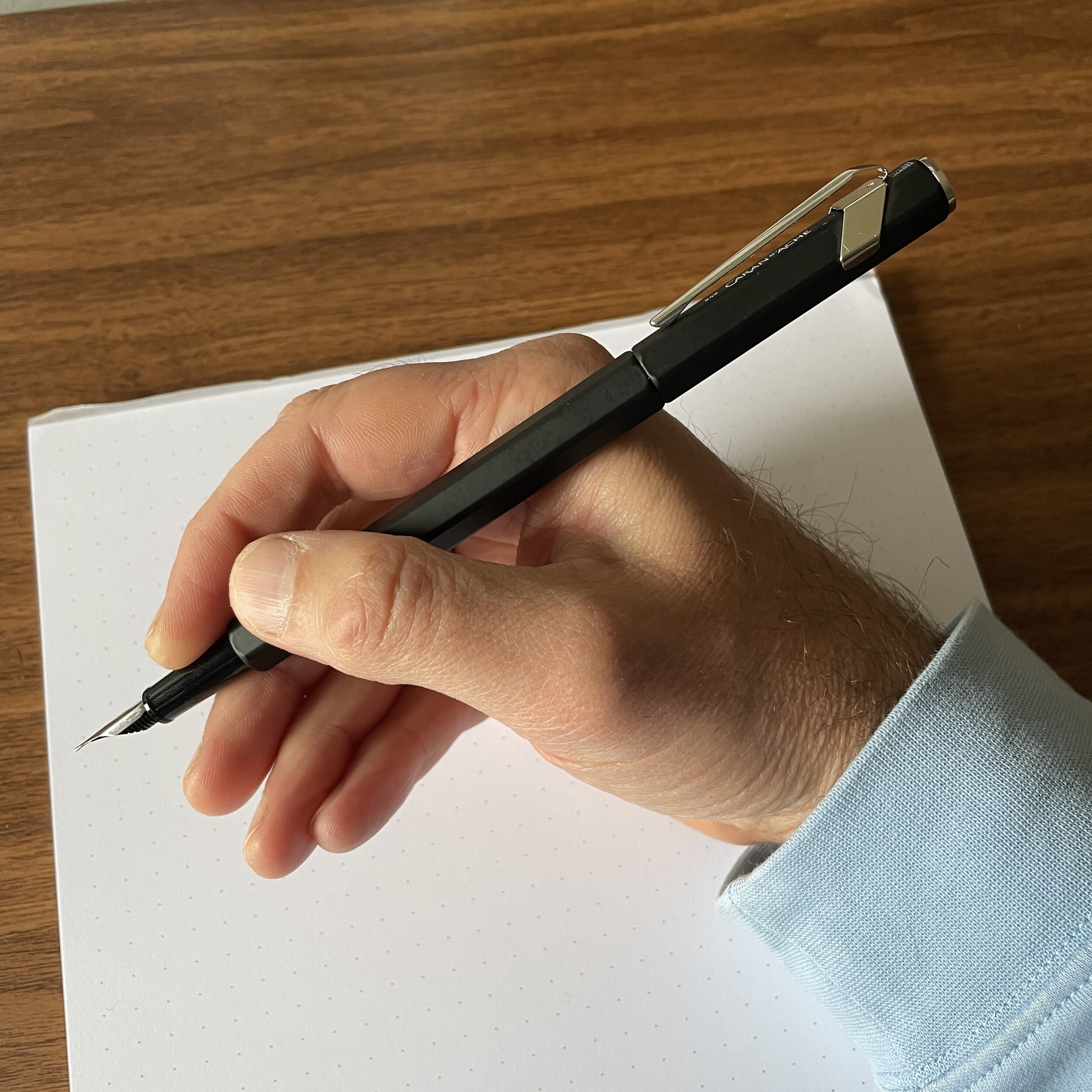
Unposted Caran d'Ache 849 (Section Grip)
Unposted Caran d-Ache 849 (Hex Grip)
Posted Caran d'Ache 849

The section and barrel present a couple of different grip options. You can of course hold the pen at the rounded plastic section, but I sometimes grip this pen a bit higher up on the hexagonal barrel. While it gives the pen a bit of a “paintbrush” feel, I find it oddly enjoyable to use this way, especially if I’m writing in formal cursive.

271C6B81-9754-42E1-A767-A86DCAC72950_1_201_a.jpeg

Takeaways and Where to Buy

The Caran d’Ache 849 fountain pen is a fun addition to the Swiss company’s now-iconic (and increasingly expansive) “849 lineup.” A key benefit of the shared design scheme is the ability to create matching fountain pen/ballpoint/pencil sets. Here, I opted for the matte black fountain pen for my own personal collection, because I already have a matte black .7mm mechanical pencil, and eventually I’ll add a “Black Code” 849 ballpoint and a black Fixpencil so that I’m color-consistent. (If the company is listening, the “Black Code” motif applied to a fountain pen, mechanical pencil, and fixpencil - especially a black-plated knock and clip - would sell like crazy. Just sayin’….)

From left, the “Black Code” 849 Ballpoint, the 849 fountain pen in matte black, the 844 mechanical pencil in matte black, and the Fixpencil with black knock.

As I noted above, Caran d’Ache is one of the brands I’ve chosen to sell directly, and I currently stock the fountain pen in all colors with fine and medium nib options, as well as the full range of Caran d’Ache “Chromatics” ink cartridges. If these pens do well, I’ll consider bringing in additional nib sizes, converters, and bottled ink, but for now I’m sticking to the most popular nib widths and cartridges, which honestly is how most people use this pen. The 849 Fountain Pen currently retails for $52, and ships with one Caran d’Ache “Idyllic Blue” ink cartridge.

In Pens, TGS Curated Shop Tags Caran d'Ache 849, Caran d'Ache, Caran d'Ache 849 Fountain Pen
3 Comments
Pilot-G2-Gel-Pens.jpeg

Review Revisited: Is the Pilot G2 Still A Good Pen?

April 7, 2021

One of my major “pandemic projects” has been to bring the content on this website up to date: deleting years-old announcements and “deals” posts containing outdated links, advertisements and sponsor posts from companies no longer in existence, and other material that’s basically clutter and makes it more difficult to find truly useful content. In the process, I’ve come across many reviews that I hadn’t read in several years, including this piece from nearly five years ago in which I discuss my appreciation for the Pilot G2, and even call it my personal favorite gel pen. It’s time to revisit to see whether this opinion still holds true.

Short Answer: I Still Like the Pilot G2 Overall

For the most part, my original review holds up. While I’ve never been on board with the G2’s moniker as the “World’s Best Pen” or “World’s Most Popular Pen” or whatever, I also don’t believe that it deserves the shade thrown its way. For a pen that most people can find in their corner grocery store, the G2 is quite good and, in my mind, serves the same role as the Bic Cristal: a classic pen that’s almost universally available with a refill that provides a consistently decent writing experience whenever you need to just get some work done. For that reason, I continue to keep a handful of Pilot G2s in my desk. While the standard plastic G2 body has zero character and isn’t particularly comfortable, for a small amount of money you can upgrade to the G2 Limited, which offers a better grip and balance for less than $10. I still own two.

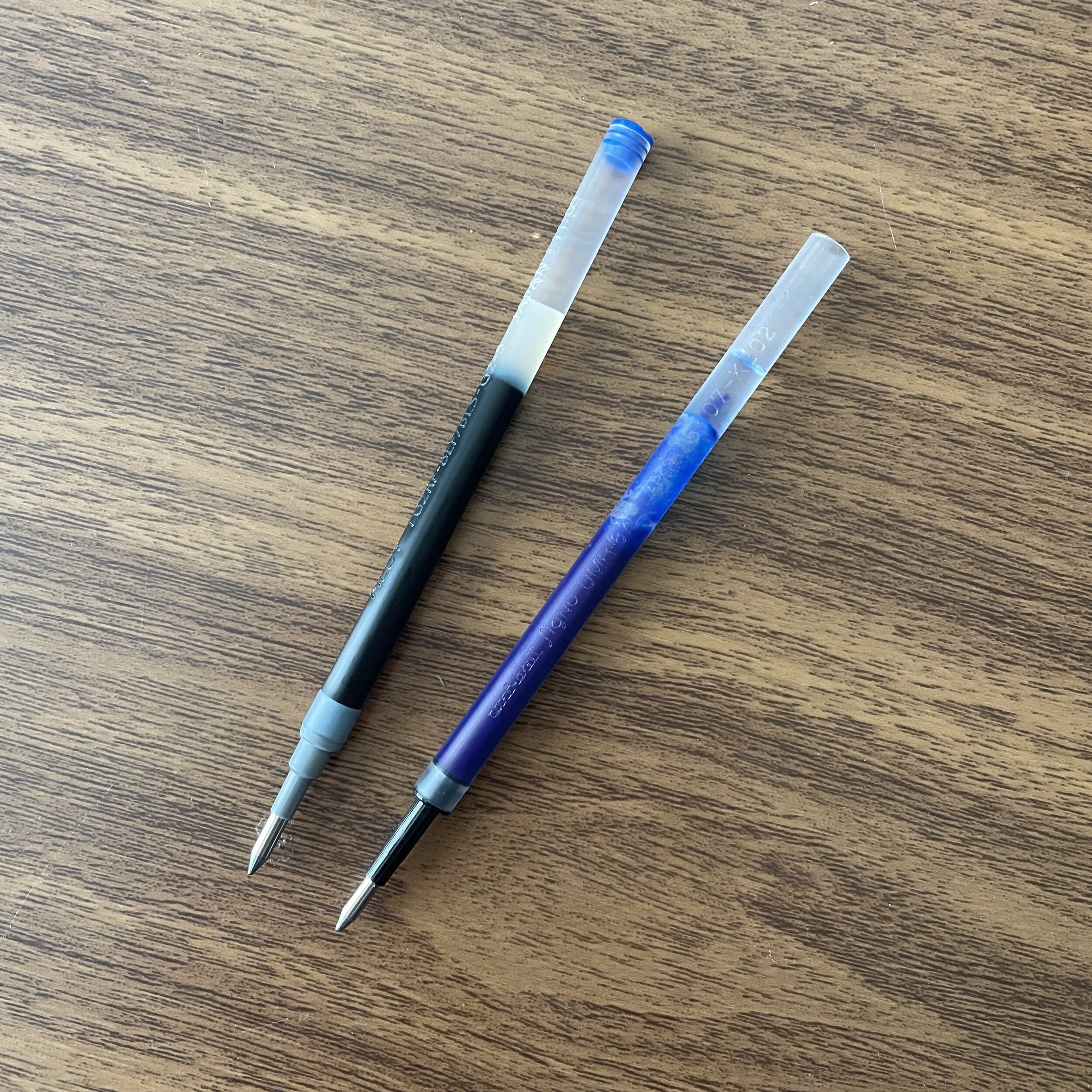
The G2 does an excellent job of preventing evaporation from the cartridge, presumably due to the plastic cap and whatever material Pilot uses to seal off the ink. The refill on the right is from a Signo 307, which shows significant evaporation. Both…

The G2 does an excellent job of preventing evaporation from the cartridge, presumably due to the plastic cap and whatever material Pilot uses to seal off the ink. The refill on the right is from a Signo 307, which shows significant evaporation. Both of these pens were left sitting for 2-3 years.

The G2 Vs. Everything Else

The biggest downside to the G2, at least as sold, is the design. Companies such as Uni and Pentel have the clear edge in terms of ergonomics. I simply don’t find the standard G2 grip that comfortable, and the standard pen body feels insubstantial. That said, what really interests me is the refill. The G2 continues to impress with its combination of availability, durability, and consistency. Is it a “great” writing experience? No. Will the G2 consistently offer a “good” writing experience, even in a pen that’s spent a couple of years unused in a desk? Based on my track record with this pen, the answer to that question is yes. With one or two exceptions, all of the G2s that I pulled out of my various stationery drawers wrote immediately, without any dryness or skipping, and when I checked the refills for evaporation I found that the G2s had much more ink remaining than its competitors, including the popular Pentel Energel and Uni Signo 307, the latter of which experienced significant evaporation after a couple of years. (Evaporation can cause gel ink to become sticky and blob and smear easily, which makes for a very unpleasant writing experience.)

Finally, I did notice some discrepancies in performance between the various G2 tip sizes. Curiously, all of the “problematic” pens (i.e., skipping and dryness) contained blue .5mm refills. The .7mm and .38mm G2 refills performed flawlessly across the range of available colors. I’m not going to draw any firm conclusions from this, as it’s not a representative sample and YMMV, but I did make that observation. The .38mm tip size has become my current favorite.

Takeaways and Where to Buy

The G2 remains my favorite inexpensive “office supply” gel pen. The combination of low cost, generally reliable performance, and the refill’s compatibility with a wide rage of different custom pens make it a quality option to have in your stationery cabinet. While the limited color options can be a considerable downside, the Pilot “Juice” range features the same refill format, though the pen itself is a bit more slender and less comfortable to use (in my opinion).

As I mentioned above, you can purchase a Pilot G2 anywhere. If you’re looking for the .38mm version, or one of the non-standard colors such as orange, burgundy, or blue-black, you may need to search around online, though I have occasionally seen them at big box office supply stores. G2 refills also ship standard in many custom machined pens, including Tactile Turn and Sunderland Machine Works. If you enjoy the G2 refill but can’t stand the default plastic housing, consider upgrading to Pilot’s G2 Limited or a third-party custom pen.

Disclaimer: The Pilot G2 products featured in this post were purchased with my own funds, for my own personal use. This post does not contain affiliate links. If you wish to support The Gentleman Stationer, please consider supporting us on Patreon or via The Curated Shop. Many thanks!

In Pens Tags Gel Pens, Pilot G2, Pilot G2 Limited, Pilot Juice, Pen Review, Revisited
8 Comments
← Newer Posts Older Posts →
Store Hours and Location
Visit the T.G.S. Curated SHOP
*New* Updated "Best Pens" Guide (2025)
T.G.S. 2025 Holiday Gift Guide
TGS x Roterfaden TGS_25
Hierarchies of Fountain Pen Friendly Paper

Join Our Patreon!
Subscribe to the TGS E-mail List

Featured Posts

Featured
Cover On the Paper Trail Intro Clip.jpeg
Dec 3, 2025
Introducing "On the Paper Trail," a New Podcast/Video Collaboration with Lisa Vanness of Vanness Pens!
Dec 3, 2025
Dec 3, 2025
Iro-Utsushi-Fine-Dip-Pens.jpeg
Oct 1, 2025
The Pilot Iro-Utsushi Dip Pen (and in General, Simple vs. Fancy Dip Pens)
Oct 1, 2025
Oct 1, 2025
Levenger-Annotation-Pad.jpeg
Sep 20, 2025
Five Boutique Paper Brands I'm Watching Closely and Why
Sep 20, 2025
Sep 20, 2025
The Gentleman Stationer RSS

© Digital Divide Media, LLC, 2014-present.

All content is the exclusive property of Digital Divide Media, LLC, d/b/a The Gentleman Stationer, including “The Gentleman Stationer” website and trademark, and should not be reproduced without express written permission.  All rights reserved.

All content containing paid advertising, affiliate links, or sponsored content will be plainly disclosed by a disclaimer when/if featured.

Contact Information

Store Shipping Policy and Return Policy

Privacy Policy

Cookie Policy

Terms and Conditions

Powered by Squarespace