The first thing you’ll notice is that this six-slot pen case can actually hold a lot more than six pens. Like many people new to the hobby, when I started out I was strictly in the “one pen, one slot” category, but about five years in I stopped caring if the pens touched and/or developed minor scratches and dings. Nearly all of the pens I write with regularly are permanent companions that will not be sold or kept as investment pieces/collectibles. I let them develop their own scars. Sometimes this means I have more than one pen in a single slot, or I’ll carry multiple pens in the front pocket.
As an aside, I love the Rickshaw Fillmore for its ability to unzip all the way around and serve as a pen tray as well as a traditional pen case. In addition to the pen slots, one side contains a forward pocket that can hold a notebook, sticky notes, index cards, or more pens. Here’s what I’ve got in there right now:
Lamy Swift Capless Rollerball. One of the most underappreciated workorse pens, the Lamy Swift rollerball has a genuinely good capless refill, plus a retractable clip that recedes into the barrel when the tip is extended to prevent you from accidentally ruining your shirt pocket, bag, or pen case. The Lamy Swift is one of those subtly good pens that you will use without thinking about it - I find it in my hand all the time.
Laurett’s Waka Ebonite Ballpoint. Sometimes you can’t use a fountain pen, but you want to use a visually interesting pen that features a material like ebonite. As a regular ballpoint user, I was thrilled to discover these ebonite ballpoints from Japanese maker Laurett’s, which specializes in ultra fine knurling in applications from pens to automotive parts. Here, the knurling (i.e. ridges) on the ebonite barrel adds texture that gives the pen a nice grip.
Ohto CR02 Rollerball. For an everyday classic capped rollerball, it’s hard to do better than the Ohto CR02, and if the pen’s not your thing, the fine-tip refill is excellent. I always keep one of these pens with me for when I need a dark black ink, and it’s also a great pen to lend to someone to use in a meeting.
Pilot Custom 912 with PO (Posting) Nib. The most significant change that I’ve made in my fountain pen use over the years is to focus on nibs more than the pens themselves. I’ve accordingly found myself drawn to pens like Pilot’s Custom 912, which features multiple 14k nib options that include many specialty grinds. The PO (Posting) nib is an ultra-extra fine nib that I love for planning and annotation. Currently inked with Bungubox Dandyism.
Pilot Custom 912 with WA (Waverly) Nib. My latest discovery is Pilot’s WA (Waverly) nib, which features a slightly upturned tip designed to write smoothly from multiple angles. Reminiscent of those vintage Sheaffer “Touchdown” nibs from the 1960s and 1970s, the Waverly nib make an excellent everyday writer and I’ve had this one inked up through multiple fill cycles. I currently have it inked up with an orange multi-shading Sailor Ink Studio ink, though I don’t have the exact number since it came from a sample I pulled from a friend.
Lamy 2000 (Standard Black Makrolon - Fine Nib). Yes, there will always be at least one inked-up Lamy 2000 in my pen case. I’ve made no secret over the years that I love everything about the design of this pen, and the nib style fits my handwriting well. Inked up with a special ink that you all will hear about very soon. :)
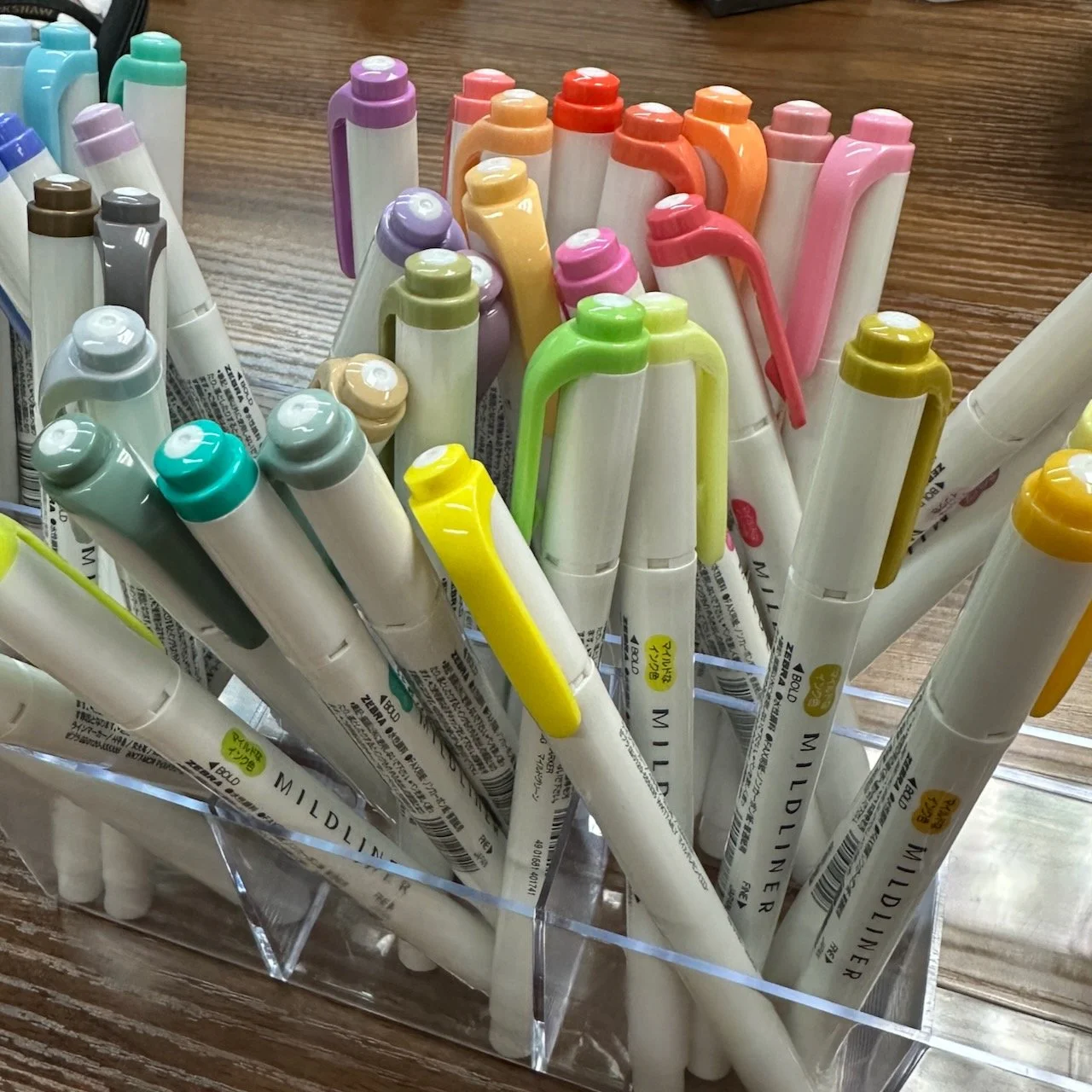
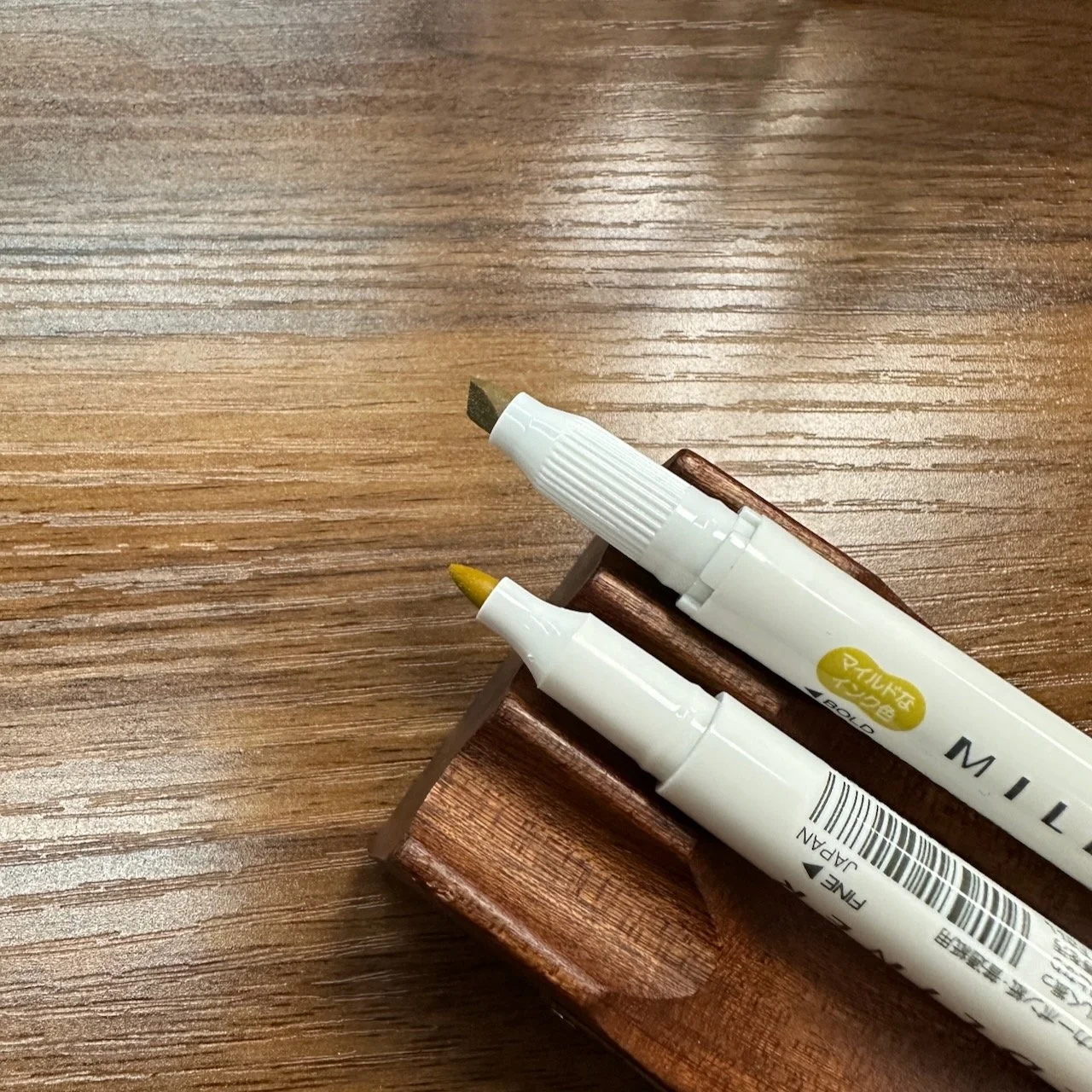
In The Pocket: 2 Zebra Mildliners and a Pilot Juice Up (Examples). I generally have a handful of highlighters and colorful gel pens in the Fillmore’s center pocket, again for planning and annotation. The specific brand/color/model rotates out fairly regularly, and honestly depends mostly on what’s sitting at my desk when I pack my pen case in the morning. This week it’s been two Zebra Mildliner dual-tip highlighters and a Pilot Juice Up with the excellent .4mm Synergy Tip.