• Blog
  • Shop
  • Resources
  • FAQ (Ask TGS)
  • About
  • Archive
  • Contact
  • Sign In My Account
Menu

The Gentleman Stationer

Vintage Living in the Modern World.
  • Blog
  • Shop
  • Resources
  • FAQ (Ask TGS)
  • About
  • Archive
  • Contact
  • Sign In My Account

Ask T.G.S.: Three Tips for Enjoying "High Maintenance" Fountain Pen Inks

November 16, 2024

I spent this past weekend at the Chicago Planner Conference, and during the course on ink and paper that I helped teach, a key concern among new fountain pen users was how to know whether an ink is “safe” to use in a fountain pen. I previously wrote an “ask T.G.S.” piece about best practices for using shimmer inks, but what about super sheeners, iron gall inks, permanent inks, and others that aren’t considered your standard “water-based” fountain pen inks? Such inks are often labeled “high maintenance” because they do require a bit of extra attention, though the concern is generally overblown. I thought it might be helpful to recap my thoughts here.

Tip 1: As a General Matter, KNow that If An Ink Is Sold by a Fountain Pen Specialty Retailer or manufacturer, and Labeled “For Fountain Pens,” It most likely Will Not Hurt Your Pens.

While there are a handful of fountain pen inks that have been known to damage certain materials due to their chemical content, you mostly only have to worry about inks staining or damaging white or light-colored acrylics, or absorbent materials like certain vintage celluloids. For these specific materials, avoid permanent inks, and colors such as purples and reds, which I’ve found particularly prone to staining.

Otherwise, modern fountain pen inks will not permanently clog or damage most pens in any way that a normal cleaning (i.e., flushing with water or running through an ultrasonic cleaner) cannot fix. Even inks that contain particles suspended in solution - such as pigmented inks and shimmer inks - will flush out of most pens with plain water. That said, as Lisa, Ana, and I emphasized during the course, under no circumstances should you use India ink or dip pen/calligraphy ink in a fountain pen. Certain of these inks contain shellac and other glue/paint-like substances that, once they dry, can permanently damage a fountain pen and render it unusable.
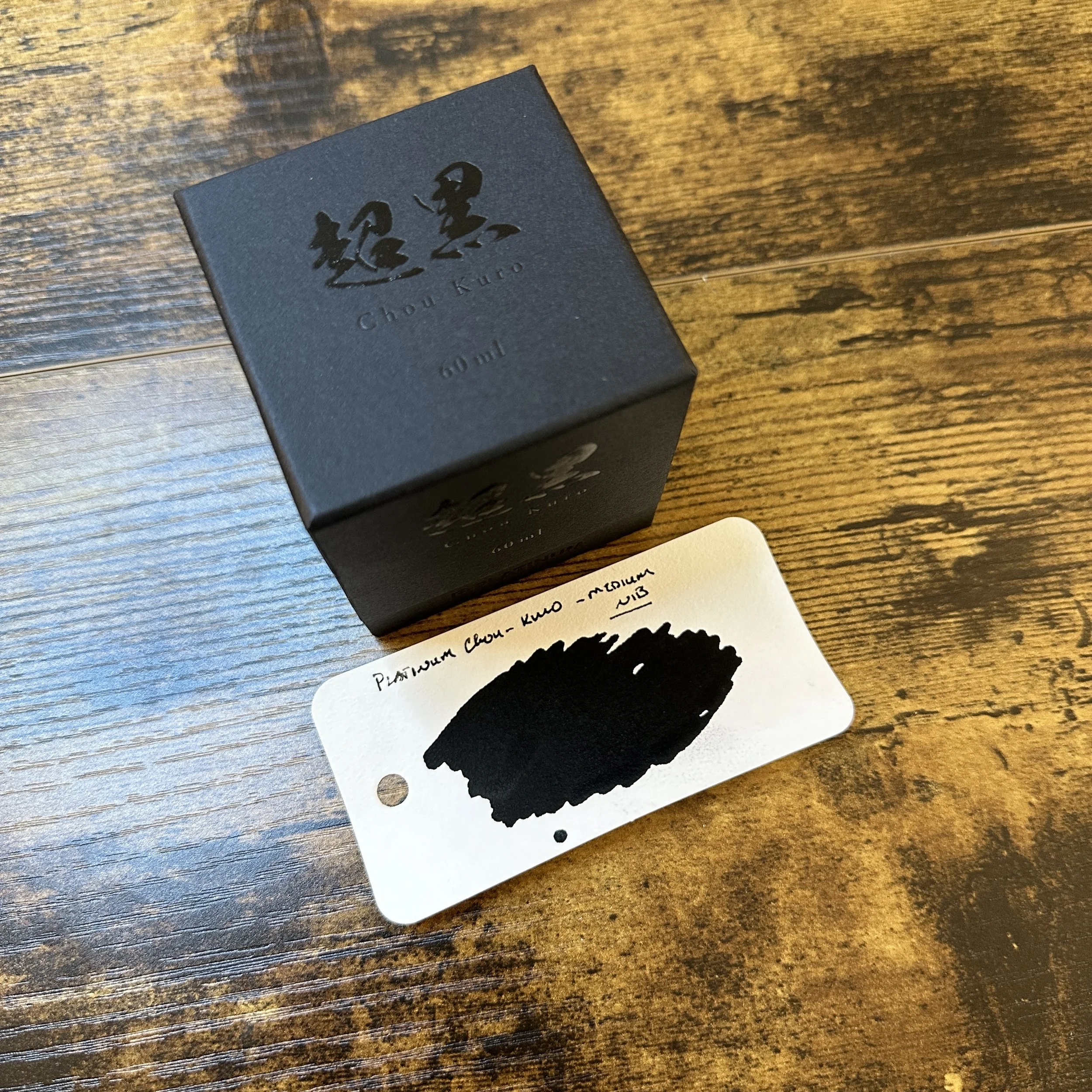
At the planner conference, there was a surprising level of interest in Platinum’s ultra black pigmented inks such as Chou Kouro (shown here) and the not-quite-as-black-hole-black Carbon Black.

Tip 2: If You Have Any Doubt or Concern, Test the ink with an Inexpensive Pen FIRST, and Clean, Clean, Clean!

This week, I spent several days testing Platinum’s recently released Chou Kuro Black ink, which is supposed to be the “blackest-of-the-black” inks, and so saturated with special pigment that Platinum recommends that your pen be flushed only with purified or distilled water. (I would consider this to be the quintessential “high maintenance” ink, at least per Platinum’s recommendations.) To test the ink, I chose an inexpensive piston filler (a Majohn), and wrote with the pen for a week. While I’m still experimenting with this ink and plan to test it in more pens before publishing a conclusive review, I’ve so far found it no more difficult to clean than your ordinary pigmented ink like Platinum Carbon Black or Sailor Kiwa Guro. I plan to start using this ink regularly - it’s incredibly dark and one of the best “cheap paper inks” I’ve ever used - but to be safe I’ll probably limit it to cartridge-converter pens, if for no other reason than to save time cleaning. Importantly, I will plan to clean any pen containing this ink at least once a month, to avoid any buildup of pigment in the feed and to ensure good performance.
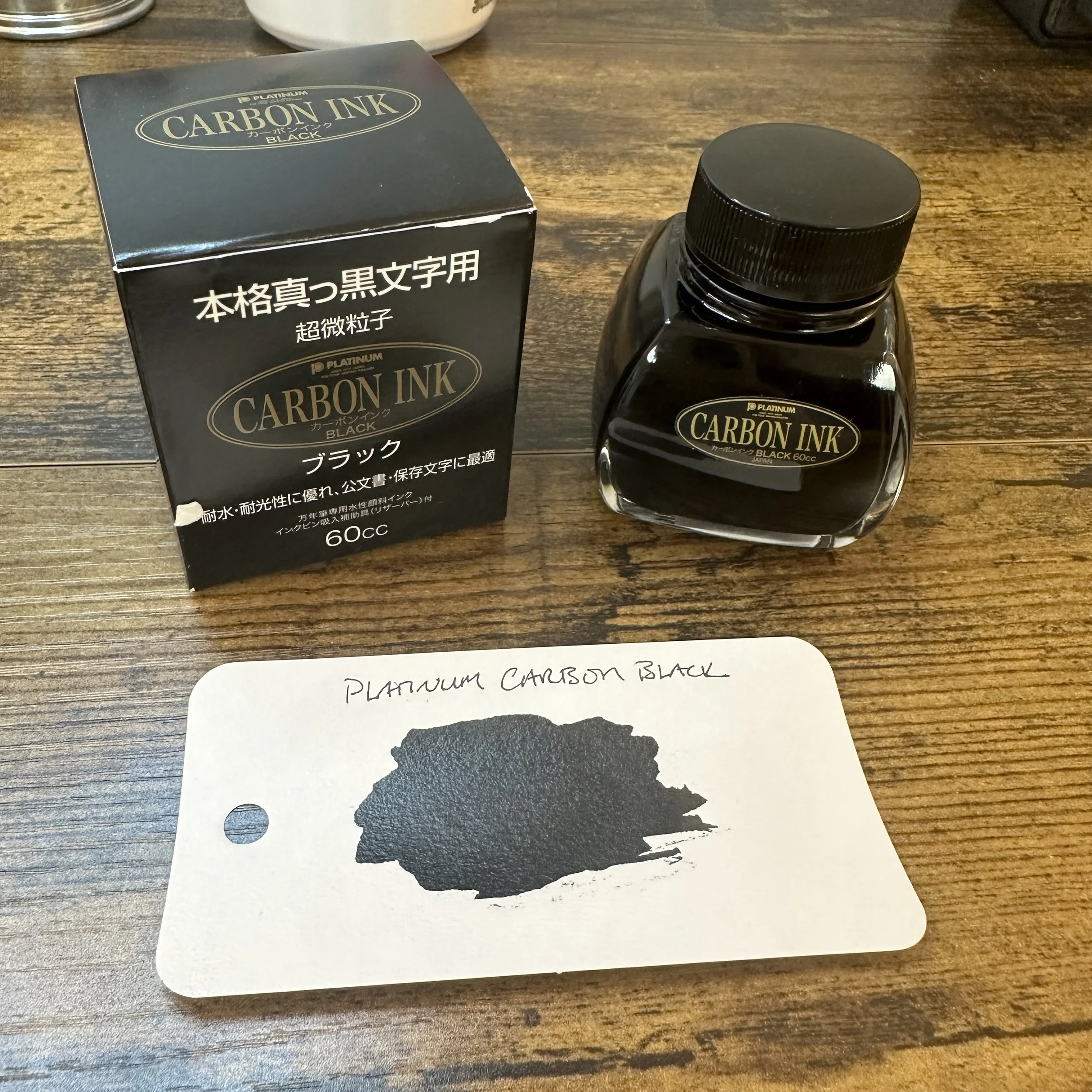
Unlike Chou-Kouro, which dries to a flat matte shade of black that reflects no light, Platinum’s Carbon Black has a slight sheen to it. Shown here on Col-o-ring ink testing paper.

Tip 3: Don’t Overly Concern Yourself With Harming Your Pens and spoil Your Enjoyment of the Hobby.

I’ve been collecting fountain pens seriously for well over 10 years, and using them for far longer. I can count on one hand the number of pens I’ve permanently stained with fountain pen inks, and all of them have been white or clear acrylics. Guess what? All of these pens continued to work just fine as writing instruments. Sure, if you have a particularly delicate celluloid or light-colored pen, and you don’t want to alter the appearance of it with a highly saturated super-sheener, choose a different ink for that specific pen. Probably Waterman Blue. But otherwise, I can guarantee you’re going to have a lot more fun with your inks and paper if you put these sort of concerns to the back of your mind, take reasonable steps to clean your pens every month or so, and just use what you like and what makes you happy.

Iron gall inks are another category of so-called “high maintenance” inks that, in my opinion, requires no more care than most other inks, especially in modern formulations. Just be sure to clean every month or so and you’ll be fine.

For more fountain pen tips, tricks, and general Q&A, check out our resource page here. As always, feel free to write in or leave a comment if you have another specific pen-related question! We’re always happy to answer.

The Gentleman Stationer is supported entirely by purchases from the T.G.S. Curated Shop and pledges via the T.G.S. Patreon Program. We also have a brick-and-mortar store, which you can visit! See here for hours.
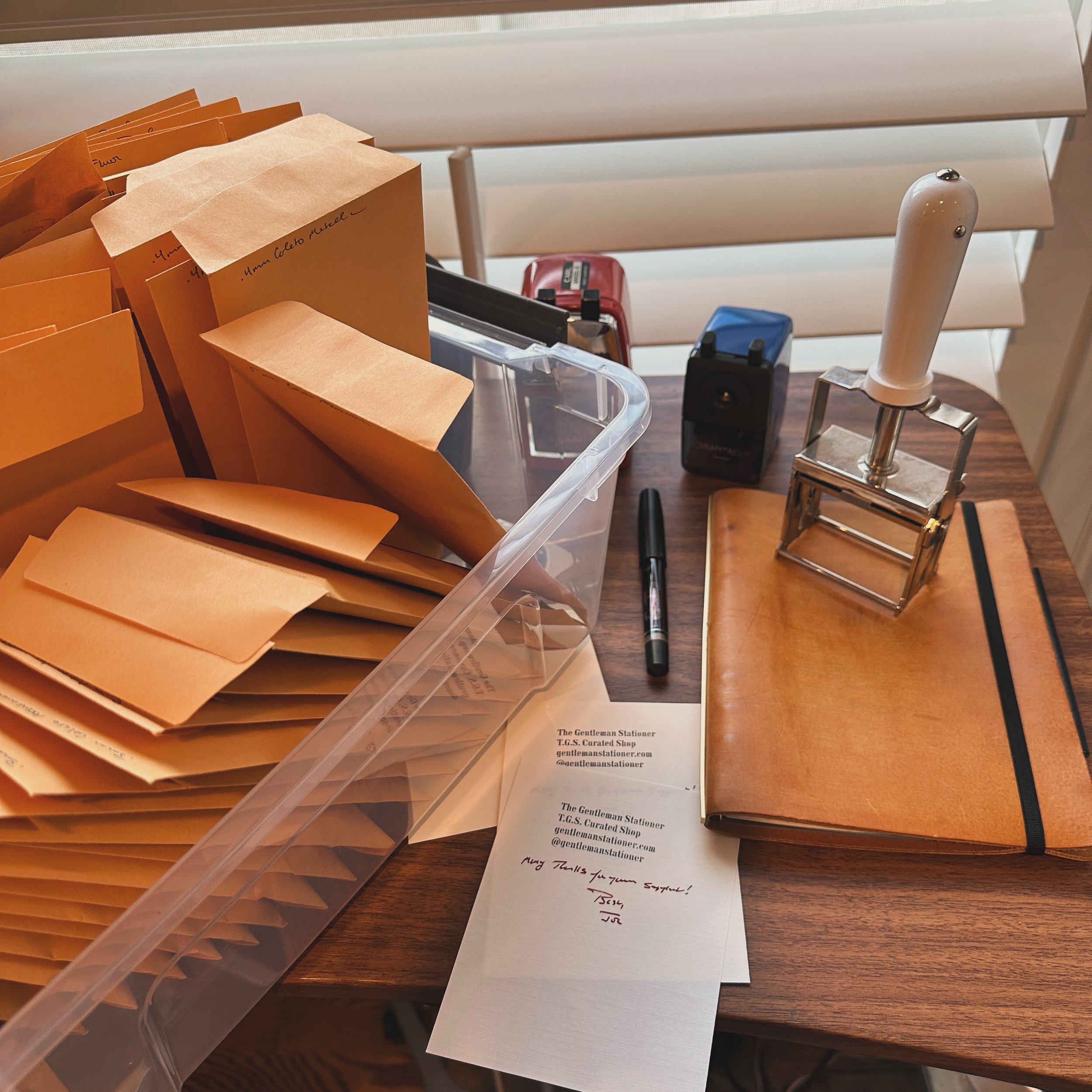
In Ask TGS Tags Ask TGS, Platinum Pigment Inks, Platinum Chou Kouro, Ink Review, Editorial
2 Comments

Ask TGS: Five Tips for Success with Refillable Fineliners

October 30, 2024

I’ve read a few posts and reviews recently discussing refillable fineliners and fibre-tipped pens such as those made by Tom’s Studio, Kuretake, and Kakimori, which have raised a number of questions about how to use these pens correctly, and what you can expect with respect to the performance of fountain pen inks in non-fountain pens. Personally, I’ve had success using these pens to the point where they might currently be near the top of my everyday user/workhorse pen rotation. Here are a few tips and tricks to get the most out of your refillable fineliners. The suggestions are mostly brand-agnostic and apply across the product category.

  1. Choose a Saturated Ink for Maximum Legibility. Most refillable fineliners use a cotton or fabric “wick”-style cartridge to hold the ink. You fill the pen by placing the end of the wick into your ink bottle or sample vial, and part of the fun is watching the ink work its way up the refill. After inserting the wick into the section, the “feed” part of the fibre tip should extend into the saturated cotton, and once you see the tip change color, the pen is ready to write. While this is a very straightforward way to fill a pen, the mechanics of writing work differently than with a fountain pen. A fountain pen nib and feed operate essentially as a controlled leak, with a relatively large amount of ink applied to the page compared to something like a fineliner, which works more like a brush. As a result, inks that are lighter in tone and/or designed to shade may appear extremely light in a fineliner, compared to more saturated inks, due to less ink being applied to the page. Use darker, more saturated colors to maximize legibility for writing with a fineliner, unless you are expressly looking for the lighter tone.

  2. Don’t Expect Shimmer Inks or Inks with Special Properties to Behave the Same as in a Fountain Pen. This one should be self-explanatory, but the large particles that give “shimmer ink” the shimmering effect cannot be absorbed by a wick reservoir and can’t flow through the fineliner tip. While a shimmer ink might technically “work” in the fineliner, the color you see will almost certainly be the base color in the ink, minus the shimmer particles. Similarly, I’ve found that some pigmented inks don’t work as well in fineliners, while others (presumably with smaller particles of solid pigment) work better. I would still say that the best performers have been regular water-based fountain pen inks.

  3. Don’t Leave the Cap Off Your Fineliner for an Extended Period of Time. If the ink dries out in a fineliner nib, it will need to be flushed with water to get the pen writing again. Sometimes you can fix the issue by simply wiping the tip with a wet paper towel to remove dried ink, but the easiest fix is to not let the pen dry out in the first place.

  4. When Changing Colors, Let the Wick and Tip Dry Completely Before Refilling. Where a refillable reservoir is included (as with the Tom’s Studio Lumos or Wren), it is absolutely intended to be rinsed and reused several times before being replaced. I’ve had the best luck completely submerging the refill in a bowl of water and squeezing the ink out multiple times until the refill is white again. The tips can typically be rinsed under a faucet, though you may need to soak them with certain inks. Place the tips and reservoir on a paper towel and allow to fully dry (24+ hours, preferably) before attempting to refill.

  5. Think Carefully About How You Plan to Use the Pen Before Filling It. Given that it can be a bit of a chore to change ink colors, you should give a bit of extra thought to ink choice and tip size on the front end. (It’s especially important for single-use pens like the Kakimori Colour Liners.) As I mentioned above, if you’re going to use fineliners for writing or sketching, and it’s important for you to write a dark line, you should choose a very dark, saturated ink.

So what inks have I had the most success using in my refillable fineliners? More saturated solid colors by Tom’s Studio and Diamine have worked extremely well. The darker purples, blues, and greens have given me no trouble, and I’ve recently enjoyed the new Midnight Blue Fibre Tip ink, specifically designed by Tom’s Studio for saturation and flow in the fibre-tipped pens. I mentioned in my recent rollerball writeup that I’ve struggled to find a blue-black rollerball or fineliner refill, and low-and-behold, this new ink appeared literally the next week.

I’ve also run some of the Laban Greek Mythology Inks through my Kakimori Colour Liners, and the more saturated colors such as Ares Red and Artemis Navy Blue work exceptionally well. More nuanced colors like Aphrodite Pink are legible, yet appear lighter than they would in a fountain pen and you therefore lose some of the brown/grey/pink nuance to the color. While there’s no substitute for your own experimentation, I’m playing around with as many inks as possible so you don’t have to!

We carry a fairly wide selection of refillable fineliners and fibre-tipped pens in our shop, from the Tom’s Studio Lumos and Wren pens to the Kakimori Colour Liners, with Kuretake pens on the way. If you have additional questions regarding these pens and how they work, feel free to reach out using our contact link.

In Ask TGS Tags Fineliner Pens, Refillable FIneliners, Tom's Studio Lumos Fineliner, Tom's Studio Wren, Kakimori Colour LIners, Ask TGS
Comment

New Resource: Introducing the "Ask TGS" Page!

July 24, 2024

I receive a lot of different questions from readers and customers, and because I can’t always respond in a timely manner due to the volume of correspondence and time constraints, I wanted to put together a site resource compiling answers to and links discussing some of the more common inquiries. I currently have these organized by topic (General, Pens and Ink, Paper, and Shop-related), but I may add to this over time. Please check out the new resource here!

While we are neck-deep in our move to a new shop location this week, we are still shipping orders within our typical 2-3 business day time frame. Many thanks to everyone who has continued to support us during this exciting, yet very scary, time! I look forward to sharing pictures of the new space as it comes together and hopefully seeing many of you in person.

In Ask TGS, Editorial Tags Ask TGS, FAQ, Resources
Comment

The nib on the Platinum Desk Pen (which I’ve installed on a Platinum Plaisir) is a bouncy steel extra-fine that many love for drawing and works great with Platinum Carbon Black.

Ask TGS: Permanent Inks for Artists and Attorneys

July 17, 2024

Whenever I get asked about permanent inks, it's typically a question from an artist or an attorney. Many artists enjoy inks that allow them to draw a dark line and then wash over it with ink or watercolors (or both), whereas the attorneys are typically concerned about permanence of a signature on a legal document and preservation of work product.

This writing sample shown above was soaked for approximately 20 minutes in a sink full of water. This is the result. The paper wrinkled and started to fall apart more than the ink bled.

So what are my recommendations? While I'm not an artist, nearly all of my artist friends recommend Platinum Carbon Black as a drawing and sketching ink of choice. Carbon Black is a pigment ink, similar to other inks such as Sailor Kiwa-Guro "Nano Black", Noodler's Bulletproof Black, Tom's Studio Pigment Black, among others. These inks are formulated differently than most fountain pen inks, in that they rely on pigments that dry quickly and bond to the paper rather than water-based dye, and therefore have very fine particles that can potentially clog your pen if left to dry out. That's not to say they are "unsafe" - these inks are very much intended for use in fountain pens, but they do require periodic maintenance in the form of a thorough cleaning, especially when changing ink colors. The upside? I can say that these inks are absolutely "waterproof," not just water-resistant. (In addition to the photograph shown here, I posted a short video to YouTube demonstrating how I soaked this piece of paper in standing water and how the ink barely moved at all.) And if the ink does end up drying out and clogging your pen, a simple flush with water should fix the issue.

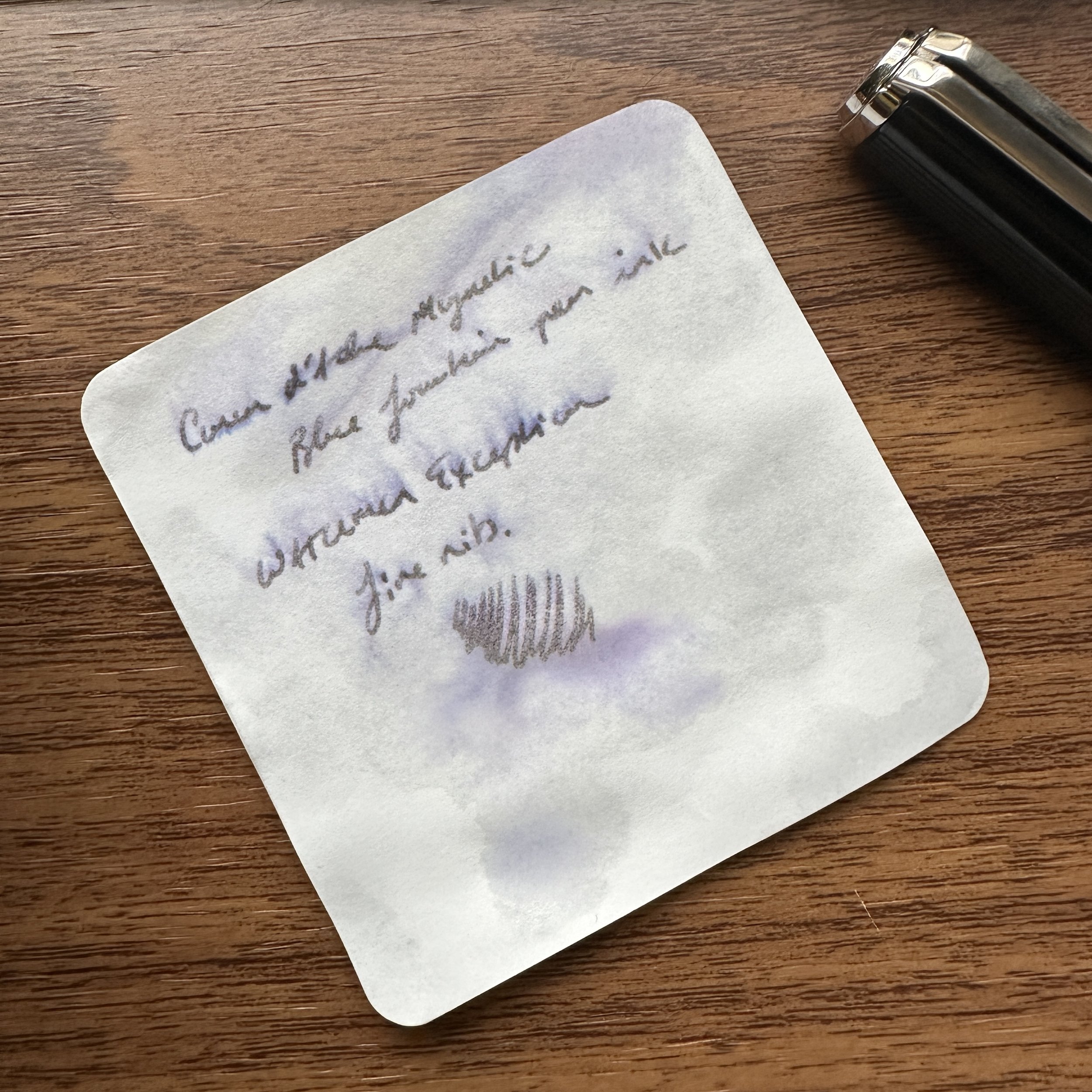
Water-resistant, but not waterproof: Caran d’Ache Magnetic Blue, a blue-black that was also soaked in the sink for the same amount of time.

For attorneys - and speaking as one myself - I would say that you have a bit more leeway. If you need absolute permanence (i.e., for a signature on a contract), you can of course use a pigmented ink or a ballpoint. But if what you're concerned about is preserving handwritten notes or marked-up documents, or simply avoiding losing work product due to spilled water or coffee, there are other suitable options to serve that more limited purpose. For example, certain blue-black inks such as Pilot Blue-Black, TWSBI Blue-Black, Pelikan Blue-Black, Caran d'Ache Magnetic Blue, etc., are highly water-resistant to the point that most writing will survive a simple spill, especially one that is cleaned up quickly. Similarly, any ink that contains iron-gall will have high water-resistance, including the line of Platinum "Classic" inks. (As with pigmented inks, you should clean your pen thoroughly to avoid mixing iron gall inks with standard fountain pen inks, which could result in clogs.)

Though pigmented black inks and blue-black inks with iron-gall content get the most attention (probably because they have been around the longest), companies do make other colors of permanent inks. Shown here are Platinum Pigment Blue cartridges (which we carry in our shop), and other options include the Kakimori pigment inks, Noodler’s “Bulletproof” inks, and Sailor Storia line, which come in a wide array of colors.

I personally don't worry much about permanence with fountain pen inks. In nearly 20 years of using fountain pens, I can count on one hand the number of times I've completely lost a piece of writing due to a spill, none of which ended up being of any importance. That said, I will regularly use low-viscosity ballpoints such as the Uni Jetstream whenever permanence could be at issue. You can even use pencil, which is both water and fade-resistant, though documents that must be permanent for legal reasons generally require ink.

Do you have a favorite permanent or water-resistant ink? Drop a comment!

The Gentleman Stationer is supported entirely by purchases from the T.G.S. Curated Shop and pledges via the T.G.S. Patreon Program. If you enjoy our content, please consider supporting us directly!

In Ask TGS, Ink Reviews Tags Fountain Pen Inks, Ink Review, Platinum Ink, Platinum Pigment Inks, Ask TGS
3 Comments

Ask TGS: Where Do I Start with Paper for Notebook Systems?

May 11, 2024

I'm regularly asked: "How do I get started?" The sheer number of different brands of paper and notebooks now available on the market can be overwhelming to those new to the world of high-end and imported stationery. Lately, it's become one of the more common questions I receive, especially at pen shows from those interested in building out a planner or notebook system but not knowing where to begin.

Any paper recommendation depends heavily on intended use, but in my experience most new users (and most everyday writers in general) are looking for a versatile, multi-purpose paper that they can use with a fairly broad range of writing instruments and, in the case of fountain pens, different inks. Most people want the ability to use their notebooks both at work and for fun. Given that, I try to direct people to paper that balances "ink-friendliness" with reasonable dry times. There are plenty of paper options out there that fall into this category, and which are relatively inexpensive to boot, so it shouldn't be cost-prohibitive to experiment with a few different brands and find the paper that works best for you.

The Lochby Field Journal can hold up to six slim A5 notebooks, or two thicker A5 notebooks. It’s a universal A5 size allows you to use different notebooks from all sorts of different brands, in an seemingly endless universe of layouts.

A Note on How These Recommendations are Set Up

Given my personal focus on notebook systems and covers, I typically get this question from people looking for refills for their new system binder from Lochby, Roterfaden, or another similar company. The recommendations below are therefore framed in terms of slim A5 notebooks. However, the same considerations apply to people looking to try good paper in general, and all of the companies listed below make their paper in a wide range of sizes and formats, including spiral notebooks and pads. And even with notebook systems, you’re not limited to the slim A5 notebooks (as shown in the picture above). You just won’t be able to carry as many at once.

  • Midori MD Paper: I usually recommend that people start here, in either the standard MD notebooks or the three-packs of slimmer MD Light notebooks. (I can't tell a difference between the paper and I think it's the same.) For those who want to carry multiple inserts in a cover system, the MD Light notebooks will work best, but if you want to stick with one or two thicker notebooks, then go with the standard MD notebook. The reason why I love Midori paper, especially for those looking to test out good paper for the first time, is because the paper is somewhat absorbent and strikes a good balance between ink-friendliness and dry times.

  • Nakabayashi Logical Prime Threadbound Notebooks. I discovered Nakabayashi paper last year, and it's proven extremely popular due to the fact that it's very fountain pen friendly, ink dries quickly, and the unique multi-lined ruling is reminiscent of Clairefontaine French-ruled paper without the longer Clairefontaine dry times. The slim A5 threadbound notebooks are most popular for the various "system covers", but there are other formats in different sizes. All of the various types of paper handle fountain pen ink well, including the lighter Logical Air and the heavier Yu-sari.

  • Lochby Tomoe River 68gsm Notebooks. I have always preferred the heavier, slightly more absorbent 68gsm Tomoe River paper over the lighter 52gsm version, at least for everyday use. I've found that it has a faster dry time, and also resists tearing and wrinkling, making it a preferred choice for the office. That said, I've not been able to find much information on the future of this paper. Tomoe River Paper is now being manufactured by a new company, and while Lochby still has stock of the 68gsm paper, I suspect it will eventually be phased out given that it's (unfairly, IMHO) less popular than its lightweight counterpart. Lochby does have some interesting ruling options in this format, including Wide Ruled and Undated Planner layouts, which you can't easily find elsewhere.

But What About the Traveler's Company Traveler's Notebook?

The Traveler's Notebook system is a bit of a different animal because it’s a proprietary size. While there are non-Traveler's branded refills out there in different papers, most of the "official" refills use some version of Midori MD Paper (most of the standard refills) or 52gsm Tomoe River (Lightweight Paper). I usually recommend that people interested in the Traveler’s Notebook start with the standard MD Paper refills (one blank refill is included with your cover) and then switch to the Lightweight Paper or Sketch or Watercolor Papers if they need something different.

All of these recommendations are just a starting point. As I mentioned up top, once you find a core paper that works for most of your everyday writing, you can experiment and start trying different specialty papers and other brands. My favorite aspect of a multi-refill notebook cover (a "notebook system") is the ability to carry many different papers at once and switch back and forth as you go. (The next thing you know, you're a nut like me, with three different systems in rotation all at once, because you know you need to use all the papers!)

For further reading, be sure to check out our guide to fountain pen friendly papers, which has an active comments section in addition to the papers I’ve personally tried.

The Gentleman Stationer is supported entirely by purchases from the T.G.S. Curated Shop and pledges via the T.G.S. Patreon Program. If you enjoy our content, we greatly appreciate your support!

In Ask TGS Tags Fountain Pen Friendly Paper, Notebook Systems, Editorial, Ask TGS
3 Comments
← Newer Posts Older Posts →
Store Hours and Location
Visit the T.G.S. Curated SHOP
Updated "Best Pens" Guide
On the Paper Trail Podcast
TGS_25 Roterfaden New Stock Available
Hierarchies of Fountain Pen Friendly Paper

Join Our Patreon!
Subscribe to the TGS E-mail List

Featured Posts

Featured
Pentel-Sign-Pen-Cover.JPG
Feb 28, 2026
Pen Review: The Pentel Sign Pen (Craft Design Technology Version)
Feb 28, 2026
Feb 28, 2026
Cover On the Paper Trail Intro Clip.jpeg
Dec 3, 2025
Introducing "On the Paper Trail," a New Podcast/Video Collaboration with Lisa Vanness of Vanness Pens!
Dec 3, 2025
Dec 3, 2025
Iro-Utsushi-Fine-Dip-Pens.jpeg
Oct 1, 2025
The Pilot Iro-Utsushi Dip Pen (and in General, Simple vs. Fancy Dip Pens)
Oct 1, 2025
Oct 1, 2025
The Gentleman Stationer RSS

© Digital Divide Media, LLC, 2014-present.

All content is the exclusive property of Digital Divide Media, LLC, d/b/a The Gentleman Stationer, including “The Gentleman Stationer” website and trademark, and should not be reproduced without express written permission.  All rights reserved.

All content containing paid advertising, affiliate links, or sponsored content will be plainly disclosed by a disclaimer when/if featured.

Contact Information

Store Shipping Policy and Return Policy

Privacy Policy

Cookie Policy

Terms and Conditions

Powered by Squarespace