• Blog
  • Shop
  • Resources
  • FAQ (Ask TGS)
  • About
  • Archive
  • Contact
  • Sign In My Account
Menu

The Gentleman Stationer

Vintage Living in the Modern World.
  • Blog
  • Shop
  • Resources
  • FAQ (Ask TGS)
  • About
  • Archive
  • Contact
  • Sign In My Account

Initial Impressions: Wing Sung 618 and Wing Sung 698 Piston Fillers

February 7, 2018

If you’ve been following the links in my Deals and Drops posts over the past few months, you might suspect that I've been dabbling in the world of ultra low-cost Chinese pens. You notice I don’t use the word “cheap”, because I don’t necessarily agree with all that term implies, namely low quality. Indeed, the first two pens that I’ve tried recently - two piston filling demonstrators from Wing Sung - are a far cry from the fragile, basically disposable pens that I became familiar with from my early days in this hobby.

Previous Experience

My prior experience with inexpensive Chinese pens was primarily with Jinhao, and as we all know I’m not the biggest fan. I’ve owned some Jinhao pens that were serviceable writers; however, at the same time, I’ve received Jinhao pens with severe flaws in the finish, and the Monteverde Monza / Jinhao 992 has barrel-cracking issues in addition to quality control problems with the nibs. I did purchase a Kaigelu Duofold clone from now-defunct isellpens.com that was an ok writer, but the pen was also extremely heavy due to the brass barrel. Based on my experience so far, the Wing Sung pens are a cut above their competitors: they are relatively well-built, functional pens that I can actually see myself using, provided they hold up over the long term. 

Design and Build

For my initial foray back into the Chinese pen market, I opted to try two Wing Sung demonstrators, the Wing Sung 618 and the Wing Sung 698. Both of these pens are attractive. Wing Sung did a good job of polishing the acrylic for this price point, and the clips feel secure. It remains to be seen how the pens will hold up over the long term (i.e., more than a month), but when you’re operating at this price point durability is one of those things you may have to sacrifice (or just assume that it’s reflected in the lower price).  

I like that the Wing Sung pens (on the right) sport the clean lines and modern aesthetics of the TWSBI 580 and TWSBI Eco (two pens on the left), but in a slimmer, more streamlined package.

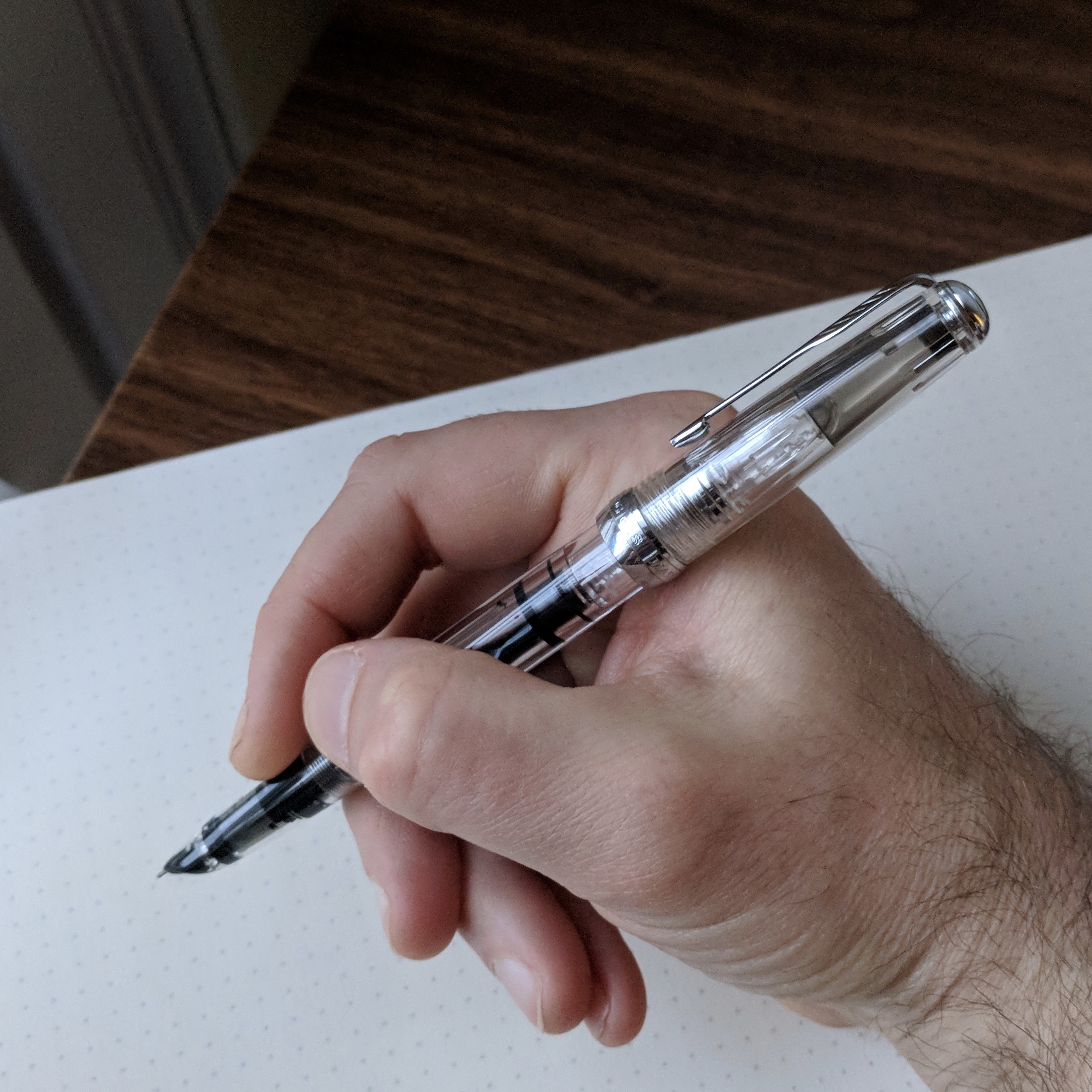
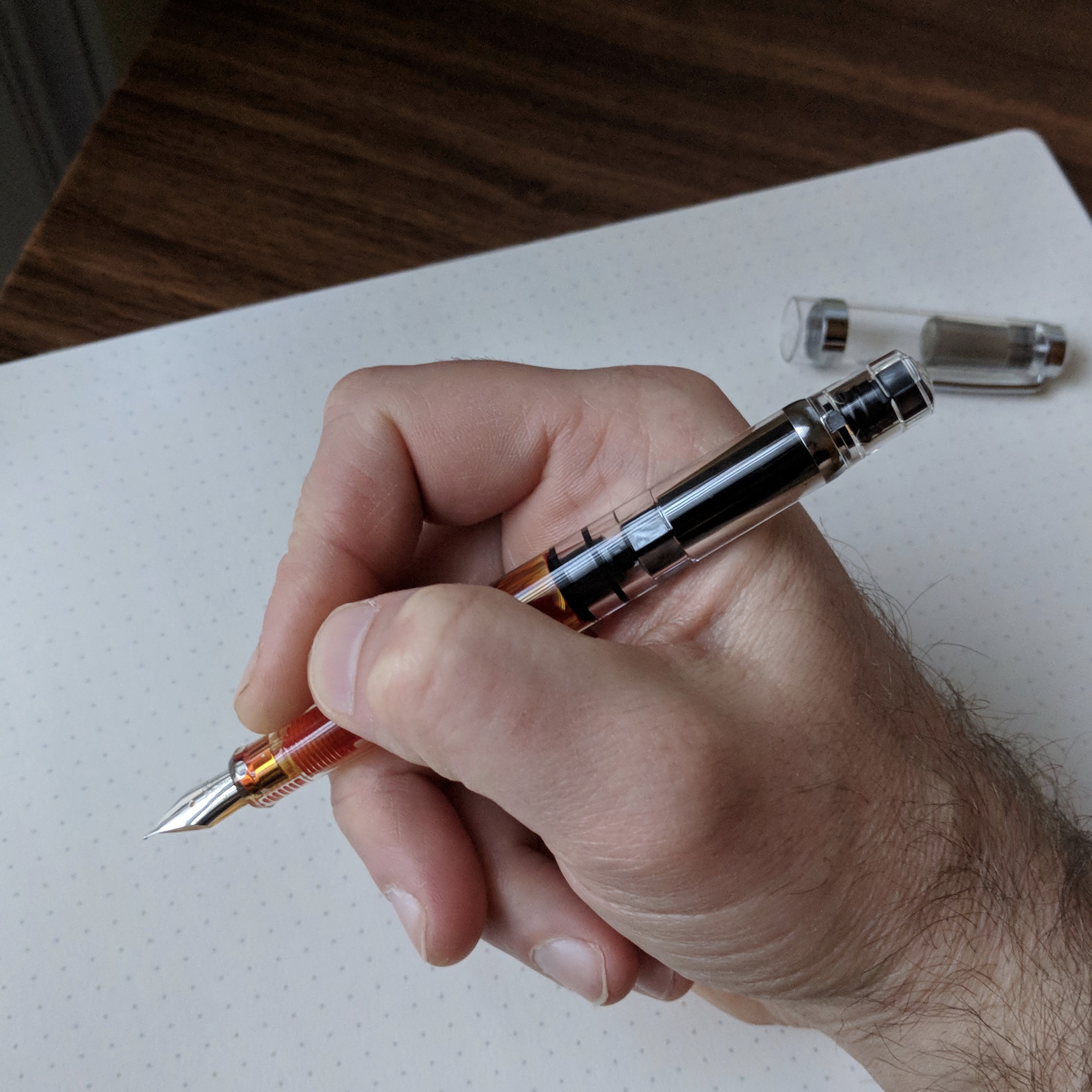
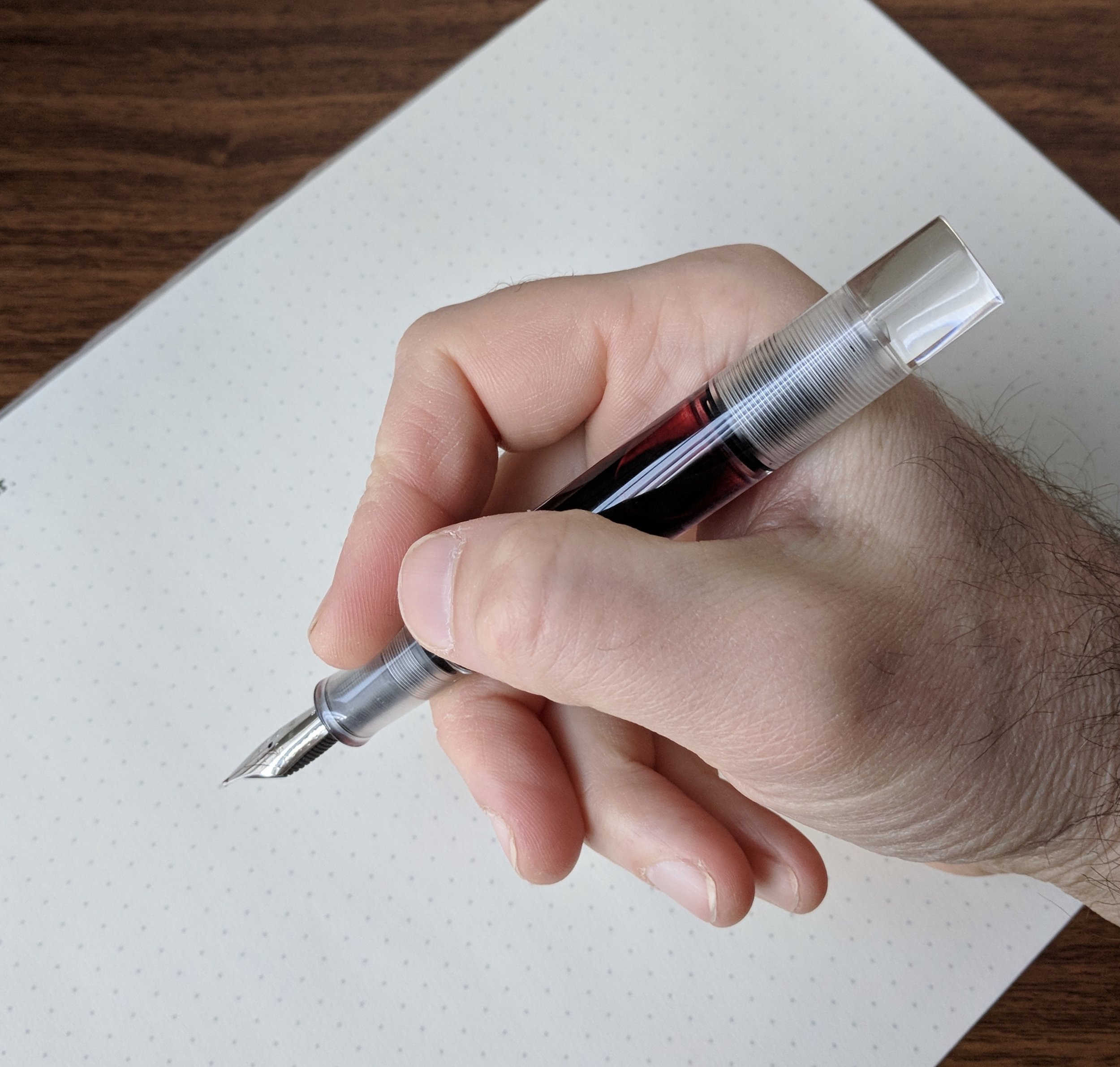
The 618 posts quite well; the 698 doesn't post at all.
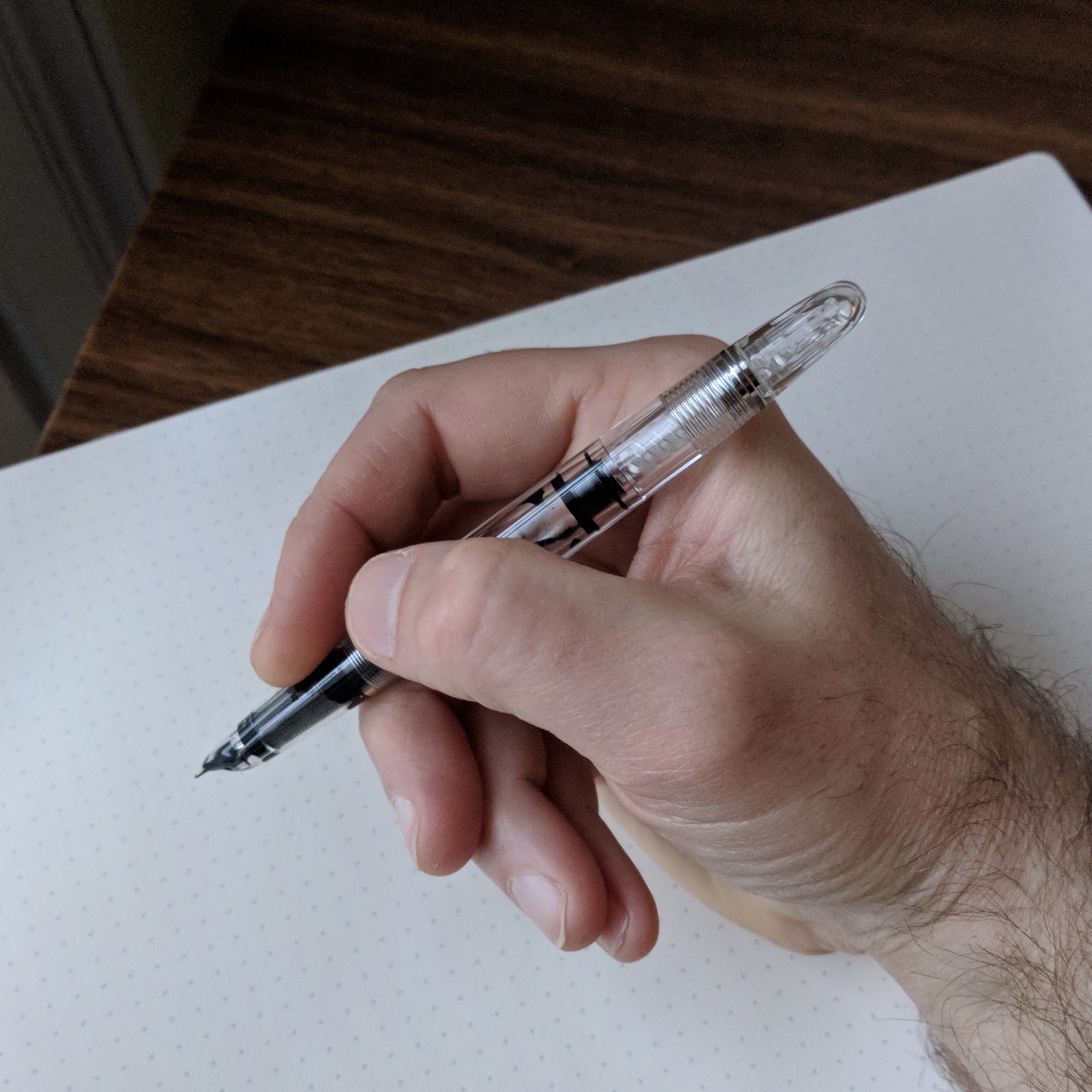
View fullsize Wing Sung 618 Unposted
View fullsize Wing Sung 618 Posted
View fullsize Wing Sung 698 Unposted - Pen Doesn't Post

The 618 is approximately the same size and shape as the vintage Parker 51, though the addition of the piston filler, threaded cap, and chrome cap band do change the look of the pen by modernizing it quite a bit. I would compare the 698 to a slimmer mash-up of the TWSBI 580 and the TWSBI Eco. I could use both Wing Sung pens very comfortably, though I wish the 698 posted.

While both pens have "Wing Sung" engraved on the barrel, for some reason the 698 has "Lucky" written on the clip. 

A note on design. Chinese pen companies have been known for their “liberal” approach to intellectual property rights. With the possible exception of the “Arrow Clip” (which I believe is the subject of an ongoing dispute between Parker and Hero, Wing Sung's affiliated company, dating back to the 1940s), these two pens feature more original design elements than I’m accustomed to seeing, placing 618 pens more into the “homage” or “fantasy pen” category. The 698, to my knowledge, is distinct enough from anything else on the market to stand on its own.

Filling System and Writing Experience

This is where these pens almost lost me. While Wing Sung markets these pens as “piston fillers,” the filling system is a touch janky, for lack of a better term. This filling system is more accurately described, in my opinion, as a hybrid syringe filler / piston filler, since in order to get a “full fill” - and a full fill on these pens holds a lot of ink - you need to hold the blind cap steady and pull the piston out a bit as you turn, or else the blind cap will screw down and stop the piston before the pen is full of ink. It takes a few tries to master, and is tricky enough that I wouldn’t recommend this as a first fountain pen, despite the low price.

UPDATE: Based on reader recommendations, I tried again with the piston on these pens. As it turns out, Wing Sung uses a "locking piston" system, where in order to engage the piston you have to first pull out on the blind cap, after which the pen works like any regular piston filler, with no "syringe" action. Once you fill the pen, you push down on the blind cap to lock it back in place. It's slightly more complex than a typical piston filler, but it does work fairly well. I still wouldn't recommend this pen for beginners, since the instructions from Wing Sung don't offer clear instructions on how to fill the pen (unless you read Chinese). Also, the locking blind cap is held in place by small plastic "teeth," and I'm interested in seeing how those hold up over time. 

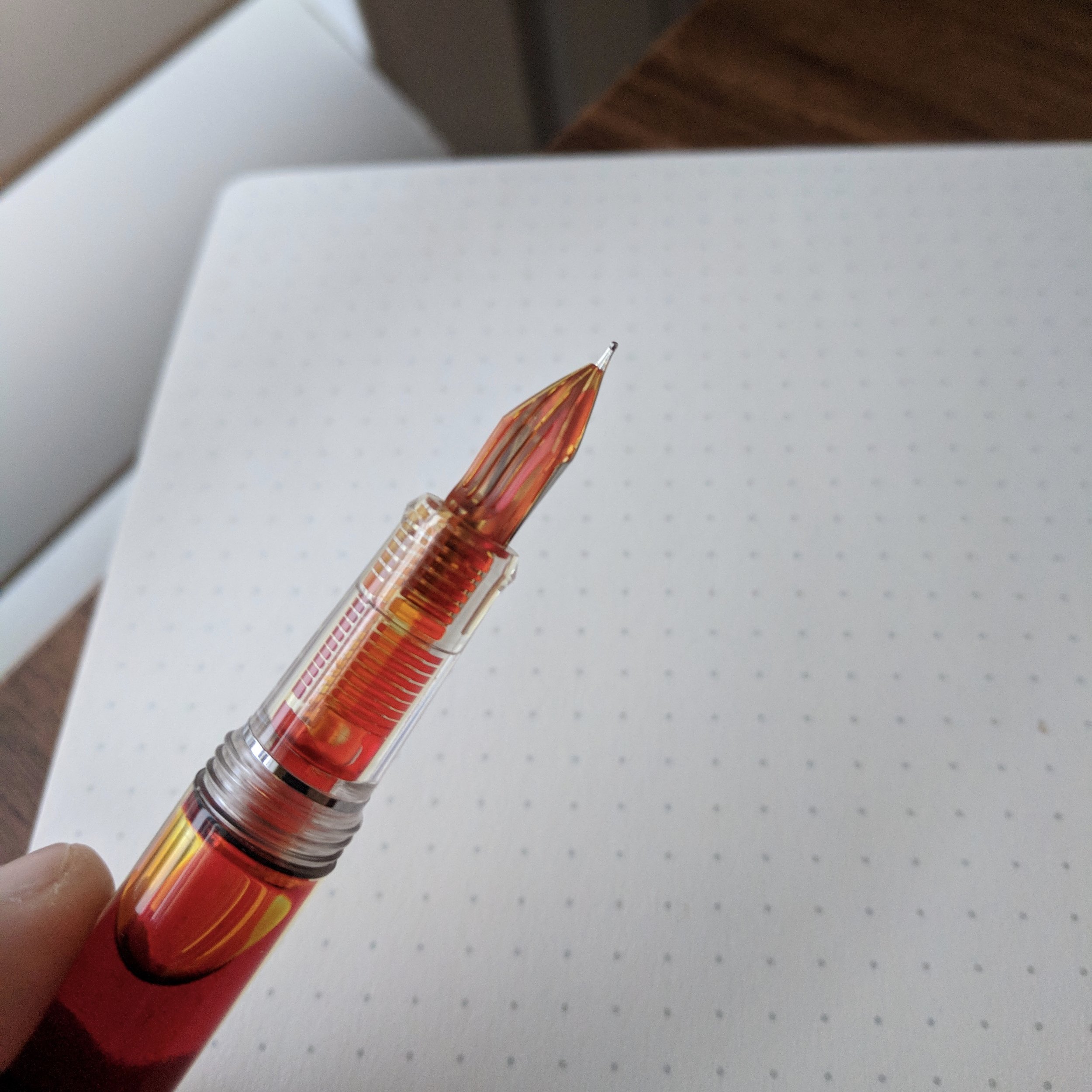
I love vintage-style hooded sections, and other than the Aurora DuoCart and the Lamy 2000, not many pen companies use them today. 

At the end of the day, it took me two or three attempts to get a full fill, and wow, these pens hold a lot of ink. I’ve been writing with the 618 almost non-stop for the past couple of weeks, and it’s still ¼ full. If I’m only refilling these pens once or twice a month, I can live with the temperamental piston.
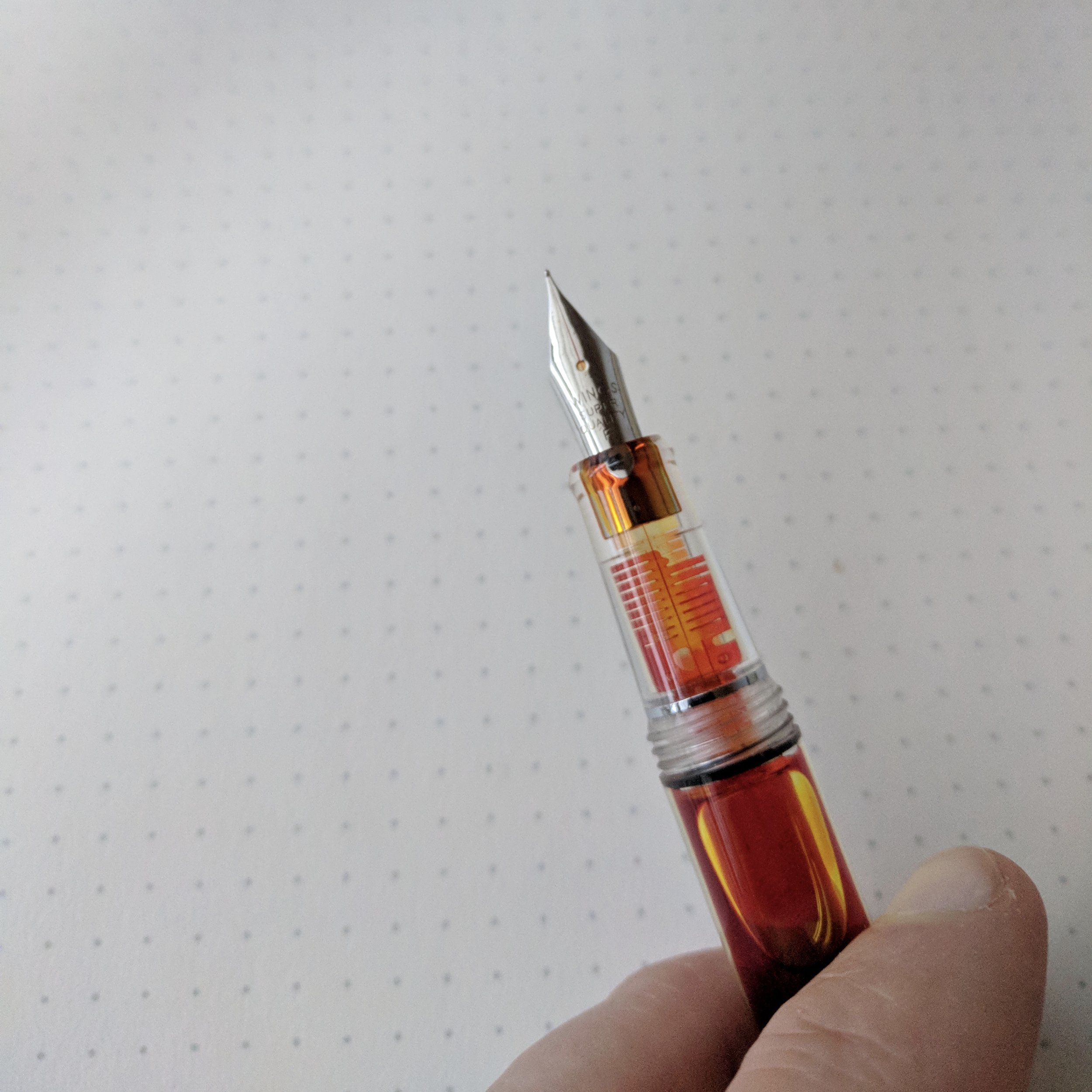
View fullsize Wing Sung 698 Nib (Top)
View fullsize Wing Sung 698 Clear Feed and Section

The nibs are unremarkable, and I’d characterize both as “Western fine”. The nib on my 618 is fairly toothy, and I’ll probably take some micromesh to it to smooth it out. The nib on the 698 writes extremely well unmodified, and looks and feels similar to the nib on a Pilot Kakuno.

Takeaways and Where to Buy

Right now, I’m categorizing this article as my “initial impressions” as opposed to a full review, because I still have some durability concerns about how long these pens will last and I want to revisit them at some point in the future. Given the low price point, I expect that some users will experience cracking in the acrylic, and that others will have problems with the “pistons,” but that’s to be expected with less expensive pens. Even TWSBI took a while to get the QC right at a much higher price point.

That said, my initial impressions are favorable. I’ve enjoyed using these unique pens, both of which have decent nibs that wrote immediately out of the box without any adjustment, which unfortunately is more than you can say for many pens that cost 2-3 times as much. Again, I would not recommend these as anyone’s first piston filling fountain pen - stick with the TWSBI Eco - but if you’re looking to vary your collection with some inexpensive transparent demonstrators, give these a try.  

I purchased these pens from Amazon, where prices will vary. (See a link here for the 618 and a link here for the 698.) Though there are other ways to source these pens, I prefer to rely on Amazon when I can because (1) Prime shipping is generally faster, and (2) I like Amazon’s buyer protection services. The 698 is only available as a clear demonstrator, with chrome or gold plated trim, but the 618 comes in a wide range of colors, and I have a transparent dark blue with silver trim version on its way to me, via the slow boat, apparently. Look for more pics and an updated opinion in the future! 

Disclaimer: I purchased these pens with my own money, for my own use. This post does contain affiliate links.
In Pens Tags Pens, Wing Sung, Demonstrator, Chinese Pens
3 Comments

Pen Review: The Wancher Dream Pen in Dark Blue Urushi

January 31, 2018

The big news of the past week (at least in the pen community) has been the wild success of Wancher's “Dream Pen,” a Kickstarter project that launched last Thursday. Wancher is a Japanese pen company that has been around for some time, but the Dream Pen is their first high-profile product release. So far, the Kickstarter has been successful by any measure, raising more than $215,000 from 550+ backers in less than a week, with 29 days still to go.

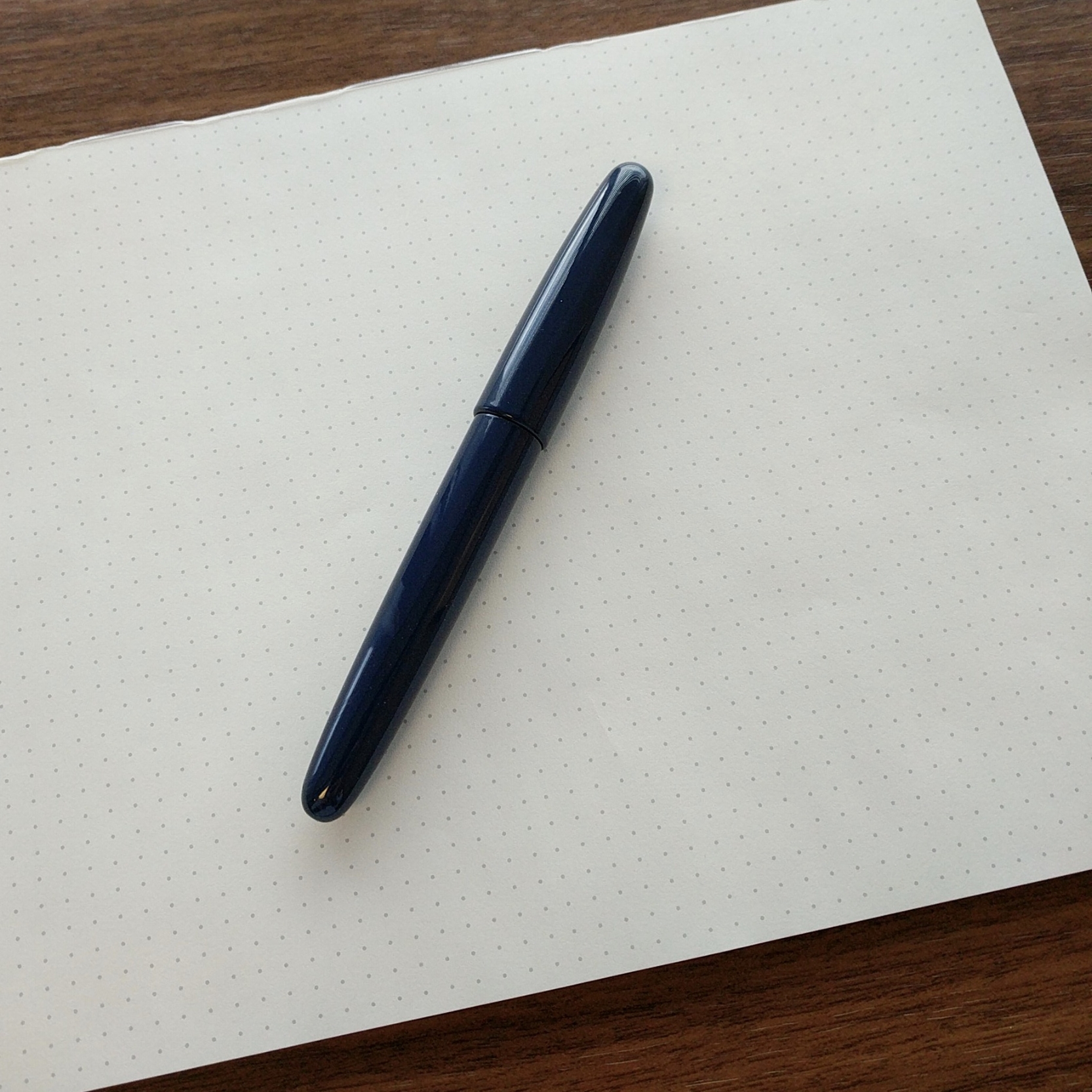
The prototype Dream Pen sent to me is a dark blue urushi. It's a gorgeous color. 

The prototype Dream Pen sent to me is a dark blue urushi. It's a gorgeous color. 

The goal of the Dream Pen is to make the Japanese urushi and maki-e artistry available “without the luxury markups.” In other words, Wancher is taking aim at a lower-cost market segment disregarded by the likes of Platinum and Nakaya, whose urushi pens start around $700 and move very quickly into the thousands for the more intricate and complex designs. While the Dream Pen is certainly not inexpensive, Wancher’s pricing ($350 Kickstarter / $450 retail) is more in line with what you would pay for a custom Edison or Newton pen with similar specs.

Since this was a relatively expensive loaner prototype, I was careful in terms of how hard I used this pen and where I took it, but I did have the opportunity to "test drive" the Dream Pen. So far, I’m impressed. I found the pen extremely comfortable, lightweight and well-balanced, though like almost all urushi pens it can only be used unposted.  

Broad JoWo 18kt nib 

The nib on this particular prototype is one of the better JoWo nibs I’ve used, and I suspect that it’s due to the ebonite feed. Nibs fitted to ebonite feeds tend to be wet writers, so while I loved this broad nib, I’ll likely opt for a fine or medium nib on my final Kickstarter reward.

The Dream Pen features an ebonite feed, which are increasingly uncommon on modern pens. 

So should you back the Wancher Dream Pen? It’s a lot of money, so here are the pros and cons, from my perspective:

Pros:

  • The price point, especially at the Kickstarter price. Well-executed urushi pens with gold nibs and ebonite fees can easily run $700-plus, so if you’ve been considering a similar pen from Platinum or Nakaya, the Wancher should be on your radar.
  • The Dream Pen features a JoWo nib and non-proprietary cartridge/converter compatibility. I’ve seen some comments to the effect that a JoWo nib is a drawback, in that it’s “boring” and there isn’t any detailing like on Nakaya's gorgeous nibs. Fair enough. But the drawback to Nakaya nibs is (1) the price, and (2) that you're locked into the proprietary Platinum converter, which I don’t necessarily like, and the proprietary Platinum cartridges.
  • The construction and the build on the Dream Pen are high-quality. The spring-loaded cap was a surprise, and creates a very secure closure. I could not locate a single flaw in the Urushi finish. The pen feels great in the hand and is very well-balanced.

Cons:

  • Price. Regardless of how this pen compares to other urushi offerings, $350-450 is a LOT of money to spend on a pen - especially a Kickstarter project where you won't have the reward in your hands until late summer, early fall (assuming no delays in production). 
  • Non-lacquered threads. In an effort to keep costs down - which is completely understandable - the Dream pen features non-lacquered ebonite threads. I personally like the contrast, but some may think that they make the pen look unfinished.
  • JoWo nib. See above. Some people don’t like how they look or write, but as I've said before, it's unrealistic to expect smaller companies to offer a house-made nib and still keep pricing reasonable.
  • As of now, the Dream Pen does not give you the option of adding a clip, and, like most urushi pens, the Dream Pen does not post. 

I ended up deciding to back this pen, and I really hope that there is a yellow urushi option at some point. I’ve been going back and forth on a Nakaya Portable Writer in Nanohana-Iro (yellow) for the past couple years, but I’ve had trouble justifying the $700+ price tag for the pen that I want. I owned a standard black Portable Writer a few years ago, and while I enjoyed the pen, I ended up selling it mainly because it hadn’t spoken to me in the way it would have needed to in order to justify keeping that much money invested. I’m more comfortable with the Dream Pen as a price/value proposition.

The size of the dream pen is roughly equivalent to a Montblanc 146, though slightly fatter and longer. Both pens shown here in a Wancher leather two-pen case. 

The fact that this project, to date, has raised over $200,000 in less than a week leaves me somewhat speechless. It definitely speaks to the number and market power of pen enthusiasts around the world, because prior to this, I would have thought “Japanese urushi fountain pens” to be the definition of a hyper-niche market. Wancher has struck a chord, and hopefully this project turns into a massive success and serves as the debut of an exciting new player in the international fountain pen market.

Disclaimer: Wancher loaned me this pen free of charge for review purposes, to be returned upon completion of the review. The pen case pictured in this review was provided free of charge, for review purposes.

In Crowdfunding Projects, Pens Tags Kickstarter, Wancher, Dream Pen
6 Comments

Pen Review: Opus 88 Koloro Demonstrators

January 27, 2018

Since entirely new fountain pen brands are few and far between, those that do hit the market tend to immediately catch my attention, especially when the pens being offered are in any way unique. Enter Opus 88.

Opus 88 is a Taiwanese company that, from what I have gleaned on pen forums and other “unofficial” (and unverified) sources of research, previously has manufactured pens on a contract basis for other, better-known pen companies. This past fall, they started selling their own "Opus 88" branded pens in the United States through Pen Chalet. The pens apparently have sold very well so far, with certain colors and nib sizes periodically going out of stock.

Design and Build

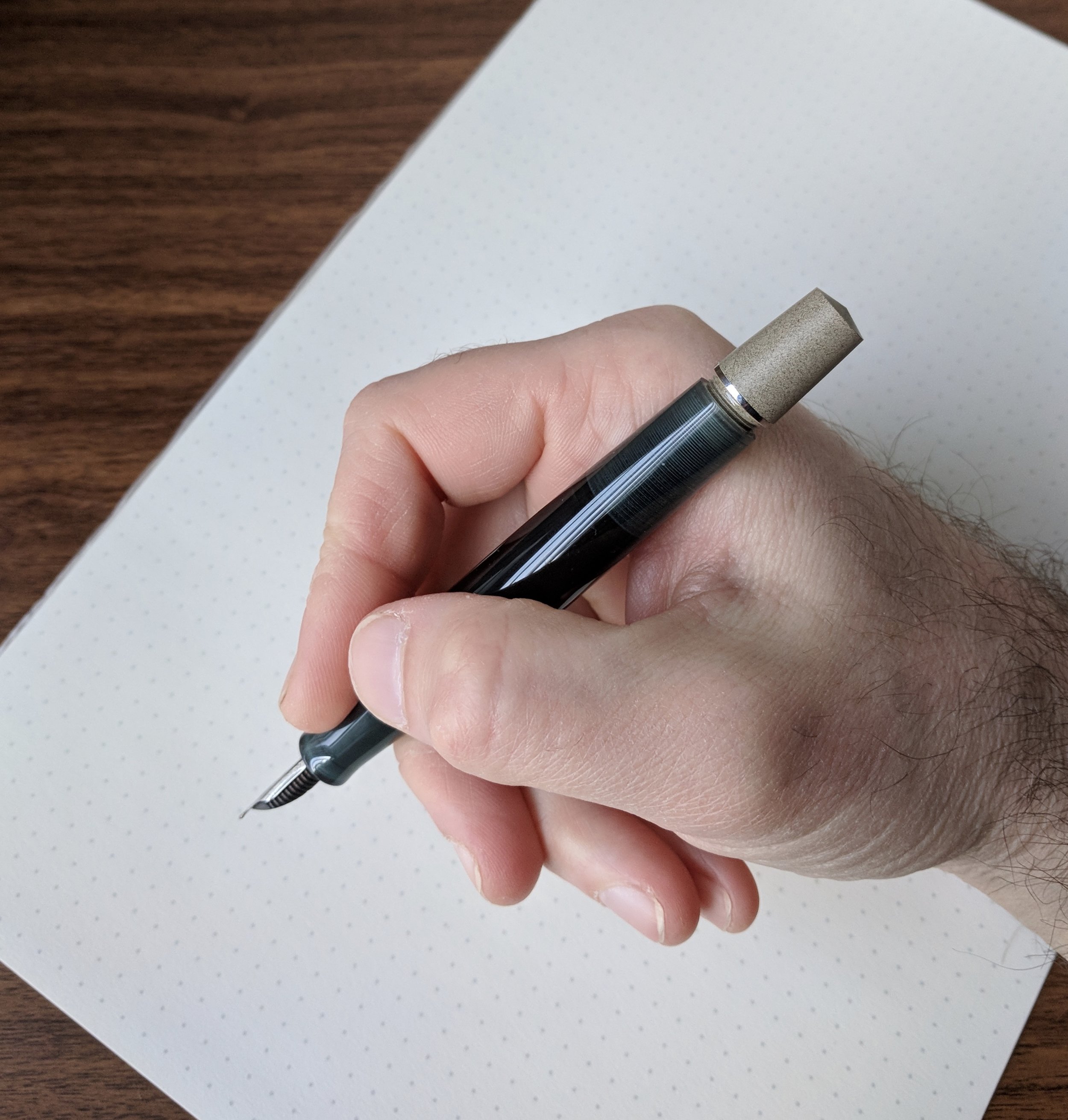
Opus 88 currently offers two models: a smaller "Koloro" demonstrator that is available in four colors: blue/tan, blue, yellow/tan, and red, and a larger transparent demonstrator with black trim. The Koloro pens feature a unique combination of ebonite and acrylic. The majority of the barrel is constructed from acrylic, while most of the cap and the blind cap are ebonite. The only trim is a somewhat plain chrome clip.

Both Opus 88 models feature minimal branding, just "Opus 88" on the cap. On the Koloro pens, the branding is engraved. On the larger demonstrator, shown below, it's screen printed, which doesn't look as nice and likely won't be as durable. 

The transparent demonstrator (also labeled the “Koloro” on Pen Chalet’s website, but I think that may be a typo) is much larger, made entirely from transparent polished acrylic, and features matte black-plated trim. Both pens are well-made for their price point, with smooth threading on the caps, sections, and blind caps, and no readily apparent tool marks or other manufacturing artifacts. For unique pens hovering around the $100 mark, the Opus 88 pens represent good value.

Filling System

All of the Opus 88 pens released to date are Japanese-style eyedroppers. It’s a pretty basic system: To fill the pen, you unscrew the section and use the included glass eyedropper or a syringe to fill the barrel with ink. I haven’t officially measured the ink capacity, but these pens hold a lot. Pen Chalet states that the smaller pens hold 2ml, but my guess would be that this estimate is on the low end. The larger pen holds nearly 4ml, as I was able to get almost an entire sample vial into the barrel. The section on each pen comes pre-fitted with an o-ring to prevent leakage, and I opted to add a bit of silicon grease to the section threads just to be on the safe side, since I travel so much and an accident could be disastrous.

In order to increase ink flow to the nib, all you need to do is open the valve, which unscrews like a piston knob at the rear of the barrel. 

A note on the “Japanese-style” eyedropper system: While the Opus 88 pens are fitted with blind caps that unscrew, this is not a piston-filling or converter pen, and the blind cap does not force ink into or "prime" the feed. Eyedroppers are entirely gravity driven. The purpose of the blind cap is to control a stopper, which seals off ink flow from the barrel to the nib so that ink doesn’t leak out when you’re not writing - a common occurrence in eyedroppers without this shutoff valve mechanism. Without a way to restrict ink flow, shaking, drops, and especially temperature and altitude fluctuations can cause the ink in an eyedropper to expand and “burp” into the cap, into your bag, or even onto the paper when you’re writing. If you plan on using this pen extensively at work or while travelling, as I have, the shutoff valve is a good feature to have, and previously I had only seen it on extremely high-end Japanese Urushi eyedroppers such as those made by Danitrio.

A shot of the Opus 88 Koloro demonstrator with the blind cap unscrewed and the valve opened. When the blind cap is screwed all the way down, the plunger/stopper seals off the nib and feed, keeping the ink in the barrel. 

The flip side is that in order to write for extended periods of time, you will need to open the shutoff valve by slightly unscrewing the blind cap to allow a continuous flow of ink to the feed, much as you would need to do with a TWSBI Vac or Pilot Custom 823. This allows ink to flow from the barrel into the section and saturate the feed. You can close the valve at this point, and with finer nibs should have enough ink to write for a page or two. I tend to leave the valve open all day while I’m at work, and close it up when I get ready to go home. The system works incredibly well. With the valve open, I’ve never had these pens dry out, skip, or hard-start.

Writing Experience

Opus 88 uses reliable stainless steel German nibs made by JoWo. The Koloro demonstrators use JoWo No. 5 nibs, while the larger transparent demonstrator uses a No. 6 nib. All three of my pens arrived well-tuned and did not require any nib adjustments. JoWo nibs are among the best stock stainless steel nibs, though I do find that the smaller No. 5 nibs work best in eyedropper or cartridge pens because they tend to write very dry when attached to a converter. I suspect this has something to do with the construction of the feeds in the No. 5 nib units, but I haven’t done enough experimenting to say for sure.

Nib size comparison: JoWo No. 5 (left) vs. No. 6 (right)

Both Opus 88 models are quite light, and therefore very comfortable to write with for long periods of time. The Koloro posts easily, even with the blind cap partially unscrewed, and I tend to use the smaller pen posted. The big transparent eyedropper doesn’t post, so it mainly sits at my desk at home.

View fullsize Koloro Ebonite/Acrylic Unposted
View fullsize Koloro Ebonite/Acrylic Posted
View fullsize Opus 88 Transparent Demonstrator
View fullsize Opus 88 Writing Samples

Takeaways and Where to Buy

As far as I’m aware, Pen Chalet is the exclusive distributor of Opus 88 fountain pens in the United States, though that may change as these pens attract more attention and become more widely available. Personally, I hope they do, because Opus 88  should have a hit on their hands with eyedropper fans who need a pen that holds a ton of ink and who don’t want to worry about the perils of temperature fluctuation and messy ink burps. Eyedroppers aren’t for everybody, however.  They tend to be messier to fill and to clean, and if you like the look of these pens I’d recommend that you start out with one of the smaller, less expensive Koloro demonstrators, which is a much more practical size that will appeal to most people.

The multicolor ebonite and acrylic “Koloro” demonstrators are currently priced at $93 (minus whatever discount code Ron has running at any given time). The transparent demonstrator is available for $120 (minus applicable discounts).

Disclaimer: Pen Chalet is a paid sponsor of this blog. I purchased these pens from Pen Chalet at a discount for purposes of this review. This post contains affiliate links.

In Pens Tags Opus 88, Pen Review, Eyedropper, Japanese-Style Eyedropper
1 Comment

My Workhorse Pens: Montblanc 146

January 24, 2018

I often get asked, at pen shows or by e-mail, what fountain pens I use on an everyday basis. I do change them up a lot, which is how I manage to keep up the pace on pen reviews, but there are several pens that are “constants” in my rotation.   

What is a “Workhorse Pen”?

The term “workhorse” gets thrown around a lot in pen reviews, casually used to denote a pen that’s not necessarily fancy, but rather intended to serve as a utilitarian daily writer. I’m as guilty of this as any. The problem with such broad categorizations, of course, is that one person’s “workhorse” might be completely impractical for another. For example, the TWSBI 580 is commonly offered as an example of a reasonably priced pen intended as an everyday writer, but it doesn’t work for me as a personal “workhorse” because I can’t post the cap (more on this below).

So before I get started on this new series of pen reviews, I wanted to take a few moments to define my criteria for considering something a “workhorse” - something I’ll keep inked up nearly 100% of the time.

  • The pen must post. Just as the watches that I wear need to have a “date” complication, the pens I use every day need to post. I often have a “busy” desk full of documents that I’m working on, or trying to sort out into some order that makes sense. I can’t worry about where I set the cap to write because it will go missing. I’m speaking from experience here. I have pens that don’t post, but they’ve been living in the Penwell.

  • The pen must be well-balanced. For someone who takes perhaps a dozen pages of handwritten notes per day, my pen can’t cause my hand to cramp. If the pen is lightweight, there’s a broader range of lengths that will work for me, but a pen that’s too long, especially if it’s back-weighted when posted, is a nonstarter.

  • The design must be understated. I spend a lot of time sitting in courtrooms/depositions/boardrooms taking notes, trying to be inconspicuous. I leave any flashy or “unique” fountain pens at home. Sorry, Visconti.

  • The nib can’t be too wet to write decently on cheap paper. Most nibs can be tamed with smart ink selection, but some (i.e. most Omas and Visconti nibs) write far too wet with any ink for me to be able to use them at work.

  • The pen must have a relatively large ink capacity. It pains me to say that I generally can’t use Sailor pens with nibs broader than a “fine”, since the Sailor converter has a ridiculously small capacity. Sure, I can use cartridges or switch pens in the middle of a meeting or deposition, but there’s no good reason why I should have to.  

I really had to work to get this 1980s-era Montblanc 146 medium stub nib to write perfectly. Subsequent Montblanc purchases haven't been as finicky. 

What I don’t worry about when choosing a pen that I think might make a good workhorse? How the nib writes out of the box, and for the most part, price. Temperamental nibs can almost always be tuned or ground by a nibmeister to something more appropriate, and while I’ve never spent $1000+ on a pen, I don’t worry about dropping a fair bit of money on a pen I know I’ll use all the time because I think of it in terms of the cost of long-term ownership. (i.e., The $400 I spent on a used Montblanc 146 - nibwork included - more than evens out over the six or so years I’ve owned the pen, and it's still going strong.)

Workhorse No. 1: Montblanc 146

It’s been years since I reviewed the Montblanc 146, and I’ve owed this iconic flagship a revisit. When I first published my review, I struggled with an iffy, 1980s-era medium nib that Mike Masuyama finally managed to fix. I now love that original pen, and I over the years I’ve picked up two more: a 146 Ultra Black and a 146 UNICEF limited edition.

From Left: The Montblanc 146 UNICEF Special Edition; the Montblanc 146 Ultra Black, and my standard 146 (1980s era). 

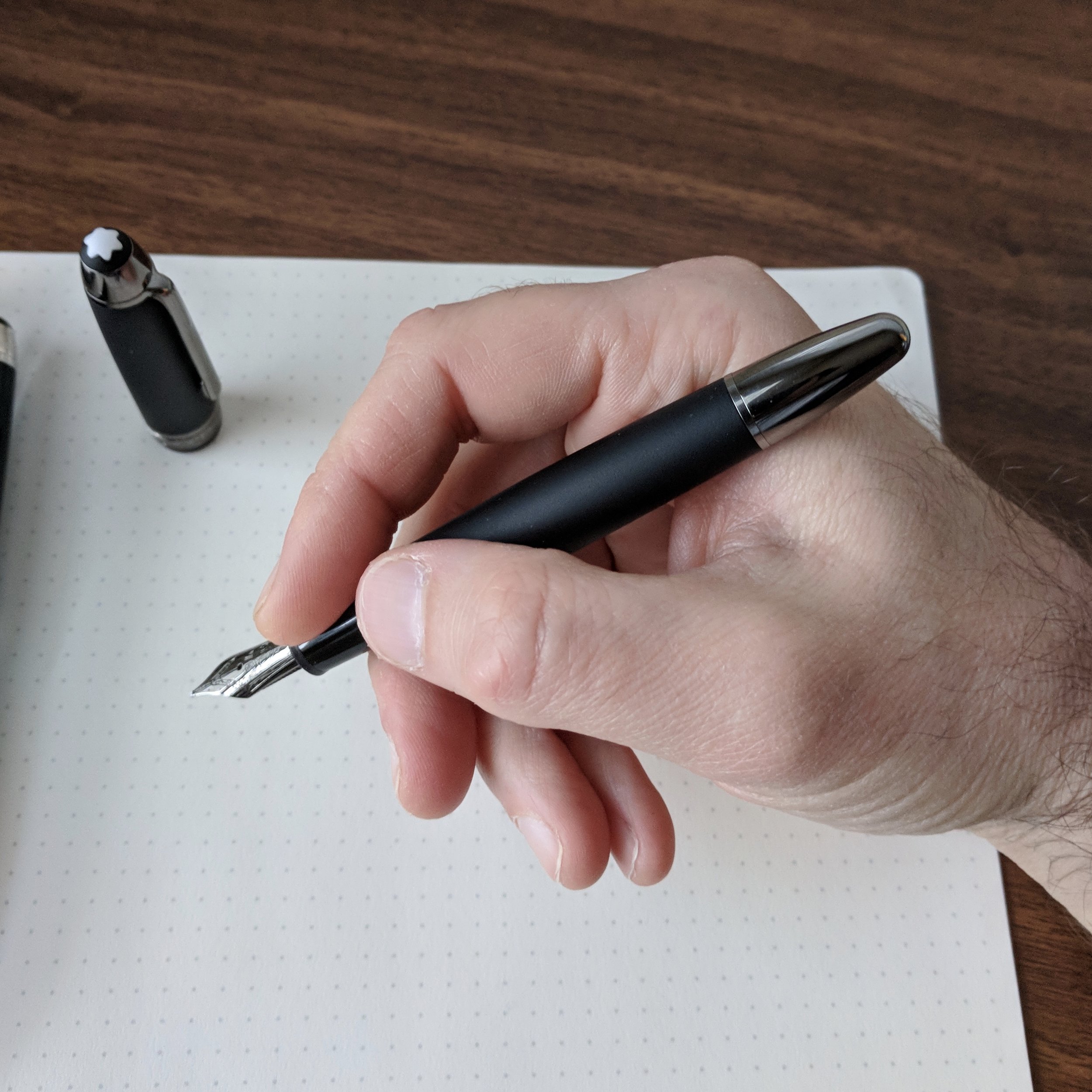
Along with the Edison Menlo, Lamy 2000, and Sheaffer Legacy (other great “workhorses” that will get the same treatment here in the coming months), the Montblanc 146 has the perfect shape and functionality for me to use every day. The pen posts, has a well-balanced torpedo/cigar shape, and holds a ton of ink.

View fullsize Montblanc 146 Posted
View fullsize Montblanc Ultra Black 146 Unposted

Nibs are where Montblanc will get you. Their standard nibs aren’t necessarily bad, but they tend to be over-polished with a bit of a baby’s bottom, meaning that they will hard start occasionally, especially on super slick paper like Rhodia or Clairefontaine. Mike Masuyama has ground most of my Montblancs to a .6mm stub/cursive italic hybrid, which makes for a very smooth writer that still retains a bit of line variation. I generally prefer cursive italic nibs over stubs for everyday use because they aren’t as wet for when you need to write on cheap paper.

The "Snowcap" isn't an uncommon sight in the corporate world, even today. 

I’ll go ahead and address this because I know I’ll get the question: Doesn’t using a Montblanc violate Rule No. 3 (“The pen must be understated?”) Not for my purposes. Montblanc pens are fairly common in the corporate world, so unless you’re going to use something like a Skeleton or one of the crazier Writers Editions, you'll attract little, if any, attention. 

The ruthenium plated nib on my Montblanc 146 Ultra Black. 

The ruthenium plated nib on my Montblanc 146 Ultra Black. 

The 146 also doesn’t have to be a pen that breaks the bank. If you’re looking for a pen in decent working condition, and don’t mind dealing with a few cosmetic blemishes, you can find them for as low as $250 at pen shows, which is around the same price as a new Sailor Pro Gear or 1911. Sure, the special editions will set you back a bit more, but the prices are generally in line with the rest of the market, provided you shop around and don’t pay MSRP at the Montblanc boutique.

Where to Buy

If you’re interested in acquiring a Montblanc 146, you have many options, ranging from the secondhand eBay market to the Montblanc Boutique. If you're new to pens, I'd advise you to proceed slowly, since there's a thriving market for counterfeit Montblanc pens and it's worth it to do your diligence and make sure that you purchase from a reputable seller. Here are some options to get you started:

  • Pen Shows. Where I purchased my first Montblanc 146. You can find exceptional pricing at pen shows (often 10-20% below what retailers sell for online), especially if you're willing to look at a secondhand pen, which is where I'd suggest you start. Larger shows like the D.C. Pen Show will have the best selection.  

  • Anderson Pens. Our sponsor Anderson Pens is an authorized Montblanc retailer that sells both new and gently used pens, including the 146. They sometimes have stock that is not listed on their website. Be sure to reach out and let them know exactly what you are looking for. 

  • Appelboom. Appelboom, another sponsor and authorized Montblanc reseller located in the Netherlands, carries the full range of Montblanc Pens, including the UNICEF and Ultra Black 146 pens pictured here. I purchased a UNICEF 144 Classique from Appelboom and was very pleased with the experience.  

Disclaimer: I purchased all three pens shown in this review with my own funds, for my own use.

Editor's Note: The "Workhorse Pens" series is something new that I tried. Did you like this series? Did I leave anything about the pen out that you wanted to know? Do you have any additional questions about how I use my pens that you'd like me to address in future installments? Should I drop this entirely? Let me know! 

In Pens, Workhorse Pens Series Tags Workhorse Pens, Montblanc, Montblanc 146, Pens
15 Comments

Baron Fig Double Release: "Lock & Key" Confidant and Squire

January 17, 2018

Baron Fig has announced their first limited edition of 2018, and this time it's a Confidant/Squire combination! The "Lock" Confidant is a gorgeous dark "forest green" color, with a debossed maze cover and a puzzle insert. The brass Squire - a first for Baron Fig - sports a "key" motif, and the packaging from the pen contains a code that you can use to decipher the puzzle hidden in the Confidant. 

Photo courtesy of Baron Fig. 

The last few limited edition Squire Pens have sold out quickly - as in, within a day or two of release - so jump on this one quickly if you're interested. I've spent the last two days writing exclusively with the brass Squire, and if you like brass pens, this is a good one. The brass will patina quickly: mine has already started to develop after a few hours of use. It's not light by any means, but since the Squire is a shorter pen with excellent balance, you don't necessarily feel the weight of the material. I'd compare the writing experience, in terms of comfort, to that offered by the Kaweco Brass Sport or Supra or the Inventery Machined Pen. 

Photo courtesy of Baron Fig. 

Takeaways and Where to Buy

I won't go on again about how the Baron Fig Confidant and Squire are two tools that I use on a near-daily basis and can readily recommend, because I've written a lot about both. You can purchase the Lock & Key Squire/Confidant set directly from Baron Fig for $77. This gives you a slight discount, as the notebook and pen are priced at $20 and $65, respectively, if you purchase them separately. This particular limited edition Squire costs $10 more than the standard pen, which is more than fair due to the brass construction.  

As I mentioned, I expect at least the pen to sell out quickly, and this one is even more unique than past releases, so don't wait if you want one. Great job by Baron Fig on their first limited release of the year, and I can't wait to see what else they have in the queue. 

Disclaimer: Baron Fig sent me the pen and notebook featured in this review free of charge, for review purposes.

In Notebook Review, Pens, News Tags Baron Fig, Baron Fig Lock, Baron Fig Key, Squire, Confidant
Comment
← Newer Posts Older Posts →
Store Hours and Location
Visit the T.G.S. Curated SHOP
Updated "Best Pens" Guide
On the Paper Trail Podcast
TGS x Roterfaden TGS_25
Hierarchies of Fountain Pen Friendly Paper

Join Our Patreon!
Subscribe to the TGS E-mail List

Featured Posts

Featured
Cover On the Paper Trail Intro Clip.jpeg
Dec 3, 2025
Introducing "On the Paper Trail," a New Podcast/Video Collaboration with Lisa Vanness of Vanness Pens!
Dec 3, 2025
Dec 3, 2025
Iro-Utsushi-Fine-Dip-Pens.jpeg
Oct 1, 2025
The Pilot Iro-Utsushi Dip Pen (and in General, Simple vs. Fancy Dip Pens)
Oct 1, 2025
Oct 1, 2025
Levenger-Annotation-Pad.jpeg
Sep 20, 2025
Five Boutique Paper Brands I'm Watching Closely and Why
Sep 20, 2025
Sep 20, 2025
The Gentleman Stationer RSS

© Digital Divide Media, LLC, 2014-present.

All content is the exclusive property of Digital Divide Media, LLC, d/b/a The Gentleman Stationer, including “The Gentleman Stationer” website and trademark, and should not be reproduced without express written permission.  All rights reserved.

All content containing paid advertising, affiliate links, or sponsored content will be plainly disclosed by a disclaimer when/if featured.

Contact Information

Store Shipping Policy and Return Policy

Privacy Policy

Cookie Policy

Terms and Conditions

Powered by Squarespace