• Blog
  • Shop
  • Resources
  • FAQ (Ask TGS)
  • About
  • Archive
  • Contact
  • Sign In My Account
Menu

The Gentleman Stationer

Vintage Living in the Modern World.
  • Blog
  • Shop
  • Resources
  • FAQ (Ask TGS)
  • About
  • Archive
  • Contact
  • Sign In My Account

Pen Review: The Pilot Custom 74

February 11, 2017

I've reviewed a lot of Pilot pens on this blog, but for some strange reason I've never taken the opportunity to review what I consider one of their best, and certainly one of their more accessible, fountain pens. The Custom 74 is one of the first higher-end Pilots that I purchased, and I recently added another to my collection. I'm glad I did!

This blue demonstrator might be one of the prettiest pens in my collection. 

Pilot makes several versions of the Custom 74, but only the demonstrators are available on the North American market, to my knowledge. The Japanese market offers some lower-cost pens in solid acrylics, including Dark Blue, Black, Deep Red, and Dark Green. (You can sometimes find these Japanese pens with in-between nib sizes, like SF (soft fine) or FM (fine medium).) Along with the Vanishing Point, you'll often see the Custom 74 marketed as the "entry level luxury" Pilot fountain pen, and it's a great option for those looking to buy their first $150+ fountain pen, or upgrading from a steel nib to 14k gold. 

An older photo of the Custom 74 violet demonstrator (far left) that I no longer have. This picture offers a good size comparison of the Custom 74 to the (from left) Pilot Vanishing Point, Sailor Pro Gear Imperial Black, Sailor 1911 Large, Nakaya Portable Writer, and the Pilot Metropolitan.

The Custom 74 is a good size pen, but at the same time there's no excess length or girth, and the transparent acrylic weighs very little. I can use this pen comfortably posted and unposted, though some might find it a touch too long posted. As I mentioned, I've owned two of these colored demonstrators over the years - the blue and the violet - and both pens were stunning to look at. The sapphire-blue acrylic featured here is a personal favorite, and pairs perfectly with Sailor Bungubox Sapphire ink.

I've always found Pilot nibs very tastefully engraved. I especially like the rhodium-plated version. 

The Custom 74 color demonstrators feature a relatively stiff, rhodium-plated 14k Pilot nib that offers a super smooth writing experience. I would say these nibs (which come in fine, medium, and broad) correspond more to western sizing, as opposed to traditional Japanese nib sizes that tend to run narrower. The pen shown here has a wet medium nib that writes a fairly broad line for a Japanese pen, but on a brightly colored pen like this one, I prefer a nib that lays down some ink. Fortunately, the Custom 74 comes paired with Pilot's high capacity CON-70 push-button converter, which only works with Pilot's larger pens. (Make sure you check compatibility before purchasing a CON-70 for another pen.)   

The Pilot Con-70 converter on the Custom 74, showing the length. Be sure to check compatibility.

A final note on the Custom 74 nibs: these nibs tend to have a lot of tipping material, which make them excellent - and relatively inexpensive - options for nib customization. Before my next pen show, I may try to pick up a couple of Custom 74s with broad nibs to take with me, just to make sure I have a good option to give to Mike Masuyama or Mark Bacas....

The nib on this Pilot Custom 74 writes a nice fat medium line.  

Takeaways and Where to Buy

The color demonstrators are by far the most popular options in the Custom 74 line, and are available in transparent blue, orange, smoke, and violet. This pen, in my opinion, is one of the better buys in the fountain pen world at $176 (as of 2023, available directly from us in the T.G.S. Curated Shop). You get an incredibly attractive pen with an amazing nib and a high-capacity converter. For these reasons it's made my list of Best First Fountain Pens over $100. Personally, I think the color models are attractive enough to justify the extra money, especially with the rhodium trim, but it's a matter of personal preference.    

The Gentleman Stationer is supported entirely by purchases from the T.G.S. Curated Shop and pledges via the T.G.S. Patreon Program. We no longer participate in third-party advertising or affiliate programs.
In Pens Tags Pilot, Pilot Custom 74, Pens
6 Comments

"Shelterwood" on Steroids: Pacific & West Discbound Notebooks

February 8, 2017

Field Notes wowed us a couple years back when they introduced their "Shelterwood" line of limited edition notebooks, which featured a think veneer of cherry wood bonded to a Kraft paper cover. The edition proved so popular that a variation was later reissued as the "Cherry Wood," which remains in their lineup to this day. So, it was only natural that another company would come along and take this idea to the next level. 

Pacific & West Large Refillable Discbound Notebook

Pacific & West is a company based in Portland, Oregon that creates notebooks from premium walnut covers and brass discs, similar to the popular Levenger "Circa" Series or the Staples "Arc" brand. Pacific & West first garnered attention with their 2016 Kickstarter project that combined walnut and brass to make a premium spiral-bound notebook, which funded and from what I can tell, received very good reviews. In response to user comments, Pacific & West redirected their resources from making spiral bound notebooks to developing a refillable, discbound version.

The brass discs that form the spine of the Pacific & West notebooks are absolutely gorgeous. They'll also form a nice patina over time.  

The Pacific & West Discbound Notebook comes in three sizes: Pocket, Large, and Extra-Large. The notebook featured here is the "Large" - slightly smaller than a traditional A5 notebook. Both the "Pocket" size and "Extra Large" size are also non-standard dimensions, meaning that you will likely either need to use Pacific & West branded refills or cut your own paper to size to fit these notebooks. (You can check out Pacific & West's "Size Guide" here.)

The blank paper in my notebook worked well with fountain pens. I've not tried the lined or dot grid version. All paper is advertised as 70#, and refills come in packs of 120 sheets.

While I would have appreciated a standard paper size that would allow me to punch holes in Rhodia, Clairefontaine or other papers that I use to take notes throughout the day, I found the blank Pacific & West paper to be very high quality. In addition to the unlined paper shown here, you can choose lined or dot grid. The ruling and dot grid is a "low contrast light grey" designed to remain in the background. 

As you can see, the paper on the Rhodia No. 16 pad is slightly smaller than the "Large" Pacific & West Notebook. 

Takeaways / Where to Buy

I regularly use discbound notebook systems at work to organize project notes and loose papers. The Pacific & West notebook is nice looking and well-made, though if you work a lot with standard-size 8 1/2 x 11 inch paper, as I do, you may not be able to use this notebook as your primary option. If Pacific & West made a standard A5 or letter-sized version, I'd buy multiple notebooks. 

You can purchase Pacific & West notebooks directly from the company's website. The notebooks themselves are $59 for the Extra Large, $39 for the Large, and $25 for the Pocket. That may seem expensive, but when you consider the craftsmanship that goes into the cover, and the fact that these use solid brass discs as opposed to the plastic discs used by similar disc-based systems, the price seems reasonable. You're paying for good quality. Paper refills are also reasonable, priced between $7-11 for 120 sheet, which is less than what you would pay for Levenger Circa paper. (I haven't used Levenger paper in a while, but I recall it being relatively non-fountain-pen friendly. I've had a much better experience with the Pacific & West paper.) 

Disclaimer: Pacific & West sent me this notebook free of charge for review purposes. I was not otherwise compensated for this review.

In Notebook Review Tags Pacific & West, Notebook, Discbound Notebooks
4 Comments

Pen Review: Visconti Homo Sapiens Dark Ages

February 4, 2017

Some of my favorite pens in my collection are what many people refer to as “blacked out” or “stealth” pens. I’m not sure where the trend originated, but I suspect it started with Pilot’s Matte Black Vanishing Point. That’s the earliest “stealth pen” I can recall receiving a lot of attention. Next, I purchased the Sailor Pro Gear Imperial Black fountain pen, which remains a personal favorite to this day. I like this pen not just because of the ion-plated trim, but because of its compact size. The Pro Gear is the perfect pen to stick in a shirt pocket and take to work: it’s portable, but when posted expands to a comfortable length for longer periods of writing. 

But I still found myself looking to add a larger pen that would spend most of its time at my desk at home, for journaling and the occasional letter writing. I’d been eyeing Visconti’s Homo Sapiens line of pens for a while, and had come close to pulling the trigger on the “Steel Age” model but never loved the overall look enough to do it. Then, last year, Visconti introduced the Homo Sapiens “Dark Ages,” and I finally jumped. 

The Homo Sapiens Dark Ages features a blacked-out version of Visconti's trademark "arc" clip, plus "Homo Sapiens" engraved around the barrel. If you look closely, you can see that the lava-resin composite material is porous. 

First, a bit about the Homo Sapiens line in general. Visconti markets these pens as being made from hardened volcanic lava from Mount Etna in Sicily, which is mixed with a proprietary resin to create what most vendors describe as a “virtually unbreakable” pen. Much like celluloid and ebonite, the pen warms to the touch as you write with it, and absorbs moisture from your hands. Originally, the Homo Sapiens only came with bronze trim (the “Bronze Age” pen), but Visconti has since released the HS with steel (“Steel Age”) and the all-black (“Dark Age”) furniture. 

View fullsize Homo Sapiens Unposted
View fullsize Homo Sapiens Capped

The Homo Sapiens pens are sold in two sizes: Maxi and Midi. The Maxi size - what I have here - is a large pen that realistically can only be used unposted. It features Visconti’s 23ct Palladium “Dreamtouch” nib with Visconti’s “Power Filler” filling system. I love the nib, but I’ve found the “Power Filler” to be a bit overrated. I understand that the slightly smaller Midi pen also features a Palladium nib and a piston-fill mechanism. 

The Nib and Writing Experience

The "Dark Ages" Dreamtouch 23ct Ruthenium-plated Palladium nib, with classic Visconti engraving. You can also see Visconti's "locking" threat system, which allows the cap to attach securely, 

If you like soft, wet nibs, then you’ll love Visconti’s Palladium nibs. Once these nibs are set up properly (more on this in a minute), they write with almost no pressure. “No pressure” is key: apply too much and you could end up springing the nib or gushing ink onto the page. I purchased this pen at the 2016 DC Pen Show, and immediately had Mike Masuyama grind this nib down to an EEF and attempt to reduce the ink flow as much as possible, yet this pen will bleed through even very thick paper if I bear down too hard. That said, once you get the hang of writing with little to no pressure, this is a very pleasant and comfortable pen to use. 

The ink in this writing sample is Montblanc Leo Tolstoy Sky Blue. You can tell how wet this nib is from how dark the ink appears. 

The Puzzling “Power Filler”

The filling system on this pen merits extended discussion. I’m not sure what the purpose of Visconti's “Power Filler” is, because it doesn’t seem to hold a lot of ink, which, to me, is what the name would imply. It's a vacuum-fill system, similar to the Pilot Custom 823, where to fill the pen, you place the nib and section in the ink bottle and depress the plunger. From a normal ink bottle, I’ve found the usual fill holds just over 1ml of ink. (Supposedly, you can get a bit more into the barrel using Visconti’s “Traveling Inkwell,” but I don’t have one and don’t particularly fancy spending more $$$ just to get a couple ml more into the pen.) For a pen of this size, that’s not a huge ink capacity, and certainly seems to fall well below what my other similarly sized pens (i.e., the Pilot Custom 823, Pelikan M800 or Montblanc 146) can hold. Given that most Visconti pens are very wet writers, you'll probably find yourself refilling your Power-Filler pen more than you’d expect. 

Takeaways and Where to Buy

Of all the Visconti’s I’ve had the opportunity to try at pen shows, etc., none of them spoke to me more than the Homo Sapiens Dark Age. It’s a great-looking pen, and as modified, the nib is a very nice writer. That said, my experience with this pen doesn’t have me jonesing to go out and buy another Visconti without careful consideration. This pen was a temperamental and inconsistent writer out of the box, and if I hadn’t had Mike Masuyama there to work on the nib immediately, this experiment definitely would’ve ended in frustration. If you’d like to add a Visconti to your collection, I’d recommend purchasing at a pen show or from an online vendor who is willing to check the nib prior to sending it to you. 

I purchased this pen from Bryant Greer of Chatterly Luxuries at the 2016 D.C. Pen Show. I’ve made several purchases from Bryant in the past, and have nothing but good things to say about him and his company. (I've heard that Bryant will also ship new pens directly to Mike Masuyama for nib customization/tweaking.) If you have a relationship with another major pen retailer, most of those who carry Visconti keep the various Homo Sapiens models in stock. For example, both Pen Chalet and Anderson Pens have the Dark Ages available on their website. I’ve not seen anything to suggest that this pen is a limited or special edition, and will likely be available as part of the regular Homo Sapiens lineup for the foreseeable future. 

Disclaimer: I purchased this pen with my own funds for my own collection. While certain links in this post are affiliate links, I have not otherwise been compensated in any way for this review. 

In Pens Tags Visconti, Black Pen Society, Stealth Pen, Homo Sapiens
5 Comments

Introducing the Baron Fig Askew Confidant Limited Edition

January 31, 2017

Well, Baron Fig did it, for all you doubters out there who met the company's announcement of multiple simultaneous subscription services for as many as four different product lines with skepticism that they could maintain their creative edge. I'm still not sure what, exactly, they're going to be doing with all those limited editions, but the newest version, Askew, makes it clear that it probably won't be boring.

Even the inside cover is hand-colored, with blue ballpoint.

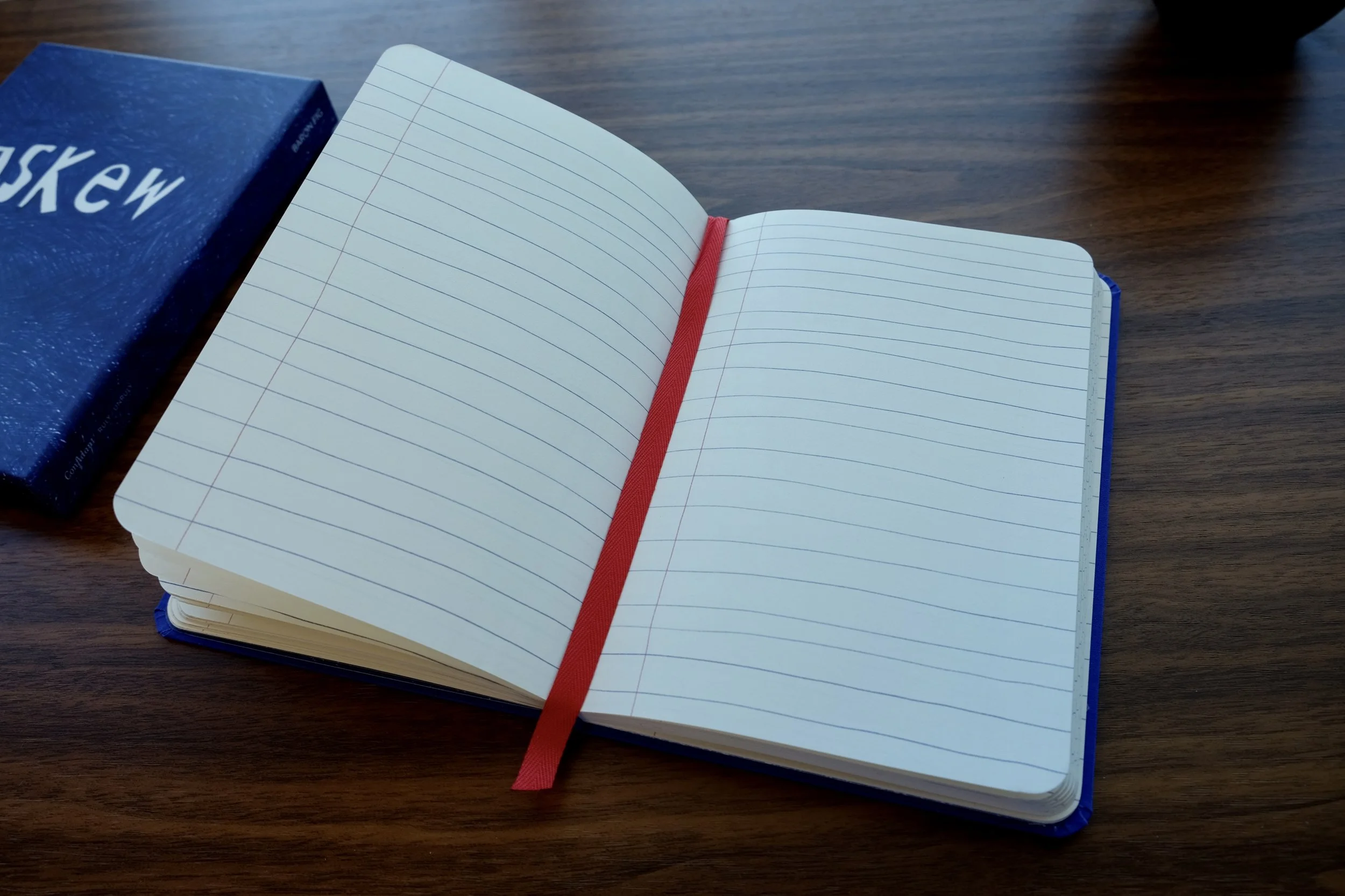
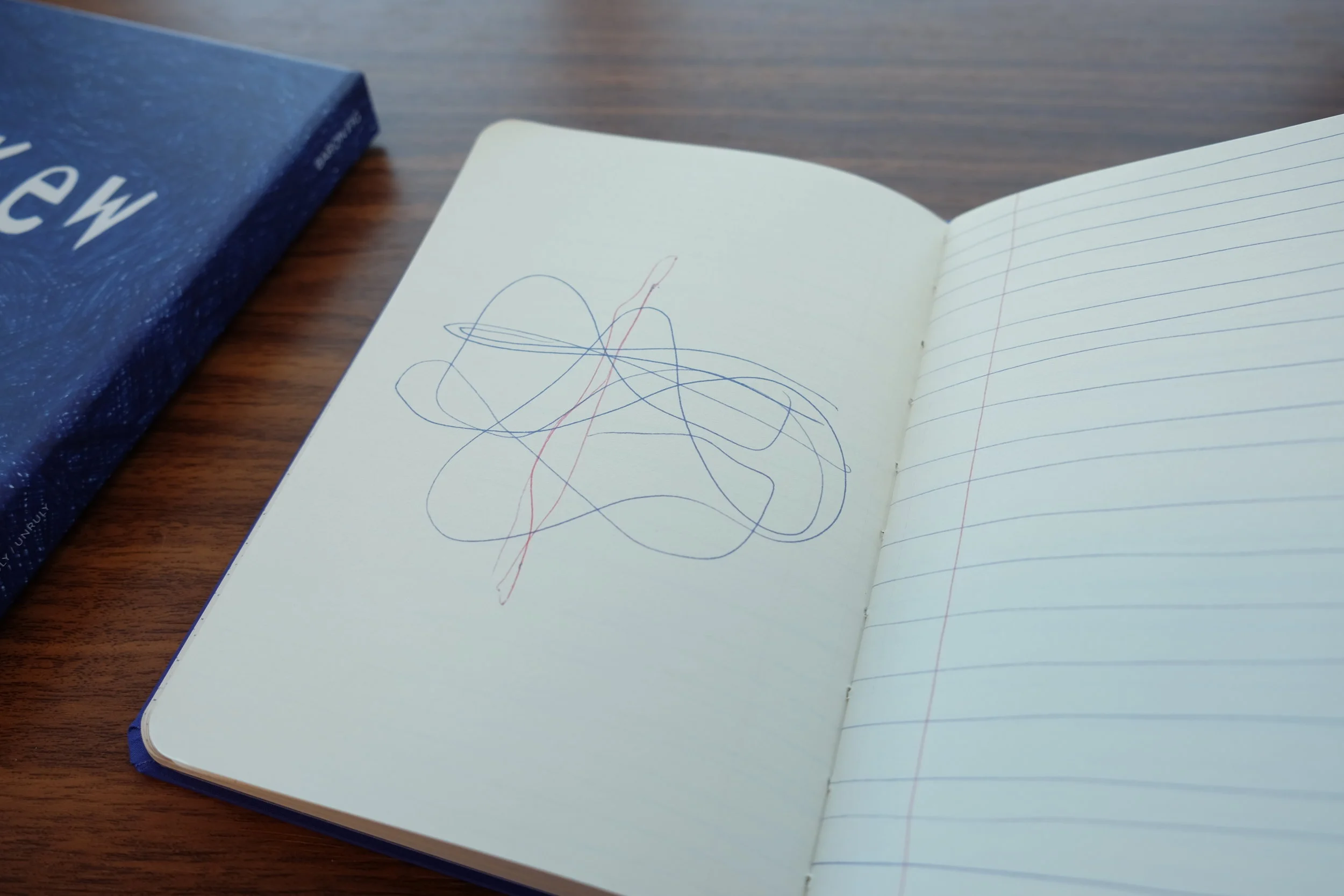
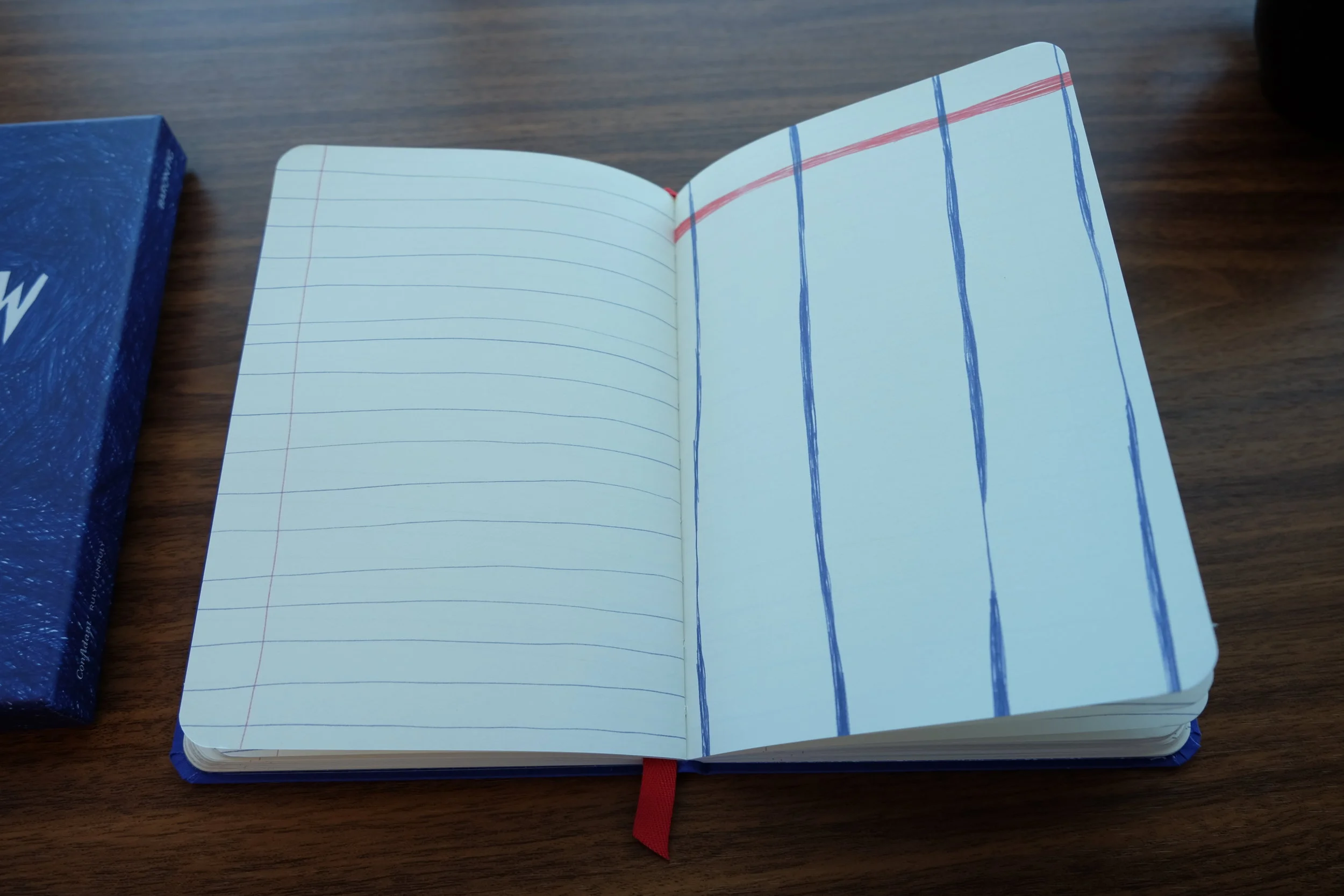
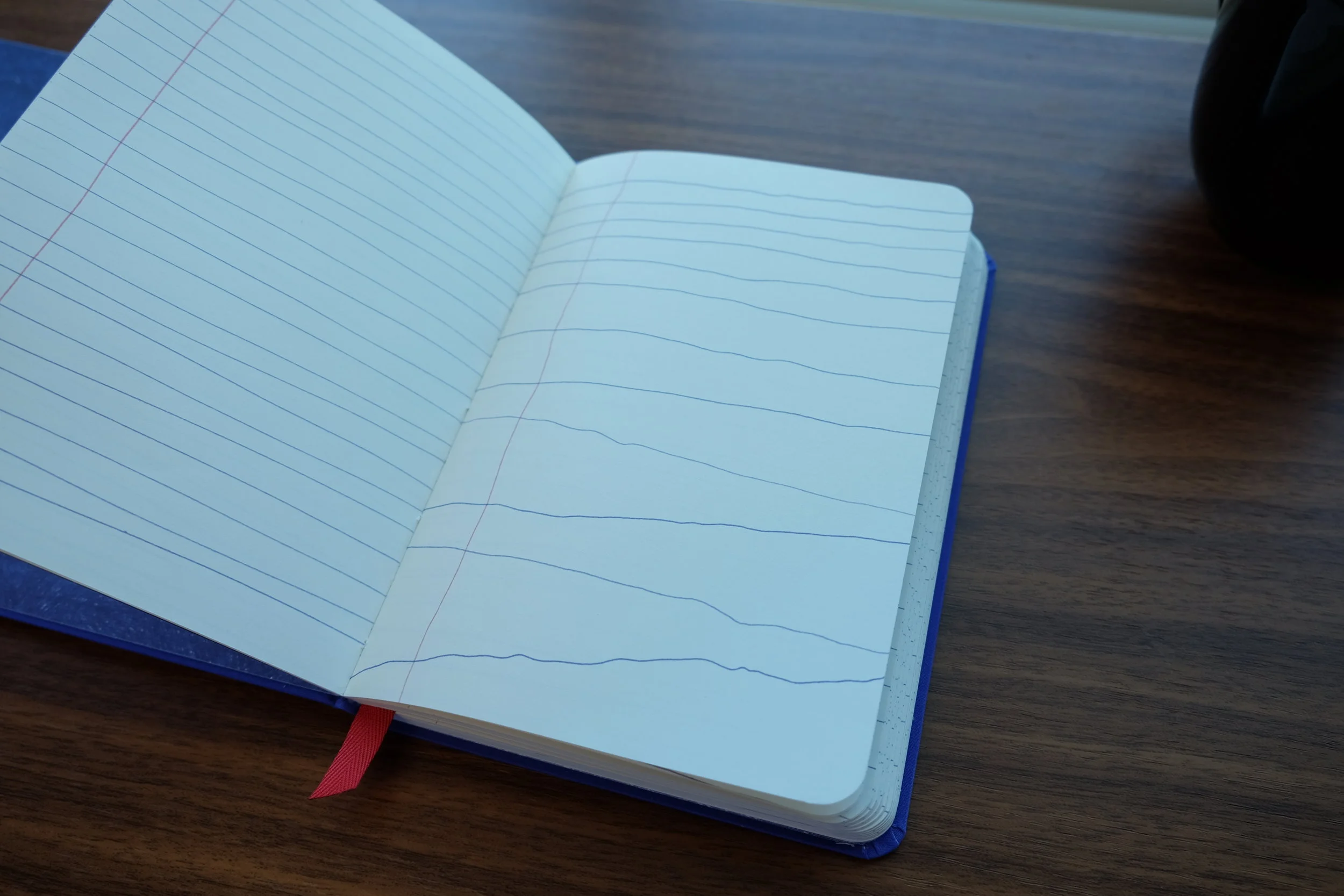
Askew, a collaboration with graphic designer Debbie Millman, is entirely hand drawn, from the inside cover pages to the ruling on the paper itself. Spoiler alert (not really): the hand-drawn lines aren't straight, and on a handful of pages they even cross or devolve into scribbles. Obviously, you're not going to be able to use these pages as you would a typical notebook, but that's clearly not what Ms. Millman and Baron Fig were going for here. The goal of this particular edition is to foster creativity by encouraging people to think "outside the lines." Personally, I really like it, and can see myself using this book as an offbeat journal or for brainstorming sessions.   

View fullsize Baron Fig Askew: "Straight" lines
View fullsize Baron Fig Askew: Squiggles
View fullsize Baron Fig Askew: Vertical
View fullsize Baron Fig Askew: Crossed Lines

Everyone has focused on the "usability" of Askew, and whether it was wise for Baron Fig to include this unusual notebook as part of Baron Fig's subscription service. That's a fair question, and one that I've addressed before in my review of the "Black Box" Vanguard notebook. Those who were considering a Confidant subscription, thinking that they would definitely get a standard notebook each quarter - as in, one they can use to take notes at work - may now have to reconsider whether they want to subscribe or purchase on a "wait & see" basis. Of course, Baron Fig could always avoid the issue by doing what Field Notes does - offer subscribers the opportunity to exchange the Limited Edition notebook for a standard Confidant of their choice, if they so choose.

The vibrant violet color of this notebook really changes things up for Baron Fig. I like it, especially the red bookmark. 

What's more interesting to me here is the collaboration aspect of this edition, and what it says about Baron Fig's prospects. Debbie Millman is a big deal in the design community: She hosts the wildly popular "Design Matters" podcast, and has been a guest on many other well-known podcasts, including the Tim Ferriss Show. That Baron Fig is attracting collaborators like Ms. Millman bodes well for the future, and I'm excited to see what else they have lined up. 

Where to Buy 

You can buy the Askew Limited Edition via Baron Fig's website for $20. If you're interested in subscribing to the Confidant quarterly subscription service (or one of the others that Baron Fig offers), you can do so here.   

Disclaimer: Baron Fig sent me this product for review purposes at no charge. 

In Notebook Review, Unusual Stationery Tags Baron Fig, Baron Fig Askew, Subscription Services
Comment

Pen Review: Pelikan M800 Souverain Burnt Orange Special Edition

January 28, 2017

I guess it's time that I finally got around to reviewing this pen, seeing that I've been talking about it for nearly a year since I bought it at last year's Atlanta Pen Show. The Pelikan Souverain M800 is one of the more iconic modern pens, and certainly one of the best known and most easily recognizable modern German pens. While the (much) larger M1000 holds the title as the largest Pelikan available, I regard the M800 as Pelikan's "flagship." Over the past several years, Pelikan has issued "limited" and "special" editions of the M800 in colors and materials outside the standard lineup. The pen featured in this review, the "Burnt Orange" edition, is one of those pens. 

Size and Construction 

The Pelikan M800 is a well-built workhorse that will last you a lifetime. It has a brass piston mechanism, which gives the pen some heft and a nice balance in the hand. The piston turns smoothly and holds just under 1.5ml of ink, which is more than enough to get me through a week of intense writing at work.

Like all Souverains, the Burnt Orange Special Edition features the Pelikan logo engraved on the cap.  

The M800 is also a large pen. Most people will find it too big to use posted. The issue isn't necessarily weight - the cap is fairly light - but rather length. I prefer to post my pens, and even I find myself using this one unposted most of the time. 

View fullsize Pelikan M800 Size Comparison
View fullsize Pelikan M800 Unposted
View fullsize Pelikan M800 Posted

The Burnt Orange Special Edition is your typical M800 as far as size and overall construction go, but the unique color has some history behind it. This is not your "blaze orange," or "hunters orange" pen - rather, the muted "burnt orange" color is reminiscent of the red hard rubber pens from the 1920s, and made famous again by Montblanc's "Hemingway" Writer's Edition from the early 1990s (which now commands a premium price on the collector's market). Moreover, the section, cap, and piston knob are not black, but rather a very dark brown. They appear black at first glance, but in the right lighting, the brown comes out.    

Writing Experience

The nib on the Pelikan M800 is stiff, yet very pleasant to write with. It makes for a great cursive italic modification.

The Pelikan M800 offers a different writing experience than both the smaller M600, which I've previously reviewed here, and the larger M1000. The nib on the M800 is fairly stiff, whereas the nibs on the other two pens are slightly softer and offer a touch of line variation, the M1000 more so than the M600. That said, the M800 is an extremely nice writer. This pen started life as a broad nib, but I had it ground to a relatively crisp .4mm cursive italic by Mike Masuyama at the Atlanta Pen Show. This particular grind gives my handwriting exceptional line variation, but unlike a stub, isn't so wet that I can't use it on the ordinary office paper that I use daily at work. 

Masuyama Cursive Italic (.4mm) with Montblanc Jonathan Swift Seaweed Green Ink (discontinued limited edition).

Takeaways and Where to Buy

I love my M800, and I'm sorry that I waited so long to add one to my collection. That said, I'm not sure that I would choose this particular model of Pelikan to collect, since it's just a touch too large for me to carry around easily in a shirt pocket. I tend to break it out when I need to do lots of long-form writing at a desk, or for when I want to journal. However, for work, when I'm running between meetings and need something a bit more portable, I tend to go with my M600 or my M205. 

The standard Pelikan M800 is available in black with gold furniture, or in blue, red, or green striated celluloid, and can be found at most pen retailers for $500-600.  (The M805 model comes with chrome trim.)  While that's far from inexpensive, the M800 is a very well-built, reliable piston-filler with a large gold nib, so the materials and construction drive the price up. I know a few attorneys who have one fountain pen (the M800) that they've owned for years and use daily, so you'll get your money's worth and the pen will hold up over time.  

As you might expect, special and limited editions will run you a bit more, typically pushing into the $600-700 range, and Pelikan typically offers these models for a year or less, depending on popularity. While the standard M800 is readily available from any major pen retailer, the Burnt Orange Special Edition featured in this review will likely become unavailable soon. As of the time of this review, you can still pick one up at Pen Chalet for $676, minus whatever discount code Ron is currently offering.  

Disclaimer: This post contains affiliate links.  

In Pens Tags Pen Review, Pelikan Souverain, Pelikan
4 Comments
← Newer Posts Older Posts →
Store Hours and Location
Visit the T.G.S. Curated SHOP
Updated "Best Pens" Guide
On the Paper Trail Podcast
TGS x Roterfaden TGS_25
Hierarchies of Fountain Pen Friendly Paper

Join Our Patreon!
Subscribe to the TGS E-mail List

Featured Posts

Featured
Cover On the Paper Trail Intro Clip.jpeg
Dec 3, 2025
Introducing "On the Paper Trail," a New Podcast/Video Collaboration with Lisa Vanness of Vanness Pens!
Dec 3, 2025
Dec 3, 2025
Iro-Utsushi-Fine-Dip-Pens.jpeg
Oct 1, 2025
The Pilot Iro-Utsushi Dip Pen (and in General, Simple vs. Fancy Dip Pens)
Oct 1, 2025
Oct 1, 2025
Levenger-Annotation-Pad.jpeg
Sep 20, 2025
Five Boutique Paper Brands I'm Watching Closely and Why
Sep 20, 2025
Sep 20, 2025
The Gentleman Stationer RSS

© Digital Divide Media, LLC, 2014-present.

All content is the exclusive property of Digital Divide Media, LLC, d/b/a The Gentleman Stationer, including “The Gentleman Stationer” website and trademark, and should not be reproduced without express written permission.  All rights reserved.

All content containing paid advertising, affiliate links, or sponsored content will be plainly disclosed by a disclaimer when/if featured.

Contact Information

Store Shipping Policy and Return Policy

Privacy Policy

Cookie Policy

Terms and Conditions

Powered by Squarespace