• Blog
  • Shop
  • Resources
  • FAQ (Ask TGS)
  • About
  • Archive
  • Contact
  • Sign In My Account
Menu

The Gentleman Stationer

Vintage Living in the Modern World.
  • Blog
  • Shop
  • Resources
  • FAQ (Ask TGS)
  • About
  • Archive
  • Contact
  • Sign In My Account

Robert Oster Inks come in a unique tall, slender plastic bottle, which makes the inks both easier to ship and to store. 

Ink Review: Robert Oster Melon Tea and Fire and Ice

April 8, 2017

Many thanks to Lisa and Mike at Vanness Pens for providing me with some more samples of excellent Robert Oster Inks to test out! The two I'm reviewing today are Melon Tea, a brownish green (or greenish brown, depending on how you look at it), and this year's new hotness, Fire and Ice, which as you might expect from the name is a teal blue with a red sheen. I thoroughly enjoyed both of these inks, and look forward to picking up a bottle of Fire and Ice soon. (I already bought a full bottle of Melon Tea at the Baltimore Pen Show.)

Melon Tea

A writing sample on Tomoe River paper from my Hobonichi Planner. The pen used here was my Kanilea Pen Co. Mauna Kea with a medium nib. 

I'm a big fan of green ink, especially darker shades of green-black or "racing green" inks. Robert Oster Melon Tea undergoes a bit of a color shift as it dries. When I was writing with this ink, I found that it appeared more green when wet, but as it dried the ink darkened and the brown shades became much more apparent. This ink was well-behaved and gave me no trouble whatsoever. It flowed well in the pen, dried quickly, and I didn't experience any smearing or bleed-through on any paper, other than the cheapest of recycled office garbage. 

Fire and Ice 

A shot of Robert Oster Fire and Ice "straight on" without the sheen showing. Note the dark areas of shading in this picture. 

One thing that I love about Robert Oster inks is the fact that the company has been able to achieve such vibrant colors without oversaturating the inks with dye, which typically leads to problems with smearing, slow dry times, bleedthrough, etc. I'd ordinarily be hesitant to try a "crazy" color like Fire and Ice, but this ink received such rave reviews that I had to go ahead and try it for myself.

Another writing sample, this time photographed in the light and from the side. Check out the sheen! 

Fire and Ice is usually described as a dark teal or turquoise that is famous for its red "sheen," which in fountain pen ink terms refers to a layer of color (usually red) that appears on top of an ink as it dries. Other famously "sheen-y" inks include the legendary Parker Penman Sapphire, J. Herbin Emerald of Chivor, and Diamine Majestic Blue (at least in the old formulation). Robert Oster Fire and Ice doesn't disappoint, and is one of those rare hyped inks that functions perfectly well as a daily writer, in addition to having a little something extra to keep things interesting. Like Melon Tea, this ink dries very quickly and doesn't smear at all. I was somewhat shocked at how low-maintenance this ink was. 

Where to Buy

You can purchase both Melon Tea and Fire and Ice, along with many other colors of Robert Oster inks, from Vanness Pens. Robert Oster Inks are reasonably priced at $16 for 50ml, which is a bargain for ink of this quality. As I mentioned earlier, I love the form factor of the Robert Oster bottles, which are tall and skinny and make for easy storage in a drawer. They even include a label and color swatch on top of the cap!

If you missed my previous review of some other Robert Oster colors, check them out here! 

Disclaimer: Thanks to Vanness Pens for providing me with the inks featured in this review. I was not otherwise compensated for this post in any way. 

In Ink Reviews Tags Robert Oster, Ink Review, Vanness, Melon Tea, Fire and Ice
Comment

Pen Review: Lamy 2000 (Original Makrolon Version)

April 5, 2017

I can’t believe that in the nearly four years I’ve been writing this blog, I’ve never done a proper review of the Lamy 2000, a pen that I often recommend and which headlines my recommendations for a best first fountain pen over $100. I currently have three of these pens in my personal collection - a standard EF nib, a fine nib ground to a cursive italic by Mark Bacas, and a Stainless Steel model with a medium nib that Mark ground into a reversible “Italifine” nib with a cursive italic on one side and an extra fine point on the reverse side. While you may or may not appreciate the design, this is a classic, well-built fountain pen that everyone should try at least once.

History

It’s safe to call the 2000 Lamy’s flagship pen. Designed by Gerd Muller in 1966, the pen has been in continuous production, and the design hasn’t changed, for the past 50+ years.

The integrated ink window, brushed stainless section, and hooded nibs are hallmarks of the Lamy 2000's design.  

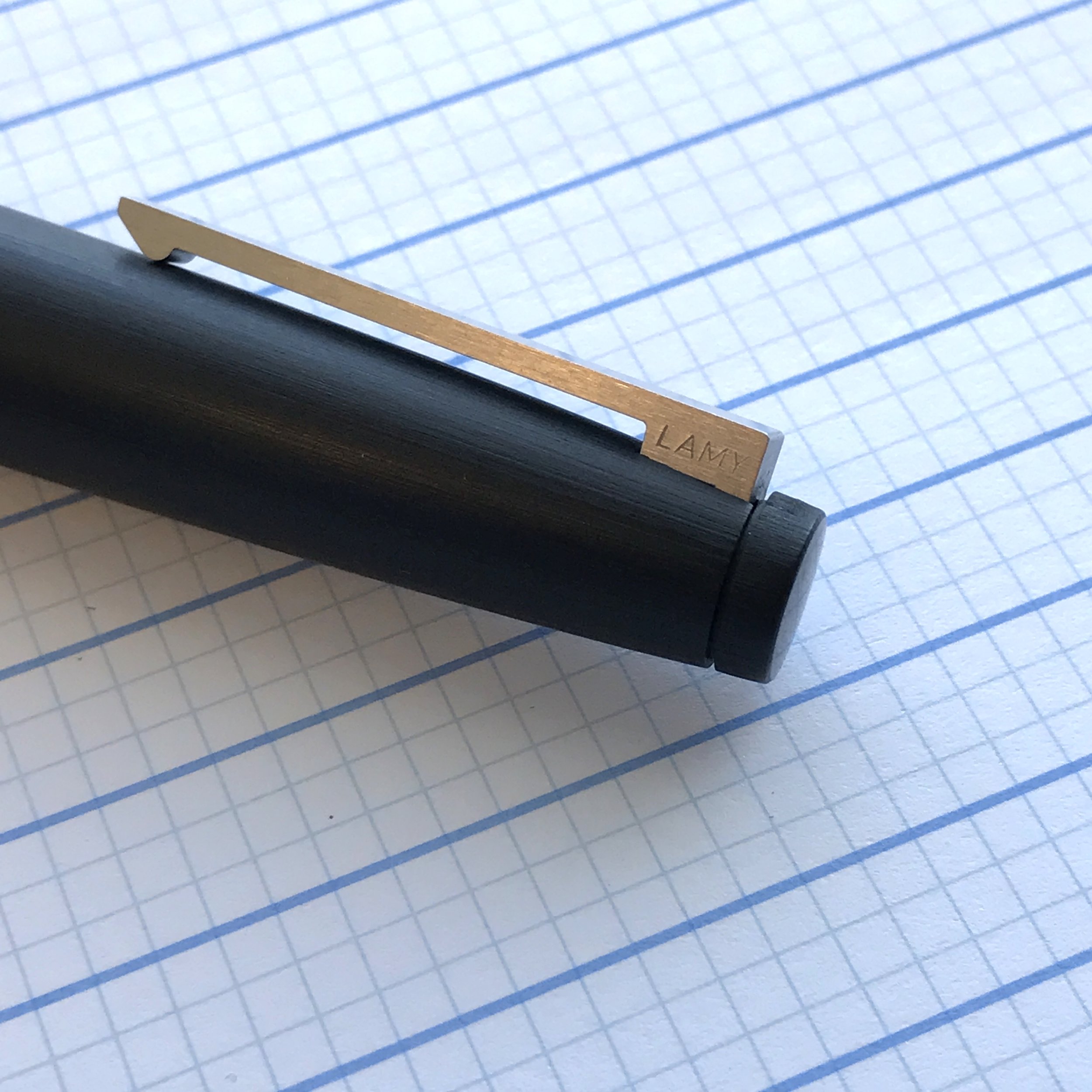
According to Lamy, the 2000 was the first pen to feature an “even surface of both stainless steel and plastic,” presumably referring to the way in which the brushed stainless steel section, Makrolon body, and other components are flush with one another. Because Lamy's manufacturing tolerances are very high, the seams between the section, body, and piston knob are all but invisible. The Lamy 2000 also claims to be the first pen with a solid stainless steel clip. Note the subtle engravings not only on the outside of the clip ("Lamy"), but on the inside as well ("Germany"). Details!   

View fullsize Lamy 2000 Inside of Clip
View fullsize Lamy 2000 Clip

Why do I like this pen so much? 

The Lamy 2000 engenders strong feelings in people. They either love the pen or hate it. Many claim that it looks “boring” or “generic.” Personally, I don’t find this pen boring at all - the simple, straightforward design reflect the pen’s Bauhaus-inspired aesthetic, not a lack of creativity. While I have my own penchant for loud colors (red and yellow, especially) and patterned celluloid, sometimes I just want an understated workhorse pen that holds a lot of ink and won’t draw a lot of attention in crowded meetings or in court. The Lamy 2000 fits the bill. 

The hooded nib on the Lamy 2000 makes it difficult for the casual observer to distinguish the Lamy 2000 fountain pen from a standard rollerball or a ballpoint, which is why this is a great pen for use in situations where you don’t want to draw attention to yourself. 

Construction

The body of the pen is made from Makrolon, a polycarbonate/fiberglass composite that is both strong and lightweight. The section is made from brushed stainless steel, which adds just enough weight to give it a nice balance in the hand. While there is an ink window, it’s translucent and somewhat narrow, only providing you with a general indication of how much ink remains in the pen. The pistons on my pens all operate smoothly, and they hold a good deal of ink, which I would peg at around 2ml (nonscientifically). 

A shot of the cap on a Makrolon Lamy 2000. Note the matte finish on the body and clip, compared with the polished end cap. 

A note on cleaning: It IS possible to disassemble the Lamy 2000 for cleaning the inside of the barrel, feed, and nib, though the pen contains multiple small parts that can easily get lost. If this sort of “deep cleaning" is needed - and it shouldn’t be necessary on a routine basis - make sure you’ve set up a workspace where you can keep track of the parts. 

Writing Experience

While I’ve known a couple people who have purchased Lamy 2000’s with nib issues - mainly caused by misalignment of the tines - every single one of the pens that I have purchased over the years (four total) has written just fine out of the box. The 14k gold nib offers a fairly wet, slightly springy writing experience, and as a result I would say that these pens tend to write on the wider side of their designation. For example, if you want a medium nib, I’d recommend that you try a fine; if you want a fine nib, consider the extra fine, etc. (The broad nib is very, very broad, at least for me.) I would say that there’s no true “extra fine” nib size available - if that’s what you’re looking for, you’ll likely need to have someone work on the nib aftermarket. 

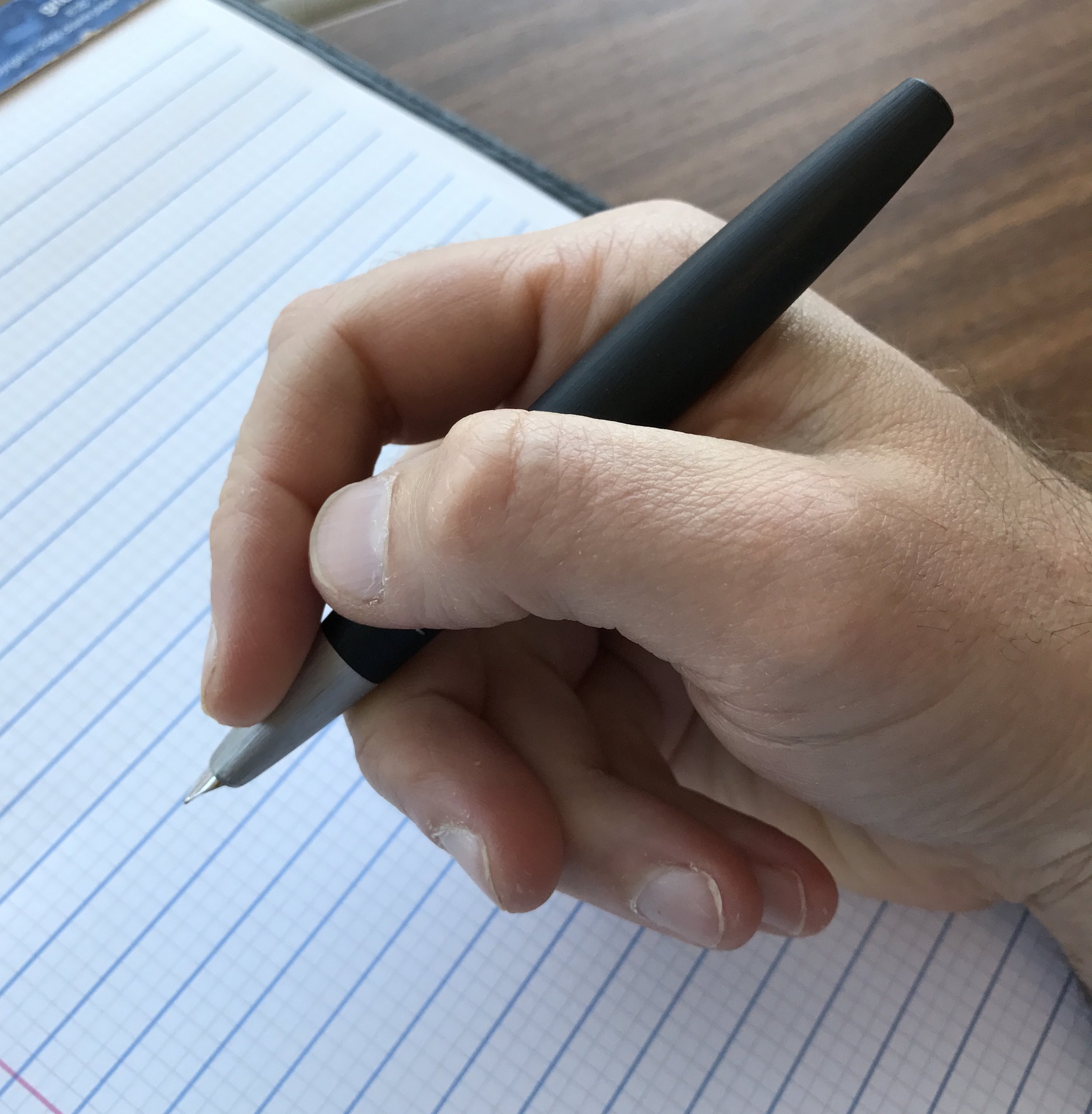
View fullsize Lamy 2000 Unposted In-Hand
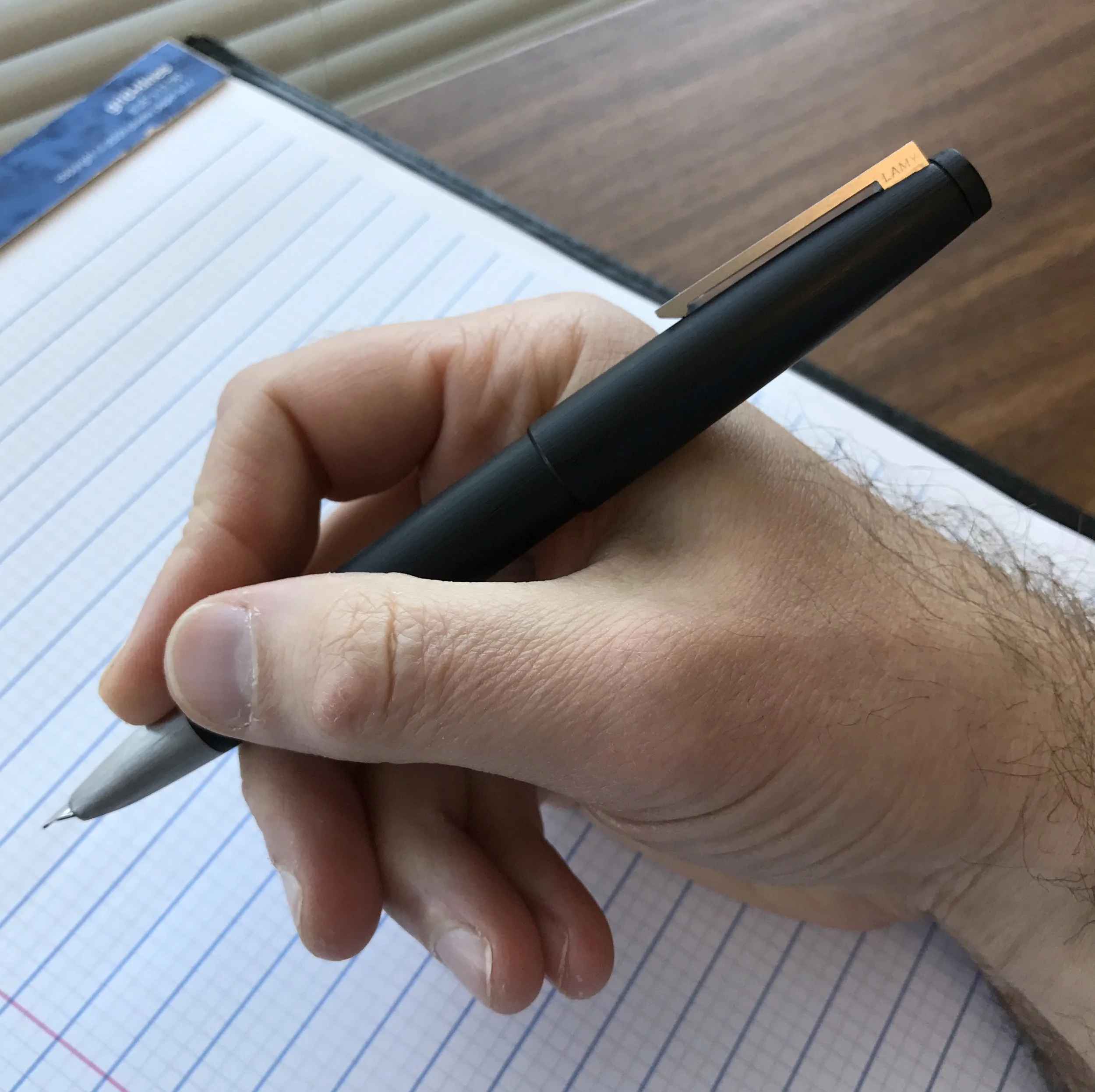
View fullsize Lamy 2000 Posted In-Hand
View fullsize Lamy 2000 Writing Sample

I prefer to use the pen posted, thought many people find it pleasant to use unposted as well. Posted, the pen is just under 6.2 inches; unposted 5.5 inches, so it’s a respectable size either way, neither too big nor too small. 

Where to Buy

[UPDATE] As of April 2023, The Gentleman Stationer is an authorized retailer of Lamy Pens, so we are pleased to be able to offer this pen to you directly as part of our effort to become self-sustaining. We no longer rely on paid advertising or third-party affiliate programs, and enjoy having full responsibility over our readers’ experience with the pens we recommend, instead of relying on third parties to deliver quality service.

Further Reading

As I mentioned, the Lamy 2000 fountain pen is available in a Stainless Steel and Limited Edition "Black Amber" Model. Lamy also manufactures a ballpoint, rollerball, multifunction pen ("4 Color Ballpoint"), and mechanical pencil, and here I've included some links to my reviews of those models that I've tried.

In Pens Tags Pen Review, Lamy 2000
3 Comments
9487C3B1-A7F6-4579-8478-3CA76770FB6C.JPG

Great Pen Stores: Papier Plume in New Orleans, Louisiana

April 1, 2017

As you may have seen on my Instagram, I've spent the past few days at a conference in New Orleans, Louisiana, and my regular posting schedule been a bit "off track" (as should be expected).  But that doesn't mean that I didn't take at least some time to visit one of my favorite pen stores around, Papier Plume on Royal Street in the French Quarter.  If you ever make it to New Orleans, this carefully curated stationery store is a must-visit. Papier Plume has their own house brand of ink, and they also carry some smaller brands of fountain pens and stationery goods that aren't easily found elsewhere.  

I passed on the black and yellow dip pen last time I was in the store.  Not so much this time.   

I passed on the black and yellow dip pen last time I was in the store.  Not so much this time.   

On this trip, I picked up a pair of Cleo-Skribent fountain pens, a Murano glass-nib dip pen, a couple bottles of Papier Plume ink (Midnight Blue and the limited edition Streetcar Green), and a leather portfolio by Orna 916, which I plan on using to replace my current worn out U.S. Senate Portfolio that was a farewell gift from an internship long ago.  

So far I've been impressed by the steel nibs on these pens from Cleo-Skribent, a smaller German brand that you don't see much in the States.  

So far I've been impressed by the steel nibs on these pens from Cleo-Skribent, a smaller German brand that you don't see much in the States.  

I'll definitely be writing more about all of these things in the future, so stay tuned!

In Pen Store Tags Travel, Pen Stores
Comment

From the Vault: Favorite Pilot Pens

March 29, 2017

I'm facing a hellish week of work travel, so I decided to dig some older reviews out of "the vault" and highlight them for newer readers and those who may have missed them the first time around. I selected some reviews of Pilot pens for this retrospective - these pens are some of my favorites, and I've been getting a lot of questions about my preferences among the various Pilot models. If you haven't already, check out the following reviews: 

  • Pilot Custom Heritage 92. Probably my favorite pen in Pilot's current line. This piston-fill demonstrator is not only easy on the eyes, but it's the perfect size for me. Pilot, please bring the color demonstrators to the U.S.!  
  • Pilot Metropolitan. I've been deep into this hobby for years, and I still use the Metropolitan regularly. I have two inked up as we speak. Don't forget to check out the new version with the stub nib. 
  • Pilot Custom 823. A true workhorse, this large ink tank holds enough to last for weeks. Though vacuum fillers are becoming more common nowadays, this is still the best, and one of the highest-capacity.    
  • Pilot Custom 74. The "in-between" size between the Custom Heritage 92 and the Custom 823. I've owned two of these over the years, and I still regret selling one. 

Happy reading! Things should settle down and get back to normal this weekend. 

In Pens Tags Vault
Comment

Pen Review: The Fisher Space Pen

March 25, 2017

A staple of the everyday carry community, Fisher Space Pens tend to get overlooked by pen addicts who tend to instinctively avoid ballpoints, and that's unfortunate. Fisher Space Pens are great "write anywhere" additions to your arsenal, and despite a few small nits, their widespread availability and versatility make Fisher Space Pens an easy recommendation.

History

If you grew up in the 1980s or earlier (at least in the U.S.), you recognized the Fisher Space Pen by the ubiquitous magazine ads touting the brand's association with NASA. The original Fisher Space Pen was privately developed by Paul C. Fisher as a pressurized ballpoint pen that would write in a zero-gravity, extreme-temperature environment, with the intent of marketing the pen to the U.S. space program. Sorry pencil fans, but Snopes has busted the long-touted myth of the Fisher Space Pen as a solution in search of a problem, and a symbol of overpriced and over-engineered 1960s Space Race excess. As it turns out, "the Russians just used a pencil" story isn't exactly true: while all space programs used pencils in the early days, broken pencil leads pose a hazard when floating around in zero gravity, and woodcase pencils are, well, flammable, especially in a pure oxygen environment. Paul Fisher apparently spent a ton of his own money developing the pens and eventually succeeded in selling them to NASA and other space programs. 

Writing Experience

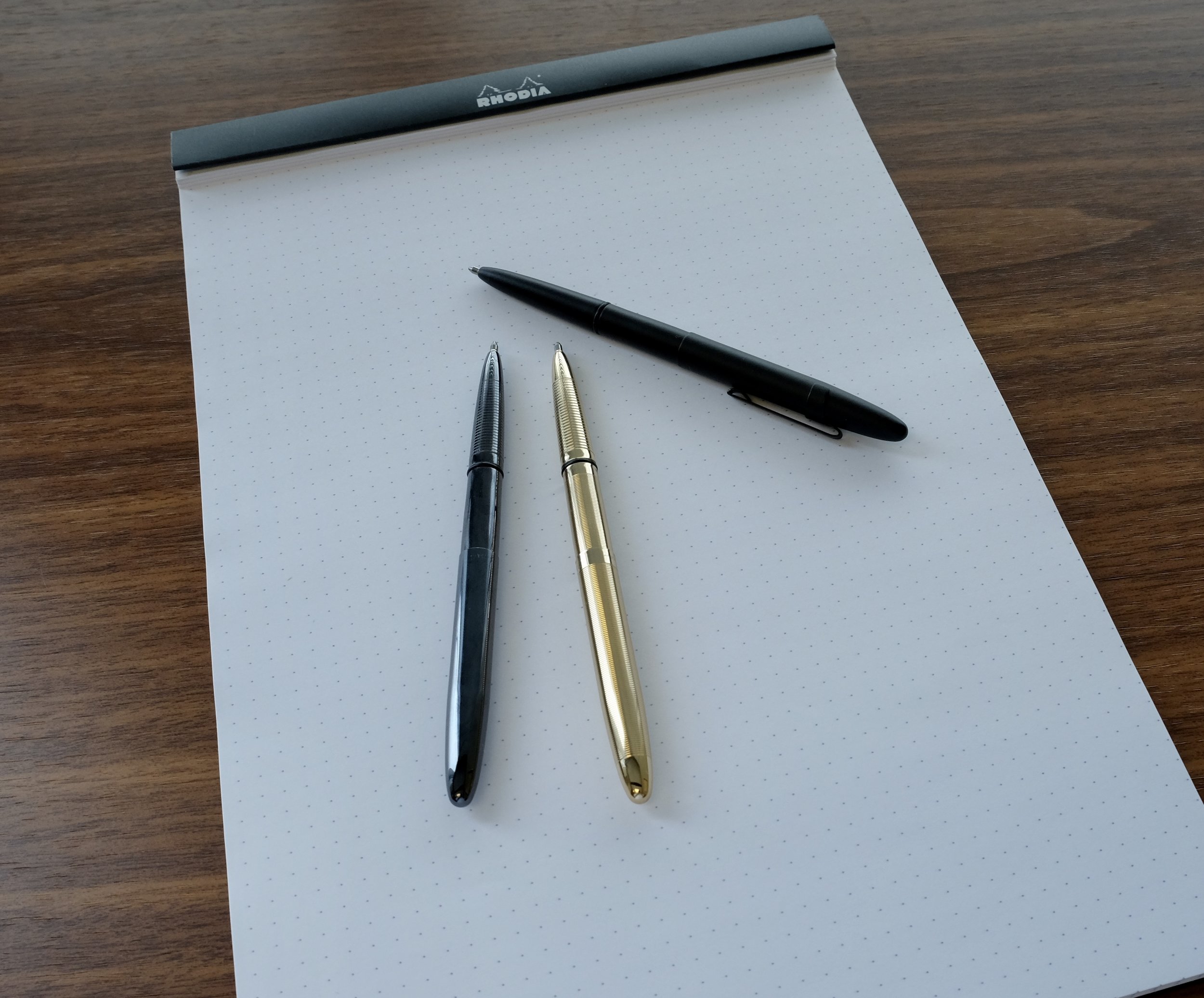
Fisher Space Pen refills come in two tip sizes: fine and medium. Here, the Titanium Nitride pen (far left) has a blue "fine" refill, while the other two have black "mediums." 

The Fisher Space Pen refill is highly engineered to perform pretty much anywhere. According to the company's website, the "sealed pressurized ink cartridge performs in temperatures from -30F to +250F, underwater, in zero gravity, at any angle - even upside down!" While I've not had the opportunity to test these more extreme claims (and probably/hopefully never will), the pen does an excellent job of writing on multiple surfaces - including the Field Notes Expedition notebooks - and, yes, it does write upside down, making it a convenient choice for situations when you don't necessarily have a flat writing surface available. The refill writes like a traditional oil-based ballpoint, and the only drawback I've found is that the tip can develop a bit of crust if you let the pen sit unused for too long. (A simple wipe or scribble normally solves the problem.) 

A Fisher Space Pen writing sample. While there's not a huge difference, I prefer the fine. 

Bullet or Click Pen? 

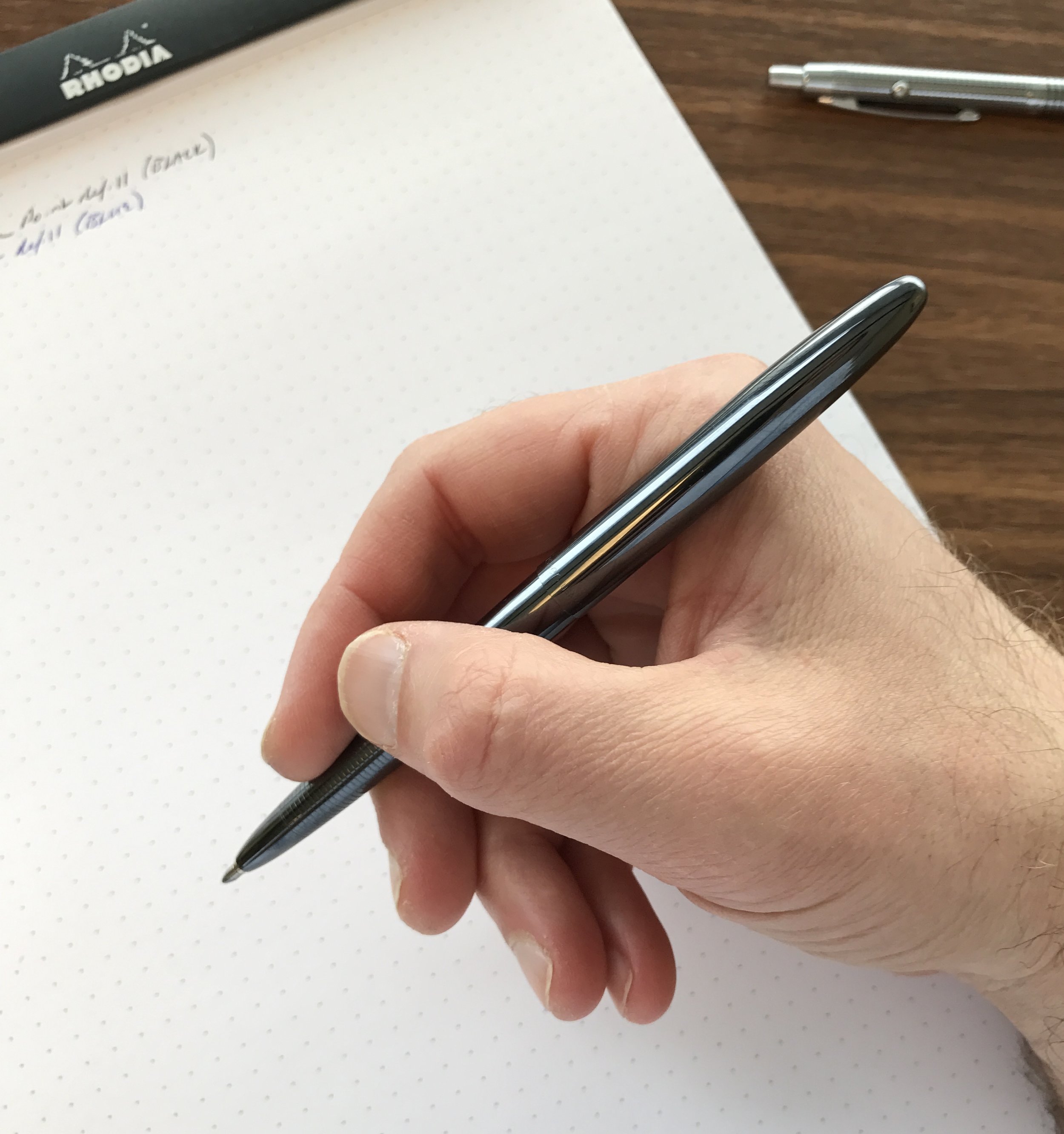
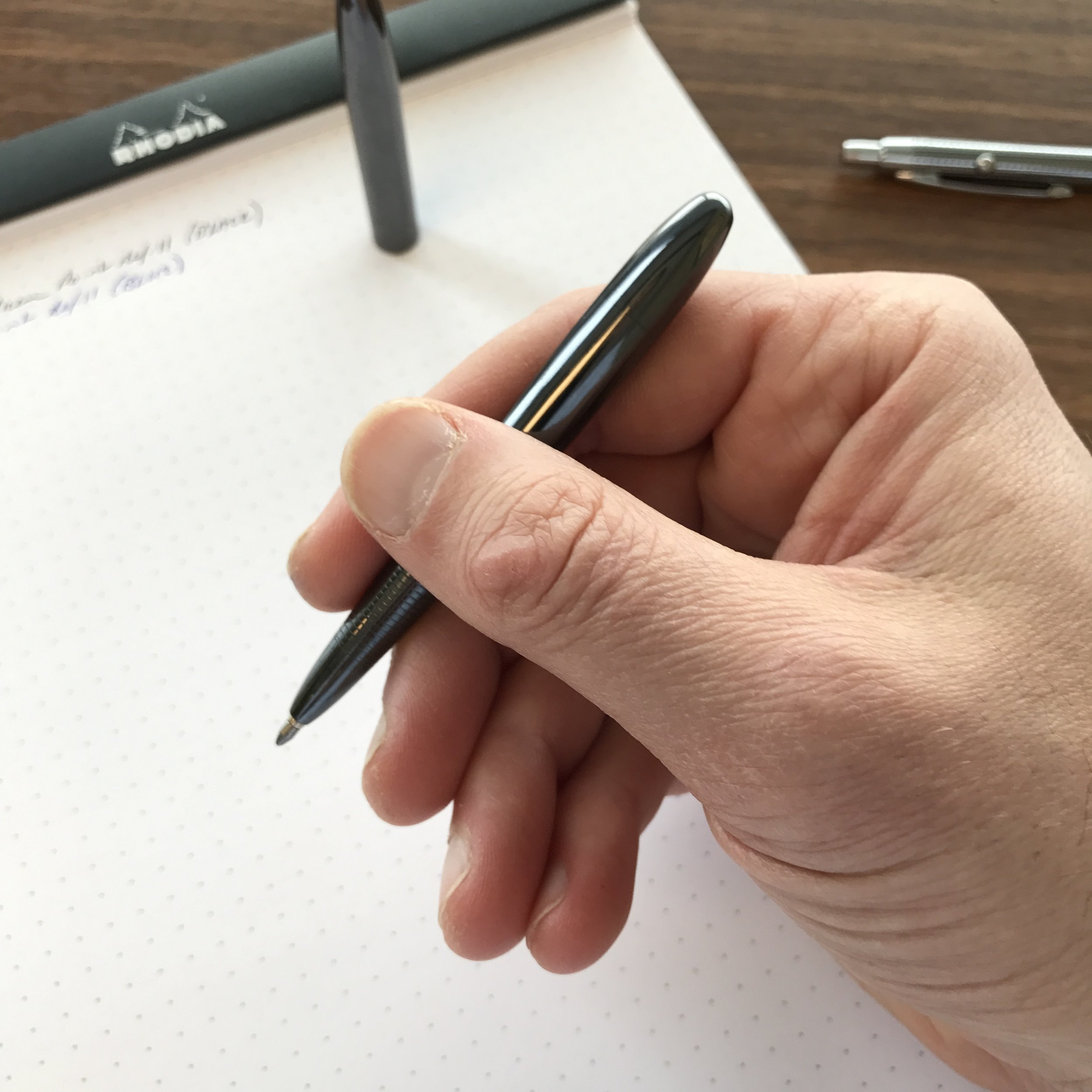
The Fisher Space Pen Company sells multiple models of the Space Pen, but the most popular is the ubiquitous "bullet pen," available in a variety of finishes. I own three: the classic matte black, the black titanium nitride, and the brass. When closed, these pens are tiny, and slide easily into a pocket. When posted, they expand to a reasonable length, which allows them to be used for most types of writing. One thing I will note - the bullet pens aren't particularly scratch or dent-resistant. Given how small they are, I've dropped mine on hard surfaces several times, and they are prone to developing small dents in the tips. (The dents aren't severe, and don't show up very well in the photographs.) 

My three Fisher Space Pen Bullets, from left: Titanium Nitride, Brass, and Matte Black (with clip). Check out the gallery below for additional images of the pens extended, in hand, etc. 

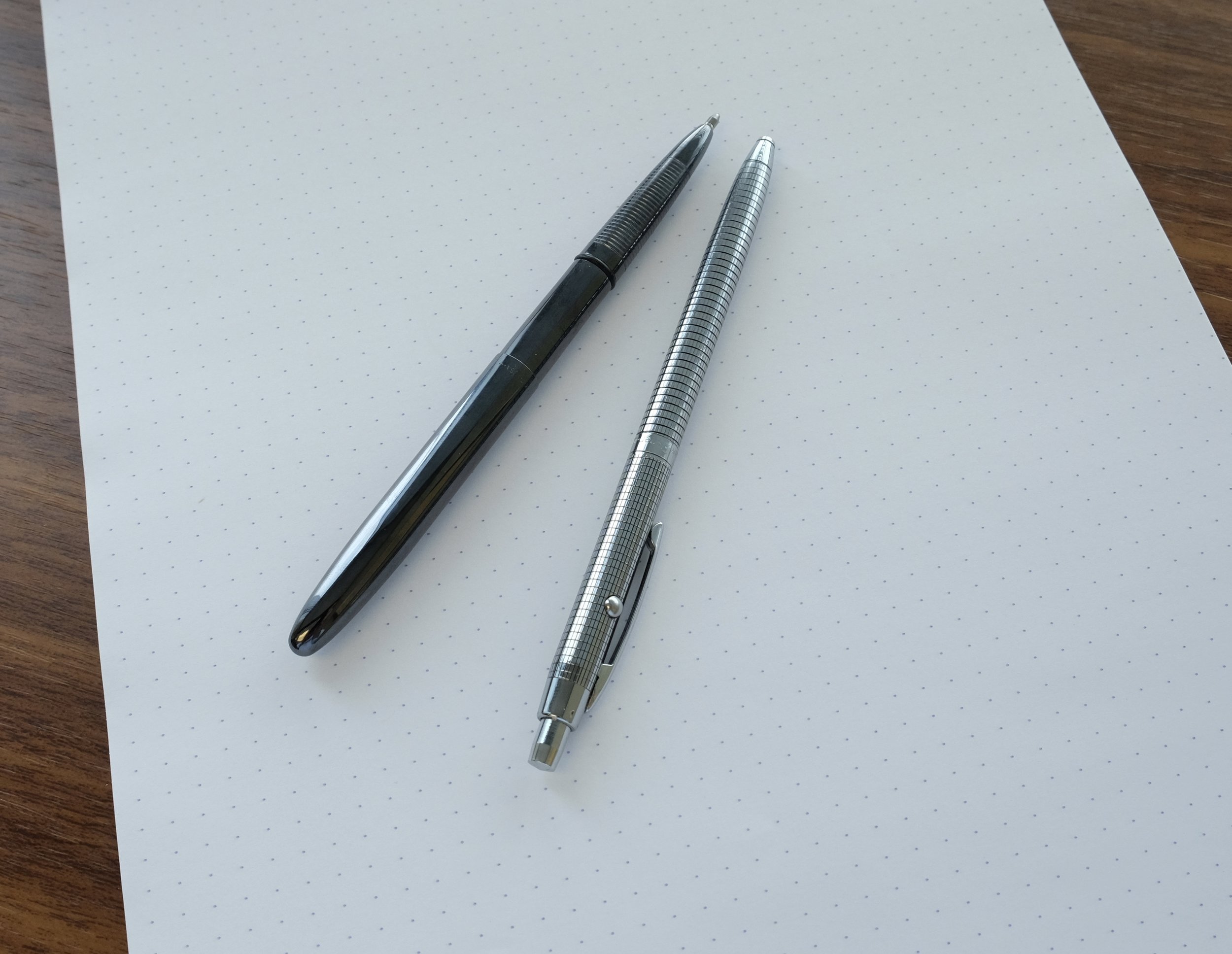
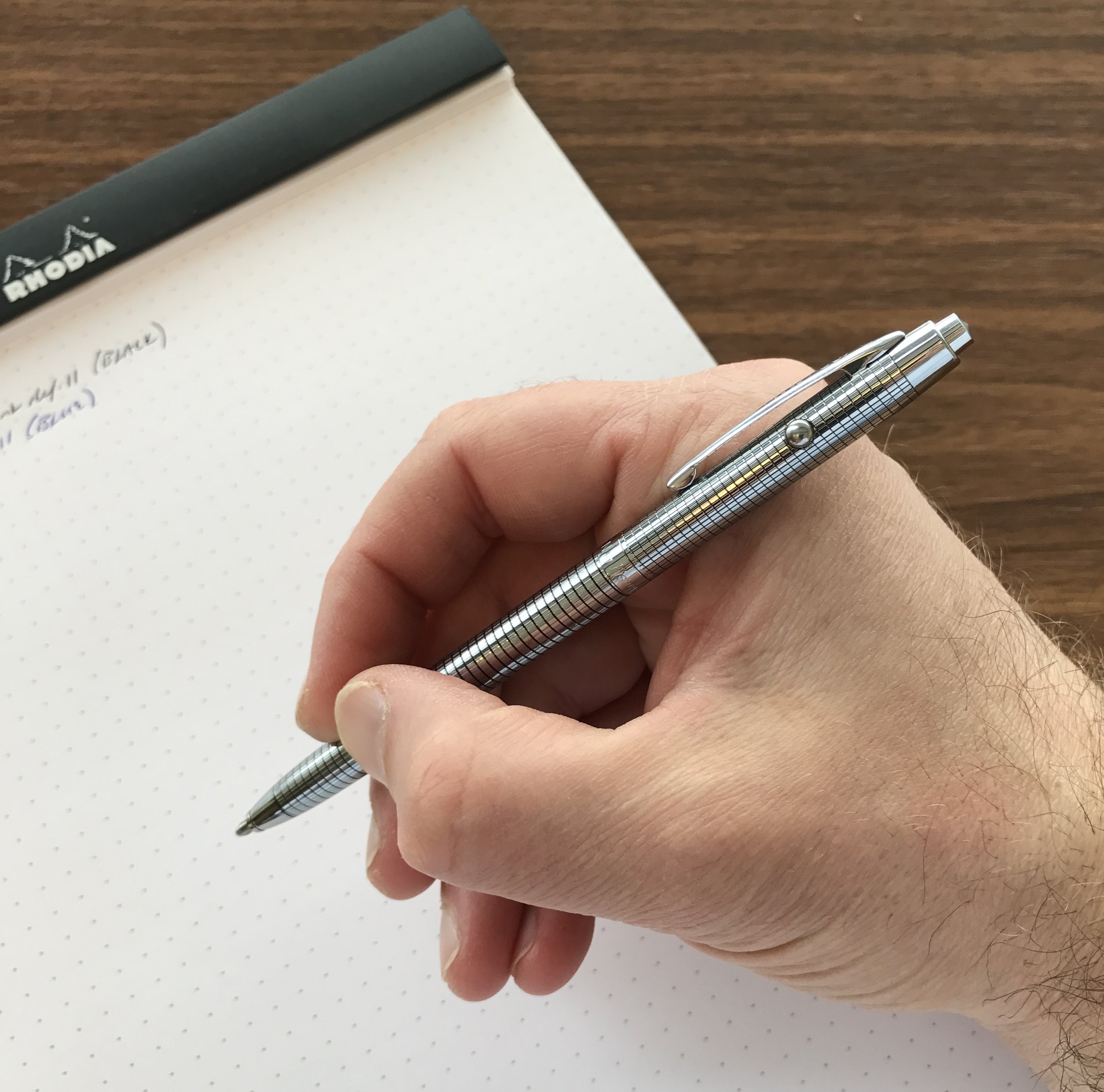
My favorite Fisher Space Pen, however, is the original Astronaut Space Pen, which according to the company is essentially the same pen as the one taken to the moon in 1969. I own the "Shuttle" version with the black grid design. I love the click mechanism on this pen, which has a button on the side that you use to retract the tip. It's a slim pen, similar to a classic Cross Century II, but it has added length that makes it a better pen for extended notetaking in meetings, etc.   

The Fisher Space Pen Astronaut "Shuttle" pen with the black grid design. Aesthetically, this is one of my favorite models of the Space Pen. 

View fullsize Fisher Space Pen Bullets Extended
View fullsize Titanium Nitride Bullet and Astronaut Black Grid Extended
View fullsize Extended Bullet in hand
View fullsize Unposted Bullet
View fullsize Fisher Space Pen Astronaut in Hand

Takeaways and Where to Buy

Like I said, Fisher Space Pens are an easy recommendation if you're looking for a relatively inexpensive, write-anywhere option. Personally, I use the Astronaut pen more than the Bullets on a day-to-day basis, but the latter are a fixture in my travel bag when I'm on the road due to their compact size. As long as you can tolerate ballpoints, the refill is reliable and readily available in fine or medium widths either online or in most brick-and-mortar office supply stores. (Most Fisher Space Pen refills also come with a small plastic adapter that allows you to use them as Parker-style refills in other pens, if you enjoy the refill but find the Fisher Space Pen bodies too small.) The pressurized Fisher refills can be somewhat expensive, but they seem to last longer than a typical ballpoint refill. 

UPDATE: As of 2024, we now carry a selection of Fisher Space Pens in our own shop, including the Bullet Pens, the original AG7 Astronaut Pens, and the Shuttle Pens, along with a wide array of Fisher Space Pen refills.   

Further Reading: If you like the Fisher Space Pen "bullet" form factor, but find yourself losing a lot of Space Pens, check out my review of the Pokka Pen, which was designed as a solution to this specific problem. 

Disclaimer: I purchased the pens featured in this review with my own funds, for my own collection.

In Pens Tags Pen Review, Fisher Space Pen
7 Comments
← Newer Posts Older Posts →
Store Hours and Location
Visit the T.G.S. Curated SHOP
Updated "Best Pens" Guide
On the Paper Trail Podcast
TGS x Roterfaden TGS_25
Hierarchies of Fountain Pen Friendly Paper

Join Our Patreon!
Subscribe to the TGS E-mail List

Featured Posts

Featured
Cover On the Paper Trail Intro Clip.jpeg
Dec 3, 2025
Introducing "On the Paper Trail," a New Podcast/Video Collaboration with Lisa Vanness of Vanness Pens!
Dec 3, 2025
Dec 3, 2025
Iro-Utsushi-Fine-Dip-Pens.jpeg
Oct 1, 2025
The Pilot Iro-Utsushi Dip Pen (and in General, Simple vs. Fancy Dip Pens)
Oct 1, 2025
Oct 1, 2025
Levenger-Annotation-Pad.jpeg
Sep 20, 2025
Five Boutique Paper Brands I'm Watching Closely and Why
Sep 20, 2025
Sep 20, 2025
The Gentleman Stationer RSS

© Digital Divide Media, LLC, 2014-present.

All content is the exclusive property of Digital Divide Media, LLC, d/b/a The Gentleman Stationer, including “The Gentleman Stationer” website and trademark, and should not be reproduced without express written permission.  All rights reserved.

All content containing paid advertising, affiliate links, or sponsored content will be plainly disclosed by a disclaimer when/if featured.

Contact Information

Store Shipping Policy and Return Policy

Privacy Policy

Cookie Policy

Terms and Conditions

Powered by Squarespace