• Blog
  • Shop
  • Podcast
  • Resources
  • About
  • Archive
  • Contact
  • Cart
  • Sign In My Account
Menu

The Gentleman Stationer

Vintage Living in the Modern World.
  • Blog
  • Shop
  • Podcast
  • Resources
  • About
  • Archive
  • Contact
  • Cart
  • Sign In My Account

From Left: Sailor Sapporo Mini; Sailor Pro Gear Color; Sailor Pro Gear Imperial Black.

Pen Review: Sailor Pro Gear Sapporo Mini

December 1, 2018

Sailor discontinued the "pocket” version of its popular Pro Gear fountain pen, the Sapporo Mini, a few years ago, prompting a run on retailers’ remaining stock and, from what I recall, somewhat of a frenzy at a recent Atlanta Pen Show when a former Sailor distributor showed up with a handful of pens she was looking to unload. What many people don’t realize, however, is that Sailor continues to make these pens for the Japanese market, including for Nagasawa department store’s private label, “PenStyle." Fans of Sailor will know that Nagasawa has a close relationship with the pen company, and that Sailor private labels dozens of “Kobe Inks” for the store in addition to special edition pens.

The Nagasawa cap finial (left) compared against the standard Sailor design (right). Note that the yellow used in the Sapporo Mini is a deeper, mustard yellow, which I prefer to the brighter yellow acrylic used on the Pro Gear Color.

The differences between a standard Sailor Sapporo Mini and the Pen Style version are mostly cosmetic. The cap band is engraved “PenStyle Memo,” and instead of the Sailor anchor logo, the finial features a plain yellow dot bordered in black. While the nib is stamped “Sailor” at the bottom, leaving no doubt who made it, the primary artwork is an engraved dragon with “Kobe” and “1882” inscribed over it - a reference to the founding date of Nagasawa, from what I understand.

A different style of nib engraving, but you still know it’s a 14k Sailor nib, meaning that it’s stiff as a nail but quite smooth.

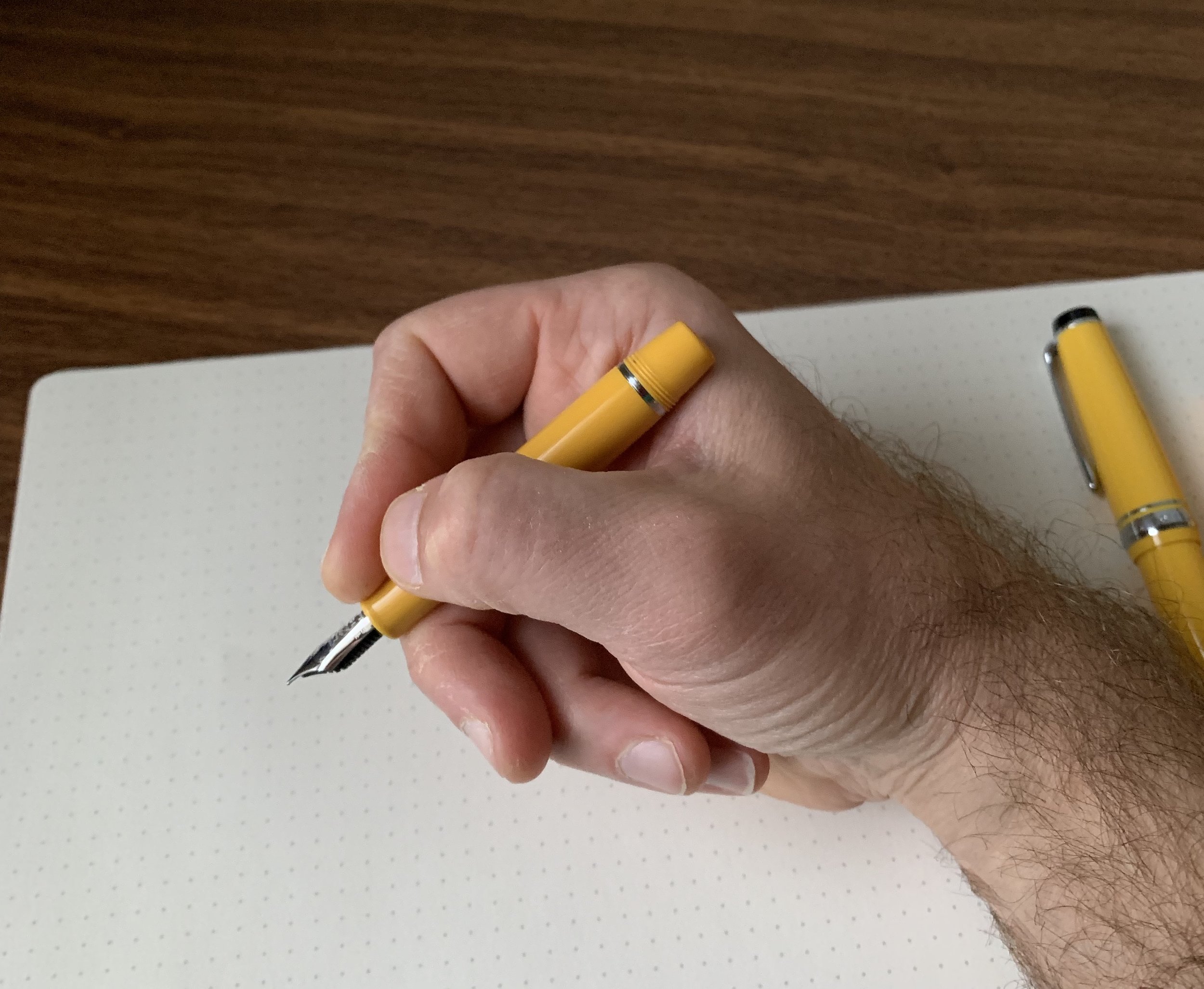
You all know that I love the standard Pro Gear, and if you’re also a fan of that pen, or a fan of the Pro Gear Slim, you’ll appreciate the Sapporo Mini as a true “pocket carry” iteration of those pens. Capped, the Sapporo Mini is tiny, fitting almost entirely inside my closed hand. Unposted, the pen feels very small and too short to be usable by almost anyone - it’s meant to be posted. The short barrel has threads at the back, allowing you to post securely, and this pen extends to almost the same length as a standard Pro Gear Slim. While it’s definitely on the smaller side, I can use it comfortably for longish periods of time.

Once this pen is posted and fully extended, it’s actually not that small (shown here compared against a standard Pro Gear).

View fullsize Sailor Sapporo Mini Posted
View fullsize Sailor Sapporo Mini Capped
View fullsize Sailor Sapporo Mini Unposted

Note that the Sapporo Mini is cartridge-only, as the barrel is too short to accept a converter. (Sailor apparently made a “mini converter” for this pen years ago, but discontinued it.) Typically, the lack of a converter option wouldn’t bother me much, since I have a bunch of cartridges lying around at any given time, but Sailor cartridges are proprietary so this ended up being a bit of a pain. I chose to stock up on cartridges of Sailor’s pigmented inks. I’m partial to the Souboku Blue-Black, but the Kiwa-Guro Nano-Black is also excellent.

Sailor’s pigmented “nano” blue-black, Souboku, has a great color that’s fairly unique. It’s water-resistant and dries quickly.

The Sailor Nano-ink cartridges have an extra little touch that I find kind of charming.

Takeaways and Where to Buy

I purchased my Sapporo Mini in yellow because, well, I have a thing for yellow pens and if yellow is an option, I’m probably going with that. The pen also comes available in red or black, with a choice of extra fine, fine, and fine-medium nibs. If you’re in the States, you can order through eBay Seller Cool Japan, where you can pick one of these up for a bit less than the price of a standard Pro Gear Slim. Cool Japan also carries a range of other Sailor/Nagasawa collaborations and other special editions, including Pro Gear Slims in custom colors like Tarumi Apricot, the Sailor 1911 Standard Clear Demonstrator with black-plated trim (referred to as the “Proske”), and the “Tequila Sunrise” Pro Gear from Sailor’s “Cocktail” series.

I keep this pen in my collection for two reasons. First, it’s a unique iteration of one of my favorite pens, the Sailor Pro Gear, and I suspect it eventually will have some value as a collectible because I don’t see Sailor/Nagasawa making this pen forever. Second, I only have one Sailor “Fine-Medium” nib in my collection, and I love this line width.

One final thought on “pocketability” - I don’t use this pen as a true “pocket pen” because it’s plastic and far from indestructible. That said, I do enjoy having a more portable version of the Pro Gear that’s very light in the shirt or jacket pocket, especially when I travel. While this isn’t a pen I ink up all the time, it’s also not one I can see myself parting with anytime soon.

Further Reading

If you like the look of the Sapporo Mini, check out my other reviews of the full-size Sailor Pro Gear fountain pens. I’ve previously reviewed the “Imperial Black” version, the Pro Gear Sky limited edition, and the “Soleil” version of the piston-filling Pro Gear Realo, which was another limited edition collaboration between Sailor and Japanese retailer Bungubox. While I’ve scaled back my collection in recent years, the Pro Gear remains one of my favorite fountain pen designs of all time.

Disclaimer: I purchased the pens featured in this review with my own funds, for my own collection. This post contains affiliate links.
In Pens Tags Sailor Pro Gear, Sailor Sapporo Mini, Kobe Nagasawa, Pen Review, eBay
Comment

Pencil Review: Dry Highlighters and Double-Ended Editing Pencils

November 28, 2018

It’s been a looong time since I’ve posted any pencil-related content around here, but pencils are something I certainly love and use a lot, as do many of my readers, so I need to make more of an effort to diversify. First up is a short piece on a category of pencils that plays a key part in my workflow: highlighting pencils, also sometimes referred to as “dryliners.” Why, you might ask? First of all, I find that they last longer than traditional ink-guzzling liquid highlighters, they don’t dry out, and I would think they’re also a more eco-conscious choice because you’re not stuffing landfills with discarded plastic bodies. Second depending on how you sharpen these pencils, you can adjust the tip size to make it narrower or broader, per your preference. The downside, of course, is lighter pigment than in traditional liquid ink, and some might find sharpening inconvenient because the core is soft, like a colored pencil. If you want to keep a point or a narrow tip, you’ll have to sharpen a lot.

The Caran d’Ache Graphicolor Highlighter/HB Combo, which combines a highlighter/dryliner pencil with a standard HB graphite half, to make notes while you highlight without switching writing implements. It’s great for when you’re reading!

“The Editor” by CW Pencil Enterprise and Caran d’Ache, as well as the more economical Milan highlighter/HB graphite combo.

Similarly, so-called double-ended editing pencils combine two different colors of graphite, traditionally blue and red. CW Pencil Enterprise, however, recently released their latest collaboration with Caran d’Ache, “The Editor,” which is a double-ended pencil featuring red and HB graphite - a more convenient combination. I haven’t quite figured out a use case for this pencil yet. I mostly prefer to edit in ink as opposed to red pencil, but Caran d’Ache’s red pigment is excellent and very visible.

Takeaways and Where to Buy

Unfortunately, those of us who are into quirky stationery items like these know that the only place to get them are via highly specialized shops. CW Pencils carries the Caran d’Ache Graphicolor HB/Highlighter combo, the Milan graphite/highlighter combo, and of course, “The Editor”. Of these three, the Milan is the one that’s most likely to make its way into my daily rotation. At $1 each, it’s a more economical choice for a workhorse than the Caran d’Ache pencils, which run a pricey $3 per pencil. I do like the editor though, and I’ll likely keep them tucked into books I’m reading for annotations. That way they’ll last longer!

Another option for highlighter pencils are Faber-Castell Textliners, which can be extremely difficult to source in the States, so I stock up on them whenever I place an order to UK retailer Cult Pens, which sells them by the box in all available colors. These also aren't double-ended pencils - they’re quite long, triangular jumbo grip highlighters that last a while, which defrays the cost a bit.

Disclaimer: I purchased the products featured in this review with my own funds, for my own use.

In Pencil Review Tags Pencils, Highlighters, Editing Pencils, Highlighter Pencils, CW Pencils
Comment

Italian Leather Notebook Covers from The British Belt Company

November 21, 2018

More excellent leather goods to show and tell! A couple months ago, The British Belt Company reached out and requested that I review one of their leather notebook covers. Not having purchased from this company before, and always looking for new manufacturers and retailers entering the stationery space, I of course agreed.

I opted for the pebbled burgundy leather option. At least nine different color options are available.

Immediately upon handing this notebook cover, I knew that it would be a hit. The cover is made from thick, full grain leather, with nicely finished edges and a suede interior. It feels great in the hand, and smells even better. (Yes, I smell all my leather.) The British Belt Company was kind enough to emboss my initials in the lower right-hand corner of the cover, which I always do if I have the option.

This notebook did ship with a lined, A5 refill, but it’s not the most fountain-pen friendly paper and devoted fountain pen users will probably want to swap in something else. A Seven Seas Writer from Nanami Paper fits perfectly, and I suspect that another A5 notebook like the Taroko Design Enigma or the Hobonichi Techo Cousin would also work.

My A5 Nanami Seven Seas Writer snug in its new home.

A comparison shot of three leather notebook covers that find their way into my daily rotation: The British Belt Company A5 (bottom), a custom One Star Leather Baron Fig Confidant Cover (middle), and the Gfeller English Kip leather cover for my Nanami Paper Cafe Note B6 (top).

Takeaways and Where to Buy

Based on what I’ve seen so far, The British Belt Company makes high quality leather goods, and I can add this notebook cover to my list of recommendations, alongside One Star Leather and other quality makers. You can purchase this product, along with a wide range of leather belts, bags, and other accessories, directly from The British Belt Company via their website or via their Etsy shop (which has slightly lower prices). The Italian Leather Notebook Cover, plus refill, is currently priced between $80-90, which is about standard for a leather notebook cover of this size and quality. I’ve also decided to include this product in the TGS 2018 Holiday Gift Guide. Be sure to check it out, especially since many of the retailers featured in the guide will be running Black Friday/Cyber Monday sales in the coming days!

Disclaimer: The British Belt Company sent me the notebook cover featured in this review at no charge, for review purposes. This post contains affiliate links.
In Accessories Tags Notebook Cover, Leather, British Belt Company
Comment

Pen Review: Graf von Faber-Castell Classic

November 14, 2018

I firmly believe that Graf von Faber-Castell makes some of the most beautiful stationery items in the world. The high-end, luxury arm of the global Faber-Castell stationery empire, their stated goal is to “embody ‘Luxury in Simplicity’ by combining selected materials, functionality and superb aesthetics.” While I’m not yet sure that the overall design of their pens works for me from a purely functional perspective, I can’t argue with the beauty and the quality.

At first I wasn’t sure how I felt about the two-toned gold nib, but ultimately I think it works paired with the dark brown wood.

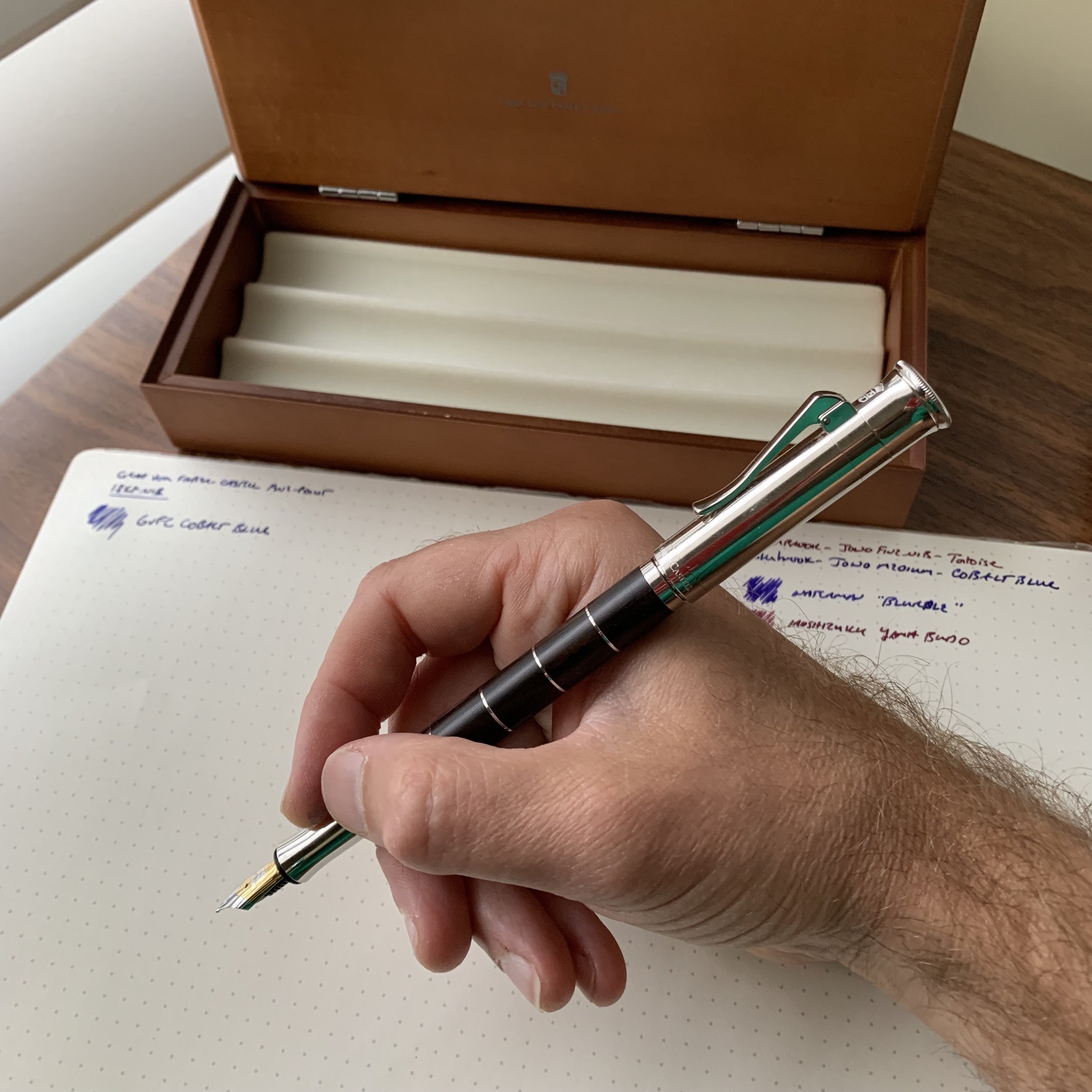
The GvFC Classic, which I’ll review here, is the company’s flagship pen. I wouldn’t call the design “simple” - there’s a lot of different design elements going on - but at the same time GvFC has made an elegant writing instrument that doesn’t lose its functionality as a pen that you could use every day. And the nib… I’ve written before about how I think Faber-Castell makes some of the best stainless steel nibs available, including at relatively low price points. The 18k gold fine nib on the pen I tested writes even better, and has a surprising bit of spring to it. You won’t get much line variation, as it’s still a relatively stiff 18k nib, but a touch of bounce makes for a smooth and comfortable writing experience.

As with most pens made from wood, each Graf von Faber-Castell Classic and Classic Anello is going to show variations in the wood grain, making each pen unique.

As with most pens made from wood, each Graf von Faber-Castell Classic and Classic Anello is going to show variations in the wood grain, making each pen unique.

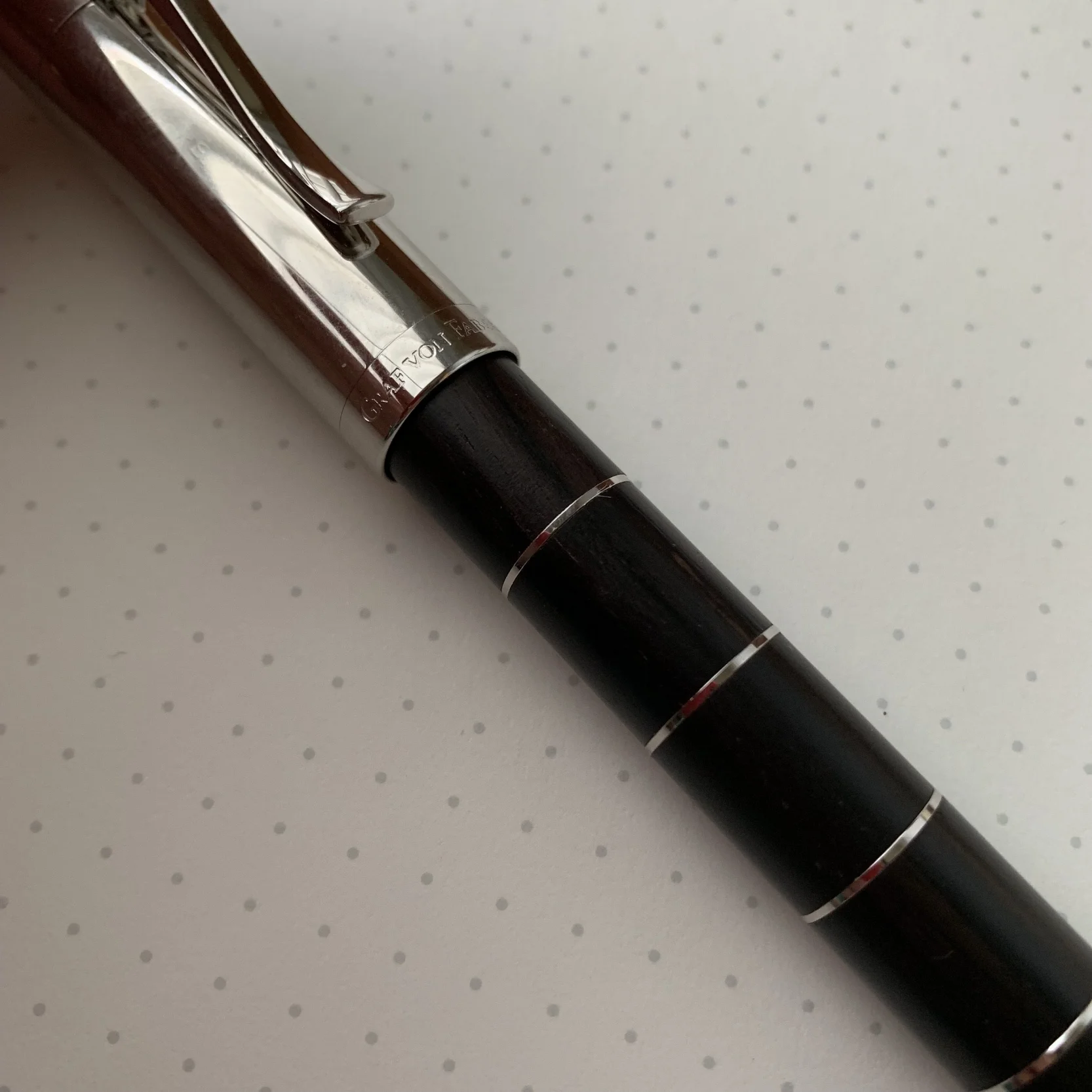
The two core elements of the Classic are Graf von Faber-Castell’s signature cap and the wood used to make the barrel. The different versions of the Classic are named to reflect the various woods used, including ebony, pernambuco, snakewood, grenadilla, and macassar. The standard Faber-Castell Classic features solid wood barrels with a ribbed texture, while the “Classic Anello” model, pictured here, features wooden barrels with inlaid metal rings.

The coin-edging on the top of the cap is one of my favorite details on this pen.

In my opinion, along with the nibs, the caps on Faber-Castell pens set them apart. The Graf von Faber-Castell Classic features a platinum-plated, solid metal cap that looks sort of like a chimney or old-fashioned smokestack that flares out at the top with coin edging. It’s similar, but not identical, to the cap used on Graf von Faber-Castell’s iconic - and somewhat ridiculous - “Perfect Pencil”. Even on most of their lower-end pens, Faber-Castell uses sturdy, spring-loaded clips that attach well to pen cases, bags, and shirt pockets. (Yet another sign that these pens aren’t just eye candy, but meant to be used.) The downside to these caps, however, is the weight, which brings me to….

What About Posting…?

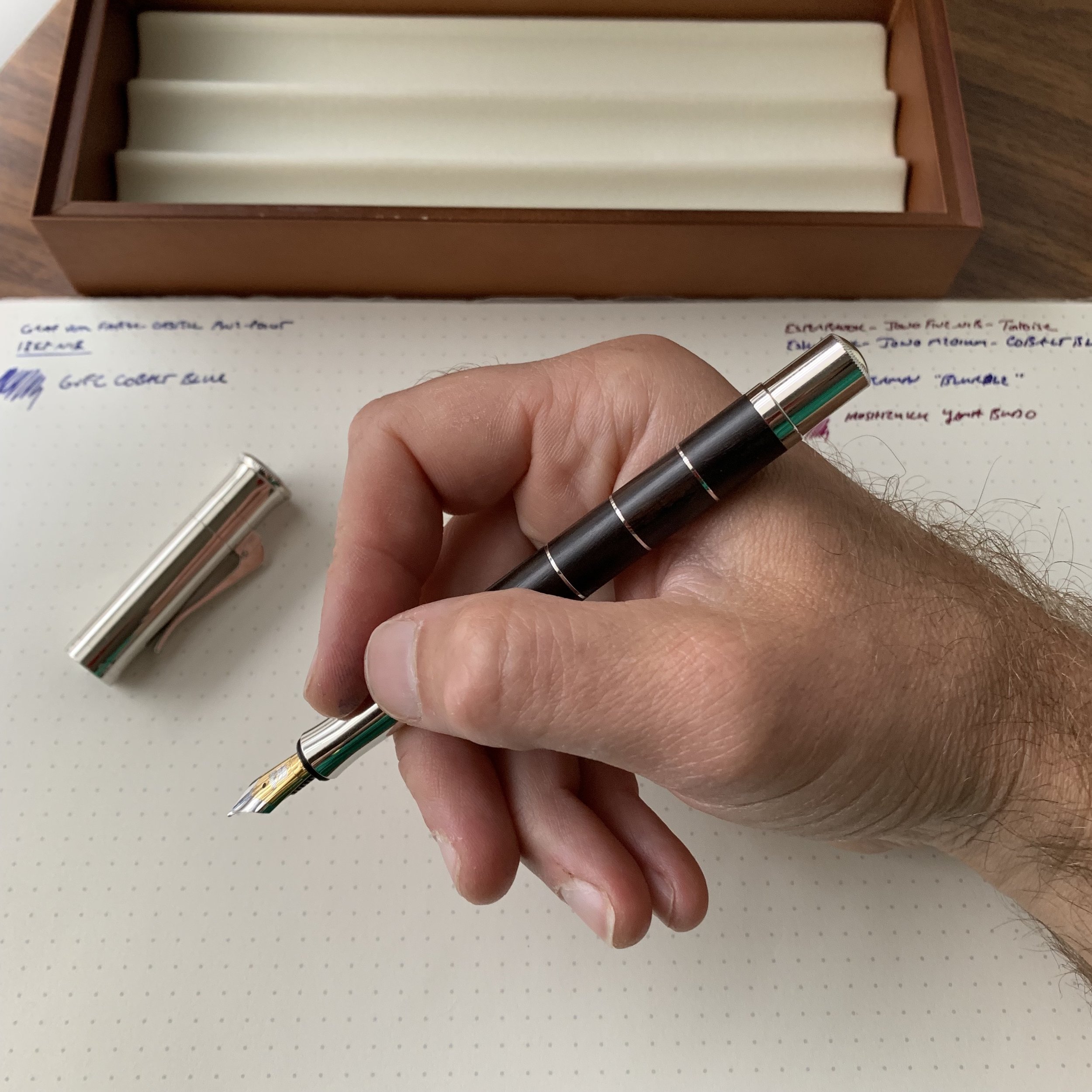
Finally, the big potential drawback for me, and the reason why, at least to date, I don’t have a Graf von Faber-Castell Classic in my collection: this pen doesn’t post. (Technically, the pen will post, but the weight of the metal cap on the back end renders the pen far too heavy to make posting comfortable for even short writing sessions.) On the flip side, for such a slender pen, the Classic feels perfectly balanced and comfortable unposted. The combination of wood/metal construction, a long grip section, and a bit of added length helps in this regard. Prior to an extended test-run with the Classic, I had thought that the Classic would be too slim, and that I’d ultimately conclude “nice pen; not for me.” That’s not the case. I’m still considering this pen, especially now that I know they have a dark-trim Macassar version, but I need to get comfortable with the fact that I won’t be able to post it.

View fullsize Graf von Faber-Castell Classic Unposted
View fullsize Graf von Faber-Castell Classic Posted

Takeaways and Where to Buy

I’m a huge fan of standard Faber-Castell products, and, as I expected, I also enjoyed my first experience with the Graf von Faber-Castell Classic. In fact, I would say that if the ability to post your pens is not a must-have feature, a Classic is a no-brainer addition to any high-end pen collection. The 18k nib writes exceptionally well, and the intricate combination of wood and metal in the design, especially the GvFC signature clip and cap, render Graf von Faber-Castell pens unlike anything else on the market.

Pricing on the Graf von Faber-Castell Classic typically runs from $400-500. The Classic Anello Grenadilla, as pictured here, is priced at $458 at Appelboom, based on the current exchange rate. While certainly an expensive pen, the Classic sits on the lower end of the pricing spectrum for luxury brands of this quality. Site sponsor Appelboom, who loaned me this pen for review, carries the full range of Graf von Faber-Castell products.

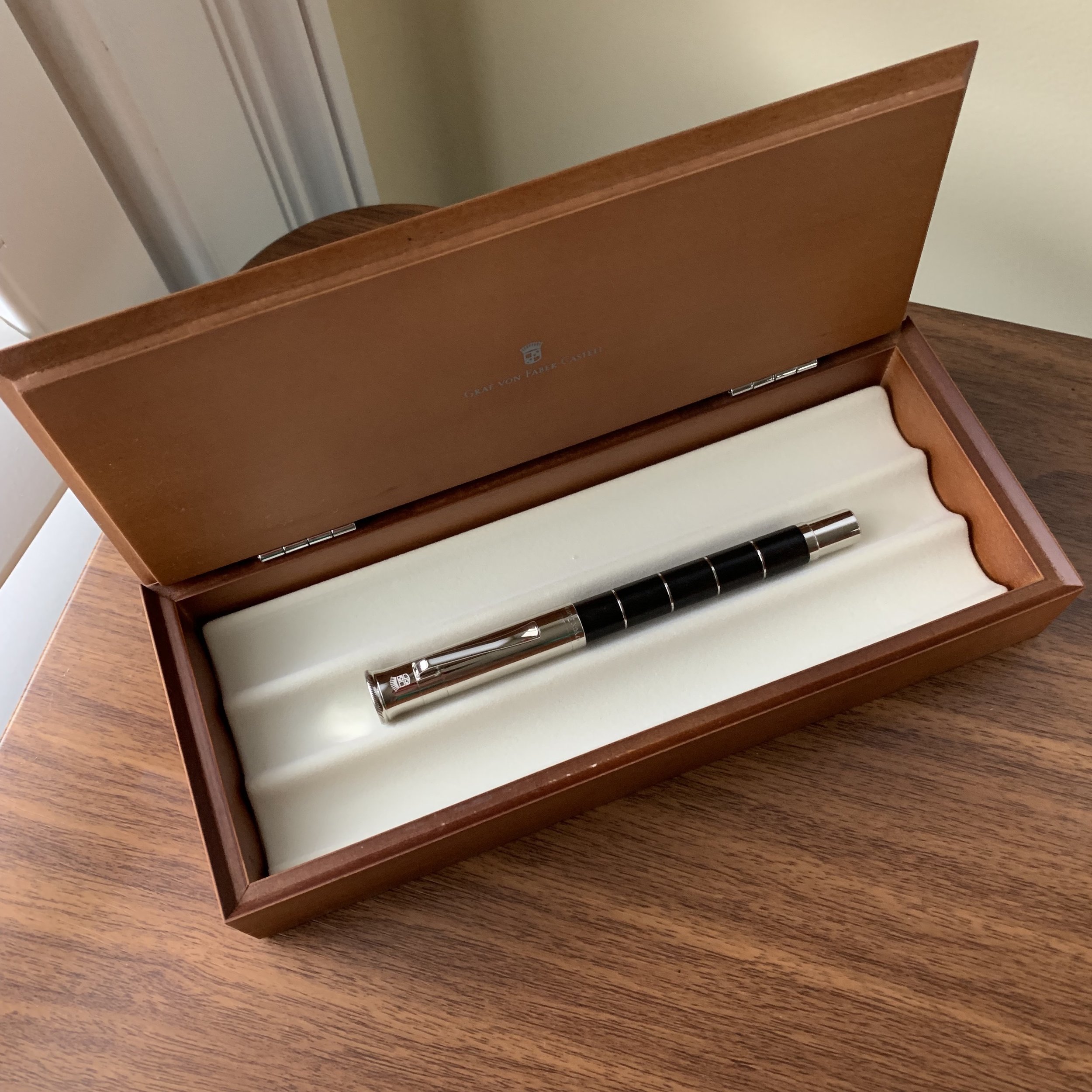
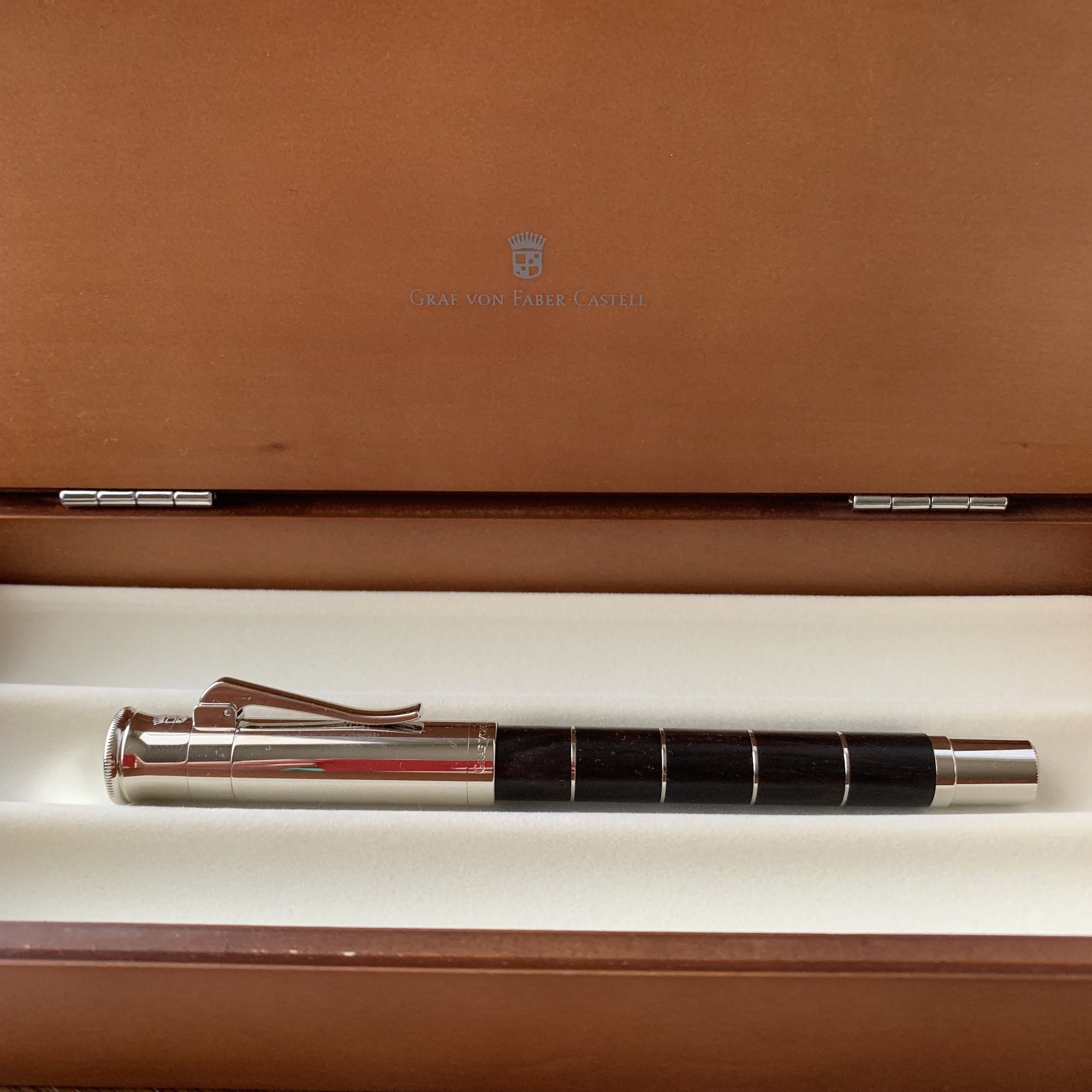
Did I mention that the packaging and presentation on GvFC products are top notch? A few more pictures are shown below, including the presentation box which doubles as a three-slot pen case.

View fullsize Graf von Faber Castell Logo on Presentation Box
View fullsize Graf von Faber-Castell Classic in the Presentation Box
View fullsize GvFC Classic Anello, Grenadilla
View fullsize GvFC Classic Anello Grenadilla, in Presentation Box

Further Reading

I’ve recently reviewed several Faber-Castell pens, including the E-motion Pure Black and the Loom, and both pens have remained fixtures in my rotation. They are also significantly less expensive than the Graf von Faber-Castell pens, demonstrating that you can get the same Faber-Castell quality for less money. Their ink is also excellent.

Disclaimer: The pen featured in this review was loaned to me by Appelboom for review purposes. This post contains affiliate links.
In Pens Tags Graf von Faber-Castell, Appelboom
Comment
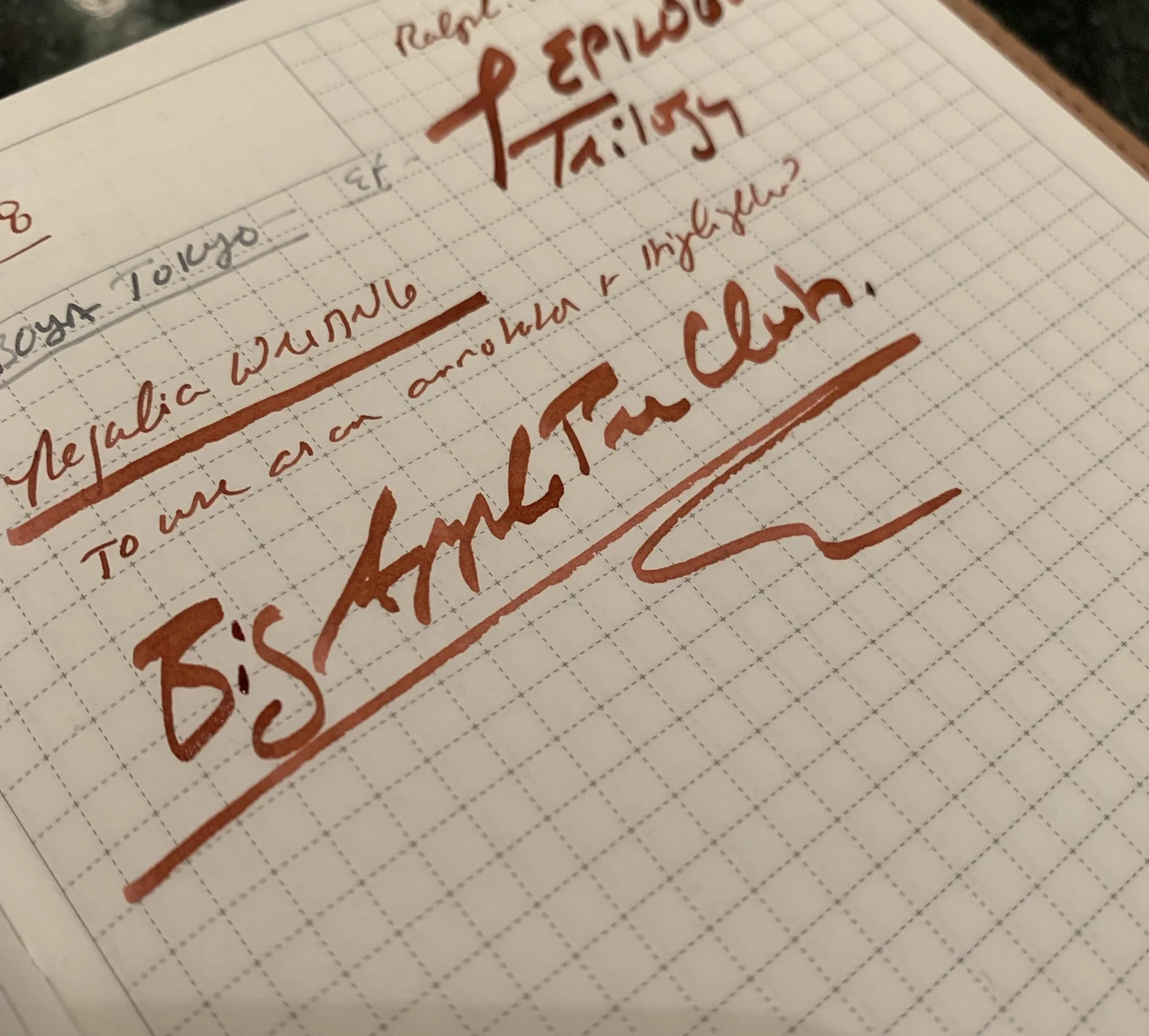
A sample of the different line widths that are possible with the Regalia Writing Labs “Epilogue” nib!

A sample of the different line widths that are possible with the Regalia Writing Labs “Epilogue” nib!

NYC Trip Recap: Big Apple Pen Club, CW Pencils, & More!

November 10, 2018

November has always been a huge travel month for me. In addition to the start of the holiday season here in the U.S., I typically have at least two conferences I’m required to attend, and everyone at the office seems to shift their projects into overdrive in an (often futile) effort to get them done by the end of the year. On the bright side, I get to spend a lot of time in New York, a city I love and which is chock-full of stationery enthusiasts and, increasingly, boutique stationery stores. I’ve written before on the shops I frequent, and not much has changed, other than a planned trip to the new Goods for the Study location over on West 8th Street before I take off tonight.

My Musubi journal and pen case, as well as my CW Pencils package (tastefully wrapped, as always), and some Hi-Tec-C Coleto refills and .38mm Uniball Jetstreams I picked up at Kinokuniya.

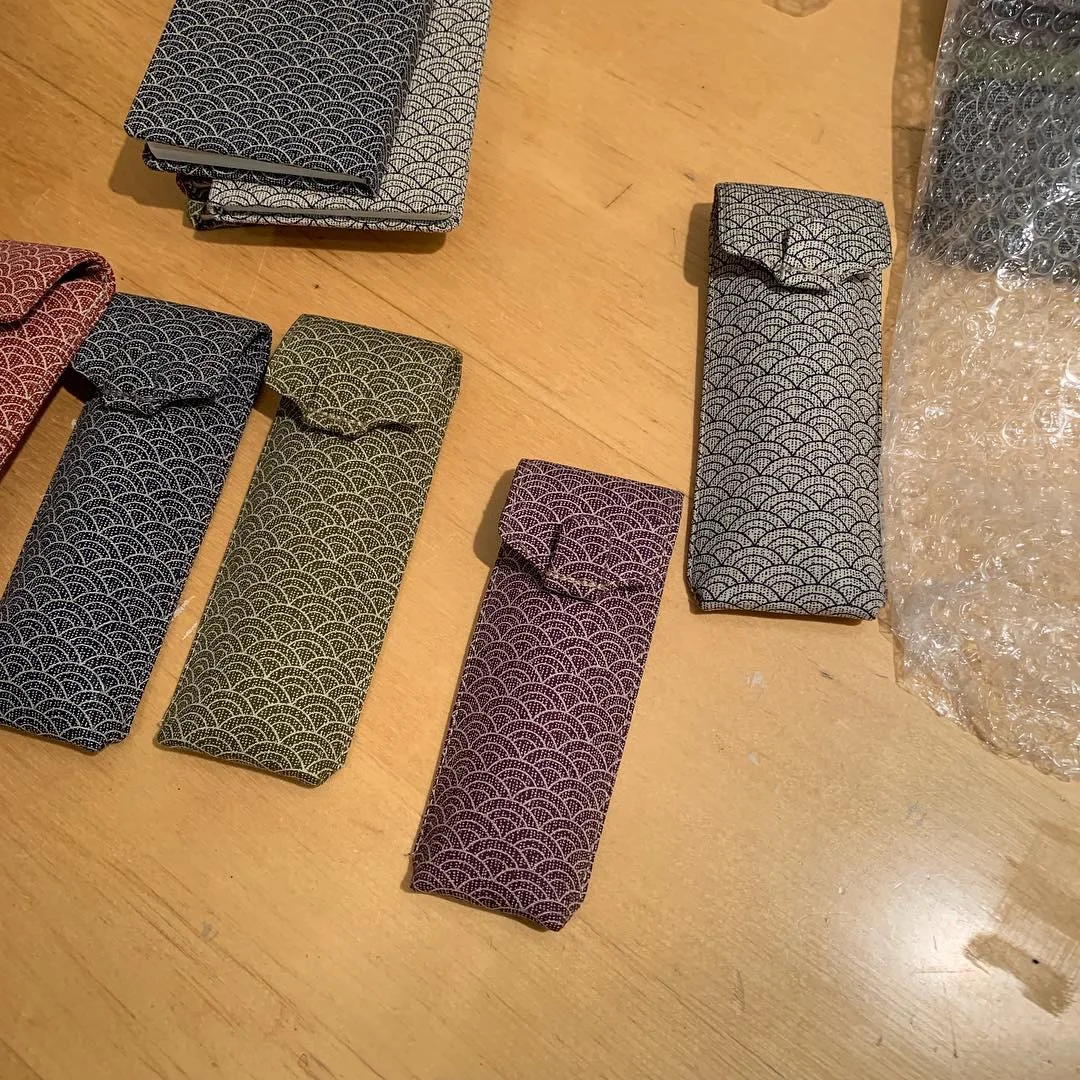
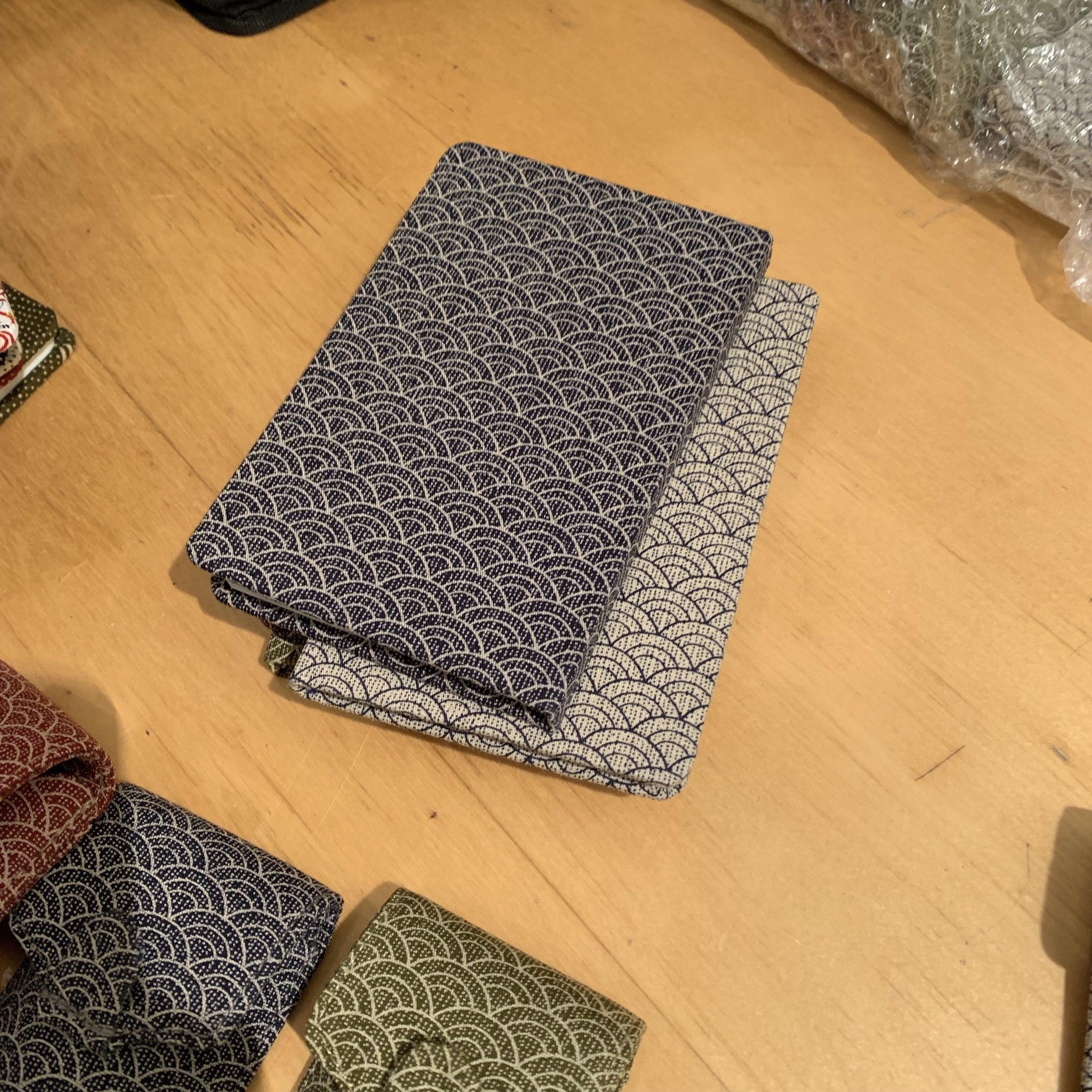
On this trip, however, I unintentionally timed my travel to coincide with the November meeting of the Big Apple Pen Club, a group of enthusiasts from the New York, New Jersey, and Connecticut-area who gather once a month to talk pens, share their latest finds, and even host speakers and guests from within the pen industry. Within minutes of my arrival, cases were opened, pens were on the table, and what I’d consider a mini-pen show ensued. To make matters worse (for my wallet), Daryl of Atelier Musubi was visiting from Singapore, and brought a selection of his journals and pen cases made from Japanese fabrics. I purchased an “Edo” journal in the “Iroha” pattern, as well as an oversized two-pen case in the Seigaiha “wave” pattern and natural fabric. I managed to stay away from Yoshi Nakama’s hand-turned pens, because I knew that wouldn’t end well!

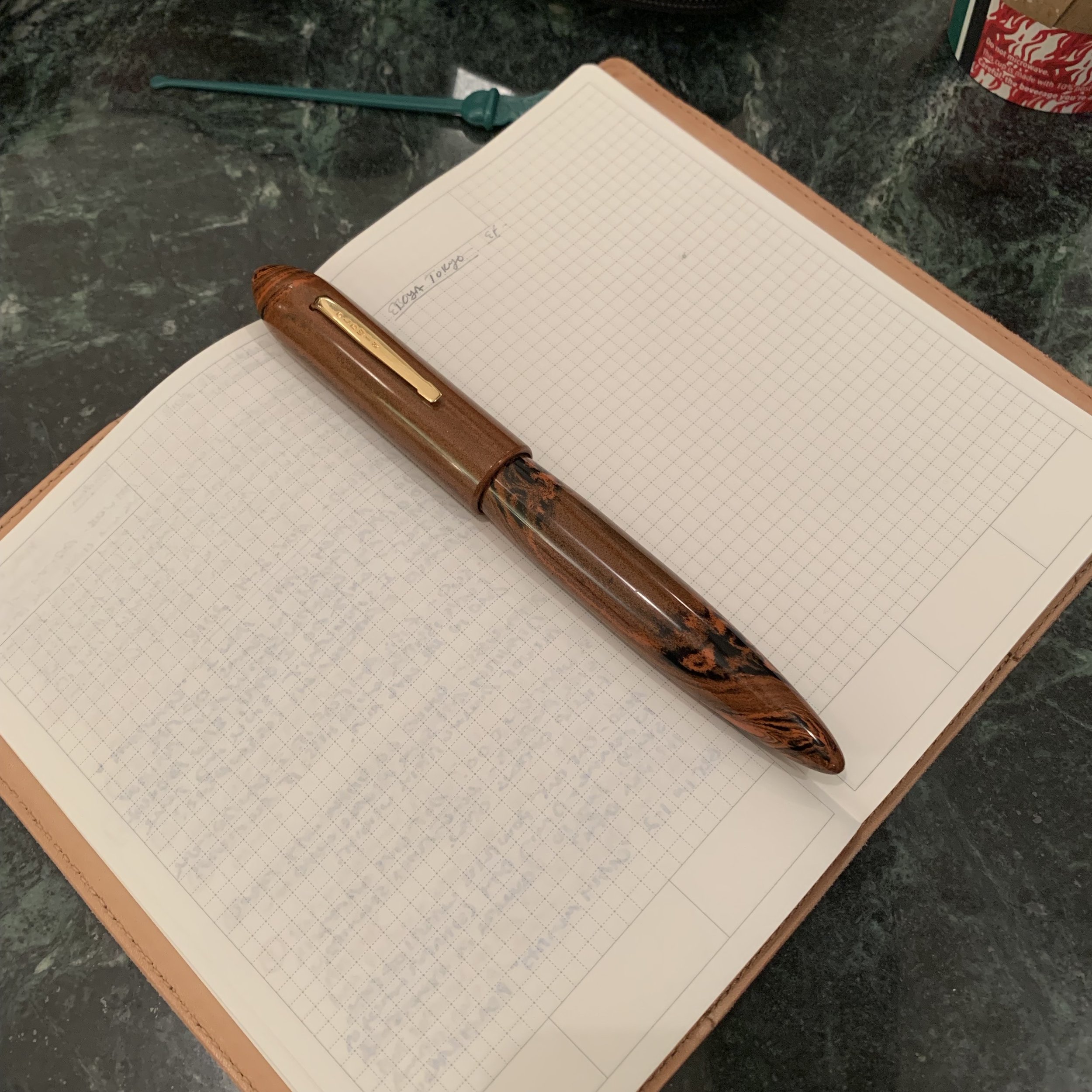
A pair of Oldwin pens in Ebonite and Arco celluloid.

View fullsize Oldwin Oversize in Ebonite
View fullsize Oldwin Oversize Unposted in Hand!
View fullsize Oldwin Oversized Nib
View fullsize Musubi Pen Cases
View fullsize Musubi Journals
View fullsize More Musubi Journals!

And, like all pen gatherings, I came across several items to add to my “must-have, eventually” list. An Oldwin pen, from Mora Stylos in Paris, remains firmly on the list, after handling my friend Dan’s oversized ebonite version that he acquired from M. Mora at this year’s Tokyo Pen Show. Oldwin pens feature a variety of rare and unique materials, particularly celluloid and ebonite, and can only be purchased at retail directly from Mora Styles, though Sarj Minhas sometimes has a handful of pens for sale at shows. I also had the opportunity to play around with an “Epilogue” nib from Regalia Writing Labs (Ralph Reyes), and believe it or not, I think I could find quite a practical use case for this nib for highlighting and annotation. (So, of course, I’ll have to buy one if they’re ever in stock!)

The Regalia Writing Labs “Epilogue” Nib, on a unique pen from Kasama in the Philippines that Dan obtained courtesy of Leigh Reyes.

A full shot of the Kasama demonstrator - I really hope these become available internationally soon! (And I love their logo!)

I made a quick Friday night trip downtown to CW Pencil Enterprise, where I stocked up on annotation pencils I had run out of, and picked up some scratch-’n-sniff stickers for my daughter. If you’ve never visited the sticker boutique in the back, you need to! Today, I’m off to explore what else NYC has to offer, including Goods for the Study, Muji, and perhaps the Apple Store to test out the new iPad Pro and the supposedly new-and-improved Apple Pencil 2.0 I’ve heard so much about.

If you ever find yourself in New York City on the second Thursday of the month, consider dropping in on a meeting of the Big Apple Pen Club. As with most circles in the pen community, it’s a welcoming group, and this experience made my trip!

Disclaimer: This post contains affiliate links.
In Travel Tags New York City, Travel, Stationery Tour, Musubi, Oldwin, Big Apple Pen Club
3 Comments
← Newer Posts Older Posts →
Store Hours and Events
Shop T.G.S. Online
Updated 2026 "Best Pens" Guide
No results found
On The Paper Trail: Live In Nashville Event Tickets Now Available!
TGS_25 Roterfaden Restock Notification
Hierarchies of Fountain Pen Friendly Paper

Join Our Patreon!
Subscribe to the TGS E-mail List

Featured Posts

Featured
Graphilo-Kobeha-Paper.jpg
July 11, 2026
Paper Review: Graphilo by Kobeha
July 11, 2026
July 11, 2026
Pilot-Custom-Heritage-92.jpg
June 6, 2026
Workhorse Pens: Pilot Custom Heritage 92 Fountain Pen
June 6, 2026
June 6, 2026
Kakimori-Inkstand-Before.jpeg
May 30, 2026
Japan Trip Journal: A Visit to Kakimori, Including Custom Notebooks and the InkStand!
May 30, 2026
May 30, 2026
The Gentleman Stationer RSS

View Cart

© Digital Divide Media, LLC, 2014-present.

All content is the exclusive property of Digital Divide Media, LLC, d/b/a The Gentleman Stationer, including “The Gentleman Stationer” website and trademark, and should not be reproduced without express written permission.  All rights reserved.

All content containing paid advertising, affiliate links, or sponsored content will be plainly disclosed by a disclaimer when/if featured.

Contact Information

Website Terms and Conditions

Store Shipping Policy and Return Policy

Privacy Policy and Cookie Policy

Accessibility Statement

Powered by Squarespace