Kaweco Paradise Blue: A Different Kind of Turquoise

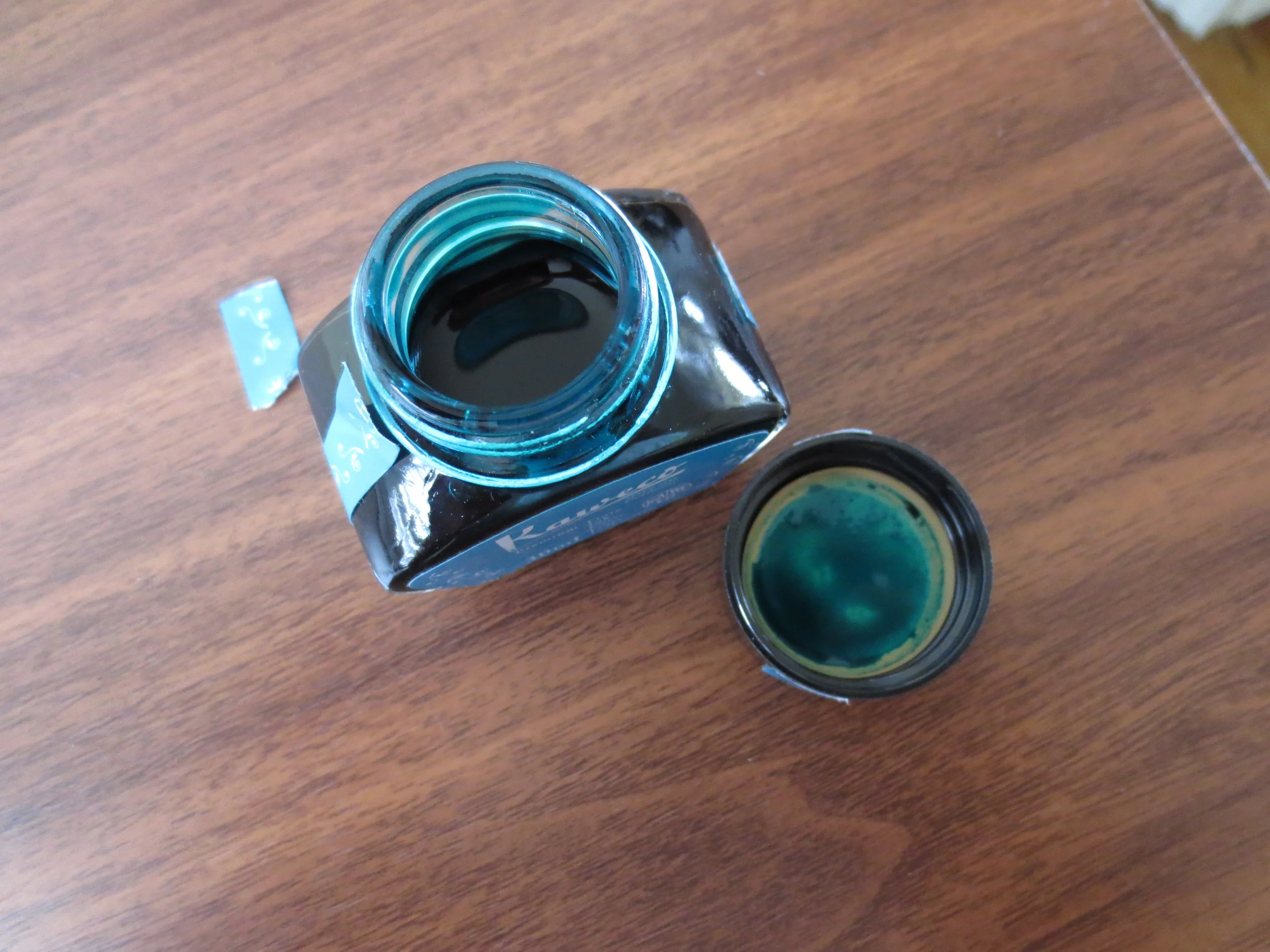
Thanks to JetPens for sending me this bottle of Kaweco Paradise Blue ink to review.  Of all of Kaweco's colors, this is the one that I probably have seen reviewed the least, though there are a few floating around out there.  I'll give my conclusions up front:  in my opinion, Kaweco makes some great inks.  I would go so far to say that they are some of the best I have tried recently, which include the Ruby Red, Midnight Blue, Palm Green, and now the Paradise Blue Colors. 

As good as the ink is, I do wish that Kaweco would increase the size of their bottle.  As of now, the ink is fairly pricey, at $19 for 30 ml of ink. 

Kaweco does not offer a super extensive range of colors.  Their options actually parallel those offered by Waterman (black, blue, red, green, purple, blue-black, brown, and turquoise).  Paradise Blue is intended as the turquoise offering in their line, and it's a great turquoise ink.  It actually has a bit more green in it than most turquoise inks on the market, which I think gives it a "truer" turquoise color, at least to my eyes.  I tested this ink in my Pilot Metropolitan with a medium nib, and experienced no problems.  Kaweco inks do run on the dry side, but I had no trouble with skips or hard starts.  There was no bleed-through or feathering on the cheapo office copy paper I have to use on a daily basis.

The Verdict.  If you don't mind paying a bit of a premium (which is becoming more the norm for imported inks these days), Kaweco Paradise Blue is a gorgeous color that shouldn't give you any trouble in any of your pens.  If this ink interests you, you can can find it offered at JetPens.com, who also offers the full Kaweco line.

This scan provides a fairly accurate representation of the ink's color.  I've provided some comparison to other similar colors in the gallery below.

Disclaimer:  This ink was provided to me by JetPens for review purposes, and I received the product free of charge.

Ink Review: Iroshizuku Kon-Peki

Whoa.  As of last night I thought today might be the day that I missed my blogging schedule for the first time since this blog has been live.  Due to a series of cascading airline delays, I staggered in at 1 a.m. last night after nearly 12 straight hours in Boston Logan Airport.  (I did get a chance to visit the famed Bromfield Pen Shop, albeit briefly, though my schedule and DC Pen Show induced discipline prevented me from buying anything).  So today, I offer you an ink review that I've had in the can for a while but haven't posted simply because I think this ink has been reviewed to death and I've never been quite able to make myself love it.

Everyone's favorite Iroshizuku--except mine.

Honestly, though, I know why other people love this ink, and it's for the same reasons that I haven't sold the bottle.  It's got a Baystate Blue-style pop to it with none of the headache.  Like all Iroshizuku inks, Kon-Peki is well behaved and cleans out of pens easily.  But I'm not a blue ink kind of guy.  I mean, I like blue ink, and sometimes I have to use it for work, but I'd rather use a blue-black or a turquoise.  If I do have to use a blue ink, more often than not it's this one, which people term "cerulean."  This review was written with an Omas Ogiva ground by Mike Masuyama to a Japanese medium.  (I asked him to copy the nib width on my Nakaya portable writer, which is perfect for me). 

Please ignore the smudging of Sailor Apricot on the paper.  I'm too tired to redo this or touch it up. 

In a wetter nib, there's some shading as well as a bit of reddish sheen, which some people like. 

Again, apologies for the transfer of Apricot that was on my hand. 

Be prepared for next week, as the Gentleman Stationer goes to the DC Pen Show!

Doane Paper Utility Journals: Garage Edition

Over the past several months I've become a pocket notebook junkie.  I primarily use Field Notes--I don't care if the paper bleeds if I use a very wet fountain pen to jot quick notes (though I normally use a gel pen for this kind of writing), and I like the limited editions.  But I'm also a fan of Doane Paper's offerings, including these guys. 

Doane Paper Utility Journal Garage Edition:  Finished the three-pack!  They look good worn out. 

These are a more fountain pen friendly alternative to the standard Field Notes paper, although the paper is not quite as good as the paper found in the America the Beautiful and Shelterwood editions.  Here's a writing sample below.  I like the Grid+Lines paper that Doane uses.  It makes the notebook practical for both large and small writing.  The other Doane product I have tried is the large legal-size pad, which I use a lot at work.  I have one of each size of the idea journals (the spiral notebooks), as well as a pack of the larger utility journals, but have not had a chance to use them yet.  I anticipate they will be just as good as these.

Slight feathering with a VERY wet stub nib.

Some slight bleed-through with a very wet nib, but standard Field Notes paper would be much worse.

All Doane Products are available directly from Doane Paper, and also now from Jetpens

My First Aurora: Ipsilon Quadra Sterling Silver

I've been jonesing for an Aurora pen for a very long time, but something else always seemed to get in the way.  Finally, two weeks ago, I pulled the trigger and selected the Aurora Ipsilon Quadra in Sterling Silver from Pen Chalet.  I'm a big fan of the chiseled sterling look, as you may know from last week's review of the Parker Sonnet, and Aurora does something different with this pen that raises the bar.  But first off, some unboxing photos.   

Aurora Presentation box.  If it's faux leather (which it probably is), they do the best job I've seen.  It feels nice and has a true leather smell. 

Props to Aurora on their packaging and presentation.  The branding details and interior trim are superb. 

Presentation.  The presentation of the pen in the box is outstanding.  Honestly, Aurora's packaging is some of the best I've seen.  It's not tacky and overdone, but it's not cheap.  It feels equal to the price and quality of the pen.  This is one of the few boxes I will keep.  Now, on to the pen itself.

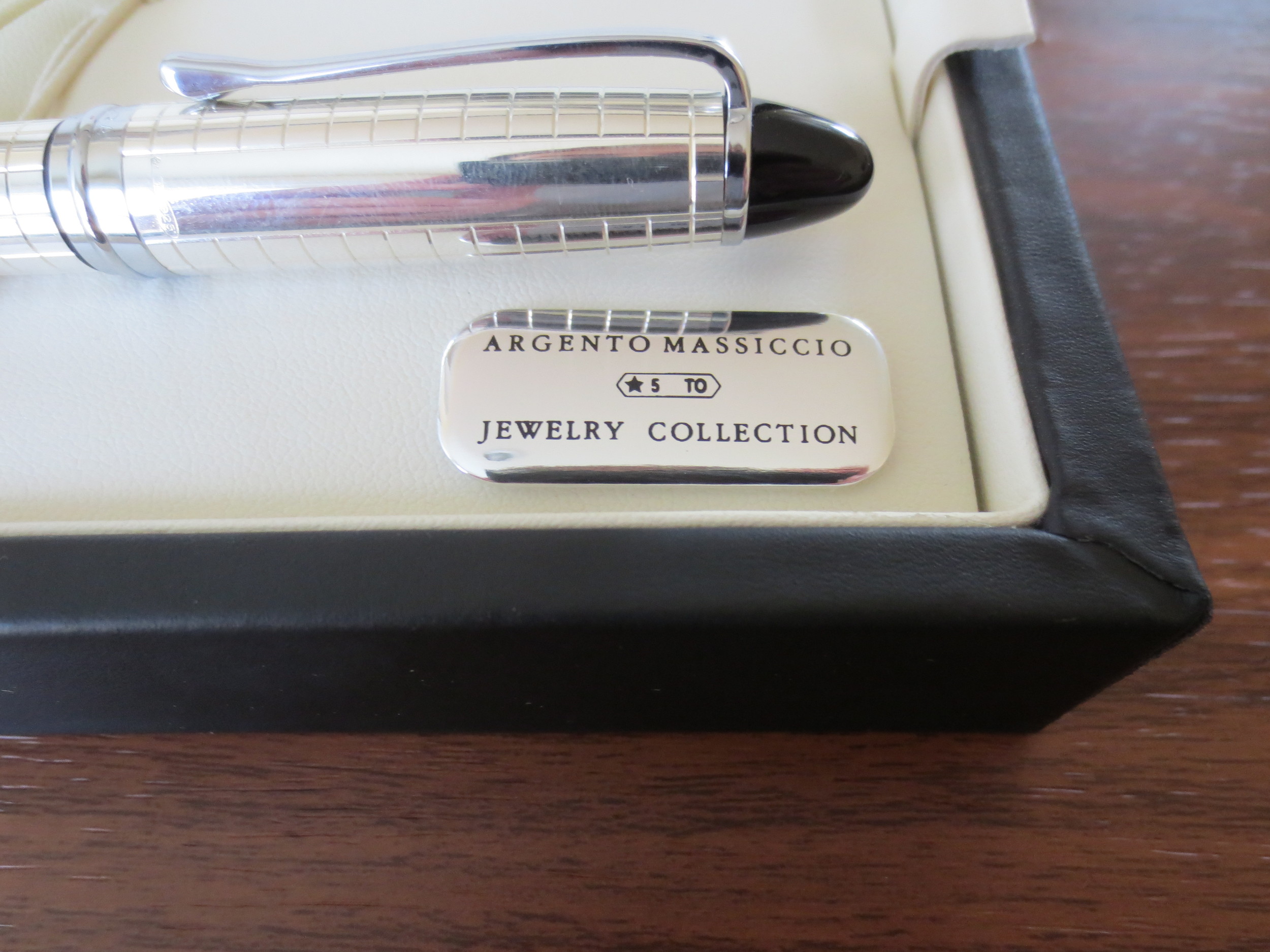
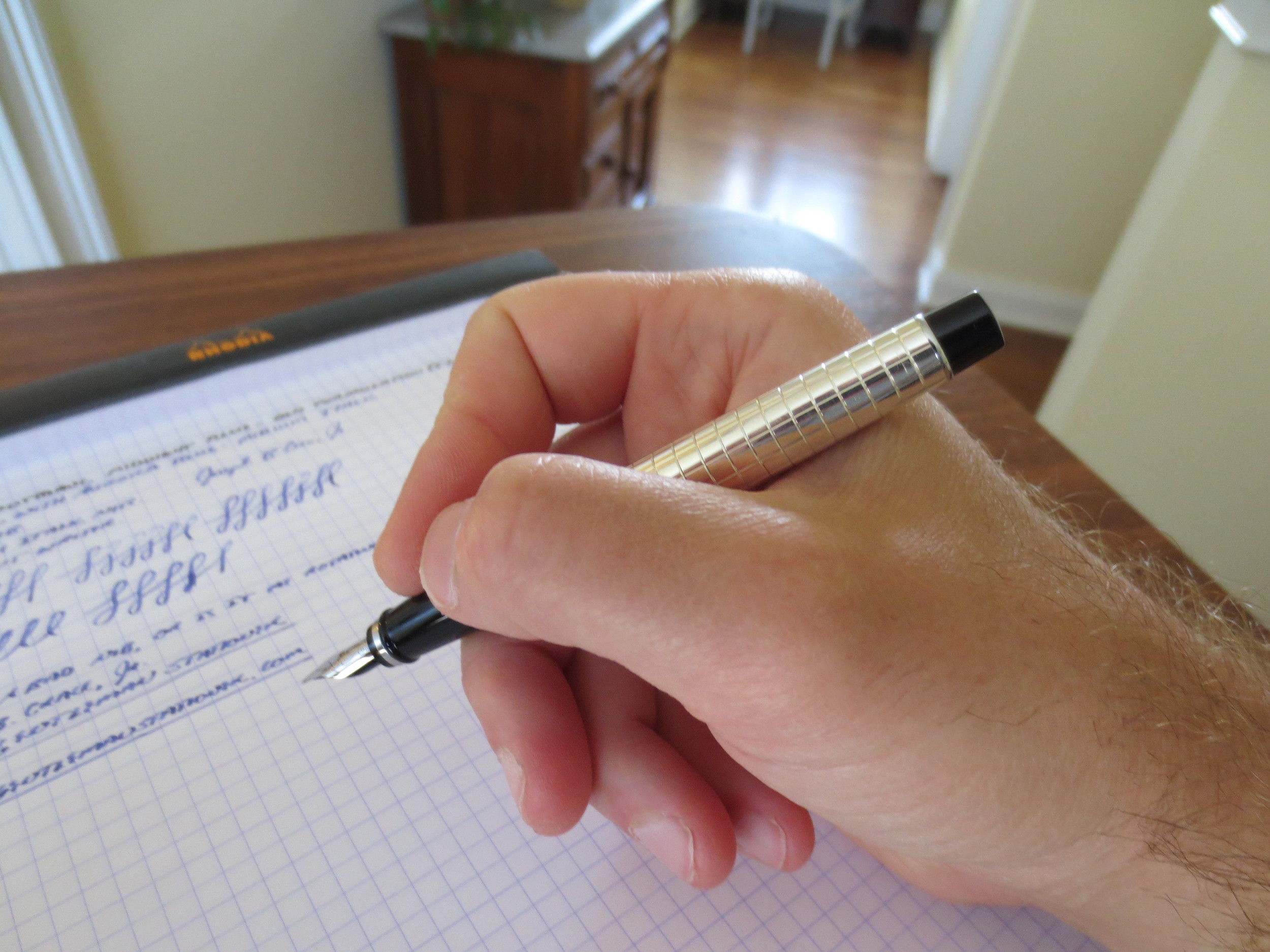
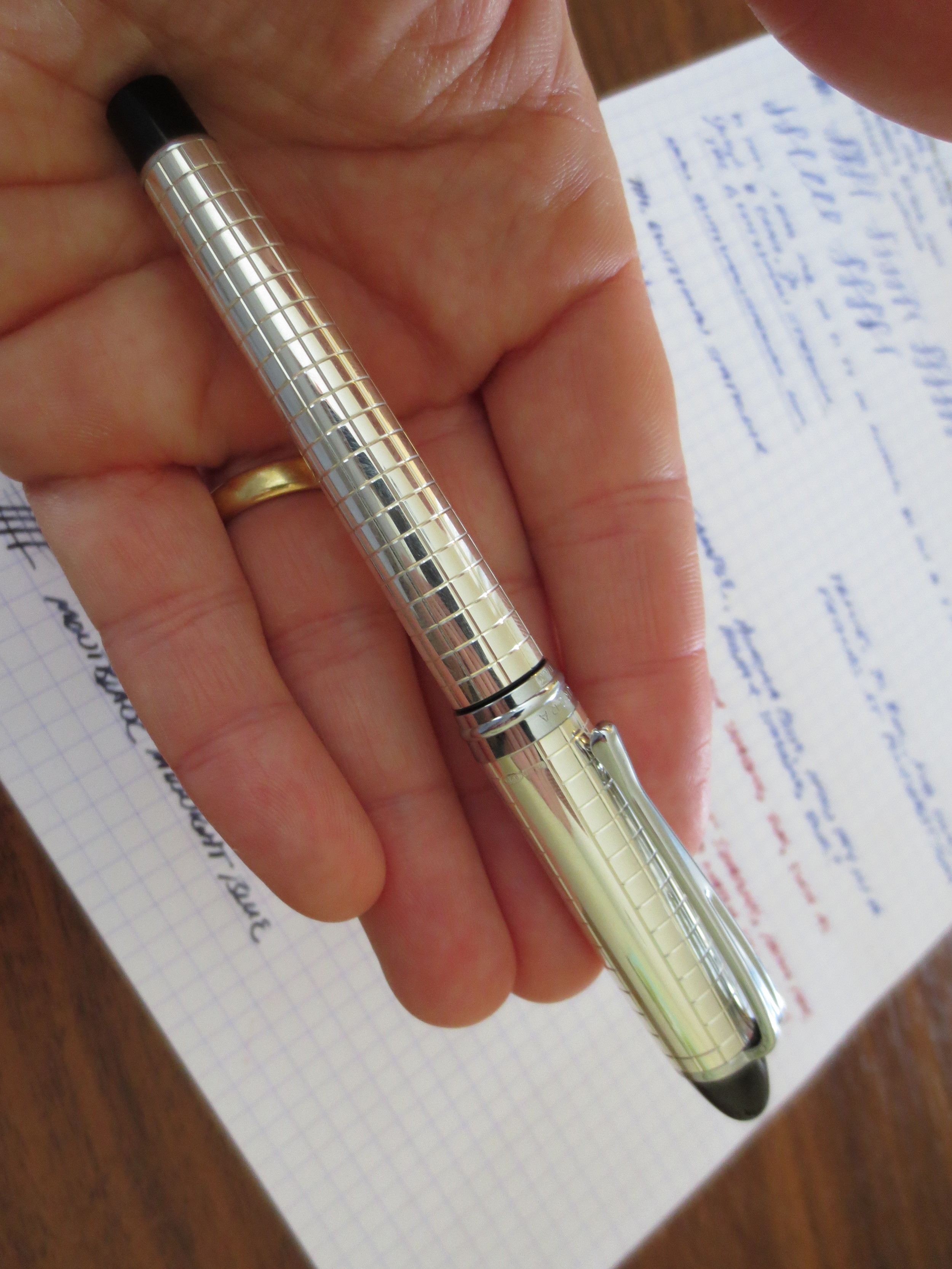
Build Quality.  It sounds trite, but the Ipsilon Quadra is simply a well-made pen.  Both the cap and the barrel are sterling silver.  The clip and cap band are not.  The pen is lighter than I would expect for a metal pen, but has good heft.  You can tell that it's not thinly plated.  Another thing I like is the finish.  My Parker Sonnet's finish is "antiqued," meaning that the silver is given a patina to make it look older.  The Ipsilon Quadra is shiny, at least until the silver develops a patina of its own.  If you want to keep this pen shiny and "new" looking, you'll have to polish it.  

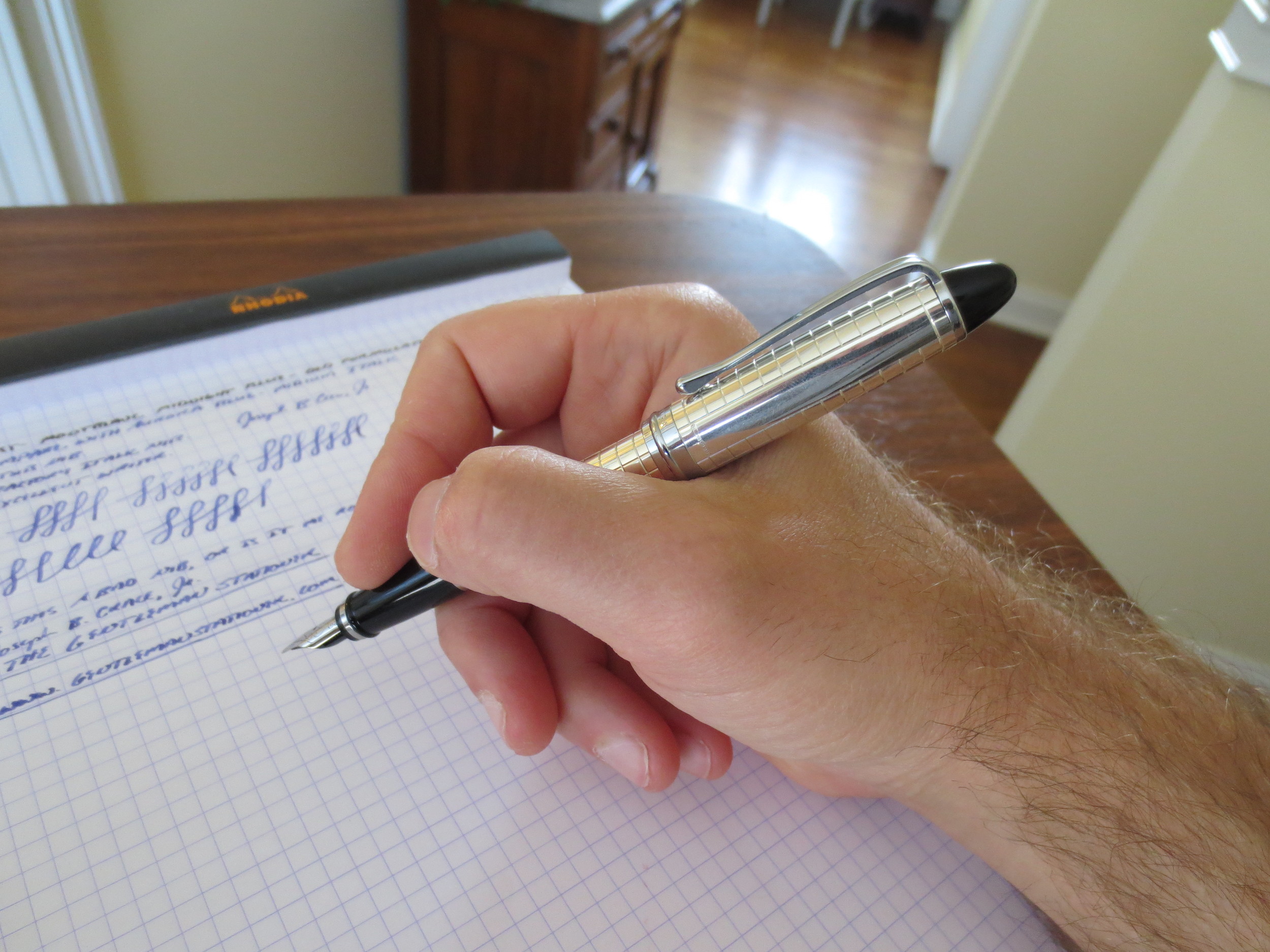
The cap is friction fit, and it snaps on and off firmly.  The plastic end-cap on the pen also "snaps" the cap into place when you post the pen.  While the pen can be used unposted, I'm pretty sure this one is intended to be used posted, and that's how it best fits my hand.  

You can see that the cap has a non-patterned area, presumably for engraving.

Another close-up look at the detailing.

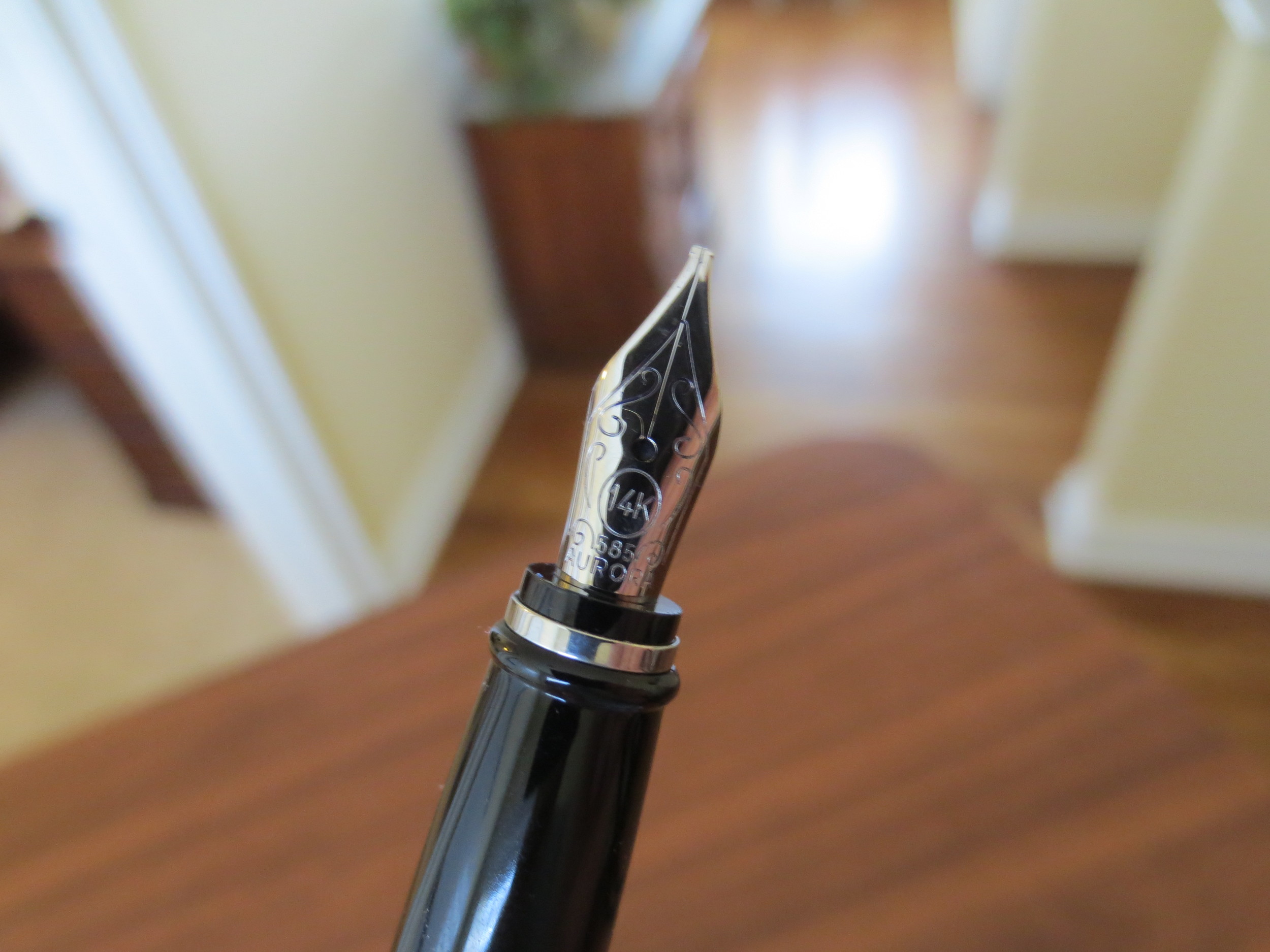
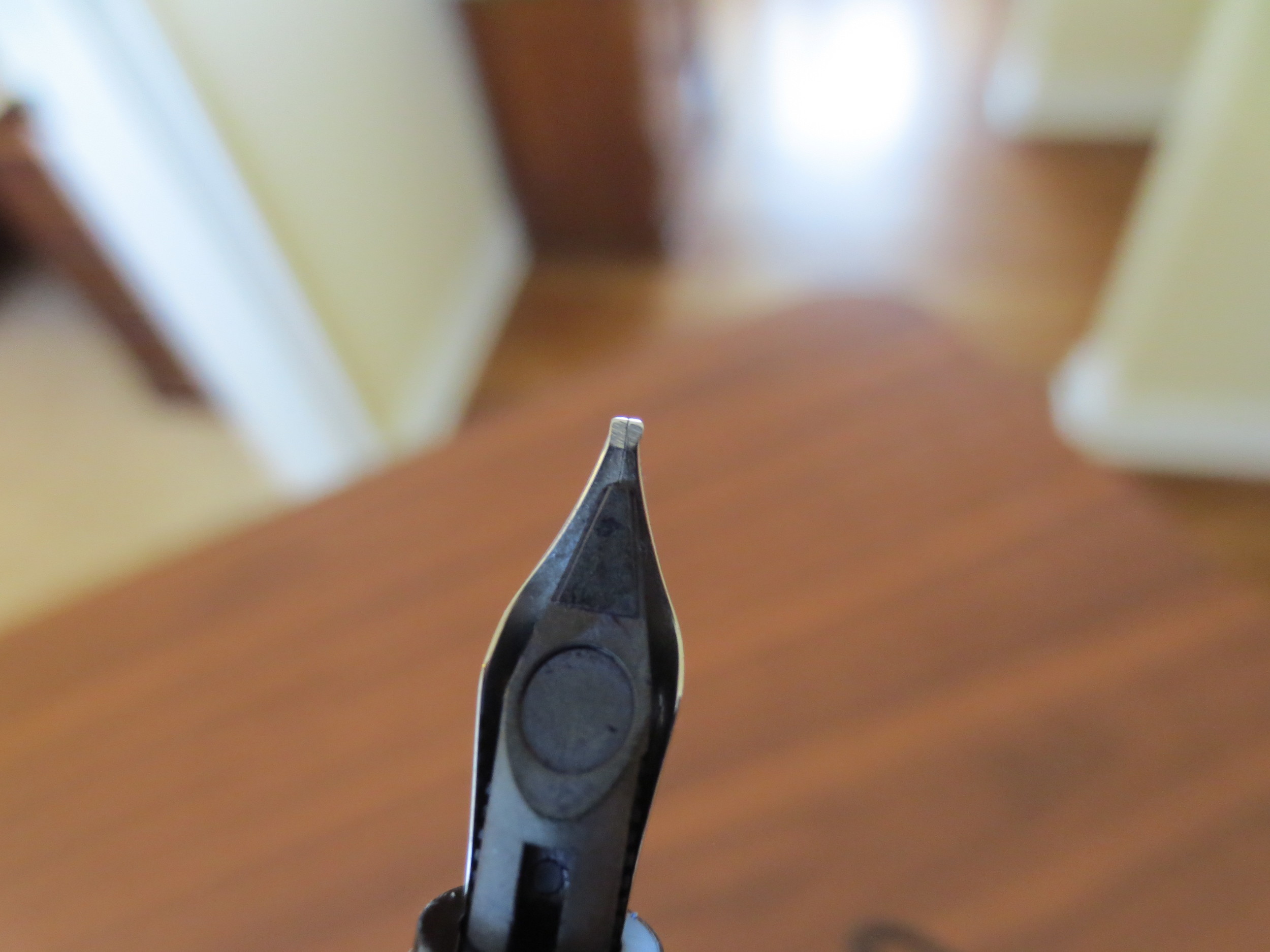
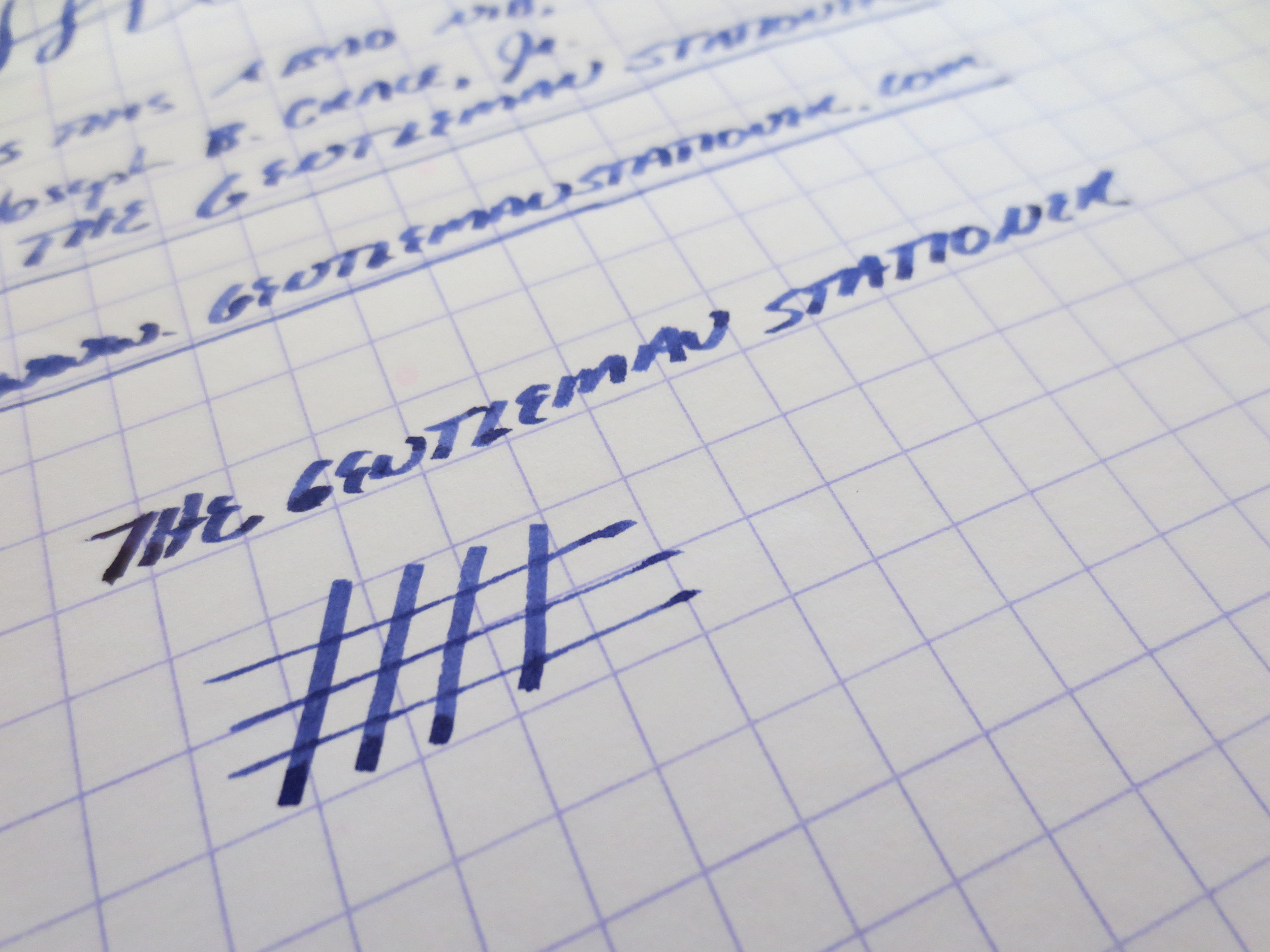
The Nib.  The nib is where I decided to step out of my comfort zone.  This 14k nib is Aurora's stock medium italic, which is a size and grind that's pretty difficult to find.  It is a very sharp italic--not a stub--and takes a bit of getting used to.  If you don't slow your writing down to give yourself time to adapt to the nib's sweet spot and how it likes to be held oriented to the paper, the edges will dig in and you'll have a pretty rough go at it.  But once you get the hang of it, this nib gives you incredible line variation and brings out any shading properties in the ink you are using.  I decided to fill this pen for the first time with Aurora blue.  Sometimes I like to test a new pen with the manufacturer's ink, because if a pen doesn't write with ink made by the company that made the pen, there's probably something wrong.  No problems, here, of course.     

It's hard to see in the picture, but the Italic nib has very sharp corners.

It's hard to see in the picture, but the Italic nib has very sharp corners.

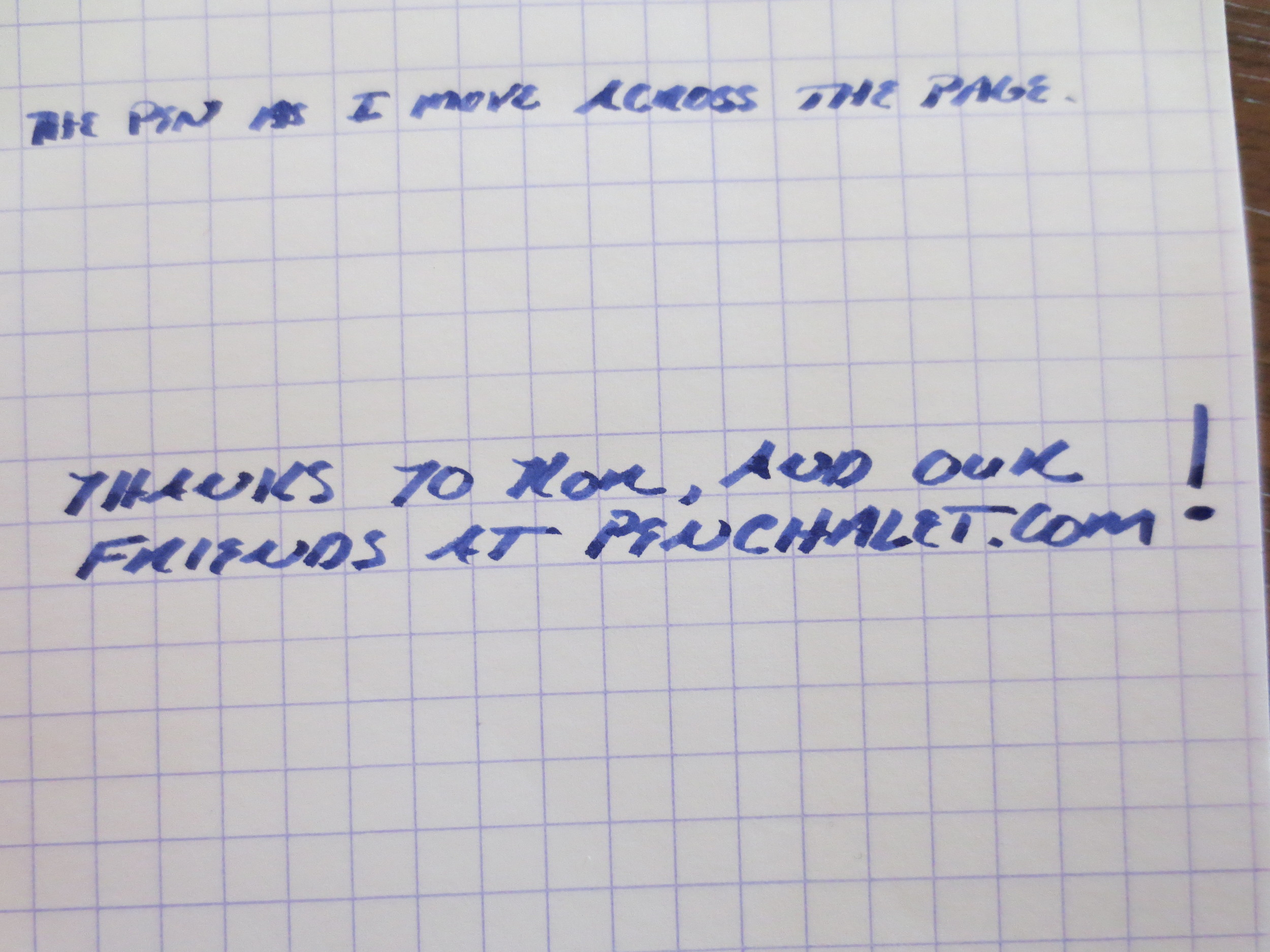
A writing sample from when I first filled and tested the pen.  Notice the rough edges and some skipping as I had to adjust my writing slightly to compensate for the sharp edges on the Italic nib.  Things got MUCH better for me once I broke the nib in a bit. 

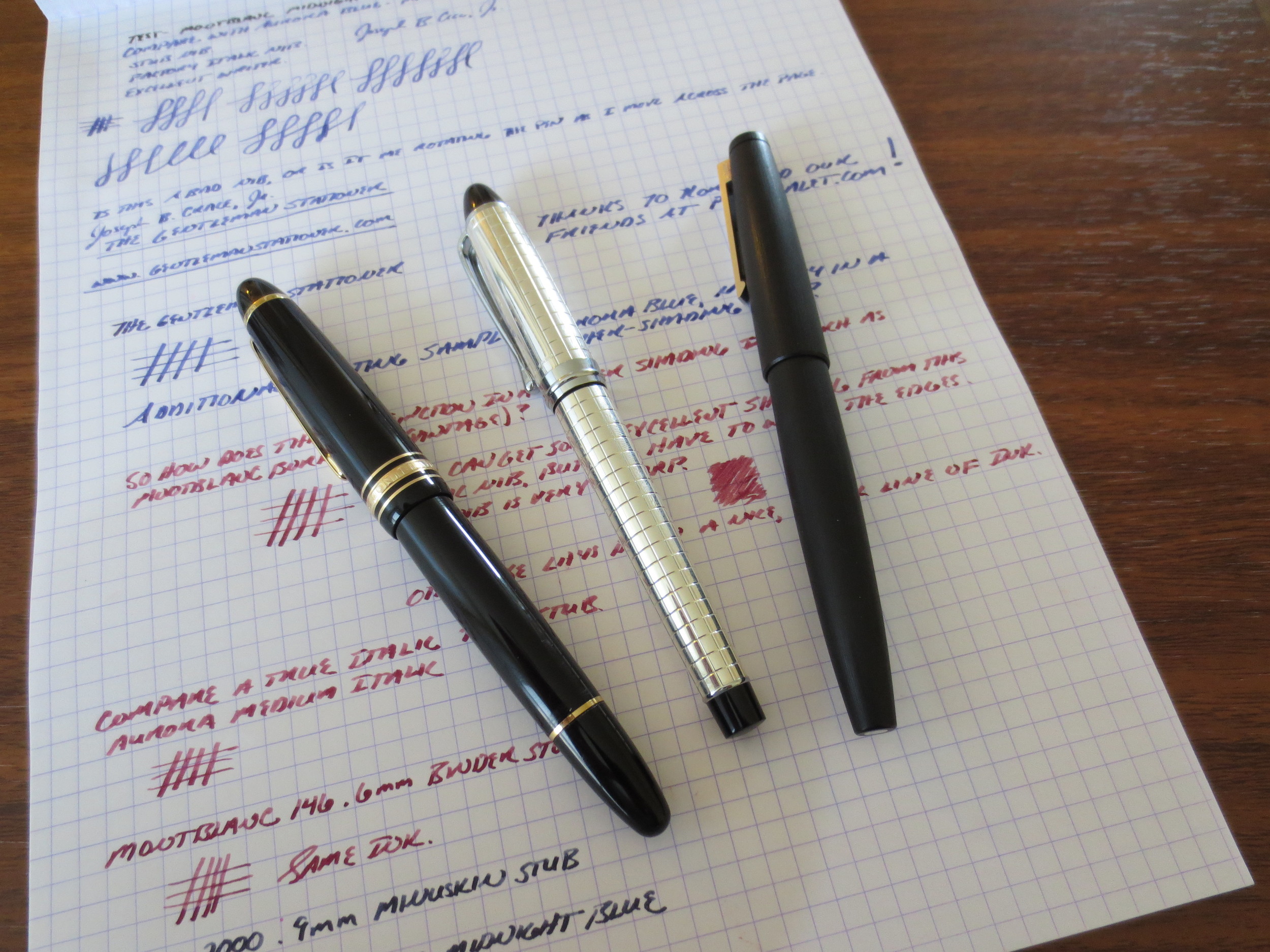
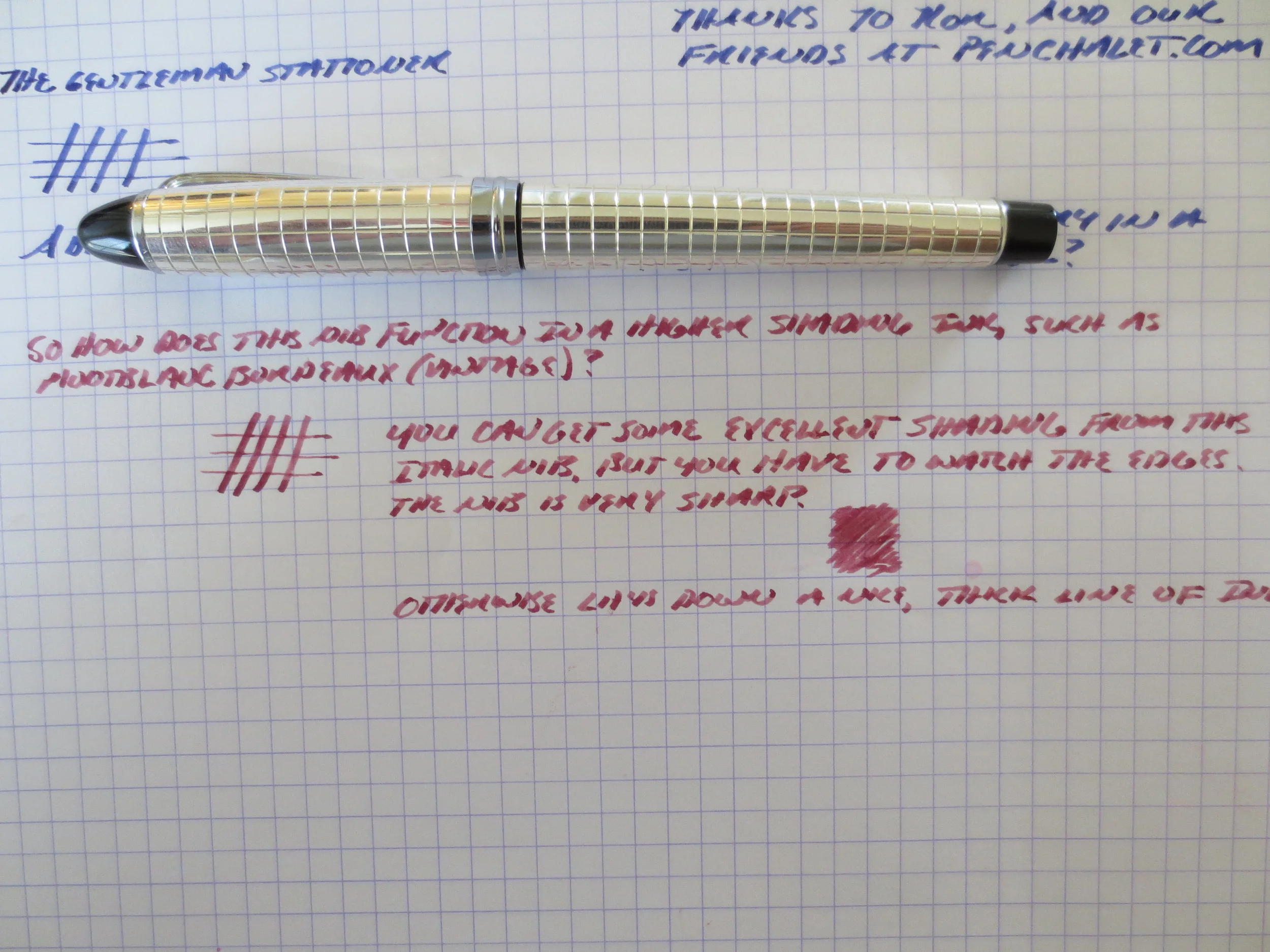
After writing with the Aurora blue for a couple of days, I switched things up and loaded the pen with Montblanc Bordeaux (the late-1990s version).  I also did some side-by-side writing samples with two custom stubs I have on a MB 146 and a Lamy 2000.  Note the shading in the italic nib, while the stubs write a wetter line and have slightly less line variation. 

The Verdict.  I absolutely love this pen and am thrilled to finally add an Aurora to my collection.  I'm also pleased with the Italic nib, something that I've hesitated to buy in the past.  This pen may make me less reluctant to try stock italics in the future.  Buyer beware:  I cannot emphasize enough that an italic nib is NOT the same thing as a stub nib.  Stubs are meant to create subtle line variation without sacrificing the ability to write relatively quickly and fluidly.  For the most part, italic nibs require you to slow down and pay attention to your handwriting. 

Like I said, I purchased this pen from Pen Chalet. This pen, while not cheap, is priced very well for a sterling silver pen, and Pen Chalet's prices are as good as any, especially when you use one of the various discounts floating around and take advantage of their free shipping on orders over $50.  The pen came to me in pristine condition and shipped fairly quickly.  Ron carries a pretty wide variety of Auroras, including some of their entry-level models.  Note that some Auroras can take up to a week or so to ship; most retailers do not always have the full line of models/nibs in stock so they may have to order it from the distributor.