• Blog
  • Shop
  • Resources
  • FAQ (Ask TGS)
  • About
  • Archive
  • Contact
  • Sign In My Account
Menu

The Gentleman Stationer

Vintage Living in the Modern World.
  • Blog
  • Shop
  • Resources
  • FAQ (Ask TGS)
  • About
  • Archive
  • Contact
  • Sign In My Account

Hierarchies of Fountain Pen Friendly Paper (Last Updated 9.13.25)

March 11, 2021

Years ago, I compiled a five-part resource titled “The Best Paper for Everyday Writing,” in which I looked at five different product categories that I regularly use in my working life and recommendations for each. These included hardcover notebooks, softcover notebooks, spiral notebooks, pocket notebooks, and writing pads/looseleaf. This particular post (which is semi-regularly updated), stepped back from specifics and offers more general thoughts on paper, this time going by brand.

I receive a lot of questions about which brand of paper to buy to ensure a good experience with fountain pens. Those are always tricky questions to answer because (1) “fountain pen friendly” is a relative concept; and (2) some brands use different types of paper for different products - some designed with the fountain pen user in mind, others not.

So as a baseline, what needs to happen before I will publicly recommend something as “fountain pen friendly paper”? My standard is fairly simple: No bleed-through or feathering with any fountain pen nib that can be reasonably used for everyday writing. (Because I mainly use my paper for drafting and notetaking, as opposed to drawing, wet ink samples, or flex-nib calligraphy, my standards may be more lenient than some.) I also don’t worry much about how the paper shows off ink color or things like sheen and saturation, though dry time occasionally factors into which paper I want to use for a particular purpose (i.e., quick notes). Below, I’ve divided major paper companies into “Tiers”, based on my own experience with using a range of fountain pens on their products. This is NOT intended as commentary on the overall quality of their offerings, merely to serve as a reference point on how well the paper used by certain brands tends to handle fountain pen ink according to my own standard. For example, while Field Notes is listed in “Tier Three,” that’s not surprising because the company makes pocket notebooks, and their products aren’t directed at those who want to write with a stub nib fountain pen every day. I love Field Notes, sell them in my shop, and use them fairly regularly - just not with most fountain pens.

All the Midori MD Notebooks.

Tier One

When I place a company into the “Tier One” category, it means that you can likely purchase a product based on brand alone and ensure yourself a good fountain pen writing experience.

  1. Clairefontaine. I still consider Clairefontaine the gold standard. Clairefontaine pads and notebooks feature 90g, coated writing stock that works well not only with fountain pens but pretty much any ink you can throw at it. It’s also relatively inexpensive for quality paper, making it my first choice and recommendation.

  2. Midori. Both their “MD” and “Cotton” lines work exceptionally well with fountain pens. I find the paper more absorbent than Clairefontaine - especially the cotton - with better dry times. Midori MD paper can also be found in standard Traveler’s Notebook refills and the refills used in the Plotter binder system. Midori also recently introduced a “Thick” version of their MD paper, perfect for heavy ink applications and those who want to use the paper for mixed media projects that involve watercolor and ink washes.

  3. Tomoe River. Available in 52g and 68g variants, this ultra-thin Japanese paper has taken on a cult following over the years. Even with the recent change in paper formulation, which I understand slightly changed the texture and the appearance of certain inks on the page, it remains excellent paper for writing. Though dedicated “Tomoe River”-branded notebooks can be found, typically this paper is sourced from third-party notebook manufacturers such as Traveler’s Company (“Lightweight Paper” refill), Nanami Paper, Lochby (68g), Atelier Musubi, and Odyssey Notebooks (68g) (among others). For similar though smaller-batch papers, check out Japanese Paper Distributor Yamamoto’s offerings, which change regularly. I don’t feel comfortable adding any of these as stand-alone entries as many are either not regularly available or being discontinued, hence the rotation in the Yamamoto lineup.

  4. Iroful. This ink-friendly paper from Sakae Technical Paper was designed to mimic the now-discontinued Cosmo Air Light, and is known for its ability to showcase ink colors. Some find Iroful to have a too-soft texture, though not as much as Cosmo Air Light. This paper is generally seen as an improvement over Cosmo Air Light because it does not cause the ink to “spread” as much, working better with finer nibs.

  5. Maruman. Exceptionally good office or student-grade paper that comes in both spiral-bound and pad formats, in multiple sizes, in both the Mnemosyne (80g) and Basic (70g) versions. In addition to handling fountain pen ink well, the pages are perforated, making Maruman notebooks a top choice for those needing versatile paper to use in the office where filing or scanning notes is necessary. The “Basic” version is slightly lighter weight than the flagship “Mnemosyne,” but still handles fountain pen ink well and comes in at an extremely reasonable price point, making it a good solution for an everyday work or student notebook.

  6. Nakabayashi. Nakabayashi makes fountain pen friendly notebooks and paper under several different lines in multiple formats. The “Logical Prime” and “Logical Air” notebooks offer a multi-lined ruling similar to Clairefontaine French-ruled paper, and the “Yu-sari” paper is thicker paper designed to handle even the wettest of fountain pen nibs. Yu-sari paper is also sold in A5 and B5 looseleaf sheets. Nakabayashi is another relatively cost-effective option, especially if you are looking for notebooks to use in a Roterfaden, Lochby, or other notebook system/cover that uses the standard A5 format.

  7. Profolio. Similar to Nakabayashi, Profolio notebooks contain a multi-lined paper that I find quite versatile and convenient. Available in multiple sizes (A6, A5, and B5), these notebooks offer another fountain pen friendly option in a thread/clothbound lie-flat format.

  8. Life. Another Japanese paper that can be counted on to handle fountain pen inks reliably, though Life paper can be difficult to source in the U.S. and on the expensive side. Life also makes products in harder-to-find paper styles such as bank paper, typewriter paper, and Airmail/Onionskin paper.

  9. Apica. Though Apica primarily makes very slim notebooks with lower page counts - a product I don’t use extensively - their paper is very fountain pen friendly and cost effective.

  10. Stálogy. I love Stálogy’s 365-Day and Half-Year notebooks, which feature white paper and a light grey grid. While the paper is almost as thin as Tomoe River, it’s slightly more absorbent, resulting in shorter dry times that make it more “work friendly” for quick notes. (Several lefties I know love this paper.) Stàlogy used to be included in Tier 2, but from customer reports, they have resolved some issues with bleedthrough and I’ve now included them in “Tier 1”.

  11. Rhodia. A sister company to Clairefontaine, Rhodia products have a different design aesthetic and the paper features a slightly different texture (i.e., many people find their paper slightly less slick than Clairefontaine and more absorbent, with quicker dry times).

  12. Blackwing. I’ve waited to include Blackwing on this page to see if their paper quality remained consistently good, and I’ve been impressed with their standard offerings, particularly the paper in the Blackwing “Illegal Pad” writing pads. Note that the paper used in Blackwing products can vary across their special edition line, so this only applies to the standard pads and “Slate” notebooks, which I have enjoyed.

  13. Notsu. I’m primarily including Notsu on this list for their ink-friendly index cards, which are frankly the best I’ve ever used and feature a wide variety of different formats. In addition to the index cards, Notsu also makes notebooks and notepads with thick dot grid paper that I enjoy because it’s textured and fairly absorbent, so it dries quickly. I debated whether I should include Notsu yet, since the brand is relatively new, but the lack of really good index cards on the market pushed this over the edge. I’ll probably continue to watch them though to make sure they don’t change card stock.

Tier Two

Outside of the first group of papers, many of which are specifically targeted to fountain pen users, you have to start to think a bit about how you intend to use the notebook. Personally, I would still consider most of the paper listed in this category as “fountain pen friendly” for my own purposes (i.e., writing with EF-Medium nibs and “practical” inks), but since you may experience spots of bleed-through and feathering if you push the paper, I don’t feel comfortable discussing them in the same context as the papers listed above.

  1. Leuchtturm 1917. Having developed a reputation as a “Moleskine upgrade,” Leuchtturm has become a fixture not only at specialty stationery stores, but more mainstream retail outlets. Leuchtturm paper is quite usable with fountain pens but you may see slight “pinpoint” bleed-through with very wet nibs and inks.

  2. Lamy. Last year Lamy released a series of notebooks featuring a unique take on combination lined-grid ruling, with textured paper that behaves similarly to Baron Fig and Leuchtturm. Since this paper is quite fibrous, it doesn’t bleed but has a tendency to feather with very wet pens.

  3. Roterfaden. While known for their Taschenbegleiter organizers that are compatible with most standard size notebooks (A4, A5, and A6), Roterfaden also makes their own proprietary refills in a variety of rulings. I’d compare the paper quality to Leuchtturm and Lamy, in that it works fine with finer lines and drier inks. The biggest selling point of these notebooks is that they lie flat and work exceptionally well with the metal clips in the Taschenbegleiter.

  4. Kokuyo (Standard Paper). I love Kokuyo’s “tall and skinny” hardcover pocket notebooks, and the micro-grid paper works well enough for any writing instrument I would consider as pocket carry, including extra-fine and fine nibs on my pocket fountain pens. You may see pinpoint bleed-through otherwise, depending on the ink.

  5. Laconic. Laconic paper behaves similarly to Stálogy and Kokuyo in that it works fine with extra-fine and fine nibs but is targeted to the Japanese planner market, which relies heavily on fine-tipped gel pens (particularly the erasable Pilot Frixion). I personally can tolerate a small bit of show-through, and have no issues using the wide variety of Laconic refills for practical tasks.

  6. Shorthand Press. Los Angeles-based Shorthand Press has been around for years, and they’ve recently expanded their color range to include different covers and rulings. The paper has a vintage off-white tone, and will handle extra-fine through medium fountain pen nibs reasonably well, but may struggle with show-through and feathering with wetter inks and wider lines.

  7. Appointed. I love the feel of Appointed’s textured, thick paper, as well as their linen stock covers, but since the paper is highly absorbent (presumably due to a higher cotton content found in U.S.-made paper), it can feather and bleed with wet fountain pens. While you can certainly get by with an extra-fine or fine nib, Appointed paper really shines with pencil, where its tactile feel pairs perfectly with graphite.

  8. Baron Fig. Baron Fig has fallen off the radar in recent years, but I still draw from my stockpile. I love the texture of Baron Fig paper, especially with pencils, but I can no longer speak to how the current stock handles fountain pens as I have not bought any in some time.

Tier Three

These are brands where you shouldn’t expect much compatibility with fountain pens, and if you purchase a notebook or notepad from one of these companies, you might see significant bleed-through and feathering. That’s not to say you can’t use fountain pens, I just wouldn’t expect to be able to use both sides of a page.

  1. Moleskine. The ubiquitous black notebook that you see everywhere. If you’re a pencil or ballpoint lover, Moleskine has some great limited and special editions, but I’ve never had a good experience with any of their paper using a fountain pen, or even a rollerball.

  2. Field Notes. While some of the special edition Field Notes pocket notebooks use thicker paper, Field Notes are relegated to pocket ballpoint territory in my own personal carry. That’s fine - it’s their intended purpose.

  3. Doane Paper. One of my favorite paper rulings of all time (Doane’s signature Grid + Lines) is generally relegated to the ballpoint + gel pens + pencils rotation. While Doane paper handles fountain pen ink somewhat better than Field Notes, it’s best categorized in the same tier.

  4. Any drugstore or big-box brand. Sure, occasionally you can find batches of very inexpensive imported composition or spiral notebooks made from sugarcane paper or another fountain pen compatible stock, but it likely won’t remain consistent from year-to-year and you may have to start your search over annually.

Missing Brands and Future Updates

Obviously I don’t have extensive experience with every paper brand out there, so I haven’t included many in this list and won’t do so until I’m comfortable discussing their performance with some degree of certainty. This rough guide therefore shouldn’t be read as “exclusive,” and I intend to add to it. Also, I’ve avoided commenting on small makers or boutique brands that can change their paper stock periodically. (I’m currently watching Nebula Note, Endless, Anecdote and Levenger for this reason, but to date I’ve been impressed with their offerings. As I gain more experience with some of these and/or see that the products show consistency, I will consider adding them to this list.)

You will also note that Write Notepads has fallen off this list, due to the company pausing their consumer/retail line to focus on B2B sales and custom work. While I hope they return at some point in the future, I have not included them due to the lack of availability.

UPDATE: If you’re interested in how paper and notebooks are sized, check out this post comparing various popular sizes (i.e. A4 vs. A5 vs. A6).

All links are to Gentleman Stationer Reviews, the T.G.S. Curated Shop, or to my friends at Vanness Pens. This post does not contain affiliate links.
In Paper Products, Notebook Review, Guide Tags Guide, Paper, Editorial, Fountain Pen Friendly Paper
64 Comments

Traveler's Notebook Tutorial: How to Connect Multiple Refills and Accessories

February 27, 2021

I’ve used the Traveler’s Notebook for years, and regard it as one of the best options for carrying multiple notebook refills inside a single cover. Want to carry a planner, notebook, and sketchbook together, with different papers? You can do that! While connecting multiple refills can seem tricky at first, it’s easy and intuitive once you get the hang of it. The general rule of thumb to remember: A primary refill secured to the notebook cover using the center elastic cord serves as an “anchor” for the entire system, allowing you to add additional refills and accessories using connecting rubber bands.

Changing out a single Traveler’s Notebook Refill is easy - just open the refill to the “staple page” and slip it under the center elastic cord. But most people will want to maximize this notebook system’s versatility. Read on to learn how to add mor…

Changing out a single Traveler’s Notebook Refill is easy - just open the refill to the “staple page” and slip it under the center elastic cord. But most people will want to maximize this notebook system’s versatility. Read on to learn how to add more!

Collect Your Traveler’s Notebook and Supplies

In order to assemble a Traveler’s Notebook containing up to three refills, you will need three things: a Traveler’s Notebook, your three refills of choice, and a package of connecting rubber bands. For this demonstration, I’m using a Passport size Traveler’s Notebook in “Camel” leather, but the process is the same for the Standard size. Here, I will walk through three different setups: a Traveler’s Notebook with two refills, a Traveler’s Notebook with three refills, and a Traveler’s Notebook with three refills plus accessories.

Clockwise from top left: Traveler’s Notebook Connecting Rubber Bands, Traveler’s Notebook Passport in Camel, Blank MD Refill (included in the Traveler’s Notebook Starter Kit), MD Paper Grid Refill, and Tomoe River (“Lightweight” Blank Refill).

Connecting Two Refills

To set up a Traveler’s Notebook with two inserts, attach the first to the notebook cover using the elastic cord, the same as if you were going to set your notebook up with a single insert. Take your second refill and place it next to the first, closed spine-to-spine.

Next, open both notebooks to their respective centers. Holding the two covers together, as shown here, loop a connecting rubber band over both notebooks. In your original refill, the rubber band should sit alongside the elastic cord. That’s it!

A two-refill notebook is perfect for a planner + notebook setup.

Connecting Three Refills

To assemble a Traveler’s Notebook with three inserts, start by picking your three books and decide the order in which you want them to appear in the notebook. Place the first and third inserts back to back, and set the second one aside for the moment.

Open the first and third refills to their centers, and using a connecting rubber band, attach them as shown above, similar to how you connected the inserts in a two-refill notebook.

Close the two refills, and set them face-down on the inside of the Traveler’s Notebook Cover, spine-to-spine and connected by the rubber band.

Gently pull the two notebooks apart, and pull the elastic cord up between the two refills. The connecting rubber band should be just loose enough to allow you to do this easily.

Slip your middle refill underneath the center elastic cord. There! You’ve now secured three refills inside.a Traveler’s Notebook!

Traveler's-Notebook-Three-Refills.jpeg

Adding Accessories

Your Traveler’s Notebook is only limited by how thick you want it to be. In addition to three refills, connected as demonstrated above, I’ve included a PVC Zippered Pouch and a set of TRC Sticky Notes on my Standard Size Traveler’s Notebook.

Attaching the PVC Pouch is pretty easy. I simply slid the pouch underneath the refills through the main elastic cord.

I then attached the Sticky Notes to the PVC Pouch using another connecting rubber band.

The Sticky Notes insert is actually a slim folio, with a think PVC cover to protect your unused stickies. Open the folio and slip the connecting rubber band over the cover and the PVC pouch, much the same as you would connect two notebook inserts.

My current Standard Traveler’s Notebook is set up with three paper inserts and two accessories - in other words a total of FIVE refills + accessories. This obviously increases the thickness and weight of the notebook, but it also transforms it into …

My current Standard Traveler’s Notebook is set up with three paper inserts and two accessories - in other words a total of FIVE refills + accessories. This obviously increases the thickness and weight of the notebook, but it also transforms it into a powerful all-in-one tool.

Traveler’s Notebooks and Accessories in the T.G.S. Curated Shop

All of the Traveler’s Notebooks, refills, and accessories pictured here are available for purchase in the T.G.S. Curated Shop. As an authorized Traveler’s Company retailer, we carry Notebook Starter Kits, MD Paper Refills, Planner Refills, Specialty Paper Refills, and Accessories, in addition to TRC Brass products such as pen cases, rulers, and clips. Please feel free to reach out through the site if you have any specific questions about Traveler’s Notebook products and how to use them. If you’re interested in reading further on my own Traveler’s Notebook setup, check out this recent post in which I walk through the standard setup pictured here.

In How To, Guide, Notebook Review, Planners Tags Traveler's Notebook, Traveler's Company, How To
4 Comments

Pairing Items for Stationery Gifts: Different Ideas for Different Interests

December 8, 2020

Let’s face it: We’re all scrambling for last-minute gifts. Whether it’s a friend or family member, there’s always at least one person who I either forgot or who is impossible to shop for. In these situations I always appreciate suggestions, so I thought I’d put together a series of proposed stationery gift pairings targeted to different interests, drawn from the full range of items available in The Curated Shop.

For the Journaler

Consider pairing a Midori MD notebook with a refillable cover that your recipient can continue to use long after they fill the notebook. Not only are the notebooks themselves high-quality, featuring 176 pages of fountain pen friendly Japanese paper, but the covers present a range of options, from luxurious natural goat leather, to durable paper or clear plastic. (Note that the paper cover is made from a thick Japanese craft paper that is tear resistant and will take on its own texture and patina as it ages.)

While the notebook itself makes a thoughtful gift, you can further customize by adding smaller items such as unique Washi Tapes or a pack of colored pencils from Midori or Caran d’Ache + Paul Smith, for those who like to use their journal as a scrapbook or sketchbook. Midori products also pair particularly well with Traveler’s Company accessories, including the full range of TRC Brass Pens.

For the Writer on the Go

Know someone who always carries a notebook with them, no matter where they go? Some of my favorite pocket notebooks at the moment include these hardcover Kokuyo “Sketch” notebooks, currently stocked in five different colors. With 80 pages of 6.5” x 4” paper, these notebooks last longer than your typical pocket notebooks and the hardcover holds up well to daily use.

The perfect pairing? Consider adding a Caran d’Ache 849 ballpoint pen, available at a variety of price points. The standard edition starts at just $20, with special finishes also available, including the “Metal-X”, the “Black Code,” the “Gold Bar,” and several limited editions. Someone who enjoys mechanical pencils might appreciate the Giuliano Mazzuoli Nobile ITALIA, a portable ballpoint pen that ships with three refills and a mechanical pencil insert.

For the Reader

At a time when readers are increasingly pressured to “go digital,” it can be hard to find gifts for those who appreciate actual books. For this holiday season, I’ve stocked the store with reading accessories, including sterling silver page markers and book weights from WMS & Co. For the particularly active reader who enjoys annotating and marking up their book so they can come back to it in the future, consider pairing one of these bookmarks with a pack of Book Darts or double-ended annotation pencils, available in both red/graphite and highlighter/graphite combinations.

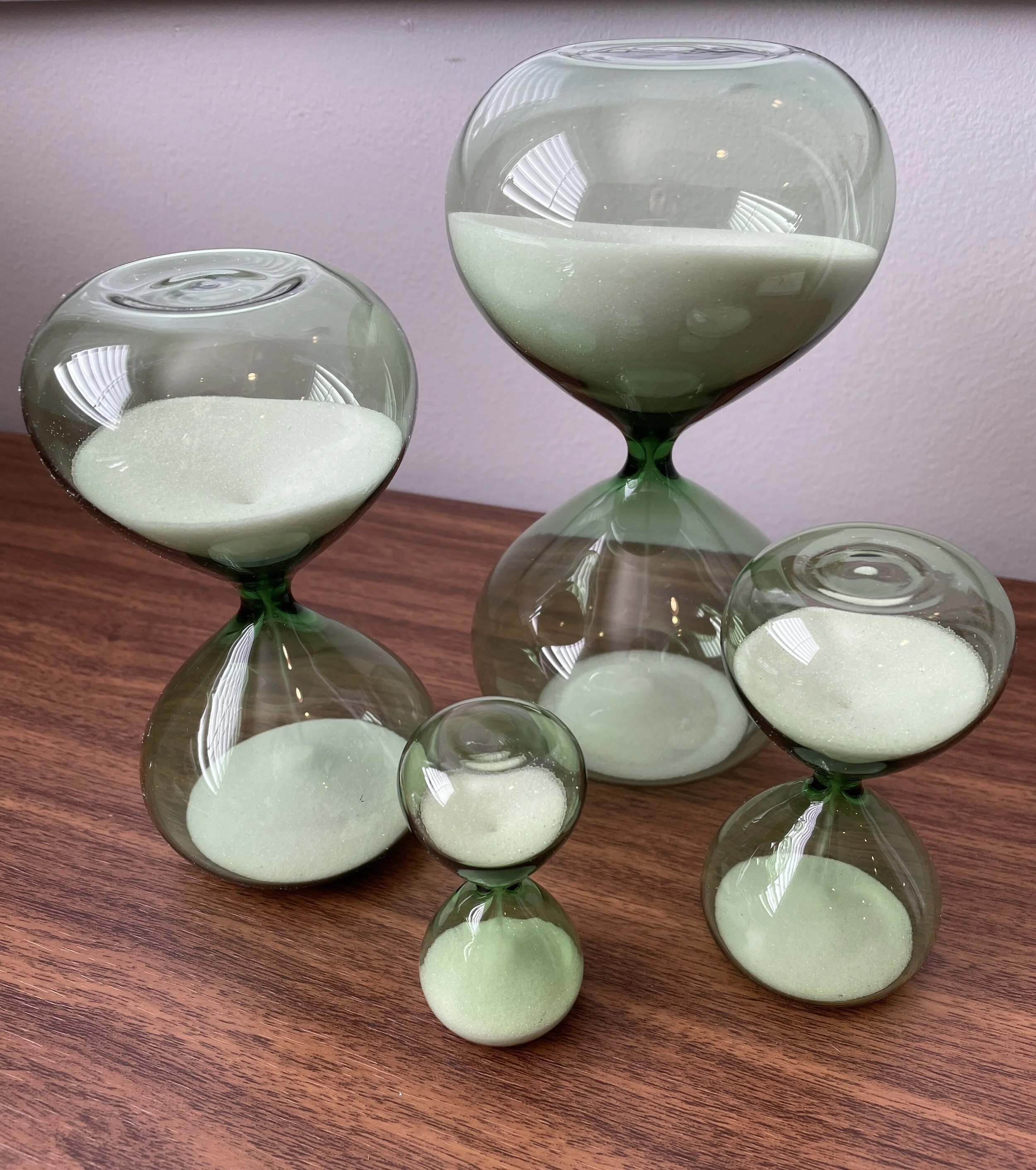
Hightide-Sandglasses-Timer

For Those Newly Working from Home

As someone used to working from a designated office outside the home, the pandemic required me to make significant changes to my remote work setup. Give someone a hand in boosting their productivity with desk accessories such as a 30, 15, 5, or 3-minute Sandglass from Hightide, a folding metal bookstand (that can also hold a notepad or tablet), or a sturdy, old-school oversized clipboard for those moments when everyone needs to get away from the actual desk.

Pair any of these with a high-quality desk pad from Midori or Write Notepads, and if you’re really feeling generous, consider gifting someone the ultimate desk pen: a CW&T Pen Type-A or Pen Type-B. The Pen Type-A comes with a handy ruler sleeve, and who doesn’t find themselves needing a ruler?

A Note on Holiday Shipping

For additional gift ideas, be sure to check out the T.G.S. 2020 Holiday Gift Guide. To be safe, if you want to ensure that something will arrive by December 25 (or even New Years, at this point), please place all domestic U.S. orders by December 15, though given today’s circumstances there can be no guarantees. Unfortunately, international orders are unlikely to arrive until after the holidays.

Many thanks for your support!

In Guide Tags Holiday Gift Guide, 2020 Gift Guide, TGS Curated Shop
Comment

Picking a "Workhorse": How To Choose A Fountain Pen for an Everyday Writer

September 28, 2019

By far the most common question I receive from readers, as well as other people in my everyday life who know that I love pens, is how to choose a fountain pen to use as an everyday writer. Sometimes, they even specify that this will be the only pen they plan to own/use! I basically write for a living, both here and at my day job, so I don’t take this question lightly and it’s also a difficult question to answer, because so much depends on personal preference, not to mention financial circumstances. The truth is that there are a variety of excellent options if what you are looking to do with the fountain pen is actually write. The best choice for you, however, depends upon your particular preferences and circumstances. This post offers my thoughts on different factors you should consider when selecting a pen you plan to use every day.

First, Budget

Be honest with yourself, and don’t feel pressure to stretch financially, because in today’s fountain pen market there are going to be viable options at any price point, even on the extreme low end of the pricing scale. If you are willing to spend as little as $25 you can purchase a reliable pen and avoid serious quality control issues. In any event, even if you have more flexibility, I would think hard before spending more than $200, since using a pen as a daily writer does bring with it the increased risk of loss, theft, and damage.

PenBBS has absolutely blown me away this year. You don’t need to spend a lot of money to get a reliable writer that holds a ton of ink.

Filling System

From the perspective of a writer, a fountain pen’s filling system is more important than many people make it out to be. If I’m busy at work, I can burn through a cartridge or a converter in an afternoon. If I’m in a place where I can’t refill, or don’t want to carry multiple pens, I need a pen that holds a lot of ink. My personal preference is a piston or vacuum filler, since these hold significantly more ink than a converter. Eyedroppers are another option, but for daily use I would highly recommend a Japanese-style eyedropper that uses a valve to prevent ink spilling or burping into the cap when the pen is not in use, especially if the pen will be carried in a briefcase, backpack, handbag, etc. where it’s going to get jostled around.

For those who don’t write a dozen pages or more a day, a cartridge-converter pen should work perfectly well for daily use, and you may find it more convenient to have the cartridge option if the pen runs out of ink at work. Just be aware that many brands (specifically Pilot, Sailor, Aurora, Lamy, and Platinum) take proprietary cartridges, so you will be limited to cartridges and ink colors made by that specific brand, unless you want to refill the cartridges yourself using a syringe or bottle-fill from the converter.

Piston fillers or cartridge-converters? Again, you have multiple options, and the best choice for a daily writer depends on how often you need to refill, and the most convenient option for refilling on the go. From left, the Pilot Custom 74, Lamy 2000, and Pilot Custom Heritage.

Weight and Balance

Once you’ve narrowed your budget and decided what type of filling system you want, the most important consideration becomes how the pen feels in your hand. Remember, you’re going to write with this thing every day, so while looks are important, comfort is key. Two of the most important things I look for in a pen are weight and balance. The two concepts are related, but distinct. By weight, I’m referring to how heavy the pen is. Certain types of pens (particularly metal pens made of copper, stainless steel, or brass) are better suited, in my opinion, for shorter notes and pocket carry, because their heft can make your hand quite tired after several pages. There are exceptions, but I’m dealing in general rules-of-thumb today.

I’ve tried a lot of pens, and none feel better in my hand than the Lamy 2000, which is made of Makrolon, a type of polycarbonate. It’s quite lightweight.

Balance is a different issue, and relates to where the weight of the pen sits. Do you post your pens, like me? If so, make sure that the cap isn’t too heavy because it will back-weight the pen and make writing awkward, even if the pen isn’t that heavy overall. Front-weighted pens (i.e., those with metal sections), typically don’t pose the same problem, since many people, myself included, prefer a pen in which the weight is shifted to the front, which keeps the nib on the paper and offers an additional degree of control over your handwriting. Because weight and balance are such a key consideration, it’s important to be able to either hold a pen in person prior to purchasing, or purchase from an online retailer that permits returns, especially if you’re shelling out a lot of money for a higher-end pen.

Nib Choice

Is the nib the most important part of the fountain pen? Yes and no. If you have a pen that feels great in your hand, but has a crummy nib, the pen isn’t usable, so the nib IS important. However, a bad nib can usually be improved through tuning and/or smoothing. On certain models of pens (TWSBI, Pelikan, Kaweco, among others) you can even switch out the nib and substitute one that’s a different size or even a specialty grind. For that reason, I tend to prioritize the weight, balance, and overall “feel” of a pen over the nib. Unless the nib is absolutely god-awful, it can be adjusted. The size and heft of the pen can’t.

I’ve had great experiences with the nibs on the Leonardo Momento Zero. They’re nothing fancy, but all of mine have arrived well-tuned and they certainly get the job done.

With respect to nibs, what’s most important is choosing the right type of nib for the work you want to do. If you write very small, and your day job (like mine) involves annotating or marking up documents that are often printed on the cheapest recycled paper available, you will likely want to choose something in the extra-fine to medium range and be particular about which inks you use. Those with larger handwriting, and who don’t need to write on cheap paper, have more flexibility to go with a broader nib or even a stub as their daily driver. Unless your day job involves calligraphy, however, I generally advise people to avoid super “soft” or “flex” nibs for everyday writing, as they tend to write far too wet.

Recommendations

Hopefully this short guide is helpful. Readers of this blog won’t be surprised to know that after considering all of the factors above, my own preferred “workhorse” pen is the Lamy 2000. I have several of them, and in addition to the fountain pen regularly carry the rollerball, ballpoint, and 4 Color Ballpoint (multi pen). From a fountain pen perspective, I love the Lamy 2000 because (1) it’s perfectly balanced for my hand; (2) it holds a lot of ink; and (3) I love both the way the hooded nib writes AND how it “disappears” in a crowded meeting room, where you don’t want to be that guy writing with a distracting fountain pen.

When I find a pen model I like, I go all out. Hence my collections of Lamy 2000s and Leonardo Momento Zeroes (pictured here)!

But what works for me may not - and in fact, probably won’t - work for you! While I maintain an annually updated list of pen recommendations, I’ve never published a “ranked” list of “Workhorse” fountain pens because the criteria are so subjective. I won’t rank pens here either, but I will provide several suggestions within particular price brackets. Everything listed here is a pen that I enjoy using and either regularly carry or would have no issues doing so. Where possible, I’ve linked to my own reviews, and otherwise to a retailer I trust.

  • $20-$50:

    • Platinum Plaisir. I’ve come to believe that the Plaisir might be the best “cheap” pen on the market, especially for one that you plan to use regularly.

    • PenBBS 308 or PenBBS 309. The 308 is a cartridge-converter pen; the 309 is a piston filler. The time has come for PenBBS pens to start appearing on recommendation lists alongside TWSBIs. They’re that good.

    • PenBBS 456. PenBBS’s vaccum-filling model, for around the price of a TWSBI Eco.

    • Faber-Castell Essentio. Faber-Castell makes the best bargain-priced steel nibs on the market.

    • TWSBI Eco. If people ask me for a TWSBI recommendation, I often recommend the Eco over the 580 because (1) it posts; and (2) it’s hard to beat the combination of price, availability, and reliability.

    • Kaweco Sport (Standard). If you don’t mind a shorter “pocket pen,” Kaweco Sports are inexpensive, reliable, and come in a wide array of colors. If you prefer chrome trim, check out the “Skyline” model. You can also swap nibs.

  • $50-$100:

    • Faber-Castell Loom. I prefer the Loom to the Essentio because it posts better. It’s only slightly more expensive and uses the same excellent nib.

    • TWSBI 580. If you want a TWSBI that uses interchangeable nibs, opt for the 580 series. If you want a TWSBI with interchangeable nibs that posts, opt for the TWSBI Diamond Mini.

    • Opus 88 Koloro or Opus 88 Picnic. The only eyedroppers I recommend, because they have the Japanese-style valve system that helps prevent “inkcidents.” Be aware that the Omar and “Demo” pens are very large.

  • $100-$200:

    • Lamy 2000. See above. My personal workhorse.

    • Pelikan M200/M205. Another relatively inexpensive piston filler, which comes in a wide array of different colors and patterns, including special and limited editions. Pelikan pens are reliable and will stand up to years of use.

    • Leonardo Momento Zero. A recently released pen out of Italy, available in some exceptionally pretty materials. Lightweight and reliable writers.

    • Pilot Custom 74. An underrated cartridge-converter pen with an exceptional nib. These pens don’t get nearly as much attention as they should. If you absolutely want a piston filler the Custom Heritage 92 is an option for more money.

    • Platinum 3776 Century. A pen that attracts a lot of attention for the collectibility of the limited editions, but also excels as a daily writer. Platinum offers a wide range of nib options for this pen.

  • OK, I want to blow it out ($200+)

    • Sailor Professional Gear (“Pro Gear”). My pick for a high-end cartridge converter pen. Sailor nibs are exceptional, and the Pro Gear is a well-balanced writing instrument, especially posted.

    • Pilot Custom 823. A vacuum-filler that posts well and makes for an comfortable writer despite the larger size.

    • Montblanc 146. Many people won’t carry a Montblanc because they find the branding pretentious. While I agree these pens have become a bit of a status symbol, they’re still great pens, hold a good amount of ink, and despite what people say, the standard Meisterstuck pens aren’t ostentatious.

    • Pelikan M400, M600, or M800. Personally, I think the Pelikan M400 and M600 make better everyday writers because they are much lighter than the M800.

    • Conid Bulkfiller. If you want the ultimate “ink tank” and cost is no object, get a Conid. Bulkfillers come in a wide array of shapes and sizes to suit any preference.

Again, I hope this is helpful! Please reach out through the comments or “Contact Me” link if you have any additional questions, or would like to share any additional information you take into account when choosing your daily writers.

In Guide, Editorial, How To, Workhorse Pens Series Tags Editorial, Workhorse Pens, How To, Pens
12 Comments

Introducing My Guide to Pocket Pens

July 1, 2017

Sometimes you just have to get it out there.  After working on this for the better part of a year, I finally just decided to publish it, admitting that it likely will never be "complete" and will be a perpetual work in progress. Check out my new Guide to Pocket Pens, live now, and major thanks to Thomas for loaning me so many pens! 

In Guide Tags Guide, Pocket Pens
4 Comments
← Newer Posts Older Posts →
Store Hours and Location
Visit the T.G.S. Curated SHOP
*New* Updated "Best Pens" Guide (2025)
T.G.S. 2025 Holiday Gift Guide
TGS x Roterfaden TGS_25
Hierarchies of Fountain Pen Friendly Paper

Join Our Patreon!
Subscribe to the TGS E-mail List

Featured Posts

Featured
Cover On the Paper Trail Intro Clip.jpeg
Dec 3, 2025
Introducing "On the Paper Trail," a New Podcast/Video Collaboration with Lisa Vanness of Vanness Pens!
Dec 3, 2025
Dec 3, 2025
Iro-Utsushi-Fine-Dip-Pens.jpeg
Oct 1, 2025
The Pilot Iro-Utsushi Dip Pen (and in General, Simple vs. Fancy Dip Pens)
Oct 1, 2025
Oct 1, 2025
Levenger-Annotation-Pad.jpeg
Sep 20, 2025
Five Boutique Paper Brands I'm Watching Closely and Why
Sep 20, 2025
Sep 20, 2025
The Gentleman Stationer RSS

© Digital Divide Media, LLC, 2014-present.

All content is the exclusive property of Digital Divide Media, LLC, d/b/a The Gentleman Stationer, including “The Gentleman Stationer” website and trademark, and should not be reproduced without express written permission.  All rights reserved.

All content containing paid advertising, affiliate links, or sponsored content will be plainly disclosed by a disclaimer when/if featured.

Contact Information

Store Shipping Policy and Return Policy

Privacy Policy

Cookie Policy

Terms and Conditions

Powered by Squarespace